

Illustrative teenager and parent discussing a clear aligner with a dental clinician
Children’s Dentistry

Invisalign for Teens in Milton

When your teen is the one asking about clear aligners, start with a proper look at the bite. Our Milton team can talk through suitability, school-day wear, and the daily effort that moving teeth and keeping them in place really takes.

Teen aligners, close to home

When the request comes from your teenager

Often it starts with a school photo or a friend who just finished treatment. Your teen wants straighter teeth and has heard that clear trays are less obvious than braces. You may be wondering who will keep track of the case, how lunch will work, and what happens when a tray goes missing. Both sets of questions deserve time before anything is ordered.

Invisalign is a system of removable clear aligners, each worn in a prescribed order to move teeth gradually. Whether it suits your teen depends on an examination of the teeth, the bite, gum health, and how the jaws and teeth are still developing, along with an honest sense of whether the routine is manageable. A brand name cannot answer that question on its own.

For families in Milton, the first visit is a conversation, not a commitment. We can assess what is happening, explain what aligners could and could not change, and tell you if an orthodontist's opinion would help. Your teen should leave knowing the daily responsibilities as clearly as the planned tooth movements.

Talk with us about your teen’s options
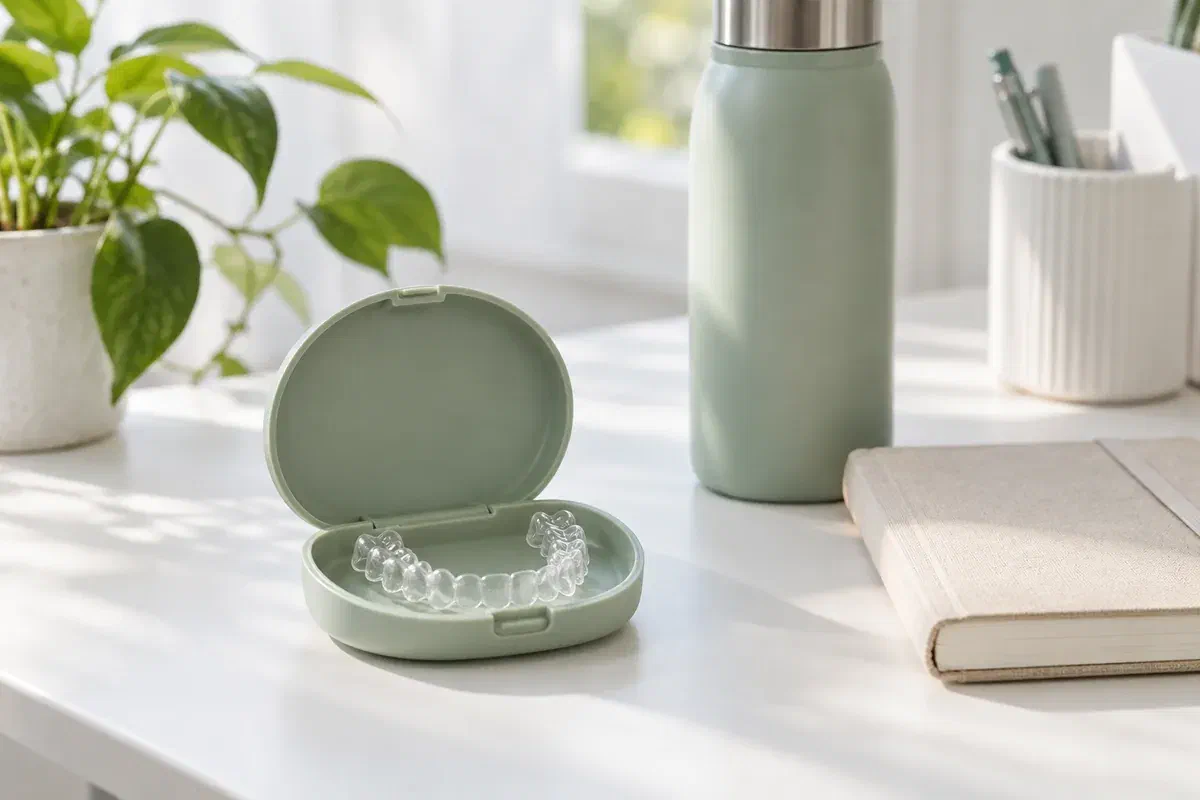
Illustrative clear aligner in a protective case beside a school notebook
What we look at first

The bite matters more than the front row.

A useful orthodontic discussion covers how the whole mouth fits together and what an ordinary week asks of your teen. Tell us what they hope to change and where the routine might be hard.

How the teeth meet and are still arriving

A gap or a crooked tooth is easy to see, but the way the upper and lower teeth close together, which teeth are still erupting, and other findings shape what is realistic. Ask which concerns aligners might correct and when braces or a specialist referral could serve your teen better.

A week of school, sport, and everything else

Think through breakfast, lunch, practices, lessons, sleepovers, and weekends away. Being able to remove the trays brings freedom and obligation together. Involve your teen directly in planning how the prescribed hours will fit their days, rather than passing every instruction through a parent.

Teeth and gums that are ready to move

Let us know about cavities, gums that bleed, old injuries, and any dental work in progress. Some of these need attention first. Checkups and cleanings carry on throughout treatment, because aligner reviews are not a substitute for regular examinations.

If your teen has had braces or aligners before, bring any records or old retainers. A new assessment is needed before reusing a tray or picking up an unfinished set.

Why some teens prefer aligners

Flexible to remove, still demanding to wear

Clear trays tend to be less noticeable than many fixed appliances, though small attachments and other features may still show. They come out for meals and brushing as directed. For some teenagers that is a real advantage, but it does not make treatment effortless, and it does not make aligners right for every bite.

What treatment is expected to achieve, how long it may take, and where its limits lie should be explained for your teen specifically. Teeth sometimes move differently from the plan, and extra trays or further assessment can be needed. Ask how progress will be measured and how any change of course would be explained to you both.

Patient information: American Association of Orthodontists — clear aligners

Room to ask about appearance

Your teen can raise questions about how the trays look, what attachments are, and how speech may feel for the first few days. Straight answers help more than promises of invisibility, and worries about class presentations or friends are worth discussing practically.

Brushing without working around brackets

Since the trays come out, teeth can be brushed and flossed as instructed, and the aligners need cleaning of their own. Ask for a routine that works at home and at school, including what to do after lunch when a sink is not handy.

Regular moments to check in

Each review is a chance to assess fit, movement, gum health, and any trouble with wear. Your teen can say what has really been happening. Honest reports help the clinician decide; a hidden gap in wear makes the review far less useful.

How treatment usually unfolds

Four stages, explained before any trays are made

Ask who will plan the treatment, who will supervise it, which records are needed, and when a referral makes sense. The consultation should lay out the choices without locking your family into one.

  1. Assess the bite and agree on goals

    The clinician reviews dental and medical history, oral health, and the alignment concerns. Photos, a scan, or X-rays may be suggested where they are needed. Talk about what your teen wants to change and which findings call for a specialist’s view.

  2. Go over the proposal and what it asks of you

    Ask about the planned movements, any attachments or extra procedures, estimated length, and other options. Confirm how often reviews happen, what retention involves, and what the fee covers. A digital preview helps explain the plan, but it does not promise the final result.

  3. Practise fitting, removing, and caring for trays

    If you go ahead, your teen learns how each aligner should sit and how to handle it safely. Invisalign is typically worn twenty to twenty-two hours a day, though the treating clinician’s instructions come first. Switch trays only on their schedule, and know who to call when something feels wrong.

  4. Keep up reviews and prepare for retainers

    The team checks progress and decides whether the plan needs adjusting. Keep mentioning missed hours, soreness, or changes in fit. Before active movement ends, confirm the retainer plan, ongoing visits, and what to do if a retainer cracks or stops fitting.

Between appointments

Small habits that hold the plan together

Most of treatment happens at home and at school. A workable plan covers meals, cleaning, storage, and how your teen can ask for help when something goes sideways.

The case goes everywhere

Put the trays in their protective case whenever they are out. A napkin on a lunch tray or a bedside table within a dog’s reach is how aligners get lost. If one is lost, cracked, or warped, contact the treating clinician soon and ask which tray to wear.

Eat, clean, then put them back

Take aligners out for food and for anything other than plain water, as instructed. Clean teeth and trays the recommended way before putting them back in. Avoid hot water and household cleaners, and ask for specific tips on managing lunch at school.

Speak up about soreness or poor fit

Pressure can come with tooth movement, but strong pain, a sore spot that lingers, or a tray that will not seat properly needs advice. Never trim it or force it in. Keep routine dental visits and wear retainers as directed once active treatment ends.

Patient information: Invisalign — retainers after treatment

Comparing the approaches

The right appliance is the one that suits the bite and the teen.

Ask what each suitable option offers, where it falls short, and what it expects of your teen. How it looks is one factor among several when choosing an appliance.

When the planned movements and routine fit

Clear aligners under supervision

After assessment, aligners may be a reasonable choice. They depend on steady wear, careful handling, cleaning, and review. Ask how erupting teeth or slower progress would be handled and whether extra features are likely to be part of the plan.

When the findings point another way

Braces or a specialist-led plan

Fixed braces or another approach may suit certain needs better. Braces carry their own cleaning, food, and appointment demands. An orthodontist’s opinion can help your family weigh realistic options instead of deciding from before-and-after photos.

When health, growth, or readiness comes first

Getting ready, or waiting with a plan

The clinician may suggest finishing other dental care, strengthening the brushing routine, or watching development before starting. Ask why a wait is advised and when to come back. Any delay should have a reason and a date for reassessment.

Common questions from Milton parents and teens

The practical details, sorted out early

School days, snacks, team sports, and who is responsible for what are all fair topics at the consultation. Your teen is welcome to ask their own questions.

(905) 876-4488
Is there a minimum age for teen Invisalign?
There is no single age that decides it. What matters is which teeth have come in, how the jaws are developing, and whether your teen can manage the routine. An assessment helps show whether now is a good time or whether a review later makes more sense.
Will aligners change how my teen talks at first?
Some people notice a slight change in speech while getting used to new trays, and it often settles as they adapt. If it persists or a tray seems not to fit properly, mention it to the treating clinician rather than leaving the aligner out.
Can braces still be an option if aligners are not suitable?
Yes. Fixed appliances or another plan may be recommended depending on the findings. Ask the clinician to explain why one approach is favoured, and consider a specialist opinion if your family would like to compare options in more detail.
Can my teen get away with leaving the trays out on weekends?
Weekend breaks are not part of a typical plan. The prescribed daily hours apply every day, and gaps can affect how teeth move and how well the next tray fits. If weekends are hard, raise that with the clinician before treatment starts.
Does Invisalign replace my teen’s regular checkups and cleanings?
No. Aligner reviews focus on tooth movement and fit. Routine examinations and hygiene visits still matter during treatment, and any cavities or gum concerns found along the way need attention.
How long does a retainer need to be worn once treatment ends?
Retainer wear is usually ongoing, because teeth can drift after active treatment. Ask what type of retainer is planned, how many hours it should be worn at each stage, and how a lost or damaged retainer would be replaced.
Teen Invisalign in Milton

Book a first conversation for your teen.

Call or visit our Bronte Street practice to ask about an orthodontic assessment. Come with questions about suitability, daily wear, scheduling reviews around school, and whether a specialist’s view might help you decide.

Suitability, supervision of treatment, and any referral are discussed after an assessment. Results and timelines differ from teen to teen.

Visit Milton Dental Clinic
Unit 1, 342 Bronte St. S, Milton, ON L9T 5B7
Get directions Clinic hours
Monday–Thursday
11am–7pm
Friday–Sunday
By appointment only

Areas we serve

  • Milton
  • Oakville
  • Mississauga
  • Georgetown
  • Halton Hills
  • Acton
  • Campbellville
  • Brampton
  • Burlington
  • Puslinch
  • Rockwood
  • Erin
  • Caledon
  • Etobicoke
  • Old Milton
  • Bronte Meadows
  • Timberlea
  • Dorset Park
  • Dempsey
  • Clarke
  • Beaty
  • Coates
  • Harrison
  • Scott
  • Willmott
  • Ford
  • Bowes
  • Cobden
  • Walker
  • Mountain View
  • Milton Heights
  • Hawthorne Village
  • Valley View
  • Fallingbrook
  • Nassagaweya
  • Trafalgar
  • Esquesing
  • Nelson
  • Brookville
  • Moffat
  • Glen Williams
  • Norval
  • Limehouse
  • Stewarttown
  • Ashgrove
  • Hornby
  • Silver Creek
  • Speyside
  • Scotch Block
  • North Oakville
  • River Oaks
  • Glen Abbey
  • West Oak Trails
  • Palermo
  • Bronte Creek
  • College Park
  • Joshua Creek
  • Uptown Core
  • Preserve
  • Iroquois Ridge
  • Lisgar
  • Meadowvale
  • Meadowvale Village
  • Churchill Meadows
  • Erin Mills
  • Central Erin Mills
  • Streetsville
  • East Credit
  • Creditview
  • Heartland
  • Sheridan
  • Mount Pleasant
  • Credit Valley
  • Huttonville
  • Churchville
  • Springbrook
  • Northwest Brampton
  • Bram West
  • Fletcher's Meadow
  • Fletcher's Creek South
  • Alton Village
  • Orchard
  • Millcroft
  • Headon Forest
  • Tansley
  • Brant Hills
  • Tyandaga
  • Kilbride
  • Lowville
  • Aberfoyle
  • Morriston
  • Arkell
  • Hillsburgh
  • Freelton
  • Carlisle
  • Waterdown
  • Flamborough
  • Mountsberg

How can we help?

Milton Dental Clinic

Have a question about your smile? Choose the option that works best for you.

For urgent dental concerns, please call.
Messages are reviewed during clinic hours.