

Illustrative teenager and parent discussing a clear aligner with a dental clinician
Children’s Dentistry

Invisalign for Teens in Old Milton

Maybe an older sibling wore braces years ago and the retainer was forgotten. For teens in Old Milton, clear aligners deserve the same careful start: an assessment of the bite, an honest look at daily wear, and a plan for keeping results.

Old Milton teens and clear aligners

Straightening is half the job. Keeping it is the other half.

Plenty of parents remember their own orthodontic years, including the retainer that ended up in a drawer and the teeth that slowly shifted back. That memory is useful. When a teenager asks about clear aligners, the conversation can cover both the movement ahead and the long stretch of retention that follows.

With Invisalign, teeth are guided by a series of removable clear trays worn in a set order. Not every teen is a good fit. An examination of the bite, gums, overall oral health, and stage of development matters, and so does whether your teen can realistically keep the trays in for most of the day. The product name does not settle any of that.

Our Bronte Street practice sits a short walk from Milton’s historic downtown, and we are glad to talk families through the options. We can assess your teen, explain what aligners might achieve, and suggest an orthodontist’s opinion when it would help. Nobody should feel pressed to begin treatment at the first appointment.

Ask about clear aligners for your teen
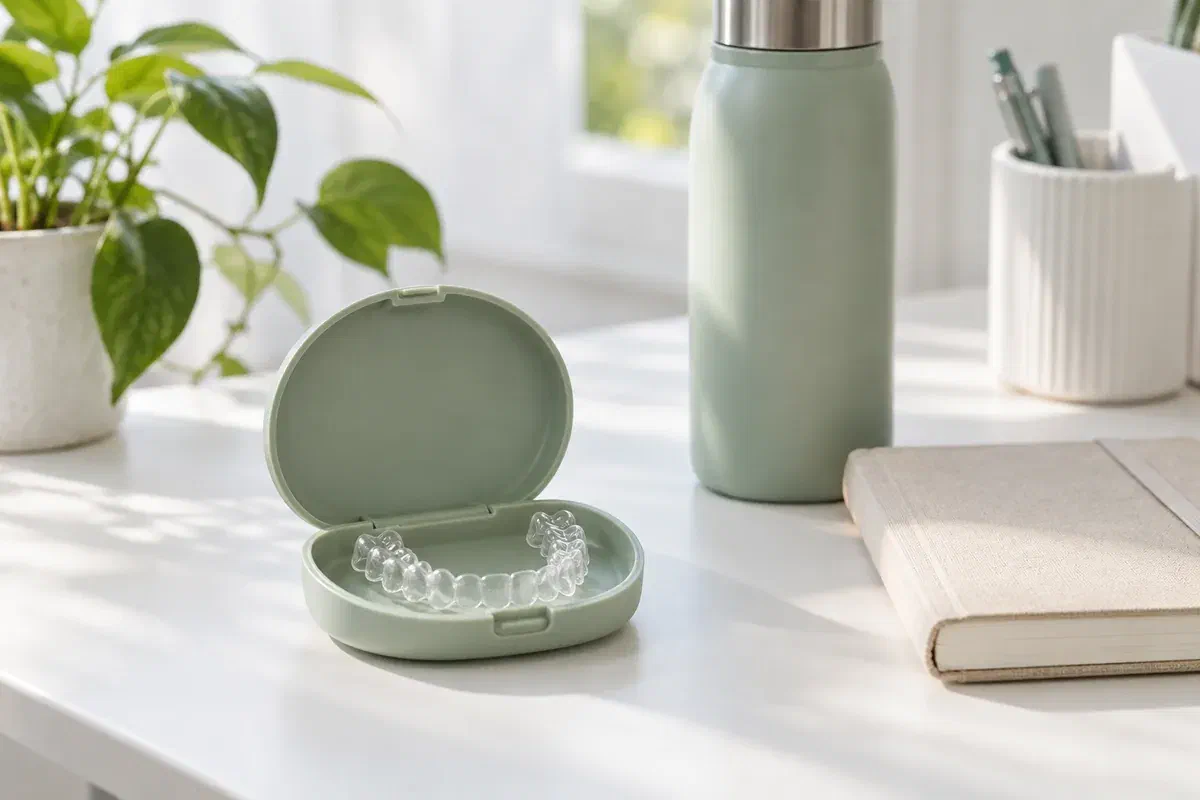
Illustrative clear aligner in a protective case beside a school notebook
Questions worth settling first

Is this about appearance, the bite, or both?

Treatment planning looks at more than the teeth people notice in photos. Share what your teen would like to change and anything about their week that could make wear difficult.

Alignment, bite, and teeth still erupting

Crowding in front is only one piece. How the back teeth meet, whether adult teeth are still coming in, and other findings can steer the choice of appliance. Ask what aligners would be expected to address and when another approach might be wiser.

Whether the hours are realistic

Trays come out for meals and cleaning, then go straight back in. Walk through a typical school day, practices, part-time shifts, and family outings. Your teen should help shape that routine themselves instead of hearing the rules second-hand.

Oral health that supports movement

Mention decay, tender or bleeding gums, past injuries, and any planned fillings or other work. These may need to be dealt with before teeth start moving. Regular checkups and cleanings carry on alongside aligner reviews rather than being replaced by them.

Old retainers and records from earlier orthodontic care are helpful to bring. A current assessment is still needed before anyone reuses a tray or restarts a set that was never finished.

The appeal of removable trays

Less conspicuous, not less work

Many teenagers like that clear trays are harder to spot than fixed braces, though attachments bonded to some teeth can be visible up close. Aligners are taken out to eat and to brush as instructed. That flexibility suits some teens well, yet it brings its own discipline and is not the answer for every bite.

Your teen’s expected outcome, timeline, and limitations should be explained for their particular case. Movement does not always follow the digital plan exactly, and refinements or further assessment may be needed. Ask how progress is tracked and how you would hear about any change of direction.

Patient information: American Association of Orthodontists — clear aligners

Honest talk about how trays look

Teens can ask what the aligners and attachments look like in daily life and how their voice may sound for the first few days. Calling treatment invisible sets the wrong expectation. Real answers about class, sport, and social life are more reassuring.

Easier cleaning around the teeth

Removing the trays lets your teen brush and floss as directed without working around wires. The aligners need gentle cleaning as well. Ask for a routine that holds up on rushed mornings and after lunch at school, not just on quiet evenings.

Progress checks at set intervals

Reviews let the clinician look at fit, movement, gum health, and how wear has been going. They work best when your teen is candid about what actually happened between visits. Missed hours that go unmentioned can lead to decisions based on the wrong picture.

What the steps look like

From first records to the last tray

Find out who designs the plan, who oversees it, what records are needed, and when a referral would be sensible. A good consultation clarifies the choices without committing you to any of them.

  1. Examine the teeth and talk about goals

    Dental and medical history, gum health, and alignment are reviewed together. Photographs, scans, or radiographs may be advised when needed. Discuss what your teen hopes to change, and ask which findings would benefit from a specialist’s input.

  2. Weigh up the proposed plan

    Ask about the planned movements, any attachments or added procedures, estimated length, and alternatives. Check the review schedule, how retention works, and what is included in the fee. Simulations help explain the idea, though they cannot guarantee how the smile will finish.

  3. Learn to handle the aligners

    When treatment begins, the clinician shows how each tray should fit and how to take it in and out. Invisalign wear usually runs twenty to twenty-two hours a day, but the treating clinician’s directions take priority. Move to a new tray only as scheduled, and keep the contact number handy.

  4. Review, adjust, and plan for retention

    Progress is assessed and the course is refined if needed. Bring up missed wear, soreness, or a change in fit at every visit. Well before the final tray, settle the retainer plan, follow-up visits, and what to do if a retainer breaks or feels tight.

Everyday care at home and school

A routine simple enough to keep

Treatment carries on in the weeks between reviews. Plan ahead for meals, cleaning, storage, and what your teen should do when a tray misbehaves.

Trays out means case out

Store aligners in the supplied or recommended case every time they come out. Tissues get thrown away and pets chew. Call the treating clinician quickly if a tray is lost, cracked, or bent, and ask which one to wear in the meantime.

Follow the eating and cleaning rules

Aligners come out for meals and for drinks other than plain water, as directed. Brush and rinse the teeth and clean the trays before they go back in. Skip hot water and household products, and ask how to manage lunch when there is no sink nearby.

Report discomfort before it grows

Mild pressure with a new tray is common, but sharp pain, a sore spot that will not settle, or a tray that refuses to seat needs advice. Do not cut or force it. Keep regular dental visits and stick with the retainer schedule afterwards.

Patient information: Invisalign — retainers after treatment

Aligners, braces, or waiting

Three paths, each with its own commitments

Ask what each suitable approach offers, what it cannot do, and what it asks of your teen. Looks count, but they should not decide the appliance on their own.

When the movements and the routine both suit

Clear aligners with regular supervision

Assessment may show that aligners are a reasonable choice. Success relies on consistent wear, careful handling, cleaning, and reviews. Ask how teeth still erupting or slower movement would be handled, and whether extra features are likely.

When the findings favour another method

Braces or a specialist’s plan

Fixed braces or a different approach may be recommended for some needs. Braces have their own cleaning, food, and visit requirements. An orthodontist can help your family compare genuine options instead of choosing from photographs alone.

When oral health, growth, or readiness needs time

Prepare first, or review later

The clinician may advise finishing dental care, improving brushing habits, or monitoring growth before starting. Ask why waiting is suggested and when to return. A pause should come with a reason and a plan to reassess.

Parents and teens often ask

What families want to know before the first tray

School lunches, sports, snacks, and who keeps track of what are all fair game at the consultation. Your teen is encouraged to ask questions directly.

(905) 876-4488
My older child’s teeth shifted after braces. Could that happen with aligners too?
Teeth can move after any orthodontic treatment, which is why retention matters so much. Ask what retainer is planned, how long it should be worn each night, and how follow-up works. Consistent retainer wear is the main way to protect the result.
Are attachments always part of a teen aligner plan?
Not always. Whether small attachments are used depends on the movements planned and the clinician’s judgment. Ask what is proposed for your teen and how noticeable it may be, since clear trays do not make every part of treatment unseen.
Does wearing aligners hurt?
Many teens feel pressure or tenderness for a day or two after switching trays, and it usually eases. Strong or lasting pain, a sore spot on the gum or cheek, or a tray that will not fit should be reported to the treating clinician rather than tolerated.
Can my teen chew gum or snack with the trays in?
Generally no. Aligners come out for food, and gum can stick to them. Ask the clinician for guidance on snacks and drinks so your teen can plan around school breaks while still meeting the prescribed daily hours.
What happens if a cavity is found partway through treatment?
Tell the treating clinician, who can coordinate with the dentist on timing. Fillings or other care may change how a tray fits, so treatment might need a check or adjustment. Keeping regular dental visits helps catch problems early.
Should I or my teen be the one to call when something goes wrong?
Either can, but agree on it in advance. Many families find it works best for the teen to report problems with a parent’s support. What matters is that lost trays, poor fit, or missed wear are mentioned promptly and honestly.
Clear aligners for Old Milton teens

Start by asking the questions you already have.

Reach our Bronte Street practice to arrange an orthodontic assessment for your teen. Bring your concerns about suitability, daily wear, review appointments, retainers, and whether a specialist’s view could help your family choose.

Suitability, who supervises treatment, and any referral are discussed after assessment. Results and timelines vary for each teen.

Visit Milton Dental Clinic
Unit 1, 342 Bronte St. S, Milton, ON L9T 5B7
Get directions Clinic hours
Monday–Thursday
11am–7pm
Friday–Sunday
By appointment only

Areas we serve

  • Milton
  • Oakville
  • Mississauga
  • Georgetown
  • Halton Hills
  • Acton
  • Campbellville
  • Brampton
  • Burlington
  • Puslinch
  • Rockwood
  • Erin
  • Caledon
  • Etobicoke
  • Old Milton
  • Bronte Meadows
  • Timberlea
  • Dorset Park
  • Dempsey
  • Clarke
  • Beaty
  • Coates
  • Harrison
  • Scott
  • Willmott
  • Ford
  • Bowes
  • Cobden
  • Walker
  • Mountain View
  • Milton Heights
  • Hawthorne Village
  • Valley View
  • Fallingbrook
  • Nassagaweya
  • Trafalgar
  • Esquesing
  • Nelson
  • Brookville
  • Moffat
  • Glen Williams
  • Norval
  • Limehouse
  • Stewarttown
  • Ashgrove
  • Hornby
  • Silver Creek
  • Speyside
  • Scotch Block
  • North Oakville
  • River Oaks
  • Glen Abbey
  • West Oak Trails
  • Palermo
  • Bronte Creek
  • College Park
  • Joshua Creek
  • Uptown Core
  • Preserve
  • Iroquois Ridge
  • Lisgar
  • Meadowvale
  • Meadowvale Village
  • Churchill Meadows
  • Erin Mills
  • Central Erin Mills
  • Streetsville
  • East Credit
  • Creditview
  • Heartland
  • Sheridan
  • Mount Pleasant
  • Credit Valley
  • Huttonville
  • Churchville
  • Springbrook
  • Northwest Brampton
  • Bram West
  • Fletcher's Meadow
  • Fletcher's Creek South
  • Alton Village
  • Orchard
  • Millcroft
  • Headon Forest
  • Tansley
  • Brant Hills
  • Tyandaga
  • Kilbride
  • Lowville
  • Aberfoyle
  • Morriston
  • Arkell
  • Hillsburgh
  • Freelton
  • Carlisle
  • Waterdown
  • Flamborough
  • Mountsberg

How can we help?

Milton Dental Clinic

Have a question about your smile? Choose the option that works best for you.

For urgent dental concerns, please call.
Messages are reviewed during clinic hours.