

Illustrative teenager and parent discussing a clear aligner with a dental clinician
Children’s Dentistry

Invisalign for Teens in Puslinch

Summer camp, a school trip, a week at the cottage: aligner treatment travels with your teen. Families from Puslinch can talk with us about assessing the bite, whether trays are suitable, and how to keep wear steady when routines change.

When routines change

Aligners don’t take holidays.

School-year habits are one thing. Then comes a week at camp, a band trip, or a long summer when bedtimes drift and meals happen at odd hours. Those breaks are often when trays get left in a cabin or wrapped in a paper plate. Thinking about them early is part of deciding whether clear aligners suit your teen.

Invisalign guides teeth with a custom series of removable clear trays, each worn for a set stretch of time. An examination of the bite, the teeth and gums, and your teen’s development shows whether aligners are a reasonable option, and an honest talk shows whether near-continuous wear is likely. The brand by itself shows neither.

Households from Puslinch are welcome to bring the year’s plans to our Bronte Street practice. After examining your teen, we can describe what aligners might achieve, flag when a specialist opinion is the better path, and help you picture the routine through busy and quiet months alike. Beginning right away is never expected.

Ask how aligners fit a busy year
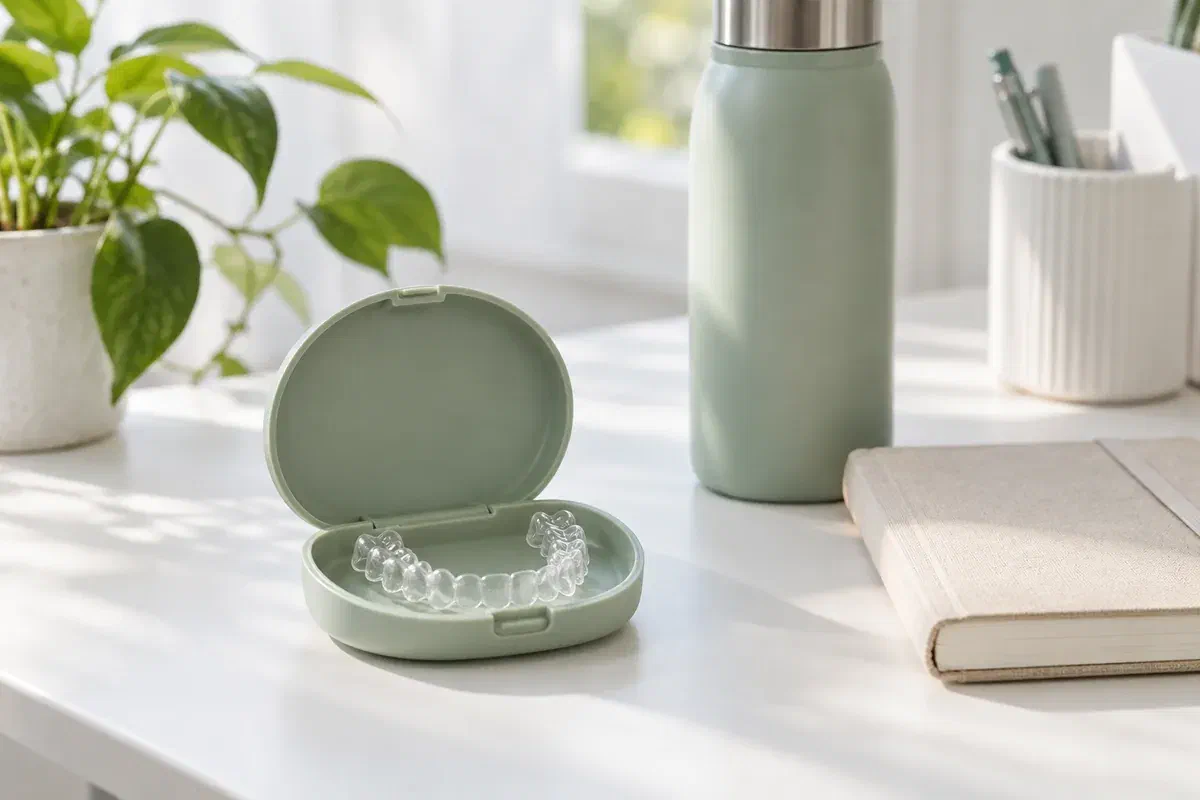
Illustrative clear aligner in a protective case beside a school notebook
Points to consider

Will the plan survive camp, trips, and long weekends?

A proper assessment considers the whole bite and every kind of week your teen has, not just the typical one. Tell us what they want to improve and when wear could lapse.

Bite, spacing, and emerging teeth

Spacing and crowding catch the eye, but the bite, permanent teeth that are not yet in, and other findings carry weight too. Ask which issues clear trays might address and when a different appliance or an orthodontist would be preferable.

Wear during travel and time away

Look ahead to camps, tournaments, family trips, and nights at friends’ homes. Your teen will be in charge of the trays without a parent nearby. Plan that part together so they know exactly what to pack and what to do if something goes wrong.

A healthy mouth before movement

Share any cavities, sore gums, past injuries, and planned dental work. Some findings need treatment before orthodontics. Hygiene visits and dental exams continue throughout treatment; reviews of the trays do not replace them.

Mention earlier orthodontic treatment and any retainers your teen still has. Don’t restart an old set or reuse a tray until a current assessment has been done.

Why aligners can work well

Portable treatment, if the case comes along

Most clear trays are less noticeable than fixed braces, though bonded attachments may be seen. They come out for eating and oral hygiene as directed, and there are no brackets to break during a trip. That is useful for some teens, but it shifts responsibility onto them and is not right for every bite.

Your teen’s expected result, timeframe, and limitations should be described for their case alone. Teeth do not always shift as predicted, so extra aligners or a further assessment may be part of the journey. Ask how progress will be reviewed and how changes would be communicated.

Patient information: American Association of Orthodontists — clear aligners

Real answers about visibility

Teens can ask about the look of the trays and attachments and how speech may feel at first. Calling them invisible misleads. Questions about photos, school, and social life deserve honest, practical replies.

Hygiene without brackets in the way

Because trays come out, your teen can brush and floss normally, following instructions, and clean the aligners separately. Ask for a routine that still works at camp or on the road, where bathrooms may be shared.

Checkpoints to reset the course

Reviews let the clinician look at fit, movement, gum health, and wear. Your teen can mention what happened while away. Honesty about missed days helps the clinician decide what comes next.

The overall plan

Map the stages against the calendar.

Ask who designs and supervises treatment, what records are needed, and when referral fits. A consultation should explain options and leave the decision with your family.

  1. Assessment and aims

    The clinician reviews history, oral health, and alignment, and may suggest photographs, a scan, or X-rays. Talk about what your teen hopes to change, and ask whether any findings would benefit from a specialist.

  2. The proposal, including travel plans

    Ask about planned movements, attachments or other procedures, estimated length, and alternatives. Mention upcoming trips so reviews can be planned around them. Check what retention involves and what the fee covers. Simulations illustrate; they don’t guarantee.

  3. Learning to wear the trays

    When treatment starts, your teen is shown how each aligner should fit and how to remove and insert it. Invisalign typically calls for twenty to twenty-two hours a day, per the treating clinician. Tray changes follow their schedule, including while away, and your teen should know who to contact.

  4. Reviews, refinements, and retention

    The clinician tracks progress and adjusts the course where needed. Keep reporting missed wear, discomfort, or fit changes. Before active movement ends, confirm the retainer, ongoing checks, and the plan if a retainer is left behind on a trip or breaks.

Packing list and daily care

What goes in the bag besides the toothbrush

Treatment keeps going wherever your teen is. Plan meals, cleaning, storage, and a way to get advice when away from home.

Case, spare tray, and instructions

Every trip should include the protective case and, if the clinician advises, the previous tray as a backup. Trays left on a plate or towel get lost. Report a lost, broken, or warped aligner promptly and ask which one to wear.

Food and drink on the road

Aligners come out for meals and for anything besides plain water, as instructed. Clean teeth and trays before they go back. Keep trays away from heat, such as a hot car or boiling water, and ask how to manage meals at camp.

Knowing when to call

Tenderness with a new tray is common, but strong pain, a sore that persists, or an aligner that won’t sit down properly needs advice. Do not reshape or force it. After treatment, keep regular dental visits and wear retainers as directed.

Patient information: Invisalign — retainers after treatment

Options side by side

Aligners, braces, or a better time to start

Ask about the benefits, limitations, and demands of each suitable option. Appearance matters, but it should not be the only reason for a choice.

When the bite and the year ahead suit

Clear aligners under review

Aligners may be appropriate after assessment. They need steady wear, careful handling, regular cleaning, and scheduled check-ins. Ask how erupting teeth or slower progress would be managed, and whether additional features are expected.

When the findings suggest a different method

Braces or a specialist’s approach

Fixed braces or another plan may be advised for some needs. Braces have their own hygiene and food rules, plus the chance of a bracket coming loose while away. A specialist opinion can help your family compare real options.

When oral health, growth, or timing isn’t right

Prepare now, start later

The clinician may suggest finishing dental work, improving brushing, or monitoring development first. Some families also prefer to avoid starting just before a long trip. Ask why waiting is advised and when to return.

Travel and time-away questions

Planning for weeks that aren’t typical

School, snacks, sport, trips, and shared responsibility are all fair topics. Your teen can ask questions directly at the consultation.

(905) 876-4488
Can my teen bring extra trays to summer camp?
Check with the treating clinician before a long trip. They can advise whether to take the next tray, keep the previous one as a backup, or adjust the schedule. Don’t change trays early without guidance.
What if my teen forgets the trays at home before a trip?
Contact the treating clinician to explain what happened and how long your teen will be away. They can advise on the safest way to continue. Missed wear can affect fit, so be honest when trays go back in.
Can a review be moved if it clashes with a family vacation?
Often, yes. Let the clinic know early so a new time can be found. Ask whether tray changes should continue as normal during the gap.
How should trays be cleaned when we are camping?
Ask the clinician for a simple routine using clean water and the recommended method. Avoid hot water and harsh products, and keep trays in their case away from heat and sunlight.
Can aligners be worn while swimming?
That is a question for the treating clinician. In general, aligners stay in except for eating and cleaning, but activities with a risk of impact or losing the tray may need a different plan.
Should the retainer come on holiday after treatment ends?
Yes, if the clinician has asked your teen to wear it during that time. Teeth can shift when retainers are skipped. Pack the case and ask what to do if the retainer is lost while away.
Teen Invisalign for Puslinch households

Plan the year before choosing the trays.

Reach out to our Bronte Street practice and book an orthodontic assessment for your teen. Bring questions about suitability, daily wear, travel plans, review timing, and whether a specialist opinion would help you decide.

Suitability, supervision of care, and any referral are discussed once your teen has been examined. Results and timelines vary.

Visit Milton Dental Clinic
Unit 1, 342 Bronte St. S, Milton, ON L9T 5B7
Get directions Clinic hours
Monday–Thursday
11am–7pm
Friday–Sunday
By appointment only

Areas we serve

  • Milton
  • Oakville
  • Mississauga
  • Georgetown
  • Halton Hills
  • Acton
  • Campbellville
  • Brampton
  • Burlington
  • Puslinch
  • Rockwood
  • Erin
  • Caledon
  • Etobicoke
  • Old Milton
  • Bronte Meadows
  • Timberlea
  • Dorset Park
  • Dempsey
  • Clarke
  • Beaty
  • Coates
  • Harrison
  • Scott
  • Willmott
  • Ford
  • Bowes
  • Cobden
  • Walker
  • Mountain View
  • Milton Heights
  • Hawthorne Village
  • Valley View
  • Fallingbrook
  • Nassagaweya
  • Trafalgar
  • Esquesing
  • Nelson
  • Brookville
  • Moffat
  • Glen Williams
  • Norval
  • Limehouse
  • Stewarttown
  • Ashgrove
  • Hornby
  • Silver Creek
  • Speyside
  • Scotch Block
  • North Oakville
  • River Oaks
  • Glen Abbey
  • West Oak Trails
  • Palermo
  • Bronte Creek
  • College Park
  • Joshua Creek
  • Uptown Core
  • Preserve
  • Iroquois Ridge
  • Lisgar
  • Meadowvale
  • Meadowvale Village
  • Churchill Meadows
  • Erin Mills
  • Central Erin Mills
  • Streetsville
  • East Credit
  • Creditview
  • Heartland
  • Sheridan
  • Mount Pleasant
  • Credit Valley
  • Huttonville
  • Churchville
  • Springbrook
  • Northwest Brampton
  • Bram West
  • Fletcher's Meadow
  • Fletcher's Creek South
  • Alton Village
  • Orchard
  • Millcroft
  • Headon Forest
  • Tansley
  • Brant Hills
  • Tyandaga
  • Kilbride
  • Lowville
  • Aberfoyle
  • Morriston
  • Arkell
  • Hillsburgh
  • Freelton
  • Carlisle
  • Waterdown
  • Flamborough
  • Mountsberg

How can we help?

Milton Dental Clinic

Have a question about your smile? Choose the option that works best for you.

For urgent dental concerns, please call.
Messages are reviewed during clinic hours.