

Illustrative parent and child discussing a molar model during a dental consultation
Children’s Dentistry

Pediatric Pulpectomy

A badly affected baby tooth needs an individual plan. Pediatric pulpectomy in Milton may be considered for a suitable restorable tooth when pulp tissue cannot be preserved, with treatment through the canals, a final restoration, and planned review.

A closer look at pediatric pulpectomy

Understand the reason for treatment inside a baby tooth.

A primary tooth can sometimes have pulp tissue that is irreversibly inflamed or has died, while enough structure remains to consider keeping the tooth. A pulpectomy removes affected pulp from the crown and root canals, cleans the internal spaces, and fills them with material appropriate for a primary tooth.

This is more extensive than a pulpotomy, which aims to preserve suitable living tissue in the roots. It is also not simply the adult root canal procedure copied onto a smaller tooth. Primary roots and the developing permanent tooth create different considerations for diagnosis, materials, and follow-up.

At Milton Dental Clinic, the discussion starts with whether retaining the tooth is appropriate at all. Your child's symptoms, root condition, remaining structure, health, and treatment needs matter. We can explain the proposed next step and when a pediatric dental referral or another approach would be more suitable.

Ask about your child’s pulp-treatment plan
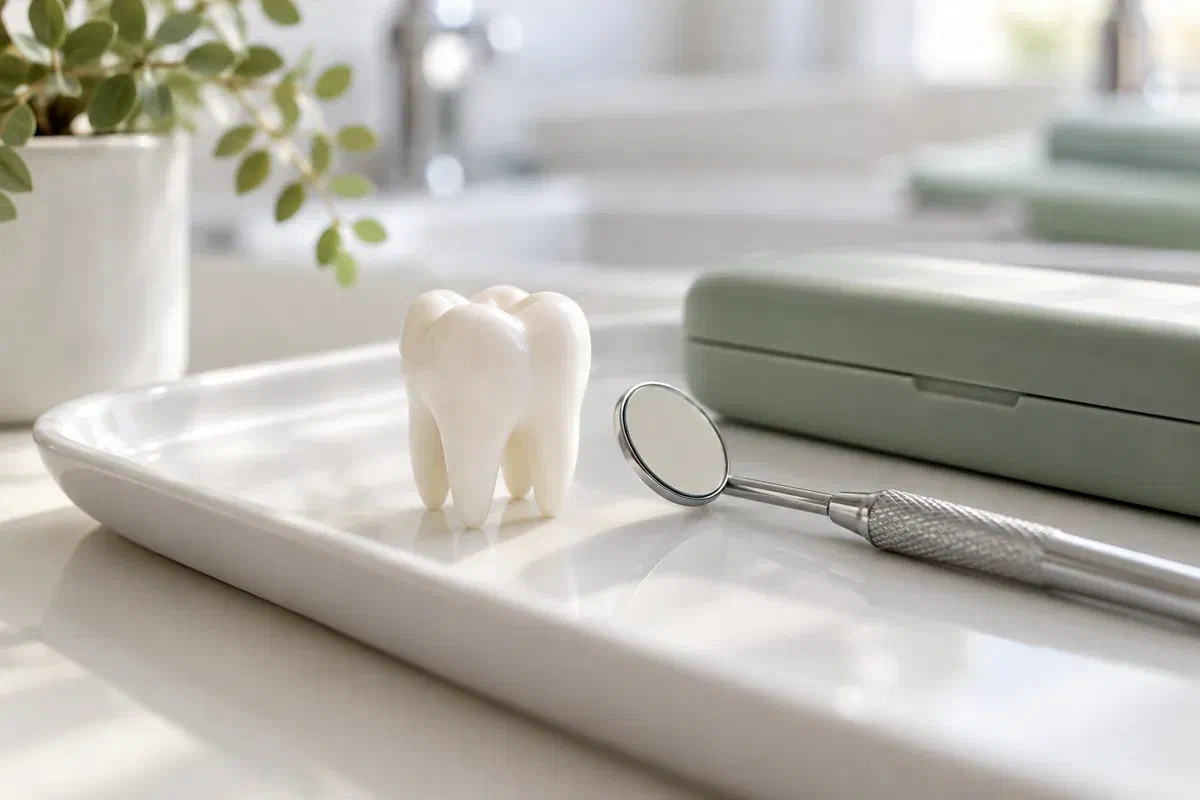
Illustrative opaque molar model and mirror on a clean dental tray
When more than a surface repair may be needed

Bring the full story, including symptoms that have changed.

The dentist uses the history and examination, together with relevant imaging, to assess the tooth. A quiet day does not erase a history of significant pain or swelling.

Persistent pain or disrupted sleep

Explain when the pain began, whether it happens without eating, and whether it wakes your child. Mention any medicines already taken and their effect. These details help the clinician assess the problem without relying only on how the child feels during the visit.

A draining area or swelling near the tooth

Tell the team about a gum bump, unusual taste, drainage, or facial swelling, including episodes that appeared to settle. These signs require assessment. Do not squeeze a gum bump or assume that drainage has removed the need to treat the source.

A tooth whose future is uncertain

The amount of remaining tooth and the condition of its roots affect whether a pulpectomy is reasonable. Ask how close the tooth may be to natural loss and how that affects the recommendation. An image of the cavity alone cannot settle the question.

Seek prompt dental advice for suspected infection. Breathing or swallowing difficulty, rapidly spreading facial swelling, or a child who is seriously unwell requires emergency medical care.

The aim of treating the canals

Address the source while assessing whether the tooth can stay useful.

For a selected primary tooth, pulpectomy aims to manage diseased pulp and support retention of a functioning tooth. Root condition is an important part of case selection. The treatment should be considered alongside alternatives, including removal when retention is not appropriate.

A favourable outcome cannot be guaranteed. The dentist should discuss the tooth's prognosis, the limitations of treatment, and what would happen if symptoms persist or return. Understanding those possibilities helps your family make a decision without treating every attempt to retain a tooth as automatically worthwhile.

Patient information: AAPD — non-vital pulp therapies in primary teeth

A decision connected to your child’s development

Ask what keeping this tooth would contribute during its remaining time in the mouth. The answer may involve function and the developing dentition. It should also consider the demands of treatment and the practicality of completing the restoration and reviews.

A plan that addresses both inside and outside

Canal treatment alone does not rebuild the damaged chewing surface. A suitable final restoration is needed as part of the plan. Discuss how the tooth will be sealed and supported, and whether the planned appointments cover every stage of care.

A record for comparing future findings

Clinical notes and appropriate radiographs help the treating dentist review the tooth over time. Ask when the first follow-up is needed and how future checks will be arranged. Your observations about eating, comfort, and any recurring swelling remain important alongside those records.

How a pediatric pulpectomy is planned

Assess restorability, treat the internal spaces, and complete the repair.

The number and length of visits depend on the tooth and your child's needs. Ask how comfort will be managed and whether treatment should be provided in another setting.

  1. Review the diagnosis and the whole treatment plan

    The clinician considers symptoms, examination, root findings, and the ability to restore the tooth. Discuss reasonable alternatives and the expected outlook. Confirm whether a specialist should be involved and how any unexpected findings would affect the agreed approach.

  2. Provide appropriate comfort and isolation

    Local anaesthesia and effective isolation are planned as appropriate to the case. Your child should know how to communicate discomfort. Tell the team about previous difficulties, health conditions, or support needs before the procedure rather than waiting until treatment is underway.

  3. Clean and fill the canal spaces

    The dentist removes affected pulp tissue and cleans the internal spaces using suitable techniques. Primary-tooth canals are filled with an appropriate resorbable material. The exact method depends on the tooth; this is treatment carried out by a clinician, not a home-care procedure.

  4. Restore the tooth and establish follow-up

    The tooth needs a suitable seal and restoration, which may include a crown. Imaging helps document the completed canal treatment as indicated. Confirm any remaining appointment, aftercare instructions, and the schedule for reassessing symptoms, the restoration, and supporting tissues.

After the pulpectomy appointment

Follow the instructions and report a change in the recovery pattern.

Ask what your child may notice after the specific treatment provided. Make sure every caregiver understands any eating restrictions, medicine advice, and remaining appointments.

Protect the mouth while feeling returns

If local anaesthetic was used, supervise your child so they do not bite numb tissues. Follow the team's advice about food and drinks. Any pain medicine should be suitable for your child's age, weight, and health, with clear instructions from the treating professional.

Keep temporary and final restorations under review

If treatment is staged, clarify how to care for the temporary repair and when to return. Report a lost filling, loose crown, or new food trap promptly. Do not apply household glue or postpone completion simply because the tooth has become more comfortable.

Attend reviews even when symptoms have settled

The absence of pain is encouraging but does not by itself confirm the treatment outcome. Keep the recommended clinical and imaging reviews. Continue helping with home care and ask about prevention for the rest of the mouth, not only the treated tooth.

Patient information: AAPD — local anaesthesia and pediatric aftercare

Choosing care for an affected primary tooth

Retaining the tooth is one possible goal, not the only consideration.

Ask how the diagnosis, roots, remaining structure, and appointment needs influence the recommendation. The plan should make the alternatives understandable.

When the primary tooth is a suitable candidate

Pulpectomy with an appropriate restoration

Canal treatment may be considered when the pulp condition calls for it and the tooth can be appropriately retained and restored. The dentist should explain the prognosis and follow-up. This approach cannot be selected solely because a parent would prefer to avoid extraction.

When the diagnosis or root findings point elsewhere

A different pulp-management approach

Some teeth have suitable living pulp and need a different treatment; other primary-tooth cases require a more specialised discussion. Ask why the recommended procedure fits the findings. Pulpotomy and pulpectomy are not interchangeable choices based simply on appointment length.

When retention has an unfavourable outlook

Extraction with a development review

Removing the tooth may be more appropriate if it cannot be restored, root changes are significant, or other findings make retention unsuitable. Ask whether the developing space needs assessment afterward. A space maintainer is considered individually rather than automatically required after every primary-tooth extraction.

Questions about pediatric pulpectomy

Clarify the diagnosis, the materials, and the follow-up.

Bring written recommendations or previous images if available. They can help the clinician explain what has been proposed and what still needs assessment.

(905) 876-4488
How is a pulpectomy different from a pulpotomy in a primary tooth?
Pulpectomy treats pulp tissue throughout the crown and root canals. A pulpotomy removes the crown portion while aiming to preserve suitable living pulp in the roots. They address different clinical findings, so one cannot simply be substituted for the other without diagnosis.
Why does the condition of a baby tooth’s roots matter before pulpectomy?
The roots help determine whether treatment has a reasonable outlook and how the tooth fits into development. Significant root resorption or other unfavourable findings can affect suitability. The dentist should explain what the examination and images show before recommending retention.
Is the filling inside a baby tooth’s canals the same as an adult root filling?
Primary-tooth treatment uses materials chosen with natural root resorption and the developing permanent tooth in mind. It is not simply an adult procedure scaled down. Ask which material is proposed and how the tooth will be monitored as your child grows.
Can we cancel the pulpectomy assessment if the gum bump has disappeared?
Do not assume that a disappearing bump means the source has resolved. Tell the dentist about the change and ask what assessment is still needed. The history of drainage or swelling remains relevant even when your child has little discomfort at the moment.
Does a pulpectomy guarantee that the baby tooth will stay until its natural loss?
No. The aim is to retain a suitable tooth, but persistent or recurrent disease, restoration problems, or other findings may change the plan. Ask about the tooth’s individual outlook and what further care would be considered if the treatment is unsuccessful.
What should we clarify if the pulpectomy and final crown are planned for separate visits?
Ask how the temporary restoration should be protected, what symptoms to report, and when the final repair must be completed. Make sure the next appointment is arranged. Feeling better after canal treatment does not mean the remaining restorative step can be skipped.
Pediatric pulpectomy in Milton

Get a clear explanation before deciding how to treat the tooth.

Contact our Bronte Street practice about your child's symptoms or a proposed pulpectomy. We can discuss assessment, the reasons for retaining or removing a primary tooth, and when referral would be appropriate.

The treatment plan depends on examination and relevant imaging. Active swelling or increasing pain should be discussed by phone.

Visit Milton Dental Clinic
Unit 1, 342 Bronte St. S, Milton, ON L9T 5B7
Get directions Clinic hours
Monday–Thursday
11am–7pm
Friday–Sunday
By appointment only

How can we help?

Milton Dental Clinic

Have a question about your smile? Choose the option that works best for you.

For urgent dental concerns, please call.
Messages are reviewed during clinic hours.