Illustrative parent and child discussing a molar model during a dental consultation
Children’s Dentistry

Pediatric Pulpectomy in Halton Hills

Some children walk into a dental room calmly; others remember a hard visit and dread the next one. For families across Halton Hills, we discuss whether a baby tooth needs a pulpectomy and how your child’s comfort, pace and support needs will shape the plan.

For the child who finds visits hard

A nervous child changes how treatment is planned, not whether it matters.

Worry about the appointment often arrives before any understanding of the procedure, so let’s start there. A pulpectomy is offered when the pulp of a primary tooth, its soft inner tissue, is inflamed beyond recovery or has died, and the tooth still looks strong enough to keep. The diseased pulp is taken out of the crown and the root canals, the inner spaces are cleaned, and a filling made for baby teeth is placed.

It is a bigger step than a pulpotomy, which leaves healthy tissue in the roots. It is also distinct from the root canal an adult might have. Primary roots naturally dissolve while the adult tooth grows below, which affects how the tooth is diagnosed, which materials are used and how it is checked later.

In Georgetown, Acton, Glen Williams or one of the smaller hamlets, the opening question for your family is the same one we ask everyone: should this tooth be kept? We take time over it, because the answer shapes everything that follows. Symptoms, the roots, remaining structure, health and other dental needs all count. So does how your child copes with treatment, and if a pediatric dentist with additional support options would be a better fit, we will discuss a referral openly.


Talk about comfort and your child’s tooth
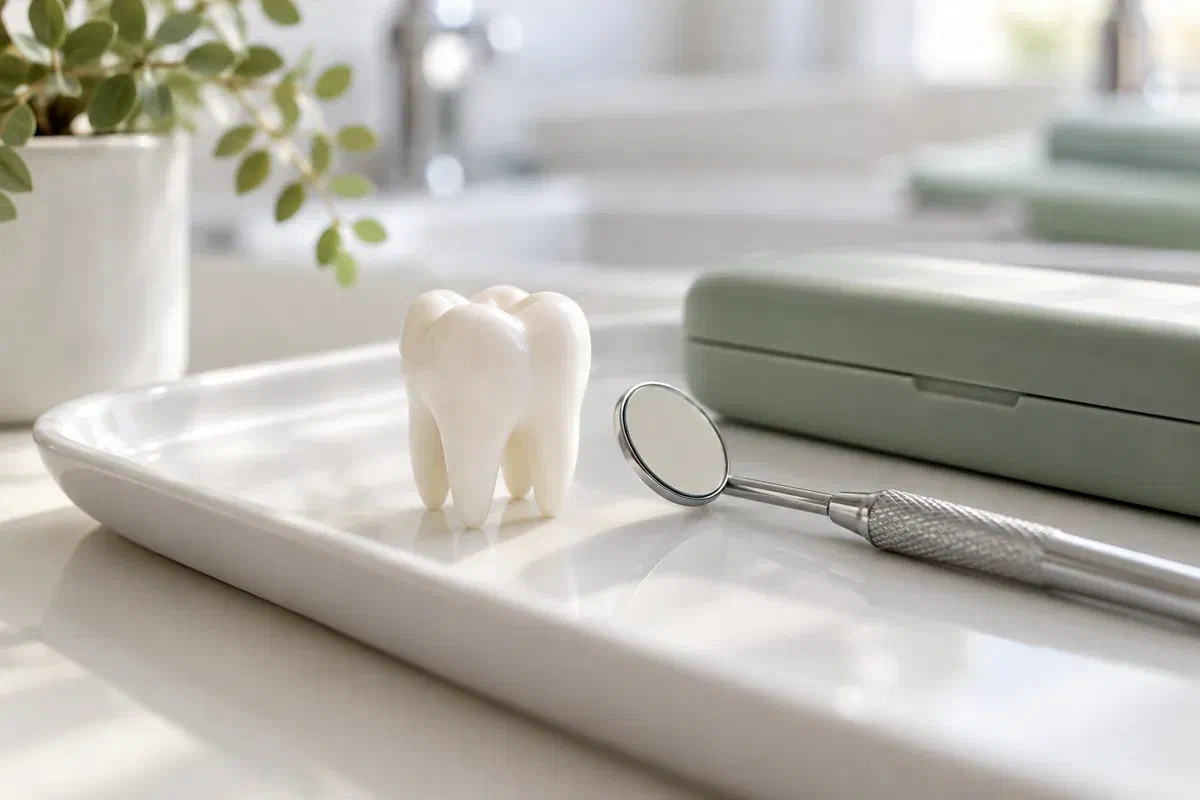
Illustrative opaque molar model and mirror on a clean dental tray
Telling us the whole story

Mention the fear as well as the toothache.

Your child’s history, past experiences, an examination and suitable X-rays all guide the plan. A child who stays quiet in the chair may still have had days of pain at home.

Pain your child may not describe in the chair

Anxious children often say “it’s fine” once they arrive. Tell us when the pain began, whether it occurs without eating, whether it breaks their sleep, and which medicines helped. Your account fills the gap.

Swelling or drainage that seemed to pass

A bump on the gum, a nasty taste, discharge or a puffy face should be mentioned even if it settled. These need assessment. Avoid squeezing anything, and don’t take drainage as a sign that the cause has gone.

Doubts about how long the tooth will last

The amount of tooth left and the root condition decide whether a pulpectomy is reasonable. Ask how near the tooth is to falling out naturally, especially if a long treatment would be hard on your child.

Seek dental advice promptly for suspected infection. Breathing or swallowing difficulty, swelling that spreads quickly, or a seriously unwell child needs emergency medical care.

Balancing benefit and burden

Is keeping the tooth worth what treatment asks of your child?

In a well-selected primary tooth, a pulpectomy aims to manage diseased pulp and help the tooth stay and function. Root condition is an important part of that selection. Removal is a real alternative and deserves an equal hearing.

Success is not something any dentist can guarantee. Ask about this tooth’s outlook, what treatment cannot do, and what might happen if pain or swelling persisted. For a child who finds dental care stressful, that conversation helps you avoid an approach that could mean more visits for little gain.

Patient information: AAPD — non-vital pulp therapies in primary teeth

What the tooth offers in its remaining years

Ask how this tooth helps with chewing and with the teeth developing nearby. Then think honestly about how many appointments your child can manage and whether the restoration and reviews can be completed.

The repair on top is part of the job

Treating the canals doesn’t rebuild the damaged surface, so a final restoration is essential. Ask whether it can be placed in the same visit, which may matter for a child who finds appointments difficult.

A record that tracks progress

Clinical notes and suitable X-rays let the dentist compare the tooth over time. Ask when the first follow-up is planned, and keep sharing what you notice about eating and comfort.

Going at your child’s pace

Explain, prepare, treat, rebuild

Some children manage treatment in one sitting; others need it broken up or provided with more support. We can talk about what setting would suit your child best.

  1. Talk it through before anything starts

    The dentist reviews symptoms, examination, root findings and restorability, then explains alternatives and the expected outlook. Ask whether specialist care would suit your child and what would happen if the findings changed during treatment.

  2. Plan comfort around your child

    Local anaesthetic and isolation are arranged to suit the case. Agree on a stop signal your child can use, and tell us beforehand about past difficult visits, sensory sensitivities, health conditions or other support needs.

  3. Treat the canals

    Diseased pulp is removed, the canals are cleaned with suitable techniques, and a resorbable filling designed for primary teeth is placed. The method depends on the tooth, and it is strictly clinical work.

  4. Rebuild and arrange reviews

    The tooth is sealed and restored, sometimes with a crown, and imaging may record the result where indicated. Make sure any remaining visit, the aftercare instructions and the review date are clear before you leave.

A gentle recovery

Reassure, supervise, and keep the next visit in view.

Ask what your child might feel after their specific treatment. Everyone caring for them should know any food limits, medicine advice and upcoming appointments.

Calm supervision while the numbness fades

A numb mouth can feel strange or upsetting. Reassure your child and stop them chewing their lip or cheek until feeling returns. Follow the food and drink advice, and use only pain medicine appropriate for their age, weight and health.

Protecting the temporary repair

If treatment is staged, ask how to look after the temporary filling and when to return. Tell us promptly about a lost filling, loose crown or food trap. Don’t use household glue, and keep the final appointment even when your child would rather skip it.

Short, regular reviews

Comfort is encouraging but does not prove success. Keep the recommended clinical and X-ray reviews; routine visits can also help a nervous child grow more at ease. Ask about prevention for the other teeth.

Patient information: AAPD — local anaesthesia and pediatric aftercare

Options to compare

There is more than one reasonable path.

Ask how the diagnosis, the roots, the tooth’s remaining structure and the demands of each visit shape the advice. Alternatives should be easy to compare.

When the tooth qualifies

Canal treatment with a restoration on top

A pulpectomy may be recommended if the pulp calls for it and the tooth is restorable with a reasonable outlook. Ask about the prognosis and the reviews involved. It should not be chosen only to avoid an extraction.

When the findings suggest another route

A different pulp procedure or a specialist’s view

Healthy pulp in the roots may suit a different treatment, and some cases, including children who need more support, benefit from a specialist. Ask why the recommended option fits. The two pulp treatments aren’t interchangeable.

When keeping the tooth looks unlikely to work

Extraction and a check on the space

Removal may be better if the tooth cannot be restored, the roots have changed markedly, or other findings argue against it. Ask whether the gap should be reviewed later; a space maintainer is decided individually.

Questions from worried parents

Comfort, support and what to expect

Bring any treatment plan or images from earlier visits. They help us understand what has already been suggested.

(905) 876-4488
My child had a bad experience before. How do we prepare?
Tell us about it when you book, including what upset them. We can discuss pacing, explanations and comfort measures, and whether a referral to a setting with more support options would be wiser.
Are sedation or general anaesthesia options for a pulpectomy?
Some children need more support than local anaesthetic, and those options are usually provided in a specialist or hospital setting. Ask whether a referral would be appropriate for your child.
Should I stay in the room during treatment?
Many children feel calmer with a parent nearby, and others settle better without one. Ask the team what usually works and share what you know about your child.
Will my child feel the procedure?
Local anaesthetic is used to numb the area in most cases. Your child may feel pressure or vibration. Agree on a signal so they can tell the team if something feels uncomfortable.
Is it better to remove the tooth if my child is very anxious?
Anxiety is one factor among several. The tooth’s condition, its remaining time and the treatment involved all matter. The dentist should explain how each option would affect your child, not just the tooth.
We are in Halton Hills. Can a nervous child’s visits be kept short?
Ask whether treatment can be staged or timed to suit your child, keeping in mind travel and school. The dentist will advise what is safe and practical for the tooth involved.
Halton Hills appointments

Start with a conversation, not the chair.

Speak with our Bronte Street practice about your child’s symptoms, their worries, or a pulpectomy someone has suggested. We can explain the assessment, discuss keeping or removing the baby tooth, and advise when a referral might help.

Recommendations follow an examination and suitable X-rays. Call us if swelling appears or pain is getting worse.

Visit Milton Dental Clinic
Unit 1, 342 Bronte St. S, Milton, ON L9T 5B7
Get directions Clinic hours
Monday–Thursday
11am–7pm
Friday–Sunday
By appointment only

Areas we serve

  • Milton
  • Oakville
  • Mississauga
  • Georgetown
  • Halton Hills
  • Acton
  • Campbellville
  • Brampton
  • Burlington
  • Puslinch
  • Rockwood
  • Erin
  • Caledon
  • Etobicoke
  • Old Milton
  • Bronte Meadows
  • Timberlea
  • Dorset Park
  • Dempsey
  • Clarke
  • Beaty
  • Coates
  • Harrison
  • Scott
  • Willmott
  • Ford
  • Bowes
  • Cobden
  • Walker
  • Mountain View
  • Milton Heights
  • Hawthorne Village
  • Valley View
  • Fallingbrook
  • Nassagaweya
  • Trafalgar
  • Esquesing
  • Nelson
  • Brookville
  • Moffat
  • Glen Williams
  • Norval
  • Limehouse
  • Stewarttown
  • Ashgrove
  • Hornby
  • Silver Creek
  • Speyside
  • Scotch Block
  • North Oakville
  • River Oaks
  • Glen Abbey
  • West Oak Trails
  • Palermo
  • Bronte Creek
  • College Park
  • Joshua Creek
  • Uptown Core
  • Preserve
  • Iroquois Ridge
  • Lisgar
  • Meadowvale
  • Meadowvale Village
  • Churchill Meadows
  • Erin Mills
  • Central Erin Mills
  • Streetsville
  • East Credit
  • Creditview
  • Heartland
  • Sheridan
  • Mount Pleasant
  • Credit Valley
  • Huttonville
  • Churchville
  • Springbrook
  • Northwest Brampton
  • Bram West
  • Fletcher's Meadow
  • Fletcher's Creek South
  • Alton Village
  • Orchard
  • Millcroft
  • Headon Forest
  • Tansley
  • Brant Hills
  • Tyandaga
  • Kilbride
  • Lowville
  • Aberfoyle
  • Morriston
  • Arkell
  • Hillsburgh
  • Freelton
  • Carlisle
  • Waterdown
  • Flamborough
  • Mountsberg

How can we help?

Milton Dental Clinic

Have a question about your smile? Choose the option that works best for you.

For urgent dental concerns, please call.
Messages are reviewed during clinic hours.