

Illustrative child and father discussing a tooth model with a dental clinician
Children’s Dentistry

Pediatric Pulpotomy in Milton

Heard the word “pulpotomy” at your child’s dental visit and not sure what it means? Here is how this baby-tooth treatment works in Milton, who it suits, why part of the pulp is kept, and how the tooth is sealed and checked later.

Making sense of a new word

A pulpotomy treats the top of the pulp and tries to keep the rest alive.

Inside every tooth is soft tissue called the pulp, which runs from the crown down into the roots. During a pulpotomy on a suitable baby tooth, the dentist removes only the part sitting in the crown and aims to leave healthy living pulp in the roots. That makes it different from an ordinary filling, and different again from treatment that clears pulp from the whole root canal.

A deep cavity on its own does not settle the question. Your dentist looks at how the tooth has been behaving, what the examination and X-rays show, whether enough of the tooth remains to restore, and what is actually seen once treatment begins. Any of these can point toward another plan.

Many young households in Milton first hear the term at a routine checkup, often with no warning signs at home. You are welcome to ask for the reasoning before anything starts: why keeping this baby tooth is worth considering, how the visit will be arranged for your child, and how the tooth will be repaired and followed afterward.

Ask about a recommended pulpotomy
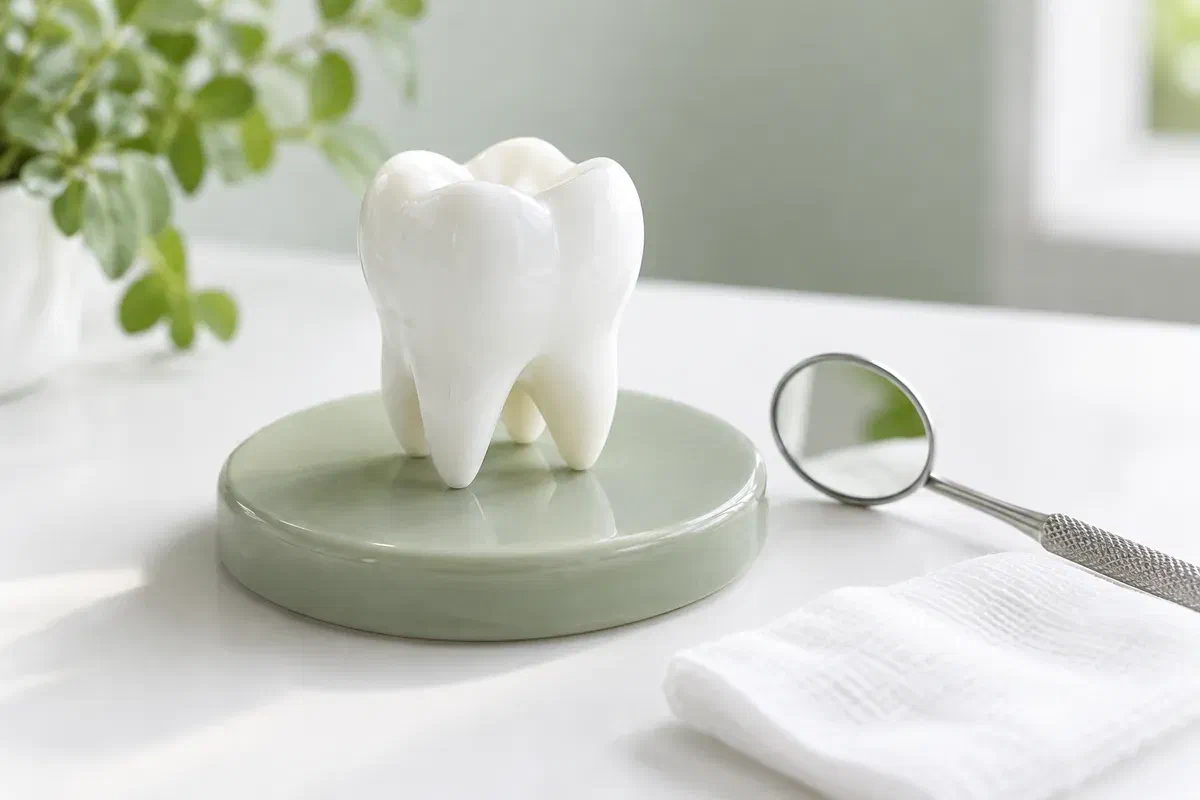
Illustrative solid primary molar model beside a dental mirror and gauze
What you have noticed at home

Your observations are part of the diagnosis.

Share what your child has been feeling, even on a day when nothing hurts. A single symptom, or a photo of the tooth, cannot show on its own whether a pulpotomy is the right fit.

Aching that arrives out of nowhere

Let the dentist know about pain that begins without a cause, interrupts sleep, or lingers well after a meal or drink. Note how long each episode lasts and what eases it. That history can shape the diagnosis and whether keeping the root pulp is a realistic aim.

A bump on the gum, puffiness, or a wobbly tooth

Mention any pimple-like spot near the tooth, discharge, swelling of the face, or looseness that does not match normal tooth loss. Each of these needs an examination and may suggest a different treatment. A bump that fades away has not necessarily healed underneath.

How much tooth is left, and how long it has to stay

A baby molar can still matter for chewing and for the way the mouth develops. The dentist weighs whether it can be properly rebuilt and how long it is likely to remain before its natural loss. Saving it only makes sense when the treatment has solid clinical grounds.

Phone the clinic soon if pain or swelling is getting worse. Trouble breathing or swallowing, swelling that is spreading across the face, or a child who appears very ill needs emergency medical care right away.

Why the dentist may suggest it

Keep the roots healthy and the tooth working.

For a carefully chosen baby tooth, the goal is to keep the remaining root pulp healthy so the tooth can go on doing its job. Because living tissue is being preserved, this counts as vital-pulp treatment. It is not a cure-all for a tooth whose roots are already infected throughout.

How well it works depends on the diagnosis, the conditions during treatment, the material placed, the quality of the restoration, and follow-up visits. Ask which findings support the plan and what might change it. Even a smooth appointment still needs checking over the following months and years.

Patient information: AAPD — vital pulp therapies in primary teeth

A clear case for this particular tooth

Your dentist can describe what this baby tooth is doing for your child right now. Ask how treating it compares with taking it out, and whether losing it early would call for a separate look at spacing. The conversation should be about this tooth, not a general rule.

A tight seal on top of the treatment

The restoration placed over the treated pulp guards against leakage and further breakdown. Depending on the tooth and how far the decay has gone, a crown may be suggested. Ask how the two steps connect and whether both can be done at one appointment.

A plan for checking how it holds up

Scheduled examinations and X-rays help the dentist see how the treated tooth and the bone around it are doing. You should leave knowing which signs mean calling sooner. These reviews are built into the plan from the start, not saved for a tooth that hurts.

The appointment, step by step

From diagnosis to a sealed, restored tooth.

The details depend on your child and on what the tooth shows. Ask what to expect and how the team would talk with you if something unexpected turned up before going further.

  1. Go over the findings and the other choices

    The dentist reviews the history, the examination and any images, then explains why a pulpotomy is being proposed, what restoration will follow, and which alternatives are reasonable. You also agree on a comfort plan and whether a specialist or another setting would suit your child better.

  2. Freeze the tooth and keep it dry

    Local anaesthetic and proper isolation create the right conditions for the work. Your child hears what they might feel and how to let the team know something is wrong. Encourage them to speak up about pain or worry instead of staying quiet.

  3. Remove the crown pulp and look closely

    The clinician takes out the pulp in the crown and checks the tissue that remains. If it does not look right for the planned treatment, a different approach may be needed. When it is suitable, a material is placed over the root pulp to support it.

  4. Rebuild the tooth and talk about home care

    A proper restoration is placed after the pulp work. Ask whether the repair is finished or another visit is needed. Before you go, the team covers eating, numbness, pain relief and when the tooth will next be checked.

The hours and weeks afterward

Look after the repair and keep each review.

Follow the guidance given for your child’s treatment and for any anaesthetic or sedation support. If another adult will be caring for your child later that day, ask the team to explain anything you need to pass on.

Watch closely until the numbness wears off

A numb lip, cheek or tongue is easy for a child to chew without realising the damage. Keep an eye on them and follow the advice about food until normal feeling returns. Give pain medicine only as recommended for your child’s age, weight and health.

Ask how chewing feels

Once your child is back to normal meals, check in about the tooth. Let the clinic know if the bite feels off, if pain stays or grows, or if the restoration chips or breaks. Real discomfort is not something a child should simply put up with.

Keep brushing and keep appointments

Help your child clean carefully around the repaired tooth. Treated teeth can still run into trouble, and the other teeth still need protecting. Bring your child to the planned examinations and X-rays even when they feel fine and the tooth looks normal.

Patient information: AAPD — local anaesthesia in pediatric dental care

Other ways to treat a deep cavity

The health of the pulp points to the right treatment.

For each option, ask what it would accomplish and why it does or does not suit this tooth. A smaller procedure is not always enough, and a bigger one is not always the better choice.

When healthy tissue can reasonably be saved

Treatment that keeps living pulp

Depending on what the dentist finds, indirect pulp treatment or a pulpotomy might be offered. They are separate procedures used in different situations. Ask why the suggested one fits this tooth’s condition rather than picking based on the name.

When the root pulp cannot be kept as hoped

Pulpectomy or other pulp treatment

A restorable baby tooth with wider pulp disease may need treatment that reaches into the root canals. That reflects a different diagnosis and a different procedure. The state of the roots and other findings decide whether it is a sensible choice.

When keeping the tooth is not advisable

Removal with an eye on development

Taking the tooth out may be advised if it cannot be properly restored or its outlook is poor. Ask how the gap will be handled and whether spacing or the incoming adult tooth should be watched. A referral can help when the situation is more involved.

Pulpotomy questions from parents

Answers about the procedure and what follows it.

Many dental terms sound alike. Ask your child’s dentist to walk you through the recommendation using the actual tooth, X-rays and findings.

(905) 876-4488
What is the difference between a pulpotomy and a regular filling?
A filling repairs a cavity that has not reached the pulp. A pulpotomy is chosen when decay has reached the pulp in the crown of a baby tooth; that portion is removed and the root pulp is kept where suitable. A restoration is still placed afterward.
Is a pulpotomy the same thing as a root canal for a child?
Not quite. A pulpotomy removes only the pulp in the crown and aims to keep the living tissue in the roots. Treatment that clears pulp from the root canals is a separate procedure called a pulpectomy. Your dentist decides which, if either, fits the diagnosis.
How does the dentist decide whether my child’s tooth qualifies?
The decision draws on your child’s symptoms, the examination, X-rays, how much healthy tooth remains, and the roots’ condition. Some teeth need a different pulp treatment, a more extensive approach, or removal. Ask which findings support the recommendation for this tooth.
Will my child need more than one visit?
That depends on the tooth, the planned restoration and how your child copes. The pulp work and final repair sometimes happen together and sometimes need a second visit. Ask the team to outline the sequence.
What happens if the tooth looks different once treatment starts?
Seeing the pulp directly can reveal things the X-rays did not show. If the remaining tissue is not suitable for a pulpotomy, the dentist may need a different approach. Talk through that possibility beforehand so you know how decisions would be handled.
Can we book the follow-up checks with regular Milton cleanings?
Often the review of a treated tooth can be paired with routine visits, which keeps things simple for a local family. Ask the team which checks and images are due, and when, so they fit your child’s usual schedule without being missed.
Children’s pulp care in Milton

Bring your questions, and we will go through them with you.

Get in touch with our Bronte Street practice to book an assessment or to talk about a pulpotomy someone has already suggested for your child. Share earlier advice and any symptoms, and we will explain the next step and what treatment planning would look like.

Treatment depends on the diagnosis and whether the tooth can be restored. For pain or swelling that is happening now, please call instead of waiting on an online message.

Visit Milton Dental Clinic
Unit 1, 342 Bronte St. S, Milton, ON L9T 5B7
Get directions Clinic hours
Monday–Thursday
11am–7pm
Friday–Sunday
By appointment only

Areas we serve

  • Milton
  • Oakville
  • Mississauga
  • Georgetown
  • Halton Hills
  • Acton
  • Campbellville
  • Brampton
  • Burlington
  • Puslinch
  • Rockwood
  • Erin
  • Caledon
  • Etobicoke
  • Old Milton
  • Bronte Meadows
  • Timberlea
  • Dorset Park
  • Dempsey
  • Clarke
  • Beaty
  • Coates
  • Harrison
  • Scott
  • Willmott
  • Ford
  • Bowes
  • Cobden
  • Walker
  • Mountain View
  • Milton Heights
  • Hawthorne Village
  • Valley View
  • Fallingbrook
  • Nassagaweya
  • Trafalgar
  • Esquesing
  • Nelson
  • Brookville
  • Moffat
  • Glen Williams
  • Norval
  • Limehouse
  • Stewarttown
  • Ashgrove
  • Hornby
  • Silver Creek
  • Speyside
  • Scotch Block
  • North Oakville
  • River Oaks
  • Glen Abbey
  • West Oak Trails
  • Palermo
  • Bronte Creek
  • College Park
  • Joshua Creek
  • Uptown Core
  • Preserve
  • Iroquois Ridge
  • Lisgar
  • Meadowvale
  • Meadowvale Village
  • Churchill Meadows
  • Erin Mills
  • Central Erin Mills
  • Streetsville
  • East Credit
  • Creditview
  • Heartland
  • Sheridan
  • Mount Pleasant
  • Credit Valley
  • Huttonville
  • Churchville
  • Springbrook
  • Northwest Brampton
  • Bram West
  • Fletcher's Meadow
  • Fletcher's Creek South
  • Alton Village
  • Orchard
  • Millcroft
  • Headon Forest
  • Tansley
  • Brant Hills
  • Tyandaga
  • Kilbride
  • Lowville
  • Aberfoyle
  • Morriston
  • Arkell
  • Hillsburgh
  • Freelton
  • Carlisle
  • Waterdown
  • Flamborough
  • Mountsberg

How can we help?

Milton Dental Clinic

Have a question about your smile? Choose the option that works best for you.

For urgent dental concerns, please call.
Messages are reviewed during clinic hours.