

Illustrative child and father discussing a tooth model with a dental clinician
Children’s Dentistry

Pediatric Pulpotomy in Rockwood

Spotted a small pimple on your child’s gum beside a baby molar? For families in Rockwood, this page explains what that sign can mean, why it sometimes rules out a pulpotomy, and how dentists decide between keeping the pulp, treating the canals or removing the tooth.

When a gum bump appears

Not every deep cavity is a pulpotomy case.

Parents often notice it during brushing: a small yellowish or red bump on the gum near a decayed baby tooth. It can be a sign that infection has moved beyond the crown, and that changes the conversation. A pulpotomy works on the idea that the pulp in the roots is still healthy. The dentist takes out the pulp in the crown, protects the living root tissue, then seals the tooth.

So the first job is to find out how far the problem reaches. Your description of pain and swelling, the examination, X-rays of the roots and surrounding bone, the amount of tooth left to rebuild, and the pulp’s appearance during treatment all feed into that answer. Sometimes a pulpotomy is still reasonable; often another route is better.

From Rockwood, it makes sense to phone first and describe what you have seen. Once your child is examined, we can explain whether this baby tooth is a good candidate for keeping, how any treatment would be arranged around your child, and what repair and checkups would follow.

Have a gum bump checked
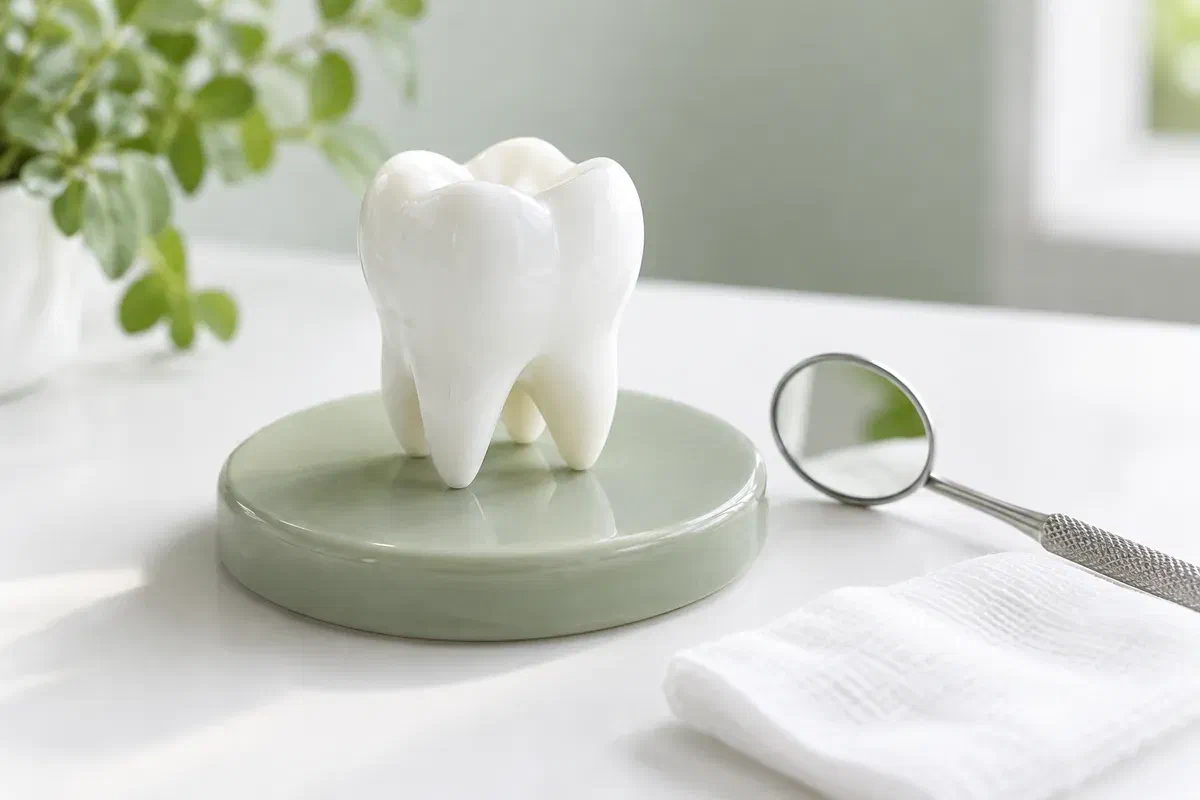
Illustrative solid primary molar model beside a dental mirror and gauze
Signs to report

Some symptoms point away from a pulpotomy

Mention everything you have noticed, including signs that came and went. No single symptom or photograph can decide whether a pulpotomy fits, but some make it less likely.

Pain that is spontaneous or lingering

Aching that begins without a trigger, disturbs sleep, or stays long after food can suggest the pulp is badly inflamed. Share how long it lasts and what helps. These details influence whether keeping the root pulp is realistic.

A gum pimple, drainage or swelling

A bump that oozes, swelling in the cheek or gum, or a tooth loosening early can indicate infection spreading from the pulp. These signs often lead toward a pulpectomy or removal rather than a pulpotomy. If the bump drains and flattens, the infection may still be present.

Remaining tooth and remaining time

The dentist asks how much sound tooth is left to restore and how long the baby tooth should stay. A molar with years ahead may justify more effort; one about to shed may not. Any plan needs a reasonable clinical basis.

Call promptly if swelling or pain is increasing. Facial swelling that spreads, difficulty breathing or swallowing, or a child who seems very ill or feverish needs emergency medical care.

When the tooth does qualify

Protect healthy root pulp and keep the tooth

If examination shows the root pulp is still healthy, a pulpotomy aims to keep it that way, allowing the baby tooth to keep chewing and holding space until it sheds. That is the meaning of vital-pulp treatment. Where infection already reaches through the roots, it is not the right tool.

Success depends on the diagnosis, treatment conditions, material, restoration and follow-up. Ask the dentist which findings make a pulpotomy reasonable for your child and what would rule it out. A tooth that responds well still needs reviews.

Patient information: AAPD — vital pulp therapies in primary teeth

A tooth worth keeping

Ask how this baby tooth contributes to your child’s chewing and spacing, and how keeping it compares with removal. Ask whether early loss would require a space assessment. The reasoning should be specific.

A tight restoration

A well-sealed crown or filling protects the treated pulp from bacteria and supports the tooth. Extensive decay may call for a crown. Ask how the restoration fits the plan and whether it can be placed at the same visit.

Reviews that catch changes early

Examinations and X-rays at planned intervals show whether the tooth and bone stay healthy. Know which signs, such as a new gum bump, should prompt a call before the next review.

If a pulpotomy goes ahead

Confirm, freeze, treat and restore

Details depend on your child and on the findings. Ask what will happen and how the dentist would discuss a change of plan if signs of infection were found during treatment.

  1. Check for infection and discuss choices

    Using your child’s history, the examination and X-rays, the dentist looks for signs that infection has spread beyond the crown pulp. You hear why a pulpotomy is or is not proposed, which restoration would follow, and the alternatives, along with comfort plans and whether referral would help.

  2. Numbness and isolation

    Local anaesthetic numbs the area, and the tooth is kept clean and dry. Your child learns what to expect and how to signal for a pause. Encourage them to say when something hurts.

  3. Look closely at the pulp

    After the crown pulp is removed, the dentist inspects what remains. Signs that the root pulp is unhealthy can lead to a different treatment. If the tissue looks suitable, a protective material is placed over it.

  4. Seal and give instructions

    A restoration closes the tooth. Ask whether it is final. Before leaving, you will go over eating, numbness, pain relief, warning signs and the review schedule.

Watching for warning signs

Keep an eye on the gum as well as the tooth

Follow the instructions for whichever treatment your child received, plus advice for any anaesthetic support. Share the warning signs with anyone else who looks after your child.

While the area is numb

Children can bite a numb lip, cheek or tongue without feeling it. Supervise closely and follow the food advice until sensation returns. Pain relief should be given only as advised for your child.

Over the next few days

Ask how the tooth feels as normal eating returns. Call about a bite that feels wrong, pain that lingers or worsens, or a damaged restoration. Significant discomfort should be reported.

During brushing, every day

Help your child brush around the restored tooth and look at the gum beside it. A treated tooth can still develop problems, and other teeth still need prevention. Keep planned reviews and X-rays even if all seems well.

Patient information: AAPD — local anaesthesia in pediatric dental care

If infection is involved

Choosing between keeping, treating and removing

Ask what each option would achieve and why the dentist favours one for this tooth. A gentler approach is not always sufficient, and a more extensive one is not always an upgrade.

If the root pulp is still healthy

Vital-pulp treatment

Where there is no sign of infection beyond the crown, the dentist may discuss a pulpotomy or indirect pulp treatment. These are different procedures. Ask why the one suggested suits your child’s tooth.

If infection reaches the root pulp

Pulpectomy

A baby tooth that can still be restored but has infection deeper in the pulp may be treated by cleaning and filling the canals. Root condition and bone findings decide whether this is a reasonable option.

If the tooth cannot be saved

Extraction

When infection is extensive or the tooth cannot be rebuilt, removal may be recommended. Ask how the space will be managed and whether the adult tooth underneath should be monitored. Referral can help with complex cases.

Questions about gum bumps

What the bump means, and what comes next

Ask the dentist to explain the findings using your child’s own tooth, gum and X-rays.

(905) 876-4488
What is the small bump on my child’s gum near a decayed tooth?
It is often a sign that infection from the tooth is draining through the gum, sometimes called a gum boil or fistula. It needs an examination. It may mean the pulp problem has gone beyond what a pulpotomy can treat.
The bump went away on its own. Is the problem gone?
Not necessarily. These bumps can drain and flatten while the infection remains. Tell the dentist about it even if it has disappeared, so the tooth and surrounding bone can be assessed.
Can a pulpotomy still be done if there is a gum bump?
Usually a gum bump suggests the root pulp is not healthy, which makes a pulpotomy less suitable. The dentist will look at the X-rays and examination findings and explain which options remain reasonable.
Could infection in a baby tooth affect the adult tooth underneath?
Infection around a baby tooth can affect surrounding tissues, which is one reason dentists take it seriously. Ask what the X-rays show and whether the developing tooth needs monitoring.
Are antibiotics enough to fix an infected baby tooth?
Antibiotics may be used in some situations, but they do not remove the source of infection inside the tooth. Treatment of the tooth itself is usually needed. Your dentist or physician can explain when antibiotics are appropriate.
Should we call before driving in from Rockwood about a gum bump?
Yes. Describing the bump, any swelling and how your child is feeling helps the team advise on timing. For spreading swelling, fever with a very unwell child, or trouble breathing or swallowing, seek emergency care nearby.
Children’s dental care for Rockwood

Find out what the bump means

Phone our Bronte Street practice to describe what you have noticed and book an examination, or to discuss a pulpotomy that has been suggested for your child. Bring earlier advice and we will explain the findings and the options that make sense.

Treatment depends on diagnosis and whether the tooth can be restored. For swelling or pain happening now, please call rather than sending an online request.

Visit Milton Dental Clinic
Unit 1, 342 Bronte St. S, Milton, ON L9T 5B7
Get directions Clinic hours
Monday–Thursday
11am–7pm
Friday–Sunday
By appointment only

Areas we serve

  • Milton
  • Oakville
  • Mississauga
  • Georgetown
  • Halton Hills
  • Acton
  • Campbellville
  • Brampton
  • Burlington
  • Puslinch
  • Rockwood
  • Erin
  • Caledon
  • Etobicoke
  • Old Milton
  • Bronte Meadows
  • Timberlea
  • Dorset Park
  • Dempsey
  • Clarke
  • Beaty
  • Coates
  • Harrison
  • Scott
  • Willmott
  • Ford
  • Bowes
  • Cobden
  • Walker
  • Mountain View
  • Milton Heights
  • Hawthorne Village
  • Valley View
  • Fallingbrook
  • Nassagaweya
  • Trafalgar
  • Esquesing
  • Nelson
  • Brookville
  • Moffat
  • Glen Williams
  • Norval
  • Limehouse
  • Stewarttown
  • Ashgrove
  • Hornby
  • Silver Creek
  • Speyside
  • Scotch Block
  • North Oakville
  • River Oaks
  • Glen Abbey
  • West Oak Trails
  • Palermo
  • Bronte Creek
  • College Park
  • Joshua Creek
  • Uptown Core
  • Preserve
  • Iroquois Ridge
  • Lisgar
  • Meadowvale
  • Meadowvale Village
  • Churchill Meadows
  • Erin Mills
  • Central Erin Mills
  • Streetsville
  • East Credit
  • Creditview
  • Heartland
  • Sheridan
  • Mount Pleasant
  • Credit Valley
  • Huttonville
  • Churchville
  • Springbrook
  • Northwest Brampton
  • Bram West
  • Fletcher's Meadow
  • Fletcher's Creek South
  • Alton Village
  • Orchard
  • Millcroft
  • Headon Forest
  • Tansley
  • Brant Hills
  • Tyandaga
  • Kilbride
  • Lowville
  • Aberfoyle
  • Morriston
  • Arkell
  • Hillsburgh
  • Freelton
  • Carlisle
  • Waterdown
  • Flamborough
  • Mountsberg

How can we help?

Milton Dental Clinic

Have a question about your smile? Choose the option that works best for you.

For urgent dental concerns, please call.
Messages are reviewed during clinic hours.