

Illustrative child and parent discussing a silver-crowned tooth teaching model
Children’s Dentistry

Pediatric Stainless Steel Crowns in Halton Hills

A small silver cap turns up in a lunch container or on a pillow. If your child’s crown has worked loose, or one is being recommended, this page explains how stainless steel crowns for baby molars are placed, cared for and checked, for households across Halton Hills.

Crowned baby molars in Halton Hills

A silver cap, a tissue, and a phone call

Plenty of parents learn what a stainless steel crown is only after one comes off. It shows up wrapped in a napkin from school, and suddenly there are questions about whether it matters, whether it can go back on and what it was doing there in the first place.

Here is the short version. These crowns are factory-shaped metal caps made for children’s back teeth. The dentist picks one that matches the tooth and cements it over the part of a back baby tooth that sits above the gum, so the top and all sides are enclosed. It looks silver. It is usually chosen for a primary molar that decay, breakage or nerve treatment has left too weak for a filling.

A first recommendation and a crown that has just come out call for the same conversation. Ask the dentist what the tooth needs, which options suit it and how it will be watched over time. From Georgetown, Acton or Glen Williams, it is worth asking how visits can be grouped.

Call about a new or loose crown
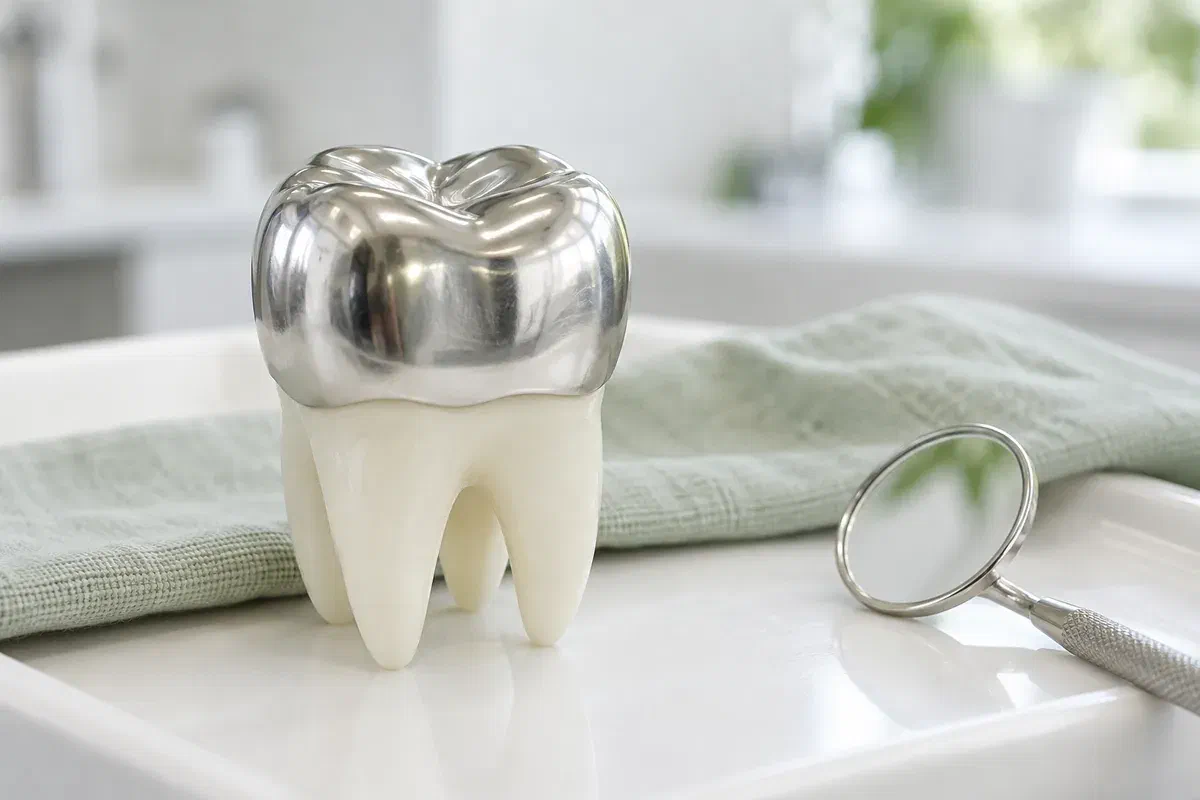
Illustrative molar teaching model with a smooth stainless steel crown
Why baby molars get crowned

Three common reasons behind the recommendation

The right repair depends on the reach of the decay, the surfaces involved and whether the nerve has been affected. Tell the dentist about symptoms and any treatment the tooth has had.

Damage on several surfaces at once

When decay or fractures spread across two or more sides, a filling may lack enough healthy tooth to hold on to. Mention any repair that broke or was redone. The dentist can tell you whether wrapping the tooth would serve it better.

Finishing after pulp therapy

Pulpotomy and pulpectomy care for the living tissue inside a baby tooth. Sealing and protecting the outside is another stage. Ask whether a crown is part of completing that work, since a pain-free tooth may still be left exposed without it.

Metal allergy, sensory needs and appearance

Let the clinician know of any reaction to nickel or other metals. Describe sensory sensitivities, how your child communicates discomfort and whether a silver tooth troubles them. These details shape the material and how treatment is carried out.

Pain, gum swelling or a recurring bump near the tooth may signal an issue a crown cannot cover over. Say so when you phone so the visit is set up to investigate it.

What the crown is there to do

Hold the tooth together until it is ready to go

Because the cap surrounds the whole visible tooth, it can support a baby molar that is weak in several places at once. It is commonly used after extensive decay or nerve treatment, though only once the diagnosis points that way.

Its job is to see the tooth through to its natural loss. It is not indestructible. Cement can give way, metal can wear thin and the tooth underneath can still run into problems, which is why the crown is checked at reviews and cleaned daily like any other tooth.

Patient information: AAPD — restorative dentistry for children

Protection when little enamel is left

Ask which surfaces were damaged and why a filling was not enough. Building out a large filling across fragile walls can be less dependable. The reasoning should relate to how the tooth is built and how much chewing it handles.

Space kept for what comes next

A baby molar that stays in place can guide the adult tooth forming beneath it. The expected timing of natural loss shapes the plan. Ask whether that timing, or the adult tooth’s development, changes what the dentist suggests.

A piece of an overall care plan

Often a crown is one of several treatments. Find out which teeth are involved and how appointments will be arranged. Prevention guidance should be part of it too, so the rest of the mouth is cared for after the crown is done.

Placing, or replacing, a crown

How the appointment is put together

Preformed crowns can go on in more than one way, and a crown that came off may be recemented or replaced. Ask what is planned and why.

  1. Look at the tooth and decide

    The dentist asks what has happened, examines the tooth and gum and arranges X-rays only where clinically warranted. If a crown has come off, the tooth underneath is checked too. You then talk through restoring it, alternatives, appearance, allergies and comfort.

  2. Get the tooth ready

    For conventional placement, the area is generally numbed, decay is cleared and the tooth is trimmed. Some primary molars that meet strict criteria may be done with the Hall technique. Neither method is assumed; the choice follows the findings.

  3. Fit and cement

    A crown of suitable size is tried on, its fit is assessed and it is fixed with dental cement. Steps vary by tooth and method. Settle on a hand signal your child can use to pause, and the team will describe anything unfamiliar.

  4. Bite, instructions and next review

    Before you go, ask how biting may feel over the coming days and what would warrant a call. Note any advice about numbness and the review date. If other teeth are still waiting, confirm when they will be seen.

Everyday care for a crowned tooth

What to watch for, and what to do if it lets go

Use the guidance given for the technique and any freezing. If a grandparent, sitter or teacher looks after your child, share the key points with them, including what to do if the crown comes out.

Go gently on the first day

Follow the clinician’s advice about eating. While the mouth is numb, children can nip their lip, cheek or tongue without realising, so watch closely. Ask which pain relief is appropriate; pain that is strong or getting worse should be reported.

Keep the gum line clean

Plaque gathers where crown meets gum and on the neighbouring teeth. Brush there every day, helping as much as your child’s age calls for, and floss as advised. If a spot keeps trapping food, ask the team to take a look.

If it wobbles, cracks or comes out

Phone the clinic when the crown feels loose, comes off or appears worn through. Put a crown that has come out in a small lidded container. Do not use any glue or press it back on, and do not leave it sitting loose in the mouth.

Patient information: Guy’s and St Thomas’ — stainless steel crowns for children

Choices for a damaged baby molar

Recement, replace, or rethink?

For a new recommendation or a crown that came off, compare the preparation, look, follow-up and limits of each suitable choice. A white restoration is not always realistic for a badly damaged tooth.

When full coverage still fits the tooth

Stainless steel crown

A metal crown may be placed, recemented or replaced on a damaged or treated primary molar. Expect an explanation of the method and any material concerns. Once cemented, it is meant to stay on, not come off for meals.

When another restoration fits better

Filling or an alternative crown

Less extensive damage may suit a direct filling, and a different crown material can be considered in certain cases. Appearance, remaining tooth, what placement involves and your child’s needs all feed in. Ask which options are genuinely open.

When the problem lies beneath

Further treatment or removal

If the nerve is affected, treatment inside the tooth may come first. A molar that cannot be restored may need to be taken out. Ask how the findings narrow the choices. If a tooth comes out early, the dentist can tell you whether anything is needed to keep room for its replacement.

Loose crowns and other questions

What to know when a crown surprises you

Most families have the same few questions once a crown is on, and a few more when one comes off. Here are some answers to start with.

(905) 876-4488
My child’s crown came off. How urgent is it?
Phone for advice soon, and keep the crown somewhere safe in the meantime. An exposed tooth can be more sensitive or more likely to break, so try not to leave it for weeks. If your child has pain, swelling or the tooth looks broken, say so; that may change how quickly they should be seen.
Can the same crown be put back on?
Sometimes, if the tooth and crown are both in good condition. The dentist will check before deciding whether to recement it, replace it or do something different.
What if my child swallowed the crown?
Let the clinic know what happened so the dentist can advise you. If your child is coughing, choking, has difficulty breathing or seems unwell, seek emergency medical care straight away.
Why would a stainless steel crown come loose?
Cement can wear over time, sticky foods can pull at it and the tooth underneath can change. The dentist will look for the cause when they examine it.
Does a crown mean my child is protected from other cavities?
No. It covers one tooth. Keep helping with brushing, use fluoride as advised and attend regular checkups for the rest of the mouth.
Can we book the crown check alongside another family appointment from Halton Hills?
Ask when you call. Grouping visits can save trips for households across Georgetown, Acton and the hamlets, as long as the timing suits what the tooth needs.
Crown care for children in Halton Hills

New crown or loose one, start with a call.

Phone our Bronte Street practice about a crown you have been advised to consider, one that has worked loose, or a back baby tooth that keeps chipping or decaying. We will look at the tooth, explain what it needs and how that fits with the rest of your child’s care.

Treatment depends on assessment. Mention pain, swelling, a swallowed crown or known metal allergies when you call.

Visit Milton Dental Clinic
Unit 1, 342 Bronte St. S, Milton, ON L9T 5B7
Get directions Clinic hours
Monday–Thursday
11am–7pm
Friday–Sunday
By appointment only

Areas we serve

  • Milton
  • Oakville
  • Mississauga
  • Georgetown
  • Halton Hills
  • Acton
  • Campbellville
  • Brampton
  • Burlington
  • Puslinch
  • Rockwood
  • Erin
  • Caledon
  • Etobicoke
  • Old Milton
  • Bronte Meadows
  • Timberlea
  • Dorset Park
  • Dempsey
  • Clarke
  • Beaty
  • Coates
  • Harrison
  • Scott
  • Willmott
  • Ford
  • Bowes
  • Cobden
  • Walker
  • Mountain View
  • Milton Heights
  • Hawthorne Village
  • Valley View
  • Fallingbrook
  • Nassagaweya
  • Trafalgar
  • Esquesing
  • Nelson
  • Brookville
  • Moffat
  • Glen Williams
  • Norval
  • Limehouse
  • Stewarttown
  • Ashgrove
  • Hornby
  • Silver Creek
  • Speyside
  • Scotch Block
  • North Oakville
  • River Oaks
  • Glen Abbey
  • West Oak Trails
  • Palermo
  • Bronte Creek
  • College Park
  • Joshua Creek
  • Uptown Core
  • Preserve
  • Iroquois Ridge
  • Lisgar
  • Meadowvale
  • Meadowvale Village
  • Churchill Meadows
  • Erin Mills
  • Central Erin Mills
  • Streetsville
  • East Credit
  • Creditview
  • Heartland
  • Sheridan
  • Mount Pleasant
  • Credit Valley
  • Huttonville
  • Churchville
  • Springbrook
  • Northwest Brampton
  • Bram West
  • Fletcher's Meadow
  • Fletcher's Creek South
  • Alton Village
  • Orchard
  • Millcroft
  • Headon Forest
  • Tansley
  • Brant Hills
  • Tyandaga
  • Kilbride
  • Lowville
  • Aberfoyle
  • Morriston
  • Arkell
  • Hillsburgh
  • Freelton
  • Carlisle
  • Waterdown
  • Flamborough
  • Mountsberg

How can we help?

Milton Dental Clinic

Have a question about your smile? Choose the option that works best for you.

For urgent dental concerns, please call.
Messages are reviewed during clinic hours.