

Illustrative child and parent discussing a dental arch model with a clinician
Children’s Dentistry

Space Maintainers

An early gap deserves a thoughtful review. Discuss space maintainers in Milton to understand whether your child needs help preserving room for a developing tooth, which approach may be suitable, and how an appliance would be monitored.

A closer look at space maintainers

Plan for the tooth that is still on its way.

When a primary tooth is lost earlier than expected, the neighbouring teeth may change position before its permanent replacement arrives. A space maintainer is an appliance considered in selected situations to help preserve existing room. It is not automatically needed for every gap left by a baby tooth.

At Milton Dental Clinic, the starting point is an assessment of the missing tooth, the surrounding dentition, and the developing replacement. The amount of space, eruption stage, time since tooth loss, and your child's overall needs all help guide the discussion. Sometimes monitoring is appropriate; sometimes further advice or an appliance is considered.

The decision also includes the practical side of care. A space maintainer needs cleaning, checks, and eventual adjustment, replacement, or removal as appropriate. Your family should understand the purpose of the proposed device and the responsibilities involved before agreeing to have one fitted.

Discuss your child’s early tooth loss
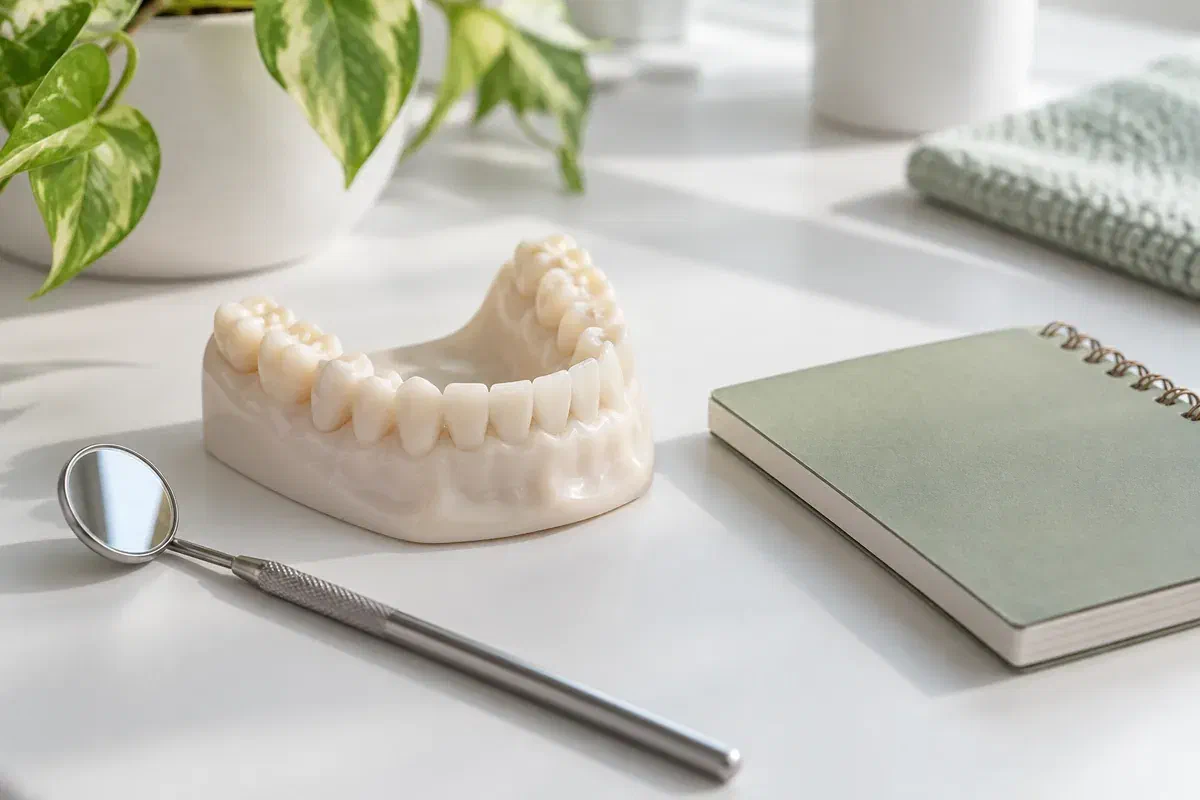
Illustrative lower dental teaching model beside a mirror and appointment notebook
Before deciding whether to maintain space

The timing and the surrounding teeth matter.

Bring details about the tooth loss and any advice already given. You do not need to know whether the gap is large enough or which appliance might be suitable.

Which tooth was lost and when

Tell the dentist whether the tooth was removed, injured, or lost in another way, and approximately when that happened. Share previous records if available. The location and timing help place the gap within the child's current stage of dental development.

The developing permanent replacement

The clinician may need relevant imaging to assess the replacement tooth and surrounding structures. Chronological age alone does not describe eruption timing. Ask what information is needed and how it affects the choice between observation, space maintenance, and another assessment.

Cleaning, cooperation, and wider oral health

An appliance adds areas that need attention at home. Mention brushing difficulties, active decay, oral habits, and any support needs. These details affect whether a device can be cared for reliably and whether another approach would be more appropriate.

If the tooth was lost in a recent injury, arrange the appropriate injury assessment first. A space-maintenance conversation does not replace checking damaged teeth or tissues.

What the appliance is intended to do

Preserve selected space while development is monitored.

A space maintainer generally aims to hold the relative position of existing teeth after an early loss. Its purpose differs from actively moving teeth to regain space that has already narrowed. Ask the clinician to explain which goal applies to your child's mouth.

The possible benefit must be weighed against limitations and appliance problems. A device can loosen, break, collect plaque, or interfere with tissues or eruption if it is not appropriately reviewed. It does not guarantee that the permanent tooth will erupt ideally or that later orthodontics will be unnecessary.

Patient information: AAPD — developing dentition and space maintenance

An explanation of why this particular gap matters

The clinician should connect the recommendation to the tooth that was lost and the developing dentition. Two children of the same age may receive different advice. Ask what change the team is trying to prevent and how the proposed plan addresses it.

A defined review plan during growth

Visits can assess the appliance's condition, the supporting teeth, and the progress of eruption. Confirm who will provide those reviews and when to return. A fitted device should not be left in place indefinitely without someone checking whether it still serves its purpose.

A chance to coordinate further advice

A pediatric dental or orthodontic opinion may be helpful when the pattern is more complex. Ask why referral is suggested and what records can be shared. The goal is an understandable plan that accounts for the whole developing mouth.

From gap assessment to an appliance plan

Confirm the purpose before choosing the design.

A space maintainer is selected for clinical findings and practical needs. Ask whether the proposed design is fixed or removable and what that means for your family.

  1. Review the tooth loss and current development

    The clinician examines the mouth and discusses relevant history and records. Imaging may be indicated to answer specific questions about eruption or supporting teeth. Explain any new discomfort or change in the gap rather than focusing only on its appearance.

  2. Compare observation and suitable appliance options

    Discuss the intended benefit, limitations, and responsibilities of each reasonable approach. Ask whether existing space is being maintained or whether an orthodontic assessment is needed for another goal. Confirm the review plan before proceeding.

  3. Obtain records and fit the selected appliance

    The steps depend on the device, which may require measurements, impressions, or other records. At fitting, the clinician checks how it relates to the teeth and tissues. Your child can ask about unfamiliar sensations and should have a way to report discomfort.

  4. Practise care and arrange monitoring

    Ask for a demonstration of cleaning around the device and any instructions about eating or removable-appliance wear. Confirm what to do if it loosens. The next review should assess both the appliance and the developing tooth, not simply whether the device is still present.

Caring for a space maintainer

Keep the appliance clean and the review schedule current.

Follow the instructions for the specific design fitted. Fixed and removable appliances have different handling requirements, so ask for clarification before making changes at home.

Clean the supporting teeth and appliance areas

Continue helping your child brush and use the cleaning method demonstrated for the device. Ask how to reach around bands, wires, or other components safely. Report a persistently sore or hard-to-clean area rather than leaving it untouched.

Avoid bending, pulling, or repeatedly testing the device

Explain that the appliance should not be played with using fingers or the tongue. Follow advice about foods that could dislodge it. Do not try to tighten a band, reshape a wire, or use household glue if something changes.

Return for fit and eruption checks

Keep planned reviews even when the device feels comfortable. Tell the clinician if a new tooth is appearing or the appliance seems to sit differently. Growth can change what is needed, and removal or adjustment should be planned professionally.

Choosing a plan after early tooth loss

Observation, maintenance, and tooth movement are different decisions.

Ask what each proposed approach is designed to achieve. The appropriate choice depends on the existing space, eruption stage, and wider findings.

When assessment supports observation

Monitoring without an appliance

Some gaps do not need a space maintainer. The clinician may recommend checking eruption and the neighbouring teeth at a defined interval. Ask what would prompt a change in the plan and when an earlier review would be useful.

When preserving existing room is the intended goal

A suitable fixed or removable space maintainer

Different designs serve different situations and carry different care requirements. The choice should reflect the teeth available for support, the developing replacement, oral health, and your child's ability to manage care. An appliance should come with a monitoring plan.

When the issue extends beyond holding an existing gap

Orthodontic or pediatric dental assessment

If space has already changed or the eruption pattern is complex, further assessment may be appropriate. Regaining space or managing alignment involves a different plan. Do not assume a passive maintainer can correct every change that has already occurred.

Questions about preserving room for developing teeth

Know the purpose, the limits, and when to call.

Ask about the individual tooth and the proposed appliance rather than relying on another child's experience. Development and treatment needs vary.

(905) 876-4488
Does every baby tooth lost before its expected time need a space maintainer?
No. The decision depends on the tooth, surrounding space, eruption stage, and other findings. Some children need monitoring only, while others may benefit from an appliance or specialist assessment. Ask the dentist to explain why the recommendation fits your child’s situation.
Can a space maintainer reopen a gap that has already become smaller?
A passive maintainer is generally intended to preserve existing space. Regaining lost space involves a different goal and may require orthodontic assessment. Tell the clinician how the gap has changed so they can determine what information and treatment discussion are appropriate.
How will we know when my child’s space maintainer should be removed?
The clinician reviews eruption and the device’s ongoing purpose at scheduled visits. Removal timing is individual and should not be based only on how long the appliance has been worn. Do not take it out or leave it indefinitely without professional review.
Should we wait for the next routine visit if one side of a space maintainer feels loose?
Call the treating clinic promptly and describe what is moving. A partly loose appliance can need attention before the routine review. Do not repeatedly wiggle it or attempt to cement it yourself, and follow the clinician’s advice about the immediate next step.
Will a space maintainer guarantee that my child never needs braces?
No. It has a specific purpose related to selected space needs. Other aspects of tooth position, growth, and bite development can still require assessment or later treatment. Ask what the appliance can reasonably achieve and what will continue to be monitored.
Can my child stop attending appliance reviews if the gap looks unchanged?
No. Appearance alone does not show whether the supporting teeth, cement, tissues, and developing replacement are all satisfactory. Keep the agreed checks and mention new symptoms or tooth eruption. If attending is difficult, contact the clinic to discuss the follow-up plan.
Space maintainers in Milton

Make the next step after early tooth loss a clear one.

Contact our Bronte Street practice to discuss your child's missing primary tooth or an existing appliance. Bring previous advice and the approximate date of tooth loss so we can plan a useful assessment.

An appliance is not automatically required. Recommendations and referral depend on your child's development and findings.

Visit Milton Dental Clinic
Unit 1, 342 Bronte St. S, Milton, ON L9T 5B7
Get directions Clinic hours
Monday–Thursday
11am–7pm
Friday–Sunday
By appointment only

How can we help?

Milton Dental Clinic

Have a question about your smile? Choose the option that works best for you.

For urgent dental concerns, please call.
Messages are reviewed during clinic hours.