
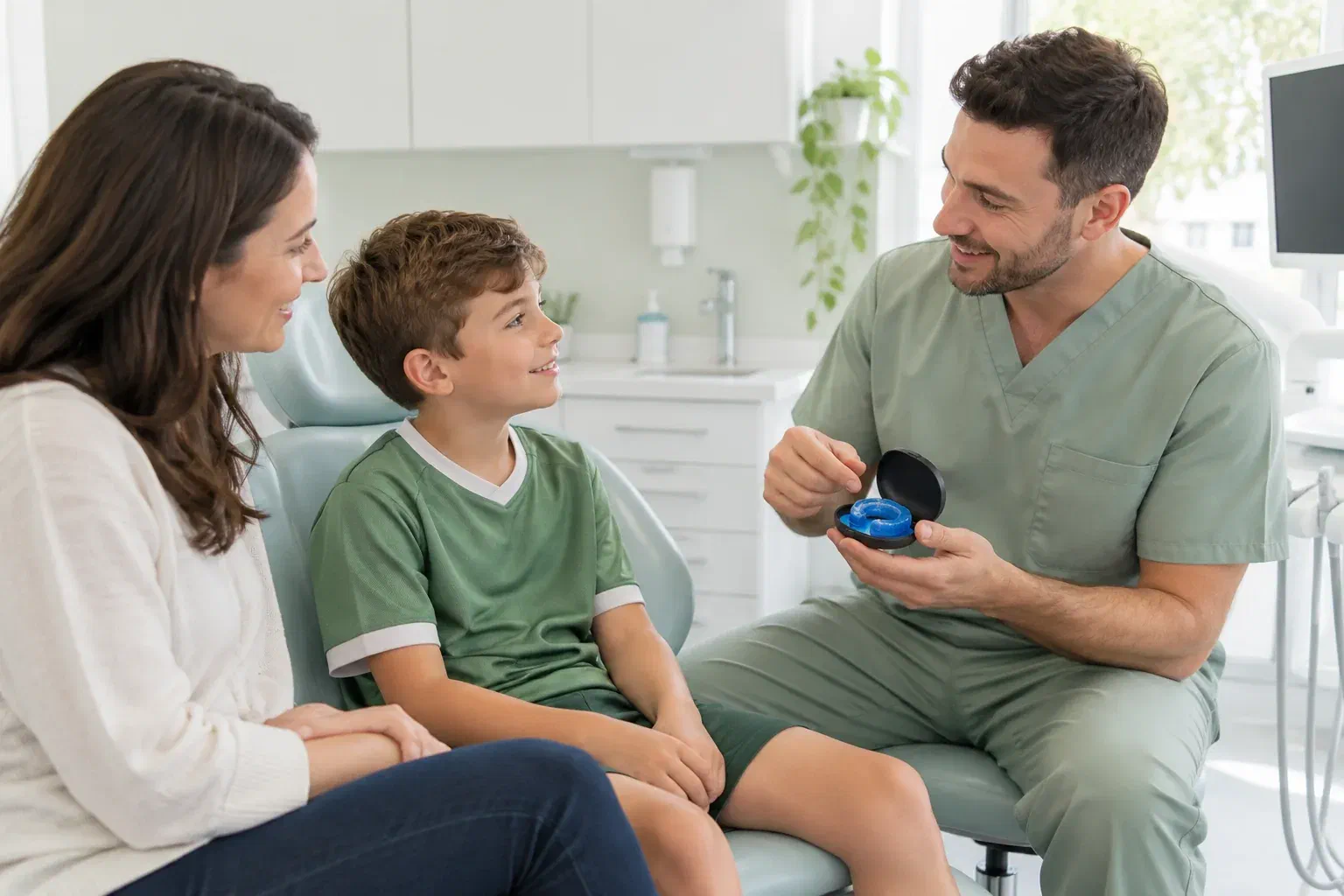
Illustrative young athlete and parent discussing a sports mouthguard with a clinician
Children’s Dentistry

Sports Mouthguards for Children

Include the smile in your child’s sports preparation. Discuss sports mouthguards for children in Milton, with attention to the activity, developing teeth, fit, breathing and speaking comfort, and the checks needed as their mouth changes.

A closer look at sports mouthguards for children

Make mouth protection part of getting ready to play.

A sports bag may already contain shoes, a helmet, and a water bottle. A suitable mouthguard belongs in the preparation for activities where impacts or falls could injure the mouth. The right discussion considers both the sport and the teeth the child has now, including the changes that may happen during the season.

At Milton Dental Clinic, bring your child's current guard if they have one. We can discuss its fit and whether a new or custom-fitted option should be considered. Mention previous dental injuries, loose primary teeth, new permanent teeth, braces, or another appliance that might affect the plan.

Protection only helps when the mouthguard is appropriate and actually worn. Your child should have a chance to explain whether it feels bulky, moves around, or makes speaking difficult. Those concerns are useful information for assessment, rather than reasons to quietly leave the guard in the bag.

Plan your child’s mouthguard assessment
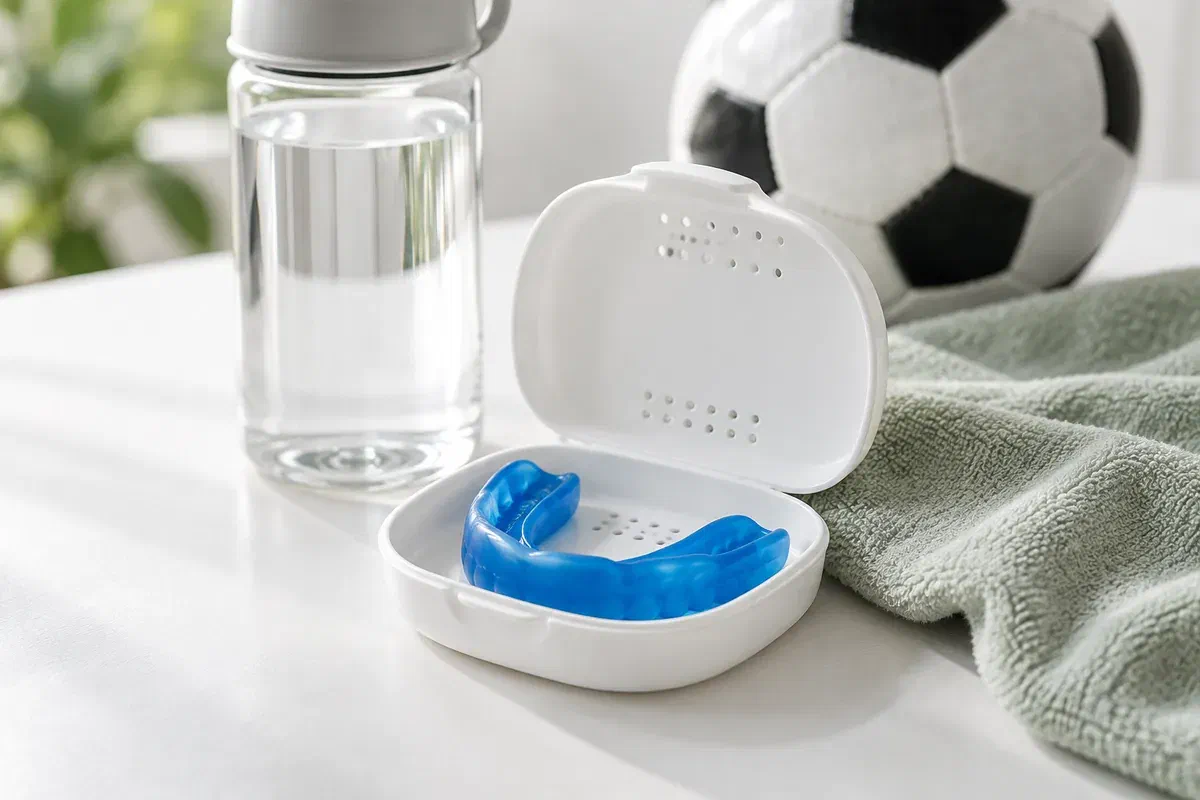
Illustrative blue sports mouthguard in a ventilated case beside sports equipment
Before the first practice

Consider the sport, the fit, and the changing smile.

A mouthguard bought last season may no longer fit the same way. Review the equipment before play begins and report problems as they arise.

Activities with contact, falls, or flying equipment

Tell the dentist about all the sports and recreational activities your child takes part in. The conversation is not limited to a league that formally requires a guard. Ask how mouth protection fits alongside the other safety equipment and rules for the activity.

A guard that slips or needs constant clenching

Ask your child whether the guard stays in place, rubs, or affects normal breathing and speaking. Bring it for assessment rather than trimming it at home. A child should not have to hide a fit problem simply because the guard is new.

Erupting teeth or orthodontic treatment

Primary tooth loss, new permanent teeth, and orthodontic movement can change fit. Tell the clinician about upcoming braces or appliance adjustments. Ask whether the proposed mouthguard needs to accommodate those changes and when it should be reviewed again.

A recent blow to the mouth needs injury assessment when indicated, even if a guard was worn. Mouth protection reduces risk but cannot rule out damage after an impact.

What a suitable guard contributes

Reduce oral-injury risk with equipment your child can use properly.

A properly fitted sports mouthguard helps reduce the risk of injuries to teeth and surrounding oral tissues. The Canadian Dental Association encourages consideration of custom-fitted guards. Fit and comfort matter because a guard needs to remain appropriately positioned while the child participates.

No guard makes a sport risk-free. It does not replace a helmet, face protection, safe-play rules, or medical assessment after a suspected head injury. It should not be sold to your family as a guarantee against concussion or every dental injury.

Patient information: Canadian Dental Association — preventing sports-related oral injuries

A fit discussion based on the individual mouth

The clinician can consider the teeth, bite, and relevant appliances rather than relying only on a label showing the child's age. Ask how fit will be checked and what an appropriate guard should feel like. Your child's feedback is an important part of that review.

A chance to practise before a game

Trying the fitted guard in a calm setting gives your child a chance to understand insertion, removal, and storage. Ask questions before a busy practice makes those details harder to discuss. Report a problem instead of assuming discomfort is an unavoidable part of protection.

An ongoing plan for growth and replacement

A growing mouth needs repeated attention to fit. Ask which changes should prompt another appointment and bring the guard to dental visits. The aim is to keep the equipment appropriate, not to make a single purchase last through every stage of development.

Planning and fitting the mouthguard

Review the sport, choose the approach, and check it in the mouth.

Discuss the timing before your child's season starts. Fabrication and fitting arrangements depend on the selected guard, and an assessment does not promise immediate delivery.

  1. Talk about activities and dental changes

    Share the sport, age group, existing equipment, previous injuries, and any orthodontic treatment. Bring an older guard for comparison if available. Mention if your child has difficulty tolerating something in the mouth so the discussion can address that concern.

  2. Assess the mouth and compare suitable options

    The clinician considers the teeth, bite, eruption, and appliances. Ask how a custom-fitted guard differs from available retail options for your child's needs. Clarify the likely appointments, cost, and replacement considerations before deciding which approach to pursue.

  3. Take records for a custom guard when selected

    A custom option requires appropriate records of the teeth, using the method arranged by the treating clinician. Explain any strong gag response or sensory difficulty beforehand. Ask when the guard will be ready and whether a fitting visit is included.

  4. Check fit and demonstrate care

    At delivery, discuss retention, comfort, breathing, and speaking with the guard in place. Practise handling and review cleaning and storage. Confirm when to return and what to do if a tooth erupts, the guard tears, or orthodontic treatment changes its fit.

Between practices and games

Clean it, protect it, and keep checking the fit.

Follow the instructions for the material and design supplied. A parent may need to supervise the routine until the child can manage the guard consistently.

Use a regular cleaning and drying routine

Rinse and clean the guard as directed, using products suitable for its material. Allow it to dry and store it in a protective ventilated case. Keep it away from high heat and do not leave it in a hot car where its shape could be affected.

Check for damage and avoid chewing it

Look for tears, worn areas, distortion, or edges that have become uncomfortable. Encourage your child to wear the guard as intended rather than chew on it between plays. Do not share it with a teammate or try to repair damaged material with glue.

Reassess after growth or dental changes

Bring the guard to dental visits and call sooner if it no longer seats comfortably. New teeth, tooth loss, restorations, and braces can change what fits. A calendar alone cannot determine whether the guard is still suitable for the child.

Patient information: Fraser Health — choosing and caring for sports mouthguards

Choosing mouth protection

Compare the fit and practical demands of each option.

The right conversation includes availability and cost as well as the child's mouth. Ask for advice about the options that can be used appropriately in their situation.

When an individual fit is being considered

A custom-fitted sports mouthguard

A guard made from dental records is planned for the mouth being assessed. It still needs fitting, care, and review as teeth change. Ask what is included in the process and whether the current stage of development affects the expected replacement needs.

When comparing accessible alternatives

A suitable retail sports guard

Stock and mouldable guards differ in fit and handling requirements. Ask the dentist to review suitability, especially with developing teeth or braces. Follow the product's instructions and do not assume that any guard sold for children will fit your child safely and comfortably.

When braces or another appliance affect the choice

Protection coordinated with orthodontic care

Talk to the treating dental or orthodontic clinician about a sports guard that accommodates the appliance and planned tooth movement. An aligner, retainer, or night guard is not automatically a sports mouthguard. Confirm the plan before combining devices.

Questions about children’s sports mouthguards

Make the routine workable before the whistle blows.

Ask about play, growth, cleaning, and what happens if the guard is lost. Good preparation includes knowing when a fit needs another look.

(905) 876-4488
Does my child need a mouthguard only when the league makes it compulsory?
No. Injury risk can exist in activities without a formal mouthguard rule. Discuss contact, falls, and equipment-related impacts with the dentist and follow the sport’s safety requirements. A suitable guard is one part of protection, alongside appropriate head and face equipment.
Can last season’s mouthguard still fit after my child gets new adult teeth?
It needs assessment rather than an assumption. Erupting teeth and changes in the jaw can alter fit even if the guard looks intact. Bring it to the dentist and report pressure, slipping, or difficulty seating it. Replacement may be needed before another season ends.
Can my child use an orthodontic retainer as a sports mouthguard?
Do not assume it provides the protection of a sports guard. Retainers, aligners, and other appliances serve different purposes. Ask the treating clinician which protection is suitable and how it should be used around the prescribed orthodontic appliance.
Will a custom sports mouthguard prevent a concussion?
It should not be relied on as concussion prevention. A mouthguard helps protect oral structures, but head protection, safe participation, and appropriate assessment after an impact remain essential. Follow the sport’s concussion protocol and seek medical advice when a head injury is suspected.
What if my child says the guard makes breathing or talking difficult?
Arrange a fit review and describe the problem. Those are important concerns, not something to dismiss because the guard has already been purchased. Do not trim or reshape it yourself, and ask about appropriate protection before the child returns to the activity.
Can two siblings share a sports mouthguard if they play at different times?
No. A guard is personal equipment, and one child’s fit does not establish suitability for another. Each child needs their own appropriate protection and cleaning routine. If a guard is lost, contact the dentist or relevant provider about a suitable replacement.
Sports mouthguards for children in Milton

Add a fit check to your child’s season preparation.

Contact our Bronte Street practice to discuss sports protection for your child. Bring their current guard and details of the activities they play, along with any orthodontic plans or recent dental changes.

Guard type, fit, fabrication timing, and replacement needs are discussed individually. An injury needs assessment even when a mouthguard was worn.

Visit Milton Dental Clinic
Unit 1, 342 Bronte St. S, Milton, ON L9T 5B7
Get directions Clinic hours
Monday–Thursday
11am–7pm
Friday–Sunday
By appointment only

How can we help?

Milton Dental Clinic

Have a question about your smile? Choose the option that works best for you.

For urgent dental concerns, please call.
Messages are reviewed during clinic hours.