

Illustrative young athlete and parent discussing a sports mouthguard with a clinician
Children’s Dentistry

Sports Mouthguards for Children in Erin

Kids talk, shout and gulp for air when they play. A mouthguard that gets in the way of any of that will soon be left on the bench. We look at fit, breathing and speech along with your child’s sport and changing teeth, so the guard can stay in when it counts.

For young athletes in Erin and Hillsburgh

Breathe, talk, play: the guard should allow all three.

Watch a game closely and you’ll see guards popping out every time a child yells for a pass or catches their breath after a sprint. It is a common complaint. If a mouthguard muffles speech or makes breathing feel tight, children tend to pull it out at exactly the moments they are moving fastest.

A visit is a good chance to test that. Bring the guard your child uses and ask them to talk with it in. We want to know about the sport, any baby teeth lost or adult teeth arriving lately, past injuries to the mouth, and braces or appliances that are on now or planned.

Your child is the best judge of how it feels mid-game. Encourage them to describe it plainly: too thick at the back, loose when they open wide, hard to drink around. For households in Erin, collecting those notes before the trip helps one appointment go further.

Book a fit and comfort check
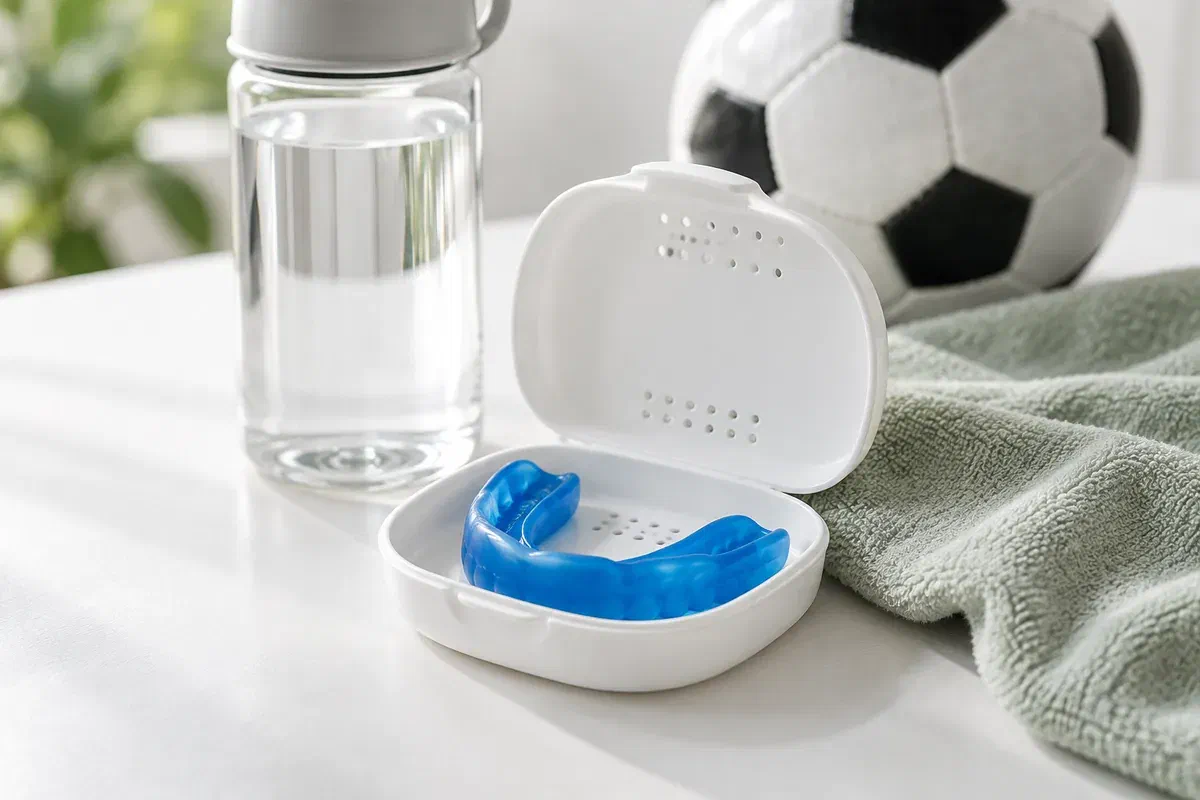
Illustrative blue sports mouthguard in a ventilated case beside sports equipment
What gets in the way

Signs the guard is working against your child

Last year’s guard may now crowd the mouth or slip at the wrong time. Review it before the season, and report problems as soon as your child mentions them.

Sports where your child is loud and fast

Hockey, soccer, lacrosse and basketball mix contact with constant communication, while biking and skating bring falls. Run through your child’s activities with the dentist, and ask how a guard sits alongside their helmet, face protection and the rules of play.

Muffled speech or tight breathing

If your child can’t be understood, feels short of breath, or has to bite down to keep the guard from falling out, it needs a fit review. Please don’t shave it down yourself. Children should feel comfortable raising these problems.

Changes under the guard

When primary teeth are lost, permanent teeth erupt or braces move teeth, the guard may start to feel bulky or loose. Tell the clinician about planned orthodontic steps, and ask how the guard should allow for them and when it needs a fresh look.

A blow to the mouth can call for an assessment even when a guard was worn. It helps lower the risk of injury but cannot confirm everything is fine.

Fit and function together

Protection that doesn’t steal your child’s voice

When a sports mouthguard fits properly, it helps reduce injury to the teeth and the soft tissues around them. The Canadian Dental Association encourages families to consider custom-fitted guards. A guard that stays seated while your child breathes hard and talks is far more likely to be in place during a collision.

Even a well-fitted guard is only one safeguard. It doesn’t replace a helmet, face protection, safe play or a medical check after a possible head injury, and you shouldn’t be told it prevents concussion or guarantees against dental injury.

Patient information: Canadian Dental Association — preventing sports-related oral injuries

A fit chosen for function

The clinician considers your child’s teeth, bite and any appliance, not just an age on a box, and pays attention to how they breathe and speak with the guard in. Ask what a good fit should feel like, and let your child describe theirs.

Trying it out loud

During a calm try-on, your child can practise talking, drinking water and taking the guard in and out. Ask questions about anything that feels awkward. Ongoing trouble with speech or breathing should be reported, not tolerated.

Rechecks as the mouth grows

A guard that allows easy breathing now may feel crowded later. Ask which changes should bring you back, and bring the guard to dental visits so fit and function can be reviewed together.

Inside the appointment

Check fit, test speech, plan the guard.

Book before the season if you can. Timing depends on the type of guard, and an assessment does not mean the finished guard is ready that day.

  1. Describe the sport and the problem

    Tell us the sport, level, current equipment, earlier injuries and orthodontic plans, and what your child finds hard about the guard. Bring it along. If your child has trouble tolerating things in the mouth, mention it.

  2. Examine and discuss options

    The clinician looks at the teeth, bite, eruption and appliances, and explains how custom and retail guards might differ for your child’s breathing, speech and fit. Ask about visits, cost and replacement before deciding.

  3. Records for a custom guard

    If a custom guard is chosen, records of the teeth are taken using the method arranged by the clinician. Tell us about a strong gag or sensory concerns ahead of time. Ask how long it will take and whether there is a fitting visit.

  4. Fit, talk and drink with it in

    At delivery, we check retention and ask your child to talk, breathe deeply and sip water with the guard in place. They practise handling it, and we explain cleaning and storage. Settle on a review date and on which changes, such as a tear or erupting tooth, mean calling early.

Taking care of it

A clean, well-kept guard is easier to wear.

Use the care instructions for your child’s particular guard. A parent may need to oversee the routine until it becomes second nature.

Rinse, clean and dry

Clean the guard after each use as directed, with products suited to its material. Let it dry fully and store it in a vented protective case. Heat can warp it, so keep it out of hot cars and away from heaters.

Inspect and stop the chewing

Look for splits, worn spots, warping and sharp edges, which can affect comfort and speech. Chewing on the bench shortens a guard’s life, so encourage proper wear. Keep it personal, and don’t glue a damaged one.

Review as teeth change

Bring the guard to dental appointments, and call sooner if it starts to feel bulky, loose or harder to talk through. Lost and new teeth, restorations and braces can all play a part. Current fit matters more than age.

Patient information: Fraser Health — choosing and caring for sports mouthguards

Guard choices

Which type lets your child play naturally?

Weigh cost and availability along with comfort and fit. The best option is one your child can breathe, talk and play in properly.

For a guard shaped to your child’s teeth

Custom-fitted sports guard

Produced from records of your child’s teeth, it is planned for their mouth at the time of assessment. It still needs fitting, cleaning and review as teeth develop. Ask how the design is checked for breathing and speech, and how growth may affect replacement.

For an accessible alternative

Retail guard, checked for fit

Stock and mouldable guards vary in bulk, fit and preparation, which can affect how easy they are to talk through. Ask the dentist whether a specific guard suits your child, especially with braces or new teeth. Follow the instructions supplied.

For children with orthodontic appliances

Guard planned alongside braces

Discuss with your child’s orthodontic clinician a sports guard that suits the appliance and tooth movement still to come. A retainer, aligner or night guard isn’t meant to protect against impact. Agree on a plan before combining any of them.

Breathing, talking and wearing it

Questions about using a guard during play

Families ask about speech, breathing, drinking, comfort and lost guards. A fit review often helps with more than one.

(905) 876-4488
Can my child drink water without taking the guard out?
It depends on the guard and the sport. Ask the dentist about your child’s guard, and if it has to come out for drinks, make sure it goes straight back in and into a clean case when not in use.
Why does my child’s voice sound different with a guard in?
Some change is common, especially at first. If your child still can’t be understood after getting used to it, or the guard feels bulky, bring it in for a fit review rather than trimming it.
Is it normal for a mouthguard to make breathing feel harder?
Ongoing difficulty breathing with a guard in should be reviewed. Describe when it happens, such as during sprints, and bring the guard in. Ask what protection your child should use until the fit is checked.
Can a mouthguard be relied on to stop a concussion?
No. It helps protect the mouth, but helmets, safe play and proper assessment after a hit remain essential. Follow the sport’s concussion protocol and get medical advice if you think your child may have a head injury.
How do I get my child to keep the guard in for the whole game?
Start by finding out why it comes out. Discomfort, gagging and trouble talking are often the reason, and a fit review can address them. Practising at home and on the bench may help your child get used to it.
What is the easiest way to plan a mouthguard visit from Erin?
Call ahead, explain your child’s sport and season dates, and bring the current guard and any orthodontic notes. Ask whether the assessment can be paired with a routine visit and how fitting appointments are usually arranged.
Mouthguards for Erin children

Find a guard your child can talk through.

Call our Bronte Street practice to arrange a mouthguard visit. Bring the guard your child uses, a list of their activities, and any information about braces or recent dental changes.

Guard type, comfort, fit, making time and replacement are discussed one child at a time. A dental injury needs checking even with a guard in.

Visit Milton Dental Clinic
Unit 1, 342 Bronte St. S, Milton, ON L9T 5B7
Get directions Clinic hours
Monday–Thursday
11am–7pm
Friday–Sunday
By appointment only

Areas we serve

  • Milton
  • Oakville
  • Mississauga
  • Georgetown
  • Halton Hills
  • Acton
  • Campbellville
  • Brampton
  • Burlington
  • Puslinch
  • Rockwood
  • Erin
  • Caledon
  • Etobicoke
  • Old Milton
  • Bronte Meadows
  • Timberlea
  • Dorset Park
  • Dempsey
  • Clarke
  • Beaty
  • Coates
  • Harrison
  • Scott
  • Willmott
  • Ford
  • Bowes
  • Cobden
  • Walker
  • Mountain View
  • Milton Heights
  • Hawthorne Village
  • Valley View
  • Fallingbrook
  • Nassagaweya
  • Trafalgar
  • Esquesing
  • Nelson
  • Brookville
  • Moffat
  • Glen Williams
  • Norval
  • Limehouse
  • Stewarttown
  • Ashgrove
  • Hornby
  • Silver Creek
  • Speyside
  • Scotch Block
  • North Oakville
  • River Oaks
  • Glen Abbey
  • West Oak Trails
  • Palermo
  • Bronte Creek
  • College Park
  • Joshua Creek
  • Uptown Core
  • Preserve
  • Iroquois Ridge
  • Lisgar
  • Meadowvale
  • Meadowvale Village
  • Churchill Meadows
  • Erin Mills
  • Central Erin Mills
  • Streetsville
  • East Credit
  • Creditview
  • Heartland
  • Sheridan
  • Mount Pleasant
  • Credit Valley
  • Huttonville
  • Churchville
  • Springbrook
  • Northwest Brampton
  • Bram West
  • Fletcher's Meadow
  • Fletcher's Creek South
  • Alton Village
  • Orchard
  • Millcroft
  • Headon Forest
  • Tansley
  • Brant Hills
  • Tyandaga
  • Kilbride
  • Lowville
  • Aberfoyle
  • Morriston
  • Arkell
  • Hillsburgh
  • Freelton
  • Carlisle
  • Waterdown
  • Flamborough
  • Mountsberg

How can we help?

Milton Dental Clinic

Have a question about your smile? Choose the option that works best for you.

For urgent dental concerns, please call.
Messages are reviewed during clinic hours.