
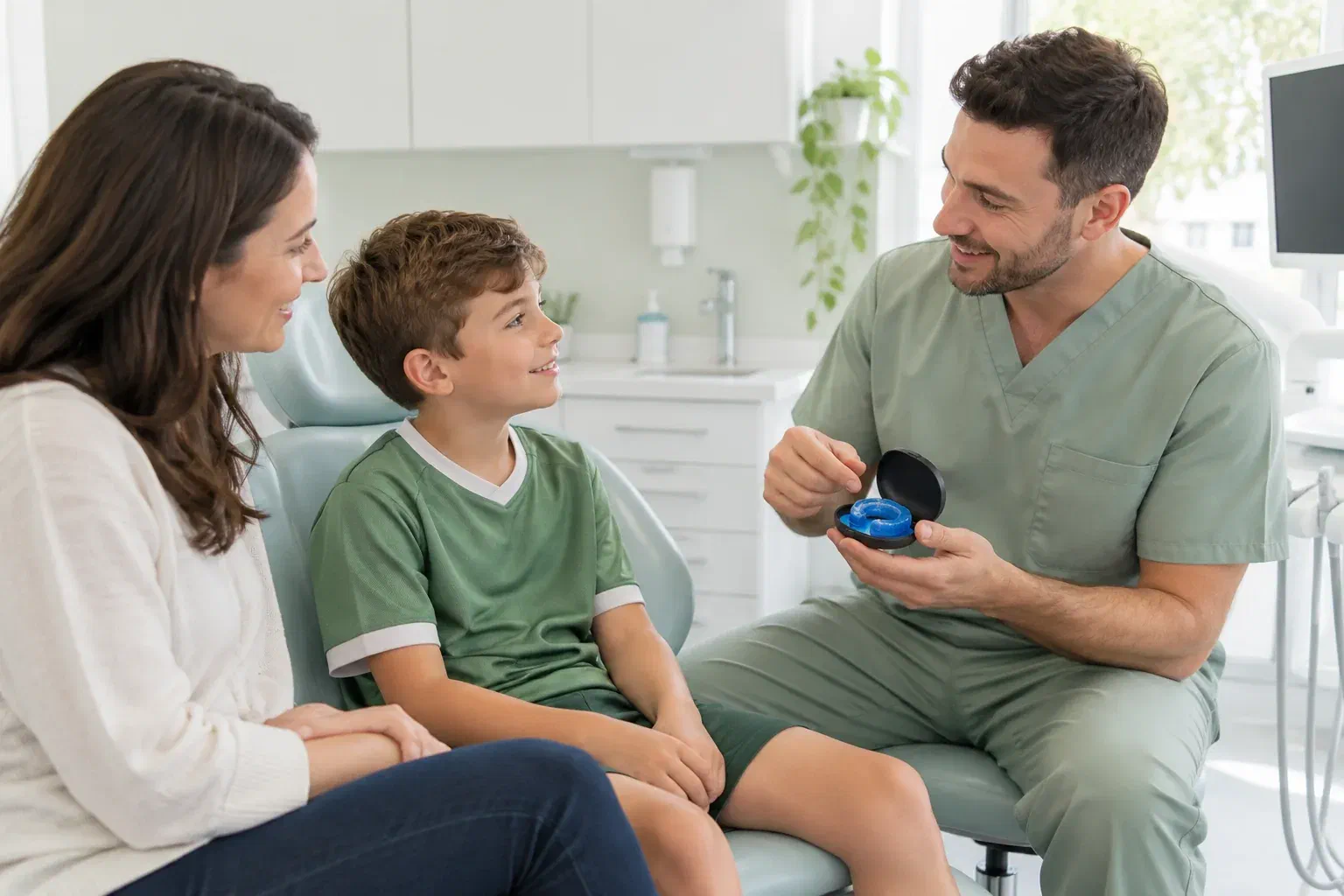
Illustrative young athlete and parent discussing a sports mouthguard with a clinician
Children’s Dentistry

Sports Mouthguards for Children in Halton Hills

Mouth injuries don’t only happen in organised games. Bikes, skateboards, trampolines and driveway hockey all carry risk. We help you decide where a mouthguard makes sense for your child, choose a type that fits their growing teeth, and keep it comfortable enough to wear.

Active kids across Halton Hills

Not every risky activity comes with a referee.

Leagues tend to set clear rules about equipment. A pickup game of ball hockey, a new set of ramps at the skate park or a backyard trampoline usually does not. Yet these are moments when a child can fall face-first or catch an elbow, and parents reasonably ask whether a guard belongs there too.

That question is a good starting point for a visit. Tell us everything your child does, formal and informal, and bring any guard they already own. Mention lost baby teeth, new adult teeth, earlier injuries to the mouth, and whether braces are planned. From Georgetown, Acton or Glen Williams, a quick call ahead can help us prepare.

We also ask your child what they would actually wear. Some will happily use a guard for hockey and refuse it on a bike. Hearing that honestly lets us talk through realistic choices instead of a rule they will ignore.

Talk about mouth protection for your child
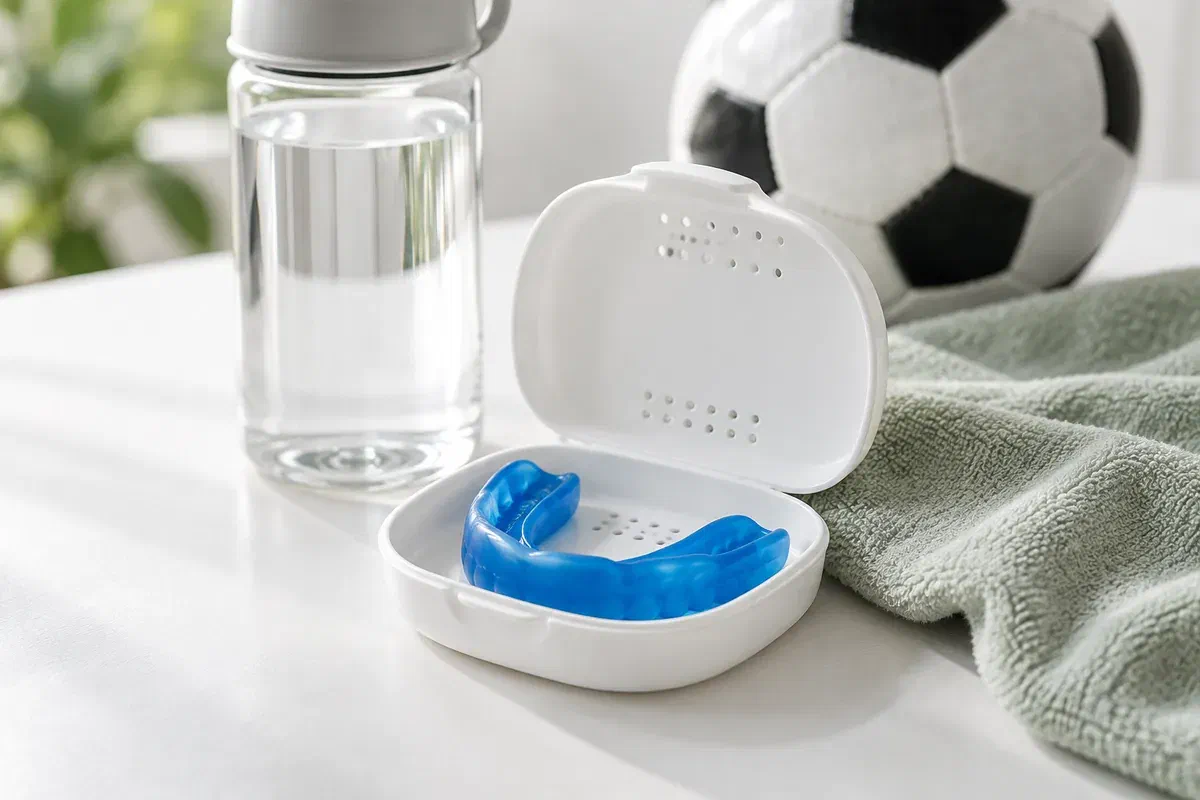
Illustrative blue sports mouthguard in a ventilated case beside sports equipment
Where protection can matter

Organised sport, open play and everything between

Activities change with the seasons, and so do children’s teeth. Look over the guard and the plan before each new season of play.

Informal play with real risk

Skateboarding, scootering, cycling, trampolining and casual ball hockey can all lead to falls or contact. Ask the dentist where a mouthguard is reasonable, and how it fits alongside the helmet and other gear your child already uses for each activity.

A guard your child avoids

If the guard keeps falling out, makes your child clamp down, rubs the gums or makes breathing feel harder, they will stop using it. Bring it in for review rather than cutting it, and thank your child for mentioning it.

A mouth in transition

Lost primary teeth, newly erupting permanent teeth and orthodontic movement can all change the fit. Tell the clinician about planned braces or appliances, and ask how the guard choice should allow for those changes and when to recheck it.

A fall or blow to the face may need an injury check whether or not a guard was in. Wearing one lowers the chance of damage; it doesn’t confirm there is none.

What a guard adds

One more layer, used consistently

A properly fitted mouthguard helps cut the risk of injury to the teeth and the gums, lips and cheeks. The Canadian Dental Association’s position supports considering custom-fitted guards. Whatever the activity, protection only counts if the guard stays where it belongs throughout play.

A guard is a layer, not a wall. It doesn’t take the place of a bike helmet, a hockey cage, safe habits or a medical assessment after a suspected head injury, and it shouldn’t be pitched to your family as protection against concussion or a promise that teeth will never be hurt.

Patient information: Canadian Dental Association — preventing sports-related oral injuries

Recommendations based on the real mouth

Instead of relying on an age range, the clinician looks at the teeth, bite and any appliance. Ask how fit will be assessed and what your child should expect to feel. Their impressions are a key part of the decision.

Getting comfortable before using it

Wearing the guard first in a calm setting helps your child master putting it in, taking it out and storing it. That is the best time for questions. Lasting soreness or rubbing should be reported, not ignored.

Adjusting the plan over time

Growing teeth mean the fit keeps changing. Ask which changes should bring you back, and bring the guard to routine dental visits. Suitable protection at each stage is the aim, rather than a single guard stretched too long.

How the visit works

Talk it through, look closely, then fit.

Raise it before the busy part of the year. Timing depends on the guard chosen, and an assessment is not a promise of a guard on the same day.

  1. List the activities and changes

    We ask about sports and casual play, age group, current gear, past injuries and orthodontic treatment. Bring an old guard if you have one. If your child is sensitive to things in the mouth, let us know early.

  2. Examine the teeth and set out choices

    The clinician reviews teeth, bite, erupting teeth and appliances, then explains the differences between custom and retail guards for your child. Ask about visits, cost and when a replacement is likely before you choose.

  3. Records for custom guards

    A custom guard needs records of the teeth, taken using the method the clinician arranges. Tell us ahead of time about gagging or sensory concerns. Ask roughly when the guard should be ready and whether a fitting appointment follows.

  4. Fitting and practice

    We check that the guard stays in and that your child can breathe and talk comfortably. They practise handling it, and we explain cleaning and storage. Before you leave, find out when to come back and what changes, such as a torn guard or a new tooth, should prompt a call.

At home and on the go

Simple habits for a guard that travels everywhere

Use the care directions for your child’s particular guard. A parent may need to run the routine until your child handles it reliably.

Rinse and air-dry

Clean the guard after each use as directed, with products that suit its material. Let it dry before putting it in a vented, protective case. Keep it away from heat; a car interior on a sunny day can warp it.

Inspect for wear

Look regularly for splits, thin areas, warping or edges that have become sharp. Discourage chewing between plays. A guard is personal, so no sharing, and don’t try to repair a damaged one with glue.

Reassess when things change

Bring the guard to dental visits and call if it stops fitting comfortably. New or lost teeth, fillings and braces can all change the fit. Its age matters less than whether it still sits properly.

Patient information: Fraser Health — choosing and caring for sports mouthguards

Guard types

Match the guard to the child and the activity.

Cost, timing and how easily a guard can be replaced all count. Ask which options your child will be able to use properly.

For an individual fit

Custom-fitted

Shaped from records of your child’s teeth, a custom guard is planned for the mouth as it was assessed. It still needs a fitting, regular cleaning and checks as teeth change. Ask what the process involves and how growth might affect its lifespan.

For a simpler, accessible option

Retail, with a dental review

Stock and mouldable guards fit differently and need different preparation. Show the dentist the guard you are considering, especially if your child has braces or teeth coming in. Follow its instructions and don’t rely on the age on the label to guarantee a good fit.

For children in orthodontic treatment

Coordinated with braces

Ask your child’s orthodontic clinician about a guard that allows for the appliance and teeth that are still moving. Retainers, aligners and night guards aren’t made for impact. Agree on one plan before your child uses them together.

Questions about play and protection

Guards beyond the league schedule

Parents ask about casual play, comfort, cleaning and lost guards. Fit reviews help answer several of these at once.

(905) 876-4488
Should my child wear a mouthguard for skateboarding or biking?
It is worth discussing with the dentist. Falls in these activities can injure the mouth, and a guard may be one part of protection along with a helmet and other gear. Ask what is suitable for your child and the activity.
Does my child need a different guard for each sport?
Not always, but it depends on the sports, the equipment involved and your child’s teeth. Bring a list of activities and the current guard, and ask whether one guard can be used appropriately across them.
My child’s guard has a strange smell. Is it still okay to use?
Clean it as directed and make sure it dries fully before storage. If the smell persists, or the guard looks discoloured, worn or damaged, bring it in for a look, and ask whether a replacement is needed.
Does a mouthguard make a head injury less likely?
Do not rely on it for that. A guard helps protect the mouth, but helmets, safe play and proper assessment after a fall or hit are still needed. Follow concussion guidance and get medical advice if a head injury is possible.
Can we drop off a guard from Halton Hills for a fit check?
A fit check needs your child there, since the guard has to be seen in their mouth. Call ahead and describe the problem; the team can advise on what kind of visit makes sense and what to bring.
What if my child hates how it feels and refuses to wear it?
Book a review and let your child explain what bothers them. Discomfort, gagging or difficulty breathing or talking are real concerns. Do not trim it yourself, and ask about suitable protection in the meantime.
Mouthguards for children in Halton Hills

Ready for the rink, the field and the ramp.

Contact our Bronte Street practice to talk through sports protection for your child. Bring their current guard, a list of the activities they enjoy, and any news about braces or recent dental changes.

Each child’s guard type, fit, timing and replacement is discussed individually. Injuries still need assessment even when a guard was in.

Visit Milton Dental Clinic
Unit 1, 342 Bronte St. S, Milton, ON L9T 5B7
Get directions Clinic hours
Monday–Thursday
11am–7pm
Friday–Sunday
By appointment only

Areas we serve

  • Milton
  • Oakville
  • Mississauga
  • Georgetown
  • Halton Hills
  • Acton
  • Campbellville
  • Brampton
  • Burlington
  • Puslinch
  • Rockwood
  • Erin
  • Caledon
  • Etobicoke
  • Old Milton
  • Bronte Meadows
  • Timberlea
  • Dorset Park
  • Dempsey
  • Clarke
  • Beaty
  • Coates
  • Harrison
  • Scott
  • Willmott
  • Ford
  • Bowes
  • Cobden
  • Walker
  • Mountain View
  • Milton Heights
  • Hawthorne Village
  • Valley View
  • Fallingbrook
  • Nassagaweya
  • Trafalgar
  • Esquesing
  • Nelson
  • Brookville
  • Moffat
  • Glen Williams
  • Norval
  • Limehouse
  • Stewarttown
  • Ashgrove
  • Hornby
  • Silver Creek
  • Speyside
  • Scotch Block
  • North Oakville
  • River Oaks
  • Glen Abbey
  • West Oak Trails
  • Palermo
  • Bronte Creek
  • College Park
  • Joshua Creek
  • Uptown Core
  • Preserve
  • Iroquois Ridge
  • Lisgar
  • Meadowvale
  • Meadowvale Village
  • Churchill Meadows
  • Erin Mills
  • Central Erin Mills
  • Streetsville
  • East Credit
  • Creditview
  • Heartland
  • Sheridan
  • Mount Pleasant
  • Credit Valley
  • Huttonville
  • Churchville
  • Springbrook
  • Northwest Brampton
  • Bram West
  • Fletcher's Meadow
  • Fletcher's Creek South
  • Alton Village
  • Orchard
  • Millcroft
  • Headon Forest
  • Tansley
  • Brant Hills
  • Tyandaga
  • Kilbride
  • Lowville
  • Aberfoyle
  • Morriston
  • Arkell
  • Hillsburgh
  • Freelton
  • Carlisle
  • Waterdown
  • Flamborough
  • Mountsberg

How can we help?

Milton Dental Clinic

Have a question about your smile? Choose the option that works best for you.

For urgent dental concerns, please call.
Messages are reviewed during clinic hours.