
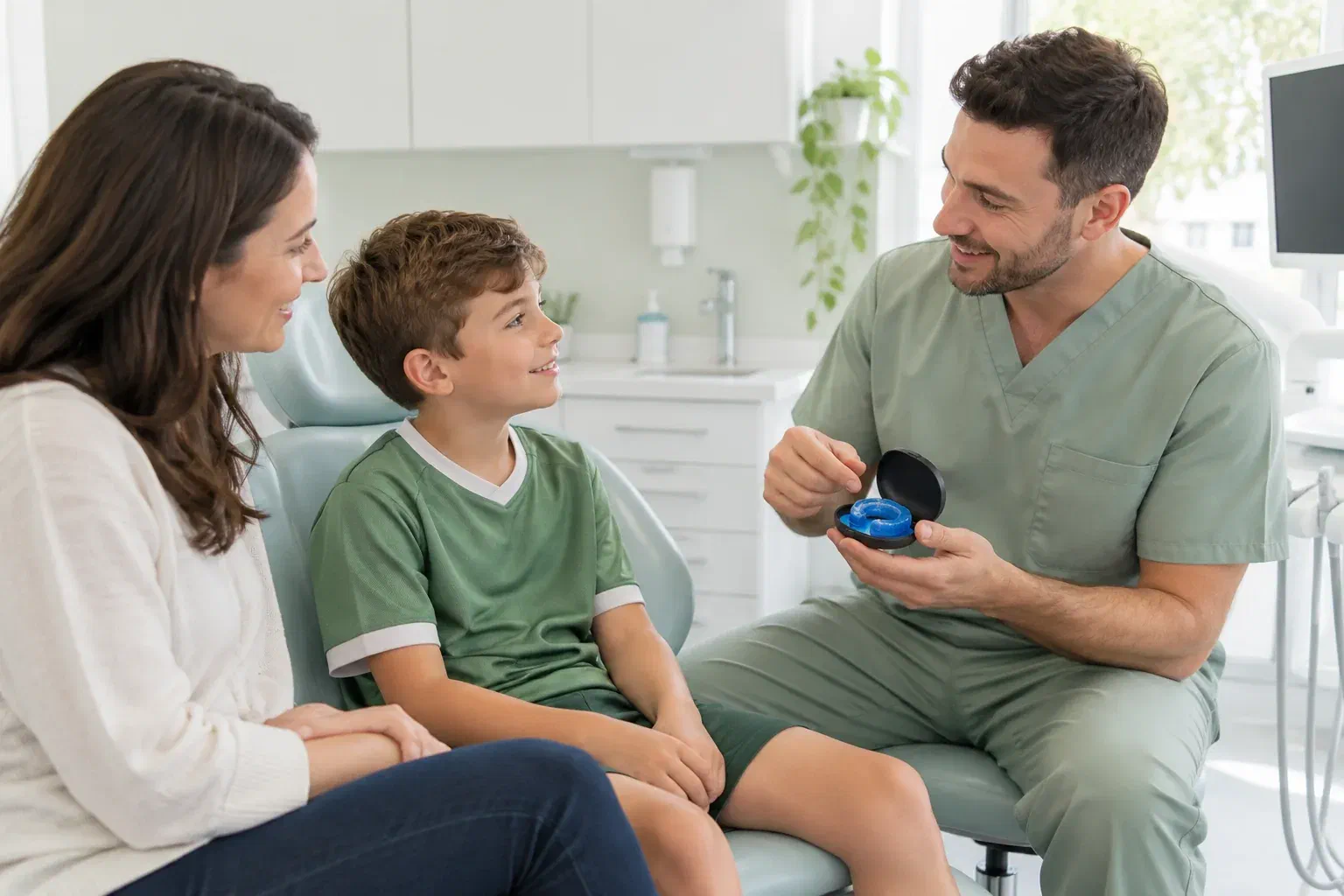
Illustrative young athlete and parent discussing a sports mouthguard with a clinician
Children’s Dentistry

Sports Mouthguards for Children in Old Milton

Found last year’s mouthguard at the bottom of the hockey bag? Before your child pops it back in, have it looked at. Teeth move, fall out and arrive between seasons, and a guard that once fit well may now press, slip or get in the way of breathing and speech.

Old Milton · young athletes

Does the old guard still belong in the bag?

It usually happens the night before the first practice. The equipment comes out of the basement, and there is the mouthguard from last winter, a little chewed and slightly stiff. It looks fine. Whether it still fits is a different question, because a child’s mouth can change a lot in twelve months.

Our Bronte Street practice sits just outside Milton’s historic downtown, so bringing that guard in for a look is an easy errand. Hand it over along with a short history: which baby teeth have come out since it was made, which adult teeth have arrived, any falls or knocks, and whether braces are on the horizon.

Then we ask your child. Does it wobble when they run? Do they bite hard to keep it up? Can they shout to a teammate? Kids often stop wearing a guard without telling anyone, and their honest answers tell us more than the plastic does.

Bring your child’s mouthguard in for a check
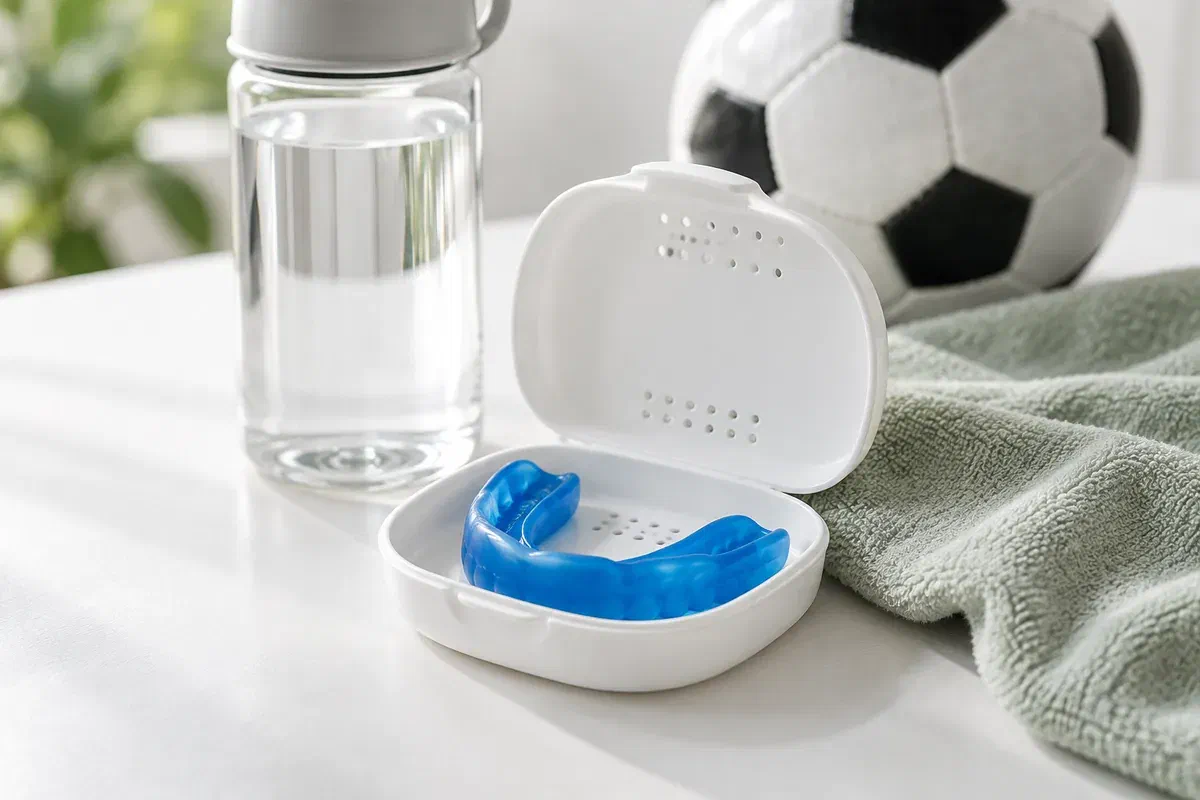
Illustrative blue sports mouthguard in a ventilated case beside sports equipment
Signs a guard needs a second look

Hand-me-downs, growth spurts and new braces

A guard can look intact and still be wrong for the mouth it is in. Check it before play resumes, and speak up when something feels different partway through.

Sports that aren’t on the league schedule

Driveway ball hockey, skateboarding and backyard tackle games can lead to mouth injuries too. Tell the dentist about every activity your child enjoys, organised or not, and ask how a guard works with the helmet, face protection and rules each one already involves.

A guard your child has to bite to keep in

Constant clenching, rubbing at the gums, or a guard that drops when your child talks all point to a fit problem. Bring it in rather than shaving the edges with scissors. Make it clear to your child that reporting it will not get them in trouble.

A smile in the middle of changing

Wiggly primary teeth, adult teeth breaking through and orthodontic shifting all alter the shape a guard must hold. Let the clinician know about planned braces or appliance adjustments, and ask how soon the guard should be reviewed afterwards.

A knock to the mouth may still need an injury check, guard or no guard. Wearing one reduces the chance of damage but cannot confirm that teeth and tissues escaped harm.

What a good fit gives you

Less chance of injury, with a guard that stays put.

When a sports mouthguard fits well, it helps cut the risk of harm to teeth and the soft tissue around them. The Canadian Dental Association recommends that families consider custom-fitted guards, largely because protection depends on the guard staying in position for the length of play.

That said, it is not the only safety measure, and it is not a promise. A guard cannot do the work of a helmet, a cage or visor, sensible rules, or a doctor’s assessment after a possible head injury. Be wary of anyone who presents it as concussion prevention.

Patient information: Canadian Dental Association — preventing sports-related oral injuries

A guard chosen for teeth, not a birthday

Age ranges on packaging are a rough guess. The clinician looks at the actual teeth, how they meet and any appliance in place. Ask what fit checks will be done and what your child should feel when it is right, then let your child weigh in.

A rehearsal away from game day

Practising with a new guard in a quiet room helps your child learn how it goes in, how it comes out and where it lives between uses. Questions are easier to ask there than on a crowded bench. Persistent discomfort is a reason to call.

Follow-up as the mouth grows

A younger athlete’s teeth rarely stay the same for long. Ask which changes are worth a visit and bring the guard to routine checkups. Aim for protection that fits each stage instead of making one guard last at all costs.

Getting from old guard to right guard

Four steps, starting with a conversation

Leave some time before the season to sort this out. How long it takes depends on the guard you choose, and the first visit does not come with an instant guard.

  1. History first

    We ask about the sport, the age group, the gear your child wears, past injuries and any orthodontic treatment. Last season’s guard is useful here. Let us know if your child struggles with things in the mouth so we can take that into account.

  2. An exam and a frank comparison

    The clinician checks the teeth, the bite, any erupting teeth and appliances, then explains how a custom guard differs from what is sold in stores for a child like yours. Ask about visits, cost and likely replacement before you decide.

  3. Records, if a custom guard is the choice

    Making a custom guard needs records of the teeth, taken by the method the clinician arranges. Warn us beforehand about a strong gag or sensory concerns. Ask roughly when it will be ready and whether a separate fitting is planned.

  4. Fit, practise and go over care

    When it arrives, we check that it stays in place and that your child can breathe and speak comfortably. They practise putting it in and taking it out while you review cleaning and storage. Ask about follow-up, and what to do if it tears or a new tooth changes the fit.

Between games

A simple routine that keeps the guard usable

Follow the care directions for the material your child’s guard is made from. Plan on supervising for a while until your child handles it reliably.

Rinse, clean, air out

After each use, rinse and clean it as instructed with products that suit the material. Let it dry fully before it goes into a ventilated case. Heat is the enemy: a sunny dashboard or hot car can change its shape.

Inspect it now and then

Look for splits, worn patches, warping and edges that have turned sharp or scratchy. Remind your child that the guard is for wearing, not for chewing on between shifts. Keep it personal, and replace damaged material rather than gluing it.

Recheck when the mouth changes

Pack the guard for dental visits and call earlier if it no longer clicks into place comfortably. Lost or new teeth, fillings and braces can all change the fit. How it sits today matters more than how old it is.

Patient information: Fraser Health — choosing and caring for sports mouthguards

Your options

Custom, retail, or planned around braces?

Price and convenience are fair things to weigh along with your child’s teeth. Ask which choices your child is likely to wear correctly.

For an individual fit

A guard made from your child’s records

A custom guard is shaped to the mouth the clinician examined. It still needs a fitting, regular cleaning and review as the teeth develop. Ask what each step involves and whether your child’s current stage of growth means it may need replacing sooner.

For a more accessible choice

A store-bought guard

Stock guards and mouldable guards vary in fit and in how they are prepared. Ask the dentist to look at whether one is suitable, particularly around new teeth or braces. Follow the package directions, and remember that a youth size is not proof of a good fit.

For children wearing an appliance

Protection worked out with the orthodontist

Ask the treating dental or orthodontic clinician about a guard that leaves room for brackets, wires and planned tooth movement. A retainer, aligner or night guard is not designed as sports protection. Agree on a plan before using any of them together.

What Old Milton parents ask us

Small questions that make a big difference

Most questions are about growth, cleaning and lost or worn guards. It also helps to know when to bring the guard back for another look.

(905) 876-4488
Can my younger child use an older sibling’s outgrown mouthguard?
No. A guard is shaped for one person, and fitting one child says nothing about how it will sit in another child’s mouth. Hygiene is a concern too. Each child should have their own guard, chosen and checked for their teeth.
How do I know when a mouthguard has worn out?
Look for tears, thin or chewed areas, warping and rough edges, and listen if your child says it feels different. Any of these is a reason to have it checked. A guard may need replacing before it looks badly damaged.
My child has a loose baby tooth. Can they still wear their guard?
Ask the dentist. A loose or newly lost tooth can change how the guard seats and may make it uncomfortable. Bring the guard in, mention which tooth is moving, and ask what protection to use for upcoming games.
Can a mouthguard stop my child from getting a concussion?
It should not be treated that way. A guard helps protect the mouth, but head protection, safe play and proper assessment after an impact are still needed. Follow the sport’s concussion protocol and get medical advice if you suspect a head injury.
Is it okay to boil and reshape a guard that has gone loose?
Do not reshape or trim a guard at home unless the product directions for a new mouldable guard say to. A guard that has loosened needs a fit review. Ask the dentist whether it can still be used or should be replaced.
Does wearing a retainer count as wearing a mouthguard?
No. Retainers and aligners are made to hold or move teeth, not to absorb impact during sport. Ask the treating clinician which kind of sports protection is suitable and how to handle the retainer on game days.
Children’s mouthguards near Old Milton

Bring the guard, the gear list and your questions.

Call our Bronte Street practice to set up a mouthguard review. Pack your child’s current guard, a list of their sports and activities, and any details about upcoming orthodontic work or recent dental changes.

Each child’s guard type, fit, timeline and replacement plan is discussed individually. A dental injury still needs assessment even when a guard was worn.

Visit Milton Dental Clinic
Unit 1, 342 Bronte St. S, Milton, ON L9T 5B7
Get directions Clinic hours
Monday–Thursday
11am–7pm
Friday–Sunday
By appointment only

Areas we serve

  • Milton
  • Oakville
  • Mississauga
  • Georgetown
  • Halton Hills
  • Acton
  • Campbellville
  • Brampton
  • Burlington
  • Puslinch
  • Rockwood
  • Erin
  • Caledon
  • Etobicoke
  • Old Milton
  • Bronte Meadows
  • Timberlea
  • Dorset Park
  • Dempsey
  • Clarke
  • Beaty
  • Coates
  • Harrison
  • Scott
  • Willmott
  • Ford
  • Bowes
  • Cobden
  • Walker
  • Mountain View
  • Milton Heights
  • Hawthorne Village
  • Valley View
  • Fallingbrook
  • Nassagaweya
  • Trafalgar
  • Esquesing
  • Nelson
  • Brookville
  • Moffat
  • Glen Williams
  • Norval
  • Limehouse
  • Stewarttown
  • Ashgrove
  • Hornby
  • Silver Creek
  • Speyside
  • Scotch Block
  • North Oakville
  • River Oaks
  • Glen Abbey
  • West Oak Trails
  • Palermo
  • Bronte Creek
  • College Park
  • Joshua Creek
  • Uptown Core
  • Preserve
  • Iroquois Ridge
  • Lisgar
  • Meadowvale
  • Meadowvale Village
  • Churchill Meadows
  • Erin Mills
  • Central Erin Mills
  • Streetsville
  • East Credit
  • Creditview
  • Heartland
  • Sheridan
  • Mount Pleasant
  • Credit Valley
  • Huttonville
  • Churchville
  • Springbrook
  • Northwest Brampton
  • Bram West
  • Fletcher's Meadow
  • Fletcher's Creek South
  • Alton Village
  • Orchard
  • Millcroft
  • Headon Forest
  • Tansley
  • Brant Hills
  • Tyandaga
  • Kilbride
  • Lowville
  • Aberfoyle
  • Morriston
  • Arkell
  • Hillsburgh
  • Freelton
  • Carlisle
  • Waterdown
  • Flamborough
  • Mountsberg

How can we help?

Milton Dental Clinic

Have a question about your smile? Choose the option that works best for you.

For urgent dental concerns, please call.
Messages are reviewed during clinic hours.