
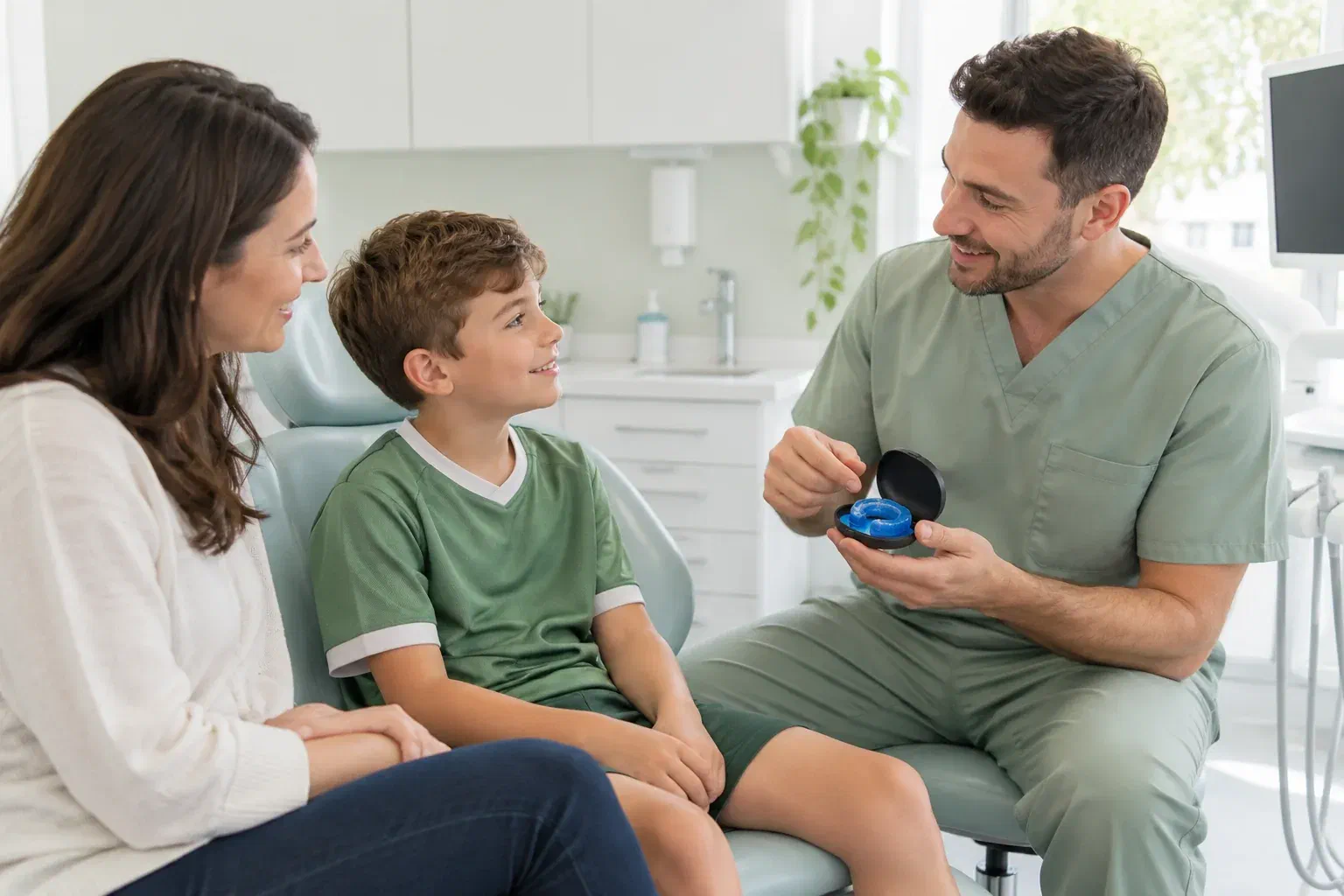
Illustrative young athlete and parent discussing a sports mouthguard with a clinician
Children’s Dentistry

Sports Mouthguards for Children in Rockwood

For some children, the hardest part of a mouthguard is simply having something in their mouth. If your child gags easily, dislikes textures or feels anxious at the dentist, we can pace the visit, explain each step, and look for a sports guard they can tolerate and wear.

Sensitive mouths, from Rockwood and beyond

When the guard itself is the hard part

Some kids love the idea of a mouthguard until it is actually in. Then come the gagging, the drooling and the plea to take it out. For a child with a strong gag reflex, sensory sensitivities or worries about dental visits, the problem is not stubbornness. It is a real reaction worth planning around.

Tell us about this when you book. We can give your child time to look at and handle a guard before anything goes near their teeth, and explain what each step involves. Bring their current guard, and let us know about the sports they play, recent tooth changes, past mouth injuries and any orthodontic plans.

Most of all, we listen to your child. Which part bothers them: the size, the feel, the taste, the way it sits at the back? Those details help the clinician weigh which guard has the best chance of being worn. Families making the trip from Rockwood can ask for a visit paced to suit.

Plan a calm mouthguard visit for your child
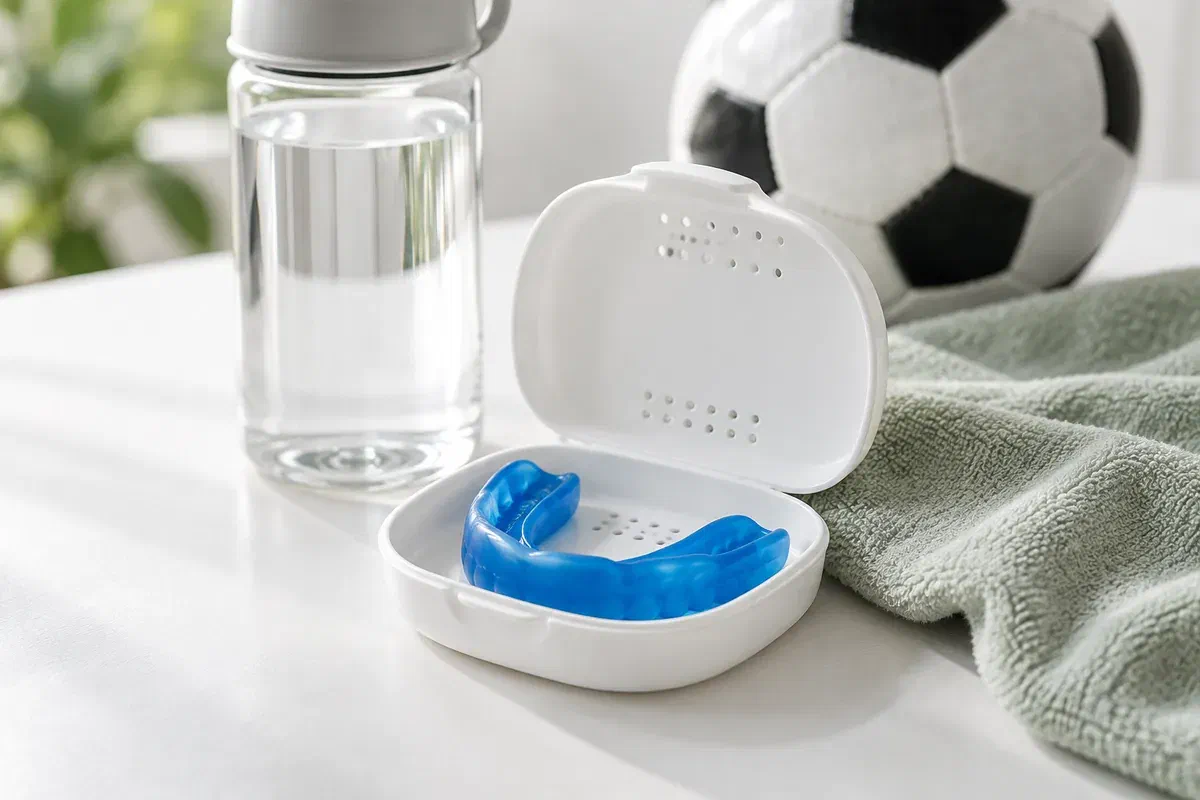
Illustrative blue sports mouthguard in a ventilated case beside sports equipment
What to tell us beforehand

Details that help us plan the visit

A guard that triggers gagging or distress tends to stay in the bag. Share what you have noticed so the plan can suit your child, and update us when things change.

Where and how your child plays

Describe every activity with contact, falls or flying equipment, from team sports to tobogganing or biking. The dentist can discuss when a guard makes sense and how it works with a helmet, face protection and each activity’s rules.

Gagging, texture or comfort problems

Let us know if the guard sets off gagging, feels too thick, rubs, or falls out unless your child bites down. Bring it in rather than cutting it smaller at home. A child who is upset by a guard deserves to be heard, not hurried.

Teeth and appliances in flux

A wobbly primary tooth, an erupting permanent tooth or a new orthodontic appliance can make a guard feel different and less tolerable. Mention planned treatment, and ask the clinician how the guard should allow for it and when to review.

Even with a guard in place, a blow to the mouth may need an injury check. A guard helps reduce risk; it cannot confirm the teeth and soft tissues are undamaged.

Why tolerance matters

A guard your child can bear to wear protects far more than one they can’t.

Sports mouthguards that fit well help reduce the risk of injury to the teeth and the tissues around them, and the Canadian Dental Association encourages considering custom-fitted options. For a sensitive child, a comfortable, well-seated guard is the difference between protection and a guard left on the bench.

No guard removes all risk. It does not do the job of a helmet, face protection, sensible rules or a medical check after a suspected head injury, and it shouldn’t be presented to your family as concussion prevention or a promise against tooth injury.

Patient information: Canadian Dental Association — preventing sports-related oral injuries

Choices based on the mouth and the child

The clinician considers the teeth, bite and any appliance, along with what your child can tolerate. Ask how fit and comfort will be checked and what a suitable guard should feel like. Your child’s reactions are useful guidance.

Getting used to it gradually

Practising with the guard in a quiet setting, without the pressure of a game, can help a sensitive child learn to insert, remove and store it. Ask about strategies for building up wear time. Report ongoing discomfort instead of pushing through.

Revisiting as things change

Growth and dental changes can make a tolerable guard uncomfortable again. Ask which signs should prompt another visit, and bring the guard to routine appointments so it can be checked without a special trip.

A paced approach

One step at a time, with explanations

Allow extra time before the season, especially if your child needs a gentle pace. The timeline depends on the guard chosen, and an assessment does not mean same-day delivery.

  1. Talk first, with no instruments

    We start by discussing the sport, level, current gear, earlier injuries and orthodontic plans, and by hearing what your child finds hard. Your child can see and touch a guard or a model. Bring the old guard for comparison.

  2. A gentle examination and options

    The clinician checks the teeth, bite, eruption and appliances, explaining as they go, then compares custom and retail guards with your child’s comfort in mind. Ask about visits, cost and replacement before choosing.

  3. Records, planned around the gag reflex

    A custom guard needs records of the teeth, taken by the method the clinician arranges. Tell us beforehand how strong the gag reflex is and what helps your child cope. Ask how long the guard will take and whether a fitting visit follows.

  4. Fitting with time to adjust

    At the fitting we check how it stays in, and how breathing, swallowing and talking feel. Your child practises putting it in and out at their own pace, and we cover cleaning and storage. Agree on a review date and on which changes, such as a tear or a new tooth, mean calling earlier.

At home

Build the habit slowly, then keep it steady.

Follow the directions for your child’s guard. Sensitive children often do better with short practice sessions at home before using it in play.

Keep it clean and fresh

Rinse and clean the guard as directed with products suited to its material, then let it dry before placing it in a vented case. A clean guard is more pleasant to wear. Keep it away from hot cars and heaters, which can warp it.

Check condition regularly

Look for tears, worn areas, warping or rough edges, which can make a guard harder to tolerate. Encourage your child not to chew it. It is not for sharing, and damaged material should be replaced rather than glued.

Come back when it changes

Bring the guard to dental visits and call sooner if it stops seating comfortably or your child starts refusing it again. Erupting or lost teeth, fillings and braces may all play a part. How it fits now matters more than its age.

Patient information: Fraser Health — choosing and caring for sports mouthguards

Options to explore

Finding the version your child will tolerate

Comfort, cost and availability all deserve a place in the decision. The aim is protection your child can actually keep in during play.

When comfort and an individual fit are priorities

Custom-fitted guard

Because it is made from records of your child’s teeth, a custom guard is planned around their mouth as it is now. Fitting, cleaning and periodic checks are still needed as the teeth develop. Ask whether its shape can be discussed with your child’s sensitivities in mind.

When a simpler option is being weighed

Retail guard, reviewed with you

Stock and mouldable guards vary in thickness, fit and preparation, and some children find one style easier than another. Bring any guard you are considering so the dentist can comment on its suitability, especially around braces or new teeth.

When an orthodontic appliance is involved

Protection planned around braces

Ask your child’s orthodontic clinician about a sports guard that suits the appliance and planned movement. Retainers, aligners and night guards are made for other jobs. Settle on a plan before your child wears more than one device.

Comfort and tolerance questions

Helping a sensitive child wear a guard

Parents ask about gagging, anxiety, practice at home and how to keep a guard tolerable. Fit reviews can help with all of these.

(905) 876-4488
Can my child practise wearing the mouthguard at home before games?
Yes, short practice sessions at home can help some children get used to the feel. Follow the clinician’s advice and the guard’s care instructions, and report any pain, rubbing or difficulty breathing.
My child panics when anything is put in their mouth. Can records still be taken?
Tell us beforehand. The clinician can explain the method, go slowly and discuss what may help your child cope. If a custom guard isn’t practical right now, ask about other suitable protection.
Is a thinner guard better for a child who gags?
Not necessarily. Thickness, fit and coverage all play a part, and the guard still needs to be suitable for the sport. Ask the dentist to look at the options with your child’s gag reflex in mind.
Should a mouthguard be counted on to prevent concussion?
No. A guard helps protect the teeth and soft tissue, but it is not concussion protection. Helmets, safe play and assessment after an impact remain essential. Follow the concussion protocol and seek medical advice when a head injury is suspected.
Can we ask for a quieter, slower appointment if we are coming from Rockwood?
Yes. Mention it when booking, along with anything that helps your child feel settled. The team can plan the visit with that in mind and explain how many appointments a custom guard is likely to involve.
My child started refusing their guard again after losing a tooth. Why?
A lost or new tooth can change how the guard sits and make it uncomfortable. Bring it in for a fit review, and do not trim it at home. Ask what protection your child should use until it is sorted out.
Children’s sports mouthguards · Rockwood

A gentler path to a guard that stays in

Contact our Bronte Street practice to plan a paced mouthguard visit. Bring your child’s current guard and a list of activities, and tell us about gag reflex, sensory needs, braces or recent dental changes.

We talk through the guard type, comfort, fit, making time and future replacement with each family. Any injury needs checking, guard or not.

Visit Milton Dental Clinic
Unit 1, 342 Bronte St. S, Milton, ON L9T 5B7
Get directions Clinic hours
Monday–Thursday
11am–7pm
Friday–Sunday
By appointment only

Areas we serve

  • Milton
  • Oakville
  • Mississauga
  • Georgetown
  • Halton Hills
  • Acton
  • Campbellville
  • Brampton
  • Burlington
  • Puslinch
  • Rockwood
  • Erin
  • Caledon
  • Etobicoke
  • Old Milton
  • Bronte Meadows
  • Timberlea
  • Dorset Park
  • Dempsey
  • Clarke
  • Beaty
  • Coates
  • Harrison
  • Scott
  • Willmott
  • Ford
  • Bowes
  • Cobden
  • Walker
  • Mountain View
  • Milton Heights
  • Hawthorne Village
  • Valley View
  • Fallingbrook
  • Nassagaweya
  • Trafalgar
  • Esquesing
  • Nelson
  • Brookville
  • Moffat
  • Glen Williams
  • Norval
  • Limehouse
  • Stewarttown
  • Ashgrove
  • Hornby
  • Silver Creek
  • Speyside
  • Scotch Block
  • North Oakville
  • River Oaks
  • Glen Abbey
  • West Oak Trails
  • Palermo
  • Bronte Creek
  • College Park
  • Joshua Creek
  • Uptown Core
  • Preserve
  • Iroquois Ridge
  • Lisgar
  • Meadowvale
  • Meadowvale Village
  • Churchill Meadows
  • Erin Mills
  • Central Erin Mills
  • Streetsville
  • East Credit
  • Creditview
  • Heartland
  • Sheridan
  • Mount Pleasant
  • Credit Valley
  • Huttonville
  • Churchville
  • Springbrook
  • Northwest Brampton
  • Bram West
  • Fletcher's Meadow
  • Fletcher's Creek South
  • Alton Village
  • Orchard
  • Millcroft
  • Headon Forest
  • Tansley
  • Brant Hills
  • Tyandaga
  • Kilbride
  • Lowville
  • Aberfoyle
  • Morriston
  • Arkell
  • Hillsburgh
  • Freelton
  • Carlisle
  • Waterdown
  • Flamborough
  • Mountsberg

How can we help?

Milton Dental Clinic

Have a question about your smile? Choose the option that works best for you.

For urgent dental concerns, please call.
Messages are reviewed during clinic hours.