

Illustrative child and parent watching a brushing demonstration on a dental model
Children’s Dentistry

Teeth Cleaning for Children in Georgetown

The new electric toothbrush hums away, your child grins, and the back teeth still look fuzzy. For families coming down from Georgetown, a children’s cleaning visit combines professional care with an honest look at whether the brush, the technique, or the help needs adjusting.

Gadgets and good habits

The brush got an upgrade. Did the routine?

Buying a powered toothbrush, a timer app, or a colourful new toothpaste often feels like progress, and sometimes it is. Yet a brush with a motor still has to be guided to the right places. Many children hold it in one spot near the front, enjoy the buzzing, and never let it reach the molars.

So bring the actual brush to the cleaning visit, whatever kind it is. Explain how your child uses it, how long brushing lasts, and who checks afterwards. Mention whether your child dislikes the vibration, the noise, or the flavour of their toothpaste. With those details, the team can help you judge what is working and what is not.

The cleaning itself removes the deposits the clinician finds and lets the dentist see the teeth plainly. The coaching afterwards is where the brush question gets answered. Remember that freshly polished enamel is not, by itself, evidence that decay or gum issues are absent.

Book a cleaning and brush check
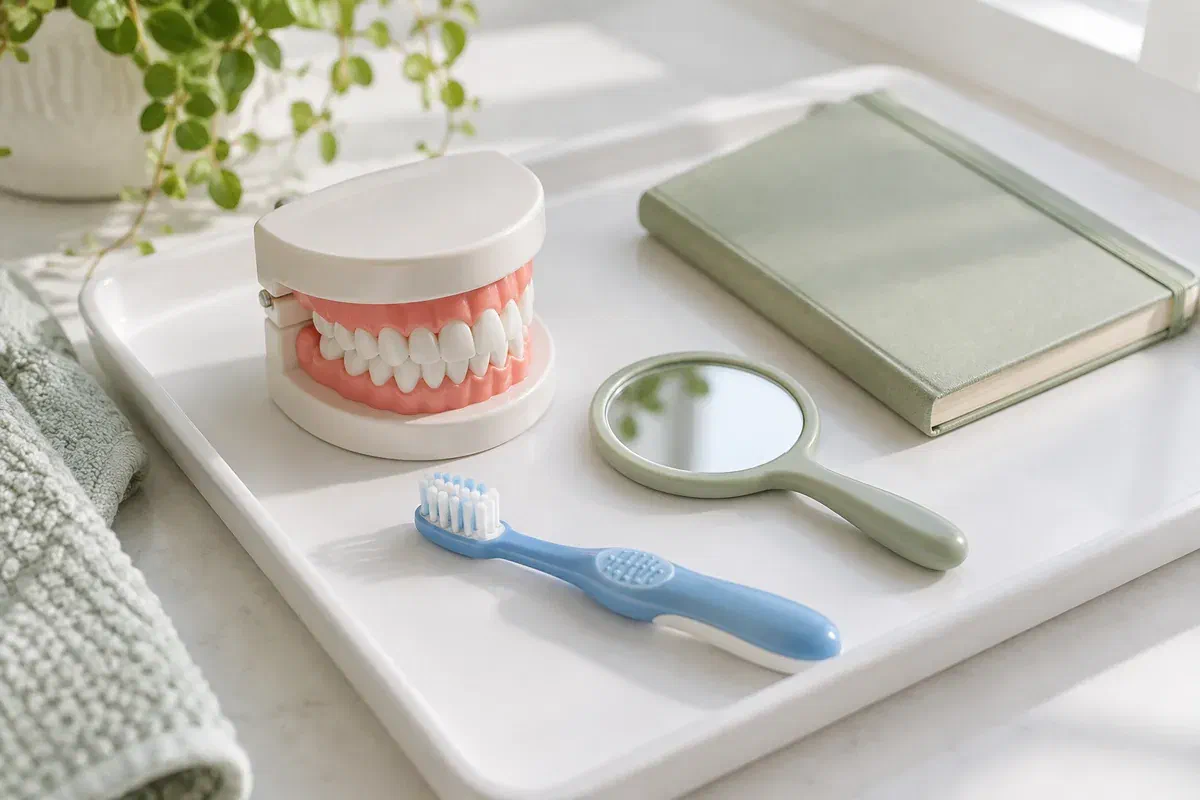
Illustrative child-sized toothbrush and dental teaching model for home-care instruction
Look past the equipment

Three places a new brush will not fix on its own

Admitting the routine is patchy is helpful, not embarrassing. Describe what you see, and the team can distinguish a technique problem from something the dentist should look at.

Molars the brush head never visits

Back teeth that are newly erupting, crowded teeth, and surfaces near the tongue or cheek are easy to skip with any brush. Have the clinician point to them on your child. A powered head held in one place can leave large areas untouched.

Dislike of vibration, flavour, or help

Some children love the buzz; others find it overwhelming. Your child may also object to the toothpaste or to an adult guiding their hand. If they seem to be avoiding pain rather than sensation, say so, so the area can be checked.

Build-up or bleeding that keeps coming back

Show the team any deposits that return, gums that bleed with gentle brushing, or places where food sticks. Switching to a more powerful setting will not reveal the cause. The team needs to understand what is happening first.

If your child has sudden pain when brushing, or any swelling, phone about that symptom. Starting with a routine cleaning may not be the right choice.

Beyond the shopping list

Technique you can see, not just a product you bought

The clinician picks cleaning methods to suit the deposits found, the surfaces involved, and what your child can tolerate. Professional care can clear plaque, surface discolouration, and hardened deposits, giving the dentist a clear view. It is also the ideal moment to watch the brush you already own being used properly.

No appointment takes the place of brushing every day, and a cleaning is not treatment for a separately diagnosed problem. Ask what was accomplished and what may need a different visit. The useful outcome is a concrete adjustment to try at home, not another purchase.

Patient information: AAPD — the role of professional cleaning in pediatric dentistry

Using your brush on your child’s teeth

Ask the team to show how to guide your child’s brush, manual or powered, to each surface. A model helps with the concept, but the advice should match your child’s mouth. Practise before you leave.

Who guides the brush, and when

A motor does not replace coordination. Talk through which areas your child can reach on their own and where an adult should still help. Independence can grow step by step, whatever kind of brush is used.

Testing one change at a time

If you change the brush or toothpaste, try it consistently before judging. Note how brushing goes and what is still difficult. Share that at the next visit so the team can refine its suggestions.

The visit, in order

Show us the brush, then watch it in action.

Ask what the appointment covers, including whether an exam or another preventive treatment is planned. There should be a reason behind every step.

  1. Bring the brush and describe the routine

    Hand over your child’s brush and toothpaste, and explain how brushing goes at home. Mention any medicines, health changes, or new symptoms. If you are unsure whether a product suits your child, the packaging helps.

  2. Identify deposits and anything to review

    The clinician checks cleaning needs and flags findings for the dentist. Let them know about sore areas in advance. Stains, swelling, or a chipped tooth deserve an explanation rather than a quick polish.

  3. Clean in a way that suits your child

    Tools and techniques are chosen to match the findings and your child’s comfort. Your child can ask for a break, and you can ask questions. The approach can differ from tooth to tooth.

  4. Practise with your child’s own brush

    The team reviews brushing and cleaning between teeth using the brush you brought where possible. Check how much toothpaste is right at your child’s age and how much help to give. Ask when to return and whether anything else needs attention.

Making the most of the brush at home

Guide it slowly, tooth by tooth.

If fluoride or another product was applied, follow the instructions given. Otherwise, keep going with the routine you discussed.

Keep the brush head soft and fresh

Whether manual or powered, a soft head sized for your child is easier on the gums. Replace heads or brushes when the bristles wear. More force or a stronger setting is not a substitute for technique.

Steer the brush where it cannot go alone

Let your child brush, then guide the head to the surfaces they miss. Adjust your help to their abilities. If the position you were shown is awkward with a powered brush, ask the team for an alternative.

Call about symptoms that hang around

If bleeding, soreness, or food trapping persists, contact the clinic. Explain what you have tried, including any brush changes. Do not use sharp tools or force floss into a painful spot.

Patient information: Canadian Dental Association — cleaning children’s teeth

Choosing your child’s next appointment

Which visit answers your question?

Cleaning, prevention, and diagnosis can share a visit but are distinct. Ask what is recommended and the reason.

When build-up and daily brushing are the issue

Cleaning plus a brush and technique check

This visit addresses the cleaning needs found and lets you practise with the brush you have. Name the specific difficulty you want help with. Confirm what was done and how to check progress at home.

When a sore tooth, gum change, or breakage needs diagnosing

A dentist’s examination

Some symptoms are not explained or resolved by cleaning. A closer look by the dentist, and possibly further assessment, could be the right next step. Tell the clinic about the symptom when booking so enough time is set aside.

When risk or access needs point to more

Additional prevention, chosen individually

Fluoride, sealants, home-care adjustments, or an adapted appointment may be considered. Ask how a recommendation relates to your child’s risk and needs. A longer visit or more products is not automatically better.

Brush and product questions

Ask before you buy the next gadget.

One tooth, one product, or one tricky moment is enough to start. Everyday words are fine.

(905) 876-4488
Is an electric toothbrush better than a manual one for my child?
Either can work well when it is used correctly and reaches every surface. Some children find a powered brush easier or more motivating; others dislike the sensation. Bring your child’s brush and ask the team which suits their abilities and preferences.
At what age can a child start using a powered toothbrush?
There is no single answer, and suitability depends on the brush and your child. Look for a model designed for children and ask the team whether it fits your child’s mouth and comfort. Adult supervision and help remain important.
My child only lets the brush buzz on the front teeth. How do I fix that?
During the visit, request a demonstration of guiding the brush head slowly to each back tooth and pausing there. Letting your child brush first and then finishing the molars yourself often helps. Practising at the chair, with the clinician watching, can make the movement feel more natural for both of you.
Do brushing apps or timers make a difference?
They can encourage children to brush longer and spread the time more evenly around the mouth. However, a timer does not guarantee the right surfaces are cleaned, and some children simply wait for the music to end. Use them alongside adult checking of the difficult areas, and mention at the visit which tools your child responds to.
We are coming from Georgetown. Should we bring spare brush heads to the visit?
Bringing the brush your child uses is enough. If you have different heads or sizes at home, mention them or bring one so the team can compare. That helps the advice relate to what you will actually use.
How often should powered brush heads be replaced?
Follow the manufacturer’s guidance and replace the head sooner if bristles look worn or splayed. Worn bristles clean less effectively. Ask the team if you are unsure whether your child’s current head is still suitable.
Children’s teeth cleaning for Georgetown families

Get more from the brush already in your bathroom.

Call our Bronte Street practice to arrange your child’s cleaning. If you are travelling from Georgetown, bring your child’s brush and mention difficult areas or symptoms, so the visit covers both professional care and the routine at home.

The cleaning approach and any additional care depend on assessment. Please mention pain or gum concerns when you book.

Visit Milton Dental Clinic
Unit 1, 342 Bronte St. S, Milton, ON L9T 5B7
Get directions Clinic hours
Monday–Thursday
11am–7pm
Friday–Sunday
By appointment only

Areas we serve

  • Milton
  • Oakville
  • Mississauga
  • Georgetown
  • Halton Hills
  • Acton
  • Campbellville
  • Brampton
  • Burlington
  • Puslinch
  • Rockwood
  • Erin
  • Caledon
  • Etobicoke
  • Old Milton
  • Bronte Meadows
  • Timberlea
  • Dorset Park
  • Dempsey
  • Clarke
  • Beaty
  • Coates
  • Harrison
  • Scott
  • Willmott
  • Ford
  • Bowes
  • Cobden
  • Walker
  • Mountain View
  • Milton Heights
  • Hawthorne Village
  • Valley View
  • Fallingbrook
  • Nassagaweya
  • Trafalgar
  • Esquesing
  • Nelson
  • Brookville
  • Moffat
  • Glen Williams
  • Norval
  • Limehouse
  • Stewarttown
  • Ashgrove
  • Hornby
  • Silver Creek
  • Speyside
  • Scotch Block
  • North Oakville
  • River Oaks
  • Glen Abbey
  • West Oak Trails
  • Palermo
  • Bronte Creek
  • College Park
  • Joshua Creek
  • Uptown Core
  • Preserve
  • Iroquois Ridge
  • Lisgar
  • Meadowvale
  • Meadowvale Village
  • Churchill Meadows
  • Erin Mills
  • Central Erin Mills
  • Streetsville
  • East Credit
  • Creditview
  • Heartland
  • Sheridan
  • Mount Pleasant
  • Credit Valley
  • Huttonville
  • Churchville
  • Springbrook
  • Northwest Brampton
  • Bram West
  • Fletcher's Meadow
  • Fletcher's Creek South
  • Alton Village
  • Orchard
  • Millcroft
  • Headon Forest
  • Tansley
  • Brant Hills
  • Tyandaga
  • Kilbride
  • Lowville
  • Aberfoyle
  • Morriston
  • Arkell
  • Hillsburgh
  • Freelton
  • Carlisle
  • Waterdown
  • Flamborough
  • Mountsberg

How can we help?

Milton Dental Clinic

Have a question about your smile? Choose the option that works best for you.

For urgent dental concerns, please call.
Messages are reviewed during clinic hours.