

Illustrative child and parent watching a brushing demonstration on a dental model
Children’s Dentistry

Teeth Cleaning for Children in Halton Hills

A pink streak in the sink after brushing can make any parent stop and stare. For households across Halton Hills, a children’s cleaning visit is a sensible place to ask about it, combining professional care with help on gentle, thorough brushing at home.

A little blood on the brush

Bleeding gums are a question, not a verdict.

Seeing blood when your child spits out toothpaste is unsettling. Often parents respond by brushing that area less, or by scrubbing it harder. Neither reaction tells you why it is happening. A cleaning appointment lets the team look at the gumline, check for deposits, and talk about what might be going on.

Come ready to describe the details. Is it one spot or several? Does it happen every time, or only after a busy week of rushed brushing? Who usually helps, and does your child flinch at that area? Combined with what the clinician sees, that history helps the team decide whether this is about technique or needs the dentist’s attention.

Removing plaque and hardened deposits during the visit gives the gums a fresh start and lets the dentist examine the area clearly. Learning a gentler angle at the gumline helps at home. Still, a tidy-looking mouth afterwards does not by itself rule out a cavity, a gum problem, or another cause.

Ask about bleeding gums at a cleaning
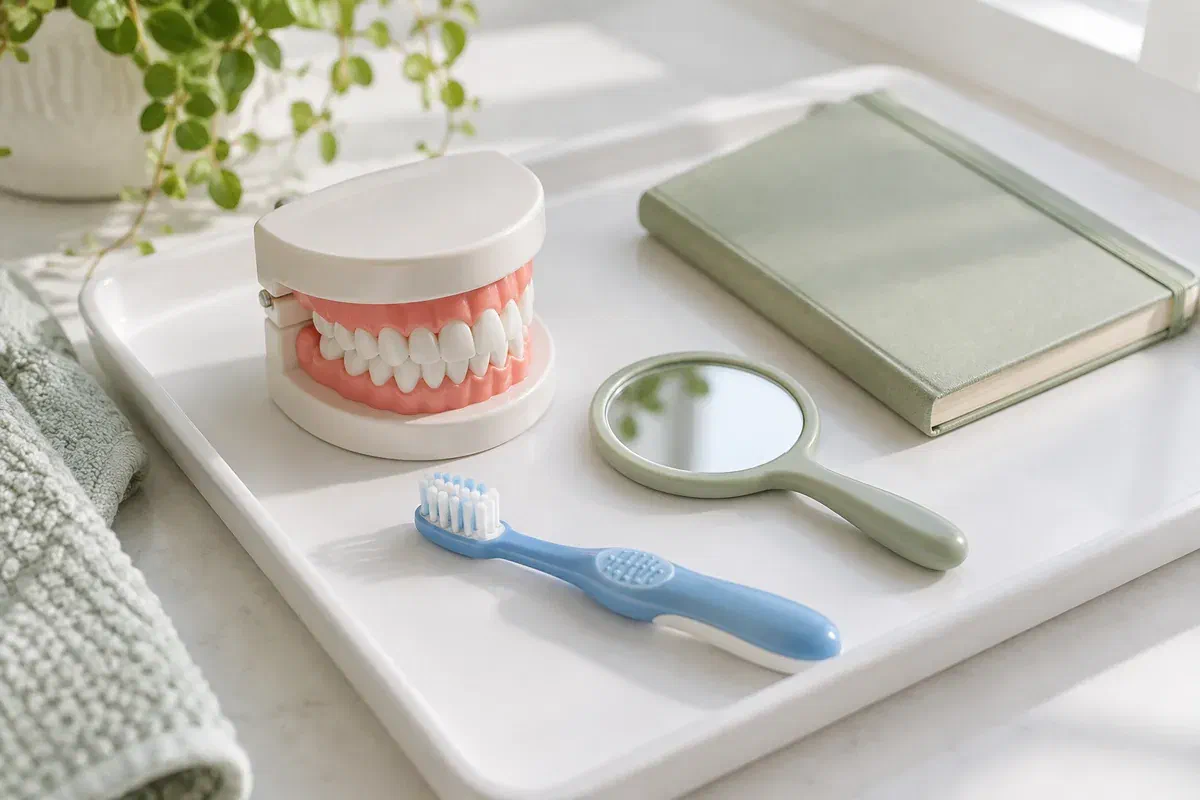
Illustrative child-sized toothbrush and dental teaching model for home-care instruction
Details worth mentioning

Where is it bleeding, and when?

A clear description helps more than a perfect routine. The team can then tell whether brushing changes may help or whether an examination is the better next step.

Gumlines that get skipped

Plaque often builds where the tooth meets the gum, particularly around back molars and crowded teeth. If those edges are regularly missed, the gums there may react. Have the clinician show you those exact margins on your child’s teeth.

Pulling away from a tender area

Your child might push your hand away because the gum is sore, because the toothpaste stings, or because they want to do it themselves. Try to note which. A child who avoids one spot may be protecting it, and that is worth checking.

Bleeding, build-up, or food that lodges

Point out where bleeding happens, any visible deposits, and gaps that catch food. Pressing harder on a bleeding gum is not the solution. Understanding the cause comes before deciding what care is needed.

Bleeding together with swelling, a bad taste, or sudden pain is reason to call the clinic about the symptom. A routine cleaning may not be the right first visit.

What a visit can do for sore gums

A cleaner gumline, and a gentler technique

The clinician tailors cleaning to what is found, which surfaces are affected, and how your child is coping. Professional care can lift plaque, staining, or hardened build-up from along the gums and gives the dentist a better view. You also get to see exactly how to angle a soft brush toward that edge.

Cleaning in the chair cannot stand in for daily brushing, and it is not a treatment if a separate problem is found. Ask what the visit achieved for the gums and what, if anything, needs more attention. Knowing your next practical step is the real result.

Patient information: AAPD — the role of professional cleaning in pediatric dentistry

Seeing the gentle gumline angle

Request a demonstration of how to place the bristles at the gum margin without scrubbing. Advice should match your child’s mouth, not only a model. Try it while you are still there so the team can correct the angle.

Deciding who brushes the tricky parts

Children develop the dexterity for gumline brushing at different ages. Agree on which areas your child can manage and where you should still help. Independence can build gradually while the gums still get the attention they need.

Tracking whether the bleeding settles

Note whether the bleeding changes over the following weeks with gentler, consistent brushing. Share what you see at the next appointment, or call sooner if it worsens. That information helps the team decide on next steps.

How the cleaning goes

History, assessment, cleaning, coaching

Feel free to ask what the appointment includes, for example whether the dentist will examine the gums as well. You should understand why each part is happening.

  1. Describe the bleeding and the routine

    Tell the team where and when bleeding occurs, who helps with brushing, and which products you use. Mention any medicines or health conditions, since some can affect the gums. Bring products you are unsure about.

  2. Look closely at gums and deposits

    The clinician checks for build-up and notes anything for the dentist to review. Mention tender spots before instruments reach them. Swelling, discolouration, or damage should be understood, not just polished.

  3. Clean with care around tender areas

    Techniques and instruments are chosen to suit the findings and your child’s comfort. Pauses and explanations are fine. Some areas may need more careful attention than others.

  4. Show the home technique for the gumline

    The team reviews gentle brushing at the gum edge and suitable ways to clean between teeth. Confirm toothpaste advice for your child’s age and how much help to give. Ask when to return and whether the dentist recommends any further assessment.

Caring for the gums at home

Soft bristles, light pressure, every day.

If a fluoride treatment or other product was used, follow the instructions you were given. Otherwise, continue the gentle routine discussed at the visit.

Choose soft bristles and the right size

A soft brush with a head small enough for your child’s mouth helps you reach the gumline without scrubbing. Replace it when the bristles fan out. Harder bristles or more pressure are not the answer to bleeding.

Keep helping along the gum edge

Many children find the gumline the hardest area to clean well. Let your child brush, then gently go over the margins yourself. If the angle you were shown is awkward, ask for another demonstration.

Report bleeding that does not improve

If bleeding or soreness continues despite consistent, gentle brushing, contact the clinic. Explain what you have tried and what you notice. Avoid sharp tools or forcing floss into a painful area.

Patient information: Canadian Dental Association — cleaning children’s teeth

Which appointment suits the concern

Sorting a cleaning question from a diagnostic one

A cleaning, a preventive treatment, and a diagnosis can happen together, but they do different jobs. Ask what is recommended and the reasoning.

For build-up and brushing technique along the gums

Cleaning with gumline coaching

This visit removes identified deposits and shows you how to brush the gum edges gently. Share the specific areas you are worried about. Confirm what was done and how to check progress.

If bleeding persists or comes with pain or swelling

A dentist’s assessment

Not every gum symptom is explained by plaque. The dentist may want to examine the area more closely and discuss whether other assessment is needed. Mention persistent bleeding when you call, along with how long it has been going on, so enough time is set aside to look into it properly.

If your child’s risk or circumstances call for more

Further preventive support

Fluoride, sealants, changes to home care, or a different appointment approach may be suggested individually. Ask how each option relates to your child’s risk. Extra products are not automatically better.

Gum questions

What parents ask about bleeding while brushing

You can ask about one spot or one pattern. No technical words are needed.

(905) 876-4488
Is it normal for a child’s gums to bleed a little when brushing?
Bleeding can happen when plaque has built up along the gumline, but it should be checked rather than assumed to be normal. Mention it to the team, who can look at the area and suggest a gentle routine. Call if it comes with swelling or pain.
Should we avoid brushing the area that bleeds?
Usually, gentle brushing should continue, because avoiding the area can allow more plaque to build. Use a soft brush and light pressure. The team can show you the right technique and decide whether the area needs further assessment.
Can a medicine my child takes affect their gums?
Some medicines and health conditions can affect the gums or mouth. Tell the team about everything your child takes, including recent changes. They can consider it when assessing the gums and may suggest coordinating with your child’s doctor if needed.
How long after a cleaning should the bleeding settle?
This varies from child to child. Some mild bleeding can improve with consistent, gentle brushing, but timelines differ and depend on what was causing it. Ask the team what to watch for and when to call. Keeping a quick note of which evenings it happens can make the next conversation clearer. If bleeding gets worse, contact the clinic sooner.
We are in Halton Hills. Should we call before booking if the gums are swollen?
Yes. Describe the swelling and any other symptoms when you call. The team can advise whether a cleaning or an examination is the right first appointment, so the trip is planned around what your child needs.
Could bleeding be a sign of something other than plaque?
Possibly. Bleeding can have several causes, including a sore tooth, an erupting tooth, or other conditions. That is why the dentist may examine the area. Let the team know about any other symptoms or health changes.
Children’s cleanings for Halton Hills households

Gentle care for gums that need a little attention

Reach out to our Bronte Street practice to book your child’s cleaning. From anywhere in Halton Hills, mention bleeding, hard-to-reach areas, or other symptoms when you call, so the appointment supports both professional care and gentle brushing at home.

The cleaning method and any extra care depend on assessment. Please describe bleeding, swelling, or pain when booking.

Visit Milton Dental Clinic
Unit 1, 342 Bronte St. S, Milton, ON L9T 5B7
Get directions Clinic hours
Monday–Thursday
11am–7pm
Friday–Sunday
By appointment only

Areas we serve

  • Milton
  • Oakville
  • Mississauga
  • Georgetown
  • Halton Hills
  • Acton
  • Campbellville
  • Brampton
  • Burlington
  • Puslinch
  • Rockwood
  • Erin
  • Caledon
  • Etobicoke
  • Old Milton
  • Bronte Meadows
  • Timberlea
  • Dorset Park
  • Dempsey
  • Clarke
  • Beaty
  • Coates
  • Harrison
  • Scott
  • Willmott
  • Ford
  • Bowes
  • Cobden
  • Walker
  • Mountain View
  • Milton Heights
  • Hawthorne Village
  • Valley View
  • Fallingbrook
  • Nassagaweya
  • Trafalgar
  • Esquesing
  • Nelson
  • Brookville
  • Moffat
  • Glen Williams
  • Norval
  • Limehouse
  • Stewarttown
  • Ashgrove
  • Hornby
  • Silver Creek
  • Speyside
  • Scotch Block
  • North Oakville
  • River Oaks
  • Glen Abbey
  • West Oak Trails
  • Palermo
  • Bronte Creek
  • College Park
  • Joshua Creek
  • Uptown Core
  • Preserve
  • Iroquois Ridge
  • Lisgar
  • Meadowvale
  • Meadowvale Village
  • Churchill Meadows
  • Erin Mills
  • Central Erin Mills
  • Streetsville
  • East Credit
  • Creditview
  • Heartland
  • Sheridan
  • Mount Pleasant
  • Credit Valley
  • Huttonville
  • Churchville
  • Springbrook
  • Northwest Brampton
  • Bram West
  • Fletcher's Meadow
  • Fletcher's Creek South
  • Alton Village
  • Orchard
  • Millcroft
  • Headon Forest
  • Tansley
  • Brant Hills
  • Tyandaga
  • Kilbride
  • Lowville
  • Aberfoyle
  • Morriston
  • Arkell
  • Hillsburgh
  • Freelton
  • Carlisle
  • Waterdown
  • Flamborough
  • Mountsberg

How can we help?

Milton Dental Clinic

Have a question about your smile? Choose the option that works best for you.

For urgent dental concerns, please call.
Messages are reviewed during clinic hours.