

Illustrative patient discussing spaces between front teeth with a dental clinician
Cosmetic Dentistry

Black Triangle Closure

Small spaces near the gumline can change the way your smile looks and feels. Explore black triangle closure in Milton with an assessment of tooth shape, gum health, and the options for reducing a space while keeping the area comfortable to clean.

A closer look at black triangle closure

A small space deserves a thoughtful explanation.

A black triangle is the dark-looking space that can appear between two teeth near the gumline. The name describes its appearance; it does not explain its cause. Tooth shape, tooth position, and the surrounding gum and bone support can all matter when deciding whether a change is appropriate.

For a suitable space, composite bonding may reshape the sides of the teeth and reduce the visible opening. That changes the tooth contour; it does not replace missing gum tissue or rebuild bone. An attractive result also needs an appropriate contact between the teeth and a surface you can keep clean.

At Milton Dental Clinic, the conversation begins with what you have noticed. Perhaps the space has always been there, became more visible after orthodontic treatment, or appeared alongside a change in your gums. We will help you understand what needs assessment before discussing a cosmetic repair.

Ask about a space near your gumline
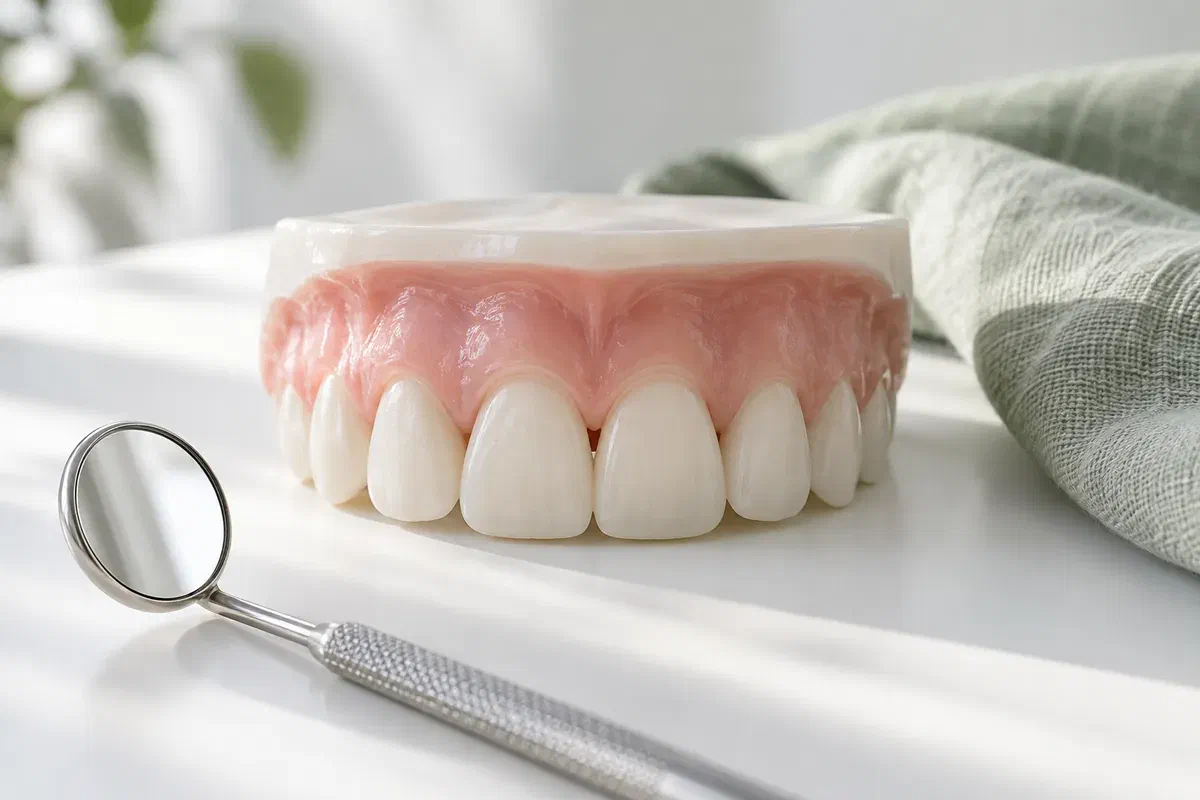
Illustrative dental model showing small triangular spaces near the gumline
Understanding the space

Look at the teeth and the tissues around them.

A photograph can show the opening, but an examination is needed to understand the circumstances. Mention when it appeared, whether it is changing, and any symptoms you have noticed.

A visible opening when you smile

Explain which space concerns you and what kind of change you hope to see. A single small opening and several spaces across the smile may call for different planning. Ask how adding material would affect the apparent width and proportions of the teeth.

Food catching between neighbouring teeth

Point out where food collects and whether cleaning is difficult or uncomfortable. The assessment should consider the contact and contour rather than simply covering a dark area. A cosmetic change should not leave you with a new ledge or an inaccessible space.

Bleeding or a changing gumline

Tell the clinician about bleeding, recession, tenderness, or looseness. These findings can change the order of care. If gum disease is present, discussing its management is a priority before deciding whether cosmetic closure is suitable.

Not every visible triangle means disease, and not every healthy space needs treatment. Ask which findings matter for your oral health and which decisions are primarily about appearance.

What a considered plan can offer

Aim for a balanced shape and a cleanable result.

Selected spaces may be reduced by carefully shaping composite around the neighbouring tooth surfaces. The amount of change depends on the starting anatomy and the health of the tissues. Complete closure is not always a sensible or achievable goal.

Before agreeing to treatment, discuss the proposed outline of the teeth, the likely maintenance, and any limitations. You should understand whether the plan addresses one visible concern or forms part of wider gum, restorative, or orthodontic care.

Patient information: Clinical trial — composite restoration of anterior black triangles · Research on tooth contact, bone level, and interdental gum tissue

An explanation of what can realistically change

Ask the clinician to identify the feature being changed and the features that will remain. This keeps the conversation specific. A reduction in the dark space may be worthwhile even when eliminating it entirely would make a tooth look too broad.

A choice that respects healthy tooth structure

Discuss how the tooth surfaces would be prepared and whether material would be added, removed, or both. Do not assume every cosmetic option has the same preparation. Ask what future repair or replacement could involve before deciding.

A plan for checking the result over time

The appearance on treatment day is only one part of the outcome. Ask how the contact, gum response, and condition of the material will be reviewed. Make sure you know whom to contact if the area becomes difficult to clean.

Planning black triangle treatment

Understand the cause before choosing the contour.

The appointment should give you room to discuss both appearance and oral health. Ask what information is needed and whether another clinician's assessment would help with the decision.

  1. Review the history and assess the area

    Discuss previous orthodontic work, gum treatment, restorations, and the timing of the change. The clinician assesses the teeth and surrounding tissues. Relevant records may be needed to understand the support and contact relationship rather than relying on the visible opening alone.

  2. Compare the proposed approaches

    Talk through whether observation, gum care, bonding, or an orthodontic opinion fits the findings. If bonding is proposed, ask how the tooth shape will change and how much reduction in the space is reasonable. Confirm the estimate and maintenance expectations.

  3. Shape composite when it is appropriate

    For an agreed bonding procedure, the surfaces are prepared and resin is placed, shaped, and hardened with a curing light. The technique must account for the neighbouring tooth and gumline. Tell the team if you need an explanation or a pause.

  4. Check the contact and demonstrate cleaning

    The clinician finishes and polishes the restoration and checks the result. Ask to see how to clean between the treated teeth. Review any remaining opening, the new contour, and the follow-up plan so you understand what has changed.

Living with the new contour

Make cleaning part of the result from the beginning.

A space that looks smaller still needs daily care. Follow the demonstrated technique and tell the team if your usual cleaning method no longer passes comfortably between the teeth.

Use the recommended interdental technique

Ask which cleaning aid and size suit the treated area. Use it gently rather than forcing it into a space or abandoning cleaning altogether. If floss repeatedly shreds or catches, arrange a check so the contact and surface can be assessed.

Watch the material without testing its limits

Avoid biting hard objects or using your front teeth to open packaging. Report a rough edge, chip, or change in the contour. Do not try to file or glue the restoration yourself; the next step depends on the condition of the bonded surface.

Keep gum and restoration reviews

Continue the recall and periodontal appointments recommended for your circumstances. Mention persistent bleeding, food trapping, or a new space. A cosmetic restoration does not remove the need to monitor the tissues that support the teeth.

Patient information: Cleveland Clinic — gum recession and its assessment

Choosing an appropriate response

The best next step depends on why the space is there.

Ask what each option is intended to achieve. Reducing a visible opening, controlling gum disease, and changing tooth position are different goals and may require different stages of care.

When tooth shape can be adjusted appropriately

Composite contouring of a suitable space

Bonding may reduce the visible triangle by changing the sides of neighbouring teeth. Discuss the resulting proportions, cleanability, and maintenance. The proposal should explain the limits rather than promise that every space can disappear completely.

When tissue health needs attention

Gum assessment and treatment first

If there are signs of periodontal disease or an unexplained change in the gumline, address those findings before settling on cosmetic work. Ask whether a periodontal referral is appropriate and when the area can be reassessed for appearance-related options.

When position or personal preference guides the choice

Observation or an orthodontic opinion

A healthy space can sometimes be monitored if it does not trouble you. Where tooth position contributes, an orthodontic assessment may help clarify alternatives. You can take time to compare the practical implications before committing to a change.

Questions about black triangles

Understand the difference between filling a space and treating its cause.

Bring the questions that matter to your smile and daily cleaning routine. The answer should relate to the individual space, rather than a standard cosmetic package.

(905) 876-4488
Does a black triangle between my teeth automatically mean I have gum disease?
No. The appearance alone does not establish the cause. Tooth shape and position can contribute, as can changes in tissue support. An examination helps distinguish a stable anatomical space from a concern that needs periodontal assessment.
Will bonding a black triangle make the missing gum grow back?
Bonding changes the shape of the tooth surfaces; it does not regenerate the gum or bone. Ask what the proposed restoration will achieve visually and how the surrounding tissues will be monitored. Gum treatment, when needed, has a separate purpose.
Could closing a triangle make my front teeth look wider?
Adding material can alter the apparent width and outline. Discuss that trade-off before treatment. The clinician should explain how much change is appropriate and whether a smaller reduction in the space would better preserve the proportions you prefer.
Can a black triangle be treated after I have finished wearing braces?
It may be possible, but the teeth, gums, and retention plan need review. Tell the dentist about your orthodontic history and bring your retainer. A change in tooth contour can affect an appliance’s fit and needs coordinated planning.
Should I expect to floss between teeth after black triangle bonding?
Yes, the treated area still needs appropriate interdental cleaning. Ask for a demonstration and report a contact that catches or shreds floss. Do not force a cleaning aid or assume the area should be sealed together and left uncleaned.
Do all the black triangles in my smile have to be treated together?
Not necessarily. Ask whether the spaces have the same cause and whether treating only the area that concerns you would produce a reasonable result. Planning should consider the overall appearance and health without assuming you want every visible difference changed.
Black triangle closure in Milton

Bring us the space you notice and the questions behind it.

Arrange an assessment at our Bronte Street practice to discuss the appearance of your gumline, any cleaning difficulty, and the options worth considering. We can help you understand the findings before you decide on treatment.

Suitability depends on tooth shape, position, and tissue health. Cosmetic bonding does not replace treatment for active gum disease.

Visit Milton Dental Clinic
Unit 1, 342 Bronte St. S, Milton, ON L9T 5B7
Get directions Clinic hours
Monday–Thursday
11am–7pm
Friday–Sunday
By appointment only

How can we help?

Milton Dental Clinic

Have a question about your smile? Choose the option that works best for you.

For urgent dental concerns, please call.
Messages are reviewed during clinic hours.