

Illustrative patient discussing spaces between front teeth with a dental clinician
Cosmetic Dentistry

Black Triangle Closure in Burlington

Your teeth are finally straight, yet small dark gaps appeared near the gums once the braces or aligners finished. From Burlington, come and find out why that happens and whether composite reshaping can soften the spaces while your retainer still fits.

Straight teeth, new shadows

The gap that showed up after orthodontics

It can feel unfair. After months of treatment the teeth line up beautifully, and then you notice little dark triangles near the gums. Crowded teeth sometimes overlap in a way that hides their true shape; once they are untangled, a narrow neck or a gap above the contact point can become visible. Gum and bone levels may also play a part.

Composite bonding is one way to respond when the tooth shape is the main reason. Resin is added to the sides of the neighbouring teeth to make the opening smaller. That changes the teeth, not the tissue: gum that has receded or bone that is missing is not replaced. The result also has to keep a cleanable contact.

For people in Burlington who have just finished orthodontics, we start by hearing about your treatment and how the space developed. We examine the gums, check how your retainer fits and talk about any changes you have noticed before cosmetic options come into it.

Ask about gaps after braces
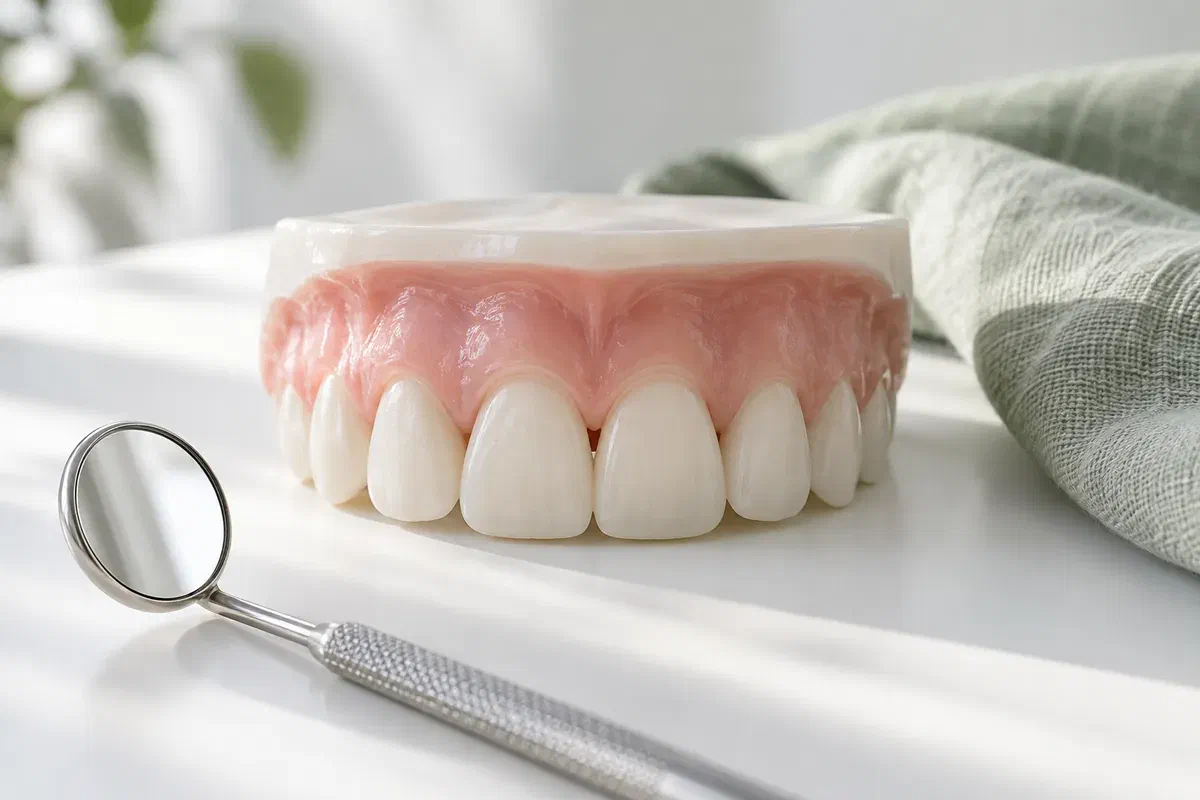
Illustrative dental model showing small triangular spaces near the gumline
What to bring up at the visit

More than one thing can be going on

Photos from before and after your orthodontics can be helpful, but they cannot replace an examination. Tell us when the space appeared, whether it seems to be changing and anything else you have felt.

The look when you smile or speak

Point out which triangle draws your attention and what you would like to change. A single opening between the central teeth may be handled differently from several along the arch. Ask how added composite might affect tooth width now that everything is aligned.

Food or floss getting caught

Mention spots where food lodges or floss snags. The dentist checks how the teeth now touch and how their sides are shaped. Any reshaping must leave a smooth surface you can clean, not a shelf where debris gathers.

Gum changes during or after treatment

Tell us about bleeding, recession, tenderness or a tooth that feels mobile. Teeth that have recently moved can need time to settle, and any sign of gum disease should be treated before cosmetic closure is considered.

Plenty of post-orthodontic triangles are simply the result of tooth shape and are perfectly healthy. We will be clear about what matters for your oral health and what is a choice about appearance.

A plan that protects your result

Bonding that respects your alignment

Composite carefully shaped on the adjoining surfaces can make some triangles much less obvious. How far that goes depends on the tooth outline and the gums. Complete closure is not always wise, especially if it would make the newly straightened teeth look broad.

Before treatment, ask about the planned contour, maintenance and limits. It also helps to know how the bonding fits with your orthodontist's retention plan and whether any further gum or restorative care is part of the picture.

Patient information: Clinical trial — composite restoration of anterior black triangles · Research on tooth contact, bone level, and interdental gum tissue

A clear statement of the goal

Ask the dentist to explain exactly which feature will change and what will stay. This keeps the plan specific. Making the shadow smaller can be a good outcome even if eliminating it would leave a tooth looking too wide.

Minimal change to healthy enamel

Find out what preparation each tooth would need and whether anything would be removed before resin is added. Cosmetic options differ here. Ask how the bonding could be repaired or replaced in future without disturbing your alignment.

Monitoring alongside retention

Your smile on the day of bonding is only part of the result. Ask how the contacts, gums and composite will be checked over time, and who to contact if cleaning that area becomes hard or your retainer stops seating properly.

Steps after orthodontics

Check the foundations, then shape the teeth

Your visit should cover how the teeth look and how the gums are doing. Ask what records we need and whether input from your orthodontist would help.

  1. Share your orthodontic story and get examined

    Let us know when your braces or aligners finished, what retainer you wear and any gum treatment you have had. The dentist assesses the teeth and gums. X-rays may help show bone levels and contact points that the visible space cannot reveal.

  2. Decide on an approach together

    We discuss whether monitoring, gum care, bonding or a conversation with your orthodontist suits the findings. If bonding fits, ask how each tooth would change and how much reduction is sensible. Confirm the estimate and the upkeep involved.

  3. Add and sculpt the composite

    With your agreement, the surfaces are prepared, resin is applied in layers, shaped and cured with a light. The contour has to work with the neighbouring tooth and the gum edge. You can ask for an explanation or a break at any time.

  4. Test the contact, the retainer and your cleaning

    The bonding is polished and checked. Bring your retainer so its fit can be reviewed. You will practise flossing or brushing through the bonded spot before leaving, and we go over any remaining gap, the new shape and your next appointment.

Keeping things on track

Retainer in, cleaning aid ready

The gap may look smaller, but it still needs daily cleaning. Use the method you were shown, and tell us if your floss or brush no longer slides through, or if your retainer feels different.

Clean between the teeth every day

Ask which floss or interdental brush suits the bonded area, and in which size. Ease it through gently, never forcing it. If floss keeps tearing or catching, book a check so we can look at the contact.

Go easy on the bonded edges

Avoid chewing ice or hard objects, and do not use your front teeth to open things. Let us know about a rough spot, chip or shape change. Do not try to smooth or glue it yourself; the right fix depends on the surface.

Keep retainer, recall and gum visits

Wear your retainer as instructed and stay with your recall and periodontal schedule. Mention lasting bleeding, trapped food or a new space. Bonding does not remove the need to monitor gums and bone.

Patient information: Cleveland Clinic — gum recession and its assessment

After braces: your choices

Three ways forward, depending on the cause

Each option solves a different problem. Narrowing a visible gap, treating gum disease and adjusting tooth position are separate aims, and they may be handled in sequence.

When the tooth outline can be adjusted

Composite reshaping of a suitable space

Bonding can reduce a triangle by building out the sides of the teeth next to it. Talk through the proportions, cleaning and maintenance. A careful plan explains its limits instead of promising every gap will disappear.

When the tissues need attention first

Gum care before cosmetic work

Signs of periodontal disease or an unexplained change in the gumline should be addressed before cosmetic treatment is planned. Ask whether a periodontist referral would help and when the area can be reassessed.

When position or preference guides the decision

Monitoring or a return to your orthodontist

A healthy space that does not bother you can be watched. If tooth position is part of the reason, your orthodontist may suggest other approaches. Take time to compare the practical side of each option.

Post-orthodontic questions

What people ask once the braces come off

Bring any question about your smile, your retainer or your cleaning routine. Answers should apply to your space, not a set package.

(905) 876-4488
Why did black triangles appear after my teeth were straightened?
Crowded or overlapping teeth can hide their shape. Once aligned, a narrow area near the gum or a contact point that sits high can leave a visible space. Gum and bone levels can also contribute. An exam helps identify which factors apply.
Do I need to wait a while after braces before having bonding?
Often it is sensible to let the gums settle and confirm your retention is stable first. Your dentist and orthodontist can suggest timing based on how your teeth and tissues look. Ask what signs show the area is ready.
Will bonding affect how my retainer fits?
It can, because changing the tooth contour alters the surfaces the retainer sits against. Bring your retainer to the appointment. Sometimes it needs adjusting or replacing, so ask about that before treatment.
Can my orthodontist do anything about the triangles?
In some cases, adjusting tooth position or contacts can reduce a space. It depends on the cause. Ask your orthodontist whether movement would help in your situation and how that might combine with bonding.
Is a triangle after braces a sign my gums were damaged?
Not necessarily. Many are related to tooth shape rather than disease. Still, an examination is the way to tell, and any signs of gum disease should be addressed before cosmetic work.
If I bond one space, will the others look worse by comparison?
It is possible, which is why the whole smile is considered when planning. Ask whether treating one area would look balanced or whether neighbouring spaces would stand out more afterward.
From Burlington to our practice

Bring your retainer and your questions

Many people make the trip from Burlington once their orthodontics wraps up. Visit our Bronte Street practice to talk over the spaces near your gumline, how cleaning is going and the options that might suit your newly aligned smile, and hear our findings before you decide anything.

Suitability depends on tooth shape, position and gum health. Cosmetic bonding is not a treatment for active gum disease.

Visit Milton Dental Clinic
Unit 1, 342 Bronte St. S, Milton, ON L9T 5B7
Get directions Clinic hours
Monday–Thursday
11am–7pm
Friday–Sunday
By appointment only

Areas we serve

  • Milton
  • Oakville
  • Mississauga
  • Georgetown
  • Halton Hills
  • Acton
  • Campbellville
  • Brampton
  • Burlington
  • Puslinch
  • Rockwood
  • Erin
  • Caledon
  • Etobicoke
  • Old Milton
  • Bronte Meadows
  • Timberlea
  • Dorset Park
  • Dempsey
  • Clarke
  • Beaty
  • Coates
  • Harrison
  • Scott
  • Willmott
  • Ford
  • Bowes
  • Cobden
  • Walker
  • Mountain View
  • Milton Heights
  • Hawthorne Village
  • Valley View
  • Fallingbrook
  • Nassagaweya
  • Trafalgar
  • Esquesing
  • Nelson
  • Brookville
  • Moffat
  • Glen Williams
  • Norval
  • Limehouse
  • Stewarttown
  • Ashgrove
  • Hornby
  • Silver Creek
  • Speyside
  • Scotch Block
  • North Oakville
  • River Oaks
  • Glen Abbey
  • West Oak Trails
  • Palermo
  • Bronte Creek
  • College Park
  • Joshua Creek
  • Uptown Core
  • Preserve
  • Iroquois Ridge
  • Lisgar
  • Meadowvale
  • Meadowvale Village
  • Churchill Meadows
  • Erin Mills
  • Central Erin Mills
  • Streetsville
  • East Credit
  • Creditview
  • Heartland
  • Sheridan
  • Mount Pleasant
  • Credit Valley
  • Huttonville
  • Churchville
  • Springbrook
  • Northwest Brampton
  • Bram West
  • Fletcher's Meadow
  • Fletcher's Creek South
  • Alton Village
  • Orchard
  • Millcroft
  • Headon Forest
  • Tansley
  • Brant Hills
  • Tyandaga
  • Kilbride
  • Lowville
  • Aberfoyle
  • Morriston
  • Arkell
  • Hillsburgh
  • Freelton
  • Carlisle
  • Waterdown
  • Flamborough
  • Mountsberg

How can we help?

Milton Dental Clinic

Have a question about your smile? Choose the option that works best for you.

For urgent dental concerns, please call.
Messages are reviewed during clinic hours.