You notice it every time you smile
Show us the opening you mean and describe the result you would like. A single gap and a series of them are planned differently. Ask how adding resin would affect the apparent width and length of the teeth involved.


Lunch keeps lodging in the same spot, and the floss tears every time you reach it. If that gap near your gums bothers you in Mississauga, we can look at why it traps food and whether reshaping it would make daily cleaning easier.
For some people, the bother is not how a black triangle looks but what it collects. These small dark openings sit between neighbouring teeth just above the gum, and their shape can make them natural food traps. Why one forms varies: the outline of the teeth, how they are positioned and the gum and bone between them can each contribute.
Composite bonding can reshape the sides of suitable teeth so the opening shrinks. It is worth knowing what that does and does not do. Resin changes the tooth contour; receded gum and lost bone stay as they are. And a smaller gap is only an improvement if the new contact still lets floss or a brush through.
When you come in from Mississauga, tell us what happens at that spot day to day: what catches, what you use to clear it and whether it ever bleeds or feels tender. Those details help us decide whether gum care, a cosmetic change or simply a better cleaning tool should come first.
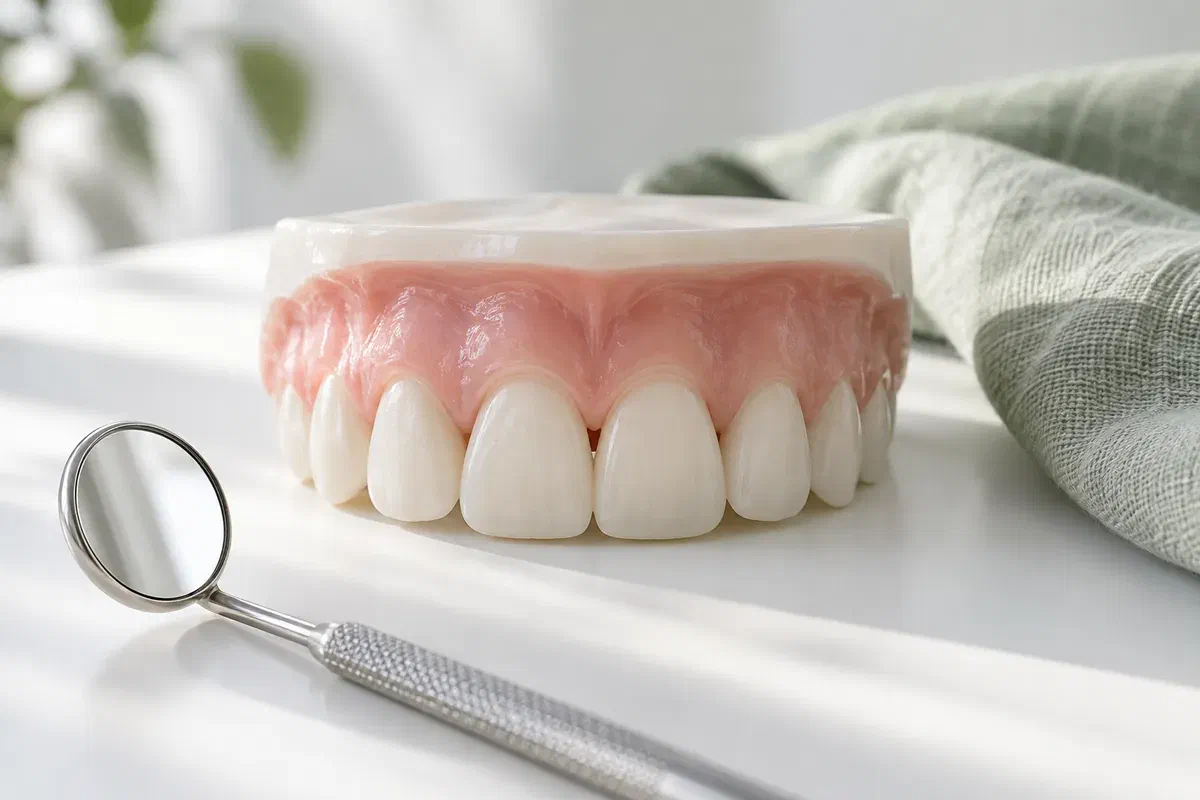
Only an examination can explain what the mirror shows. It helps to describe when you first noticed the gap, whether it has changed and anything that seems to go with it.
Show us the opening you mean and describe the result you would like. A single gap and a series of them are planned differently. Ask how adding resin would affect the apparent width and length of the teeth involved.
Let us know where food packs in and whether flossing is awkward or sore there. A good plan studies the contact and the side contours of the teeth, rather than just covering the shadow. The last thing you need is a ledge that traps even more.
Bleeding, gum recession, tenderness or a tooth that wobbles can each change the order of care. If gum disease is involved, controlling it comes first. Only after that does it make sense to ask whether cosmetic closure suits you.
A food trap is not always a sign of disease, and a gap that is healthy may need nothing more than the right floss. We will help you see which findings affect your health and which decisions are about appearance.
When the teeth suit it, carefully sculpted composite on the facing surfaces can reduce the opening and change how food moves past it. The possible change is set by the existing tooth shapes and the health of the gums. Sealing a gap completely is not always realistic or wise.
Before treatment, go over the planned outline, how you would clean it and what upkeep it will need. Ask, too, whether bonding is a stand-alone step or part of a broader plan involving gum, restorative or orthodontic work.
Patient information: Clinical trial — composite restoration of anterior black triangles · Research on tooth contact, bone level, and interdental gum tissue
Ask the dentist to explain what the composite will change and what it will not. That keeps the plan concrete. A gap that traps less food and looks smaller can be a success even if it is not fully closed.
Ask whether any tooth structure would be removed or whether resin would simply be added. Each cosmetic option asks something different of the teeth. It is sensible to know what later repairs might involve, too.
The real test comes in the months after bonding. Ask how the contact, gums and material will be checked over time, and who to call if floss starts catching or food packs in again.
Expect time to talk about both function and appearance. Ask which records are needed and whether another clinician's input would help you decide.
Tell us about past orthodontics, gum care, fillings and when the food trapping started. The dentist examines the teeth and gums. Records such as X-rays may be needed to see bone levels and the contact point, which the opening alone cannot show.
Together we look at whether monitoring, gum treatment, bonding or an orthodontic referral best suits the findings. If bonding is suggested, ask how much the gap can sensibly shrink and how the teeth will look. Confirm the estimate and expected maintenance.
On the agreed day, the tooth surfaces are prepared and resin is built up, contoured and set with a curing light. The shape has to work with the tooth beside it and the gumline. Raise a hand if you want to pause or ask something.
Once polished, the contact is checked with floss and the result is reviewed. We show you the cleaning aid that suits the new contour. Look together at any space that remains and the follow-up plan.
Less space does not mean less cleaning. Follow the method we showed you, and tell us if your floss or interdental brush suddenly stops gliding through.
Ask which product and size suits the bonded spot. Guide it through without forcing, and do not give up on that area. Floss that frays or snags again and again is worth a quick check of the contact and finish.
Do not crack nuts, chew pens or open packaging with your front teeth. Tell us about a chip, rough edge or change in shape. Leave the repair to us; filing or gluing at home can make things worse.
Keep the checkups and periodontal appointments that suit your needs. Mention ongoing bleeding, food packing in or a new opening. Cosmetic bonding does not replace regular monitoring of gum and bone.
Patient information: Cleveland Clinic — gum recession and its assessment
Ask whatever matters for your smile and your routine at the sink. The answer should fit your gap, not a pre-set package.
Book a visit at our Bronte Street practice to discuss your gumline, the trouble you have cleaning and the options worth considering. We will explain what we find so you can choose your next step with confidence.
Not every gap is a good candidate; the outline of your teeth, where they sit and the condition of your gums all decide it. Bonding is no substitute for treating active gum disease.
