

Illustrative patient discussing spaces between front teeth with a dental clinician
Cosmetic Dentistry

Black Triangle Closure in Oakville

Is the dark space between your teeth about tooth shape, your gums, or a bit of both? Coming from Oakville, you can have that question answered first, then hear whether bonding could make the gap smaller without making it harder to clean.

The first question to ask

Tooth or gum: where does the gap come from?

That is usually the most useful place to begin. The so-called black triangle is a dark opening between two teeth just above the gum, and its name says nothing about its origin. Some teeth are naturally broad at the biting edge and slim near the root. Others have shifted. Sometimes the gum and bone between them have receded.

Each cause points toward a different conversation. If the teeth themselves are the main factor and the gums are healthy, composite can often be shaped onto their sides to narrow the opening. Bonding alters tooth contour only, though. It does not restore lost gum or bone, and it still has to leave a contact and surface you can clean.

So before anyone picks up a shade guide, we listen. Tell us whether the gap was always there, became obvious after orthodontic work, or showed up as your gums changed. From Oakville or anywhere else, the health questions get sorted before the cosmetic ones.

Find out what is behind your gap
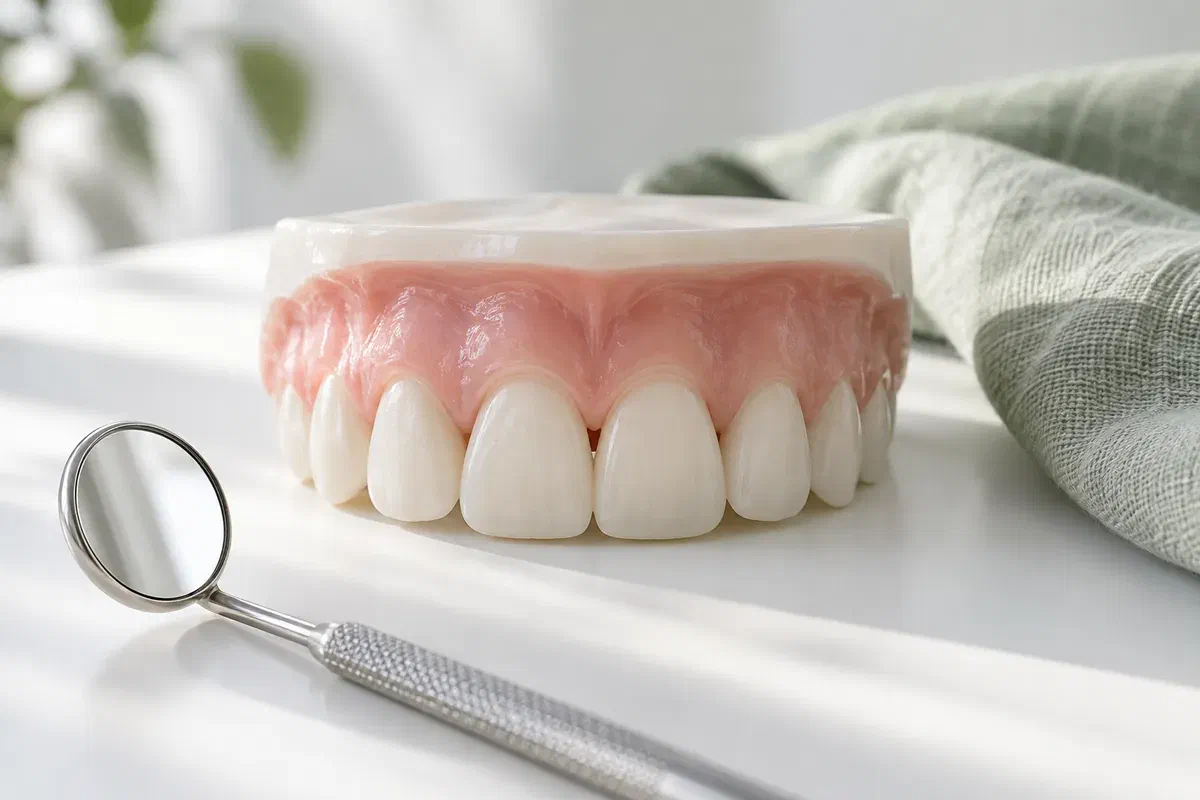
Illustrative dental model showing small triangular spaces near the gumline
Clues the exam looks for

The details that shape the plan

A picture of your smile shows the opening; it cannot show what lies beneath. Share when you noticed the space, whether it seems to be changing and any symptoms that came with it.

How visible the space is

Show us the gap that bothers you and the look you are hoping for. One small opening is planned differently from several across the front teeth. Ask how much material it would take and how that might change each tooth's apparent width.

Whether food and floss catch there

Note any spot where food wedges in or cleaning feels tricky or uncomfortable. The dentist looks at how the teeth touch and how their sides are shaped, not only at the dark area. A cosmetic change should never leave behind a ledge that is impossible to clean.

Signs from the gums themselves

Bleeding, recession, tenderness or a tooth that feels loose all deserve mention. These can change what happens first. When gum disease is present, managing it is the priority, and cosmetic closure is considered only afterward.

Some triangles reflect a healthy but unusual tooth shape and never need treatment. We will be clear about which findings relate to health and which choices are simply about how you want your smile to look.

Why a careful plan pays off

Smaller shadow, sensible proportions

When the starting point allows it, composite built up on the neighbouring surfaces can reduce an opening noticeably. The extent depends on the tooth shapes and the state of the gums. Closing a gap all the way is not always achievable, and pushing for it can make teeth look out of proportion.

Ask to see or discuss the planned outline, the upkeep and any limits before treatment. You should also know whether the bonding stands alone or sits within a larger plan involving gum, restorative or orthodontic care.

Patient information: Clinical trial — composite restoration of anterior black triangles · Research on tooth contact, bone level, and interdental gum tissue

A realistic picture before you commit

Your dentist should point out what the bonding will change and what will stay. That keeps the discussion grounded. Reducing a shadow can be worthwhile even if removing it entirely would leave a tooth looking unnaturally wide.

Minimal disruption to healthy enamel

Many bonding cases need little or no drilling, but that varies, so ask exactly what would be done to each tooth and whether anything is taken away. Cosmetic options differ in this respect. Ask too what a later repair or replacement would involve.

Ongoing checks rather than a one-off

The finished appearance is only one part of success. Ask how the contact, gum response and composite will be reviewed at later visits, and who to contact if cleaning that area becomes difficult.

What treatment involves

A step-by-step path that starts with diagnosis

There should be time to discuss appearance and oral health in equal measure. Ask what records are needed and whether a second clinician's view would help you decide.

  1. History, examination and records

    Tell us about past braces, gum treatment, fillings and when the opening first appeared. The dentist examines the teeth and surrounding gum. Radiographs or other records may be needed to understand bone support and the contact between teeth, since the visible gap does not reveal everything.

  2. A conversation about the options

    Together we consider whether monitoring, gum care, bonding or an orthodontic referral best fits the findings. If bonding is on the table, ask how each tooth would change and how much reduction is realistic. Confirm the estimate and maintenance before booking.

  3. Placing and sculpting composite

    For agreed bonding, the tooth surfaces are prepared and resin is layered, shaped and set with a curing light. The contour has to suit the neighbouring tooth and the gumline. Say so at any point if you want an explanation or a pause.

  4. Finishing, checking and a cleaning lesson

    The composite is refined and polished, and the result is reviewed. A hygienist or dentist then shows you which floss or brush slips through the new contact. Go over any remaining space, the new outline and your follow-up appointments before you leave.

In the weeks that follow

Clean it as carefully as you planned it

A narrower gap still needs daily cleaning. Use the technique you were taught, and let us know if your usual floss or brush stops fitting through comfortably.

Choose the right cleaning tool

Ask which aid and what size suits the bonded area. Slide it in gently rather than forcing it, and keep cleaning there every day. If floss shreds or sticks repeatedly, book a visit so we can check the contact and surface.

Be kind to the composite

Avoid biting on hard items or using your front teeth as tools for packaging. Tell us about a rough edge, chip or change in shape. Leave repairs to us rather than filing or gluing at home; the right fix depends on the bonded surface.

Stay on your recall schedule

Keep the checkups and periodontal visits recommended for you. Report persistent bleeding, food trapping or a new gap. A cosmetic result does not replace monitoring of the gum and bone around your teeth.

Patient information: Cleveland Clinic — gum recession and its assessment

Options, matched to cause

Why the right choice depends on the reason

Each option has its own purpose. Making a gap less visible, managing gum disease and moving teeth are separate goals, and they may need to happen in stages.

When tooth shape can be modified

Composite to narrow a suitable gap

Bonding can reduce a visible triangle by extending the sides of the teeth on either side. Discuss the proportions it creates, how you will clean it and its upkeep. A trustworthy plan explains what bonding cannot do as well as what it can.

When the tissues show warning signs

Gum health addressed first

Signs of periodontal disease, or a gumline that has shifted without a clear reason, come before any cosmetic decision. Ask whether a periodontist should be involved and when the area can be reviewed again for appearance.

When tooth position or your preference leads

Monitoring or orthodontic advice

A healthy gap that does not bother you can simply be watched. If the teeth's position contributes, an orthodontist can explain alternatives. You are welcome to take time and compare the practical side of each before deciding.

Black triangle questions

Clear answers for people coming from Oakville

Bring the questions that matter for your smile and your daily routine. Each answer should apply to your particular space, not a ready-made package.

(905) 876-4488
How can a dentist tell whether my gap is from tooth shape or gum loss?
By examining the teeth and gums and, where needed, looking at X-rays. Tooth outline, the position of the contact point and the level of bone between the teeth all give clues. Often a combination is involved, which the exam helps untangle.
Can braces alone close a black triangle?
Sometimes orthodontic movement can change how teeth meet and reduce a space, but it depends on the cause. An orthodontist can explain whether tooth position is a factor in your case and how that might combine with or replace bonding.
Is black triangle bonding reversible if I change my mind?
Composite can usually be adjusted or removed, especially when little or no enamel was prepared. Removal still affects the tooth surface somewhat, so ask how your teeth would be prepared and what reversing the work would involve before you start.
Can a triangle be closed while my gums are still being treated?
Usually it is better to wait. Gum health should be stable before cosmetic work, because the tissues can change as treatment progresses. Ask when the area should be reassessed and what signs show it is ready.
Would bonding make my teeth look bigger than they are now?
It can make them look a little wider, because material is added to the sides. Talk about that before treatment. A smaller reduction sometimes keeps the proportions you prefer better than full closure would.
Will I need to clean differently after the gap is reduced?
You will still clean between the teeth daily, but the right aid or size may change. Ask for a demonstration after treatment, and tell us if floss catches or tears, because that can mean the contact needs adjusting.
Booking from Oakville

Start with the reason, then talk about the look

Set up a consultation at our Bronte Street practice to discuss your gumline, any cleaning trouble and the choices that may fit. We will explain the findings clearly so you can decide on treatment in your own time.

Whether bonding is suitable depends on tooth shape, position and gum health. Cosmetic bonding does not treat active gum disease.

Visit Milton Dental Clinic
Unit 1, 342 Bronte St. S, Milton, ON L9T 5B7
Get directions Clinic hours
Monday–Thursday
11am–7pm
Friday–Sunday
By appointment only

Areas we serve

  • Milton
  • Oakville
  • Mississauga
  • Georgetown
  • Halton Hills
  • Acton
  • Campbellville
  • Brampton
  • Burlington
  • Puslinch
  • Rockwood
  • Erin
  • Caledon
  • Etobicoke
  • Old Milton
  • Bronte Meadows
  • Timberlea
  • Dorset Park
  • Dempsey
  • Clarke
  • Beaty
  • Coates
  • Harrison
  • Scott
  • Willmott
  • Ford
  • Bowes
  • Cobden
  • Walker
  • Mountain View
  • Milton Heights
  • Hawthorne Village
  • Valley View
  • Fallingbrook
  • Nassagaweya
  • Trafalgar
  • Esquesing
  • Nelson
  • Brookville
  • Moffat
  • Glen Williams
  • Norval
  • Limehouse
  • Stewarttown
  • Ashgrove
  • Hornby
  • Silver Creek
  • Speyside
  • Scotch Block
  • North Oakville
  • River Oaks
  • Glen Abbey
  • West Oak Trails
  • Palermo
  • Bronte Creek
  • College Park
  • Joshua Creek
  • Uptown Core
  • Preserve
  • Iroquois Ridge
  • Lisgar
  • Meadowvale
  • Meadowvale Village
  • Churchill Meadows
  • Erin Mills
  • Central Erin Mills
  • Streetsville
  • East Credit
  • Creditview
  • Heartland
  • Sheridan
  • Mount Pleasant
  • Credit Valley
  • Huttonville
  • Churchville
  • Springbrook
  • Northwest Brampton
  • Bram West
  • Fletcher's Meadow
  • Fletcher's Creek South
  • Alton Village
  • Orchard
  • Millcroft
  • Headon Forest
  • Tansley
  • Brant Hills
  • Tyandaga
  • Kilbride
  • Lowville
  • Aberfoyle
  • Morriston
  • Arkell
  • Hillsburgh
  • Freelton
  • Carlisle
  • Waterdown
  • Flamborough
  • Mountsberg

How can we help?

Milton Dental Clinic

Have a question about your smile? Choose the option that works best for you.

For urgent dental concerns, please call.
Messages are reviewed during clinic hours.