

Illustrative patient and dental clinician discussing a chipped tooth using a model
Cosmetic Dentistry

Chipped Tooth Bonding in Acton

An olive pit, a popcorn kernel or a hard candy can leave a tooth with a sudden gap. For people booking from Acton, we check the chip and look for any crack behind it, then explain whether composite bonding is a sensible way to rebuild the edge.

A crunch at the dinner table

One bite, and something felt different.

Many chips happen over an ordinary meal. You bite down on something harder than expected, feel a small crack and find a sharp new edge with your tongue. For a suitable chip, composite bonding rebuilds the area with tooth-coloured resin that is shaped directly on the tooth and polished smooth.

A chip from biting can hide more than it shows. The enamel may have broken cleanly, an old filling may have given way, or a crack may run further into the tooth than the visible gap. Pain when you release a bite, or sensitivity to cold, can be a clue that something deeper is involved.

Before you come in from Acton, note which tooth it was, what you were eating and whether it hurts to chew. We examine the area, explain what we find and talk through bonding along with other possible repairs. You don't have to work out the right treatment yourself.

Have a newly chipped tooth checked
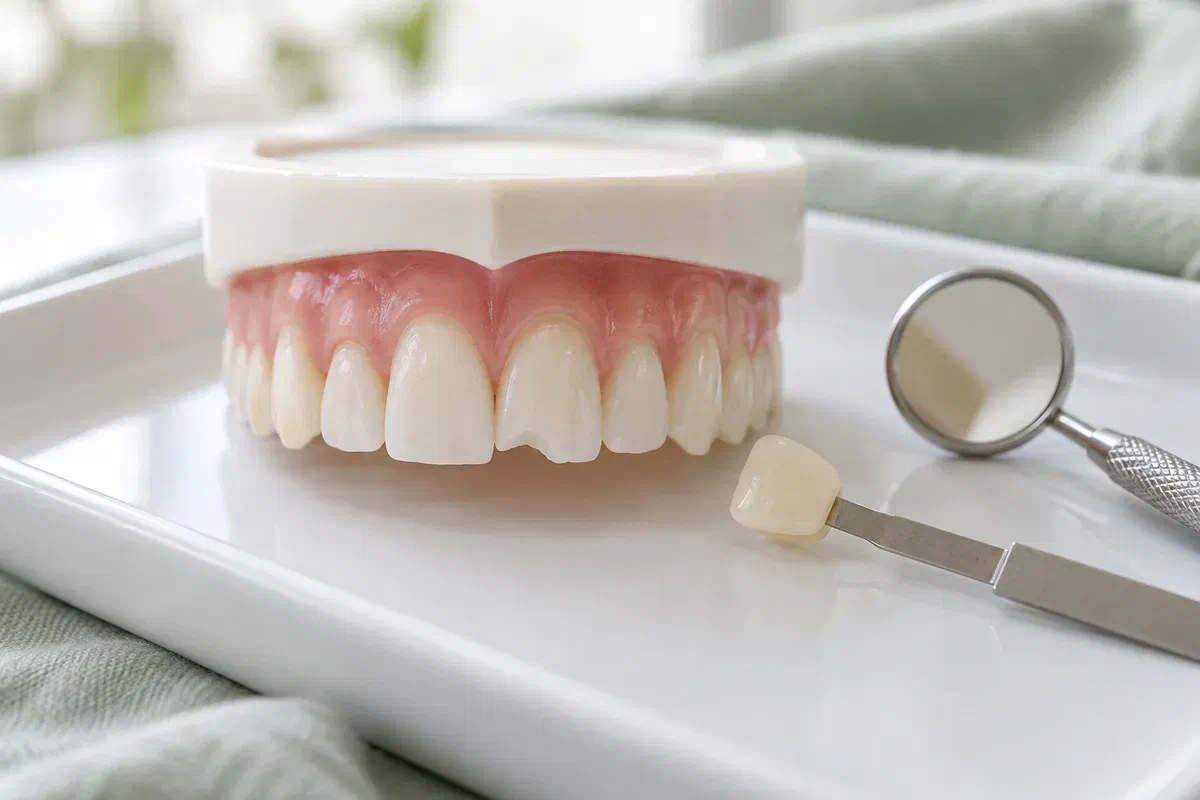
Illustrative front tooth model with a chipped corner beside a shade sample and dental mirror
In the first day or two

Notice how the tooth behaves, then tell us.

The size of the chip is only part of the picture. These observations help us plan, even if the tooth settles down and stops bothering you.

It happened with real force

If the chip came from a fall or blow rather than food, tell us if it shifted, if the gum bled, or if it has been tender since. Other teeth and the gum may also need checking. Any chip after a significant impact should be assessed as an injury first.

The new edge is sharp

Describe where it rubs your tongue or cheek. A piece of sugar-free gum or dental wax can sometimes cover a sharp spot briefly, but avoid chewing on that side or testing it with crunchy foods. We can then decide whether to smooth it or rebuild it.

Chewing hurts or feels odd

Tell us if pain comes when you bite or let go, or if hot and cold linger. That can suggest a crack rather than a simple chip. Mention grinding, clenching and earlier repairs on the same tooth, and bring any guard you wear.

If you found the piece, store it in a lidded container under a little milk or saliva, and bring it along. Reattachment isn't always possible, but the dentist can check. Skip the household glue.

What bonding can restore

Back to biting without thinking about it.

On a tooth that's a good candidate, resin is matched to your shade and sculpted to replace what broke away. That may mean restoring the outline, smoothing a sharp corner or rebuilding part of the edge you use to bite into food.

Bonding isn't indestructible. Composite can stain, wear and chip, particularly if it meets the same hard foods that caused the first break. Ask what to expect for your specific tooth rather than relying on a typical lifespan.

Patient information: Canadian Dental Association — bonding and veneers · Cleveland Clinic — dental bonding and maintenance

Treating just what broke

Ask how much of the tooth the repair will involve. A small food-related chip can often be rebuilt locally without covering the whole tooth. The choice depends on how much enamel remains, the direction of the break and any older fillings.

Restoring the look and the feel

Tell the clinician whether the sharpness, a visible gap or a change in length matters most. Ask how the planned edge will relate to its neighbour. You can explain what you want without being drawn into a wider smile plan.

Knowing what upkeep involves

Ask what would lead to polishing, repair or replacement later, and how routine visits will keep an eye on it. That makes it easier to compare bonding with alternatives. Check the estimate and whether further assessment is needed first.

How we approach a new chip

Rule out a crack, then rebuild.

Every step depends on the tooth and the repair agreed. If you get nervous about dental work, say so and ask how we'll help keep you comfortable.

  1. Checking for cracks and damage

    We ask what you were biting, and whether there's pain on chewing, on release or with cold. The clinician examines the tooth closely, may use a bite test and can suggest an X-ray. Ask whether a crack has been ruled out before bonding.

  2. Agreeing on the repair

    You'll compare bonding with other reasonable approaches and decide on the result you want. If you're thinking about whitening or other treatment, raise it now. It can affect the timing and the shade chosen for the repair.

  3. Building the new edge

    Once the plan is agreed, the tooth is prepared, and composite is added and sculpted in layers. A curing light sets the material. Freezing and preparation depend on the size and position of the chip, so ask what yours will involve.

  4. Polishing and testing your bite

    The repair is polished, and the clinician checks how your teeth come together as you bite and chew. Say so if the tooth feels high or unfamiliar. We explain aftercare and whether the tooth needs a review.

After the repair

A little caution with hard foods goes a long way.

Follow the instructions for your repair. If you were frozen, wait until full feeling returns before eating so you don't accidentally bite your cheek or lip.

Keep up regular cleaning

Twice-daily brushing with a fluoride paste and daily flossing still apply. A bonded edge picks up plaque the same way your own enamel does. If the area feels unfamiliar under the floss, ask us to demonstrate a technique.

Rethink the foods and habits that caused it

Take care with olive pits, popcorn kernels, hard candies and ice. Don't use the tooth to open packages or crack shells. If you clench or grind, ask whether an appliance should be considered; it isn't automatically part of bonding.

Let us know about new symptoms

Call if the edge feels rough again, your bite changes, chewing becomes painful or a piece comes away. Leave adjustments to us. Keep any review recommended for the tooth, since a smooth surface doesn't rule out a crack developing.

Patient information: NHS — assessment and treatment of chipped or broken teeth

Possible repairs

A chipped edge and a cracked tooth need different answers.

For any suggestion, find out what problem it solves and what it leaves untreated. Smoothing a small corner and treating a fractured tooth are different tasks.

For a small chip on a sound tooth

Bonding or a light polish

Composite can rebuild a lost corner, while a very slight roughness might only need smoothing. Ask how either affects the shape and enamel. An exam, not a photo, should decide which is appropriate.

For bigger breaks or cracks

Reattachment or a stronger restoration

A saved fragment can sometimes be bonded back on. If a crack runs deeper or more tooth is missing, a restoration with more coverage may be advised. Ask why and whether enough healthy structure remains to support it.

For pain that suggests deeper damage

Investigating the pulp

Lingering pain, sensitivity or a deep fracture may mean the inner tissue is involved. Further treatment would depend on the diagnosis. Resin over a chip doesn't replace assessing a tooth that may be more seriously damaged.

Questions after a bite gone wrong

What to know when food chips a tooth.

Ask about comfort, appearance and care together. A good plan treats the repair as part of a tooth that still has to handle everyday meals.

(905) 876-4488
Is it a chip or a crack if it hurts when I let go of a bite?
Pain on release can be a sign of a crack, though only an exam can tell. Mention it when you call. The dentist may use bite tests, close examination and X-rays to work out what is going on.
What can I do about a sharp edge until my appointment?
Dental wax or sugar-free gum may cover the edge for a short time. Avoid chewing on that side and skip hard or very hot and cold foods. Call sooner if pain, swelling or looseness develops.
Which foods are hardest on bonded teeth?
Very hard or crunchy items like ice, hard candy, nuts in shells and popcorn kernels put the most stress on a repaired edge. Sticky foods can also be a problem. You don’t need to avoid everything, but bite carefully.
Can a chipped back tooth be bonded too?
Sometimes, depending on the size of the chip and the forces on that tooth. Back teeth handle heavy chewing, so a different restoration is sometimes recommended. The dentist will explain the options after examining it.
Should I worry if the chipped tooth is sensitive to cold?
Some sensitivity can follow a chip, especially if inner layers are exposed. If it is strong, lingering or getting worse, call for advice. The dentist can check whether the tooth needs more than a surface repair.
If I chip a tooth on a weekend, should I call before driving in from Acton?
Yes. Our weekend appointments are by arrangement, so calling first lets us advise whether to come in, wait for a weekday or seek urgent care nearby. Have details of the tooth and your symptoms ready.
Chip repair for Acton

Bit something hard? Let's take a look.

Call our Bronte Street office from Acton to describe the chip and arrange an assessment. Let us know what you were eating, whether chewing hurts and whether the tooth feels sensitive or loose, so we can advise on a sensible next step.

Bonding is one of several ways to repair a chip. If the tooth is painful, swollen or loose, a phone call is the quickest way to reach us.

Visit Milton Dental Clinic
Unit 1, 342 Bronte St. S, Milton, ON L9T 5B7
Get directions Clinic hours
Monday–Thursday
11am–7pm
Friday–Sunday
By appointment only

Areas we serve

  • Milton
  • Oakville
  • Mississauga
  • Georgetown
  • Halton Hills
  • Acton
  • Campbellville
  • Brampton
  • Burlington
  • Puslinch
  • Rockwood
  • Erin
  • Caledon
  • Etobicoke
  • Old Milton
  • Bronte Meadows
  • Timberlea
  • Dorset Park
  • Dempsey
  • Clarke
  • Beaty
  • Coates
  • Harrison
  • Scott
  • Willmott
  • Ford
  • Bowes
  • Cobden
  • Walker
  • Mountain View
  • Milton Heights
  • Hawthorne Village
  • Valley View
  • Fallingbrook
  • Nassagaweya
  • Trafalgar
  • Esquesing
  • Nelson
  • Brookville
  • Moffat
  • Glen Williams
  • Norval
  • Limehouse
  • Stewarttown
  • Ashgrove
  • Hornby
  • Silver Creek
  • Speyside
  • Scotch Block
  • North Oakville
  • River Oaks
  • Glen Abbey
  • West Oak Trails
  • Palermo
  • Bronte Creek
  • College Park
  • Joshua Creek
  • Uptown Core
  • Preserve
  • Iroquois Ridge
  • Lisgar
  • Meadowvale
  • Meadowvale Village
  • Churchill Meadows
  • Erin Mills
  • Central Erin Mills
  • Streetsville
  • East Credit
  • Creditview
  • Heartland
  • Sheridan
  • Mount Pleasant
  • Credit Valley
  • Huttonville
  • Churchville
  • Springbrook
  • Northwest Brampton
  • Bram West
  • Fletcher's Meadow
  • Fletcher's Creek South
  • Alton Village
  • Orchard
  • Millcroft
  • Headon Forest
  • Tansley
  • Brant Hills
  • Tyandaga
  • Kilbride
  • Lowville
  • Aberfoyle
  • Morriston
  • Arkell
  • Hillsburgh
  • Freelton
  • Carlisle
  • Waterdown
  • Flamborough
  • Mountsberg

How can we help?

Milton Dental Clinic

Have a question about your smile? Choose the option that works best for you.

For urgent dental concerns, please call.
Messages are reviewed during clinic hours.