

Illustrative patient and dental clinician discussing a chipped tooth using a model
Cosmetic Dentistry

Chipped Tooth Bonding in Burlington

A chipped edge that keeps scraping your tongue is hard to ignore. For people travelling from Burlington, our team examines the broken area and your bite, then explains whether smoothing, composite bonding or another repair would settle it properly.

That rough spot your tongue keeps finding

Small edge, constant irritation.

It often starts as something you only feel. Your tongue drifts to a jagged corner during a meeting, or your lip catches on it while you talk. For a suitable chip, composite bonding rebuilds the missing part with tooth-coloured resin that is shaped on the tooth and polished smooth.

Before deciding how to fix it, we want to know why it broke. An old filling that let go, enamel that cracked on something hard, and a tooth that wears down from clenching each lead to different advice. The scratchy edge itself rarely tells the whole story.

If you are booking from Burlington, mention when you first felt the rough spot, whether it is sore, and how you would like the tooth to look. We examine it, share what we find, and discuss bonding or other options with you. There is no need to decide on a treatment beforehand.

Get that rough edge looked at
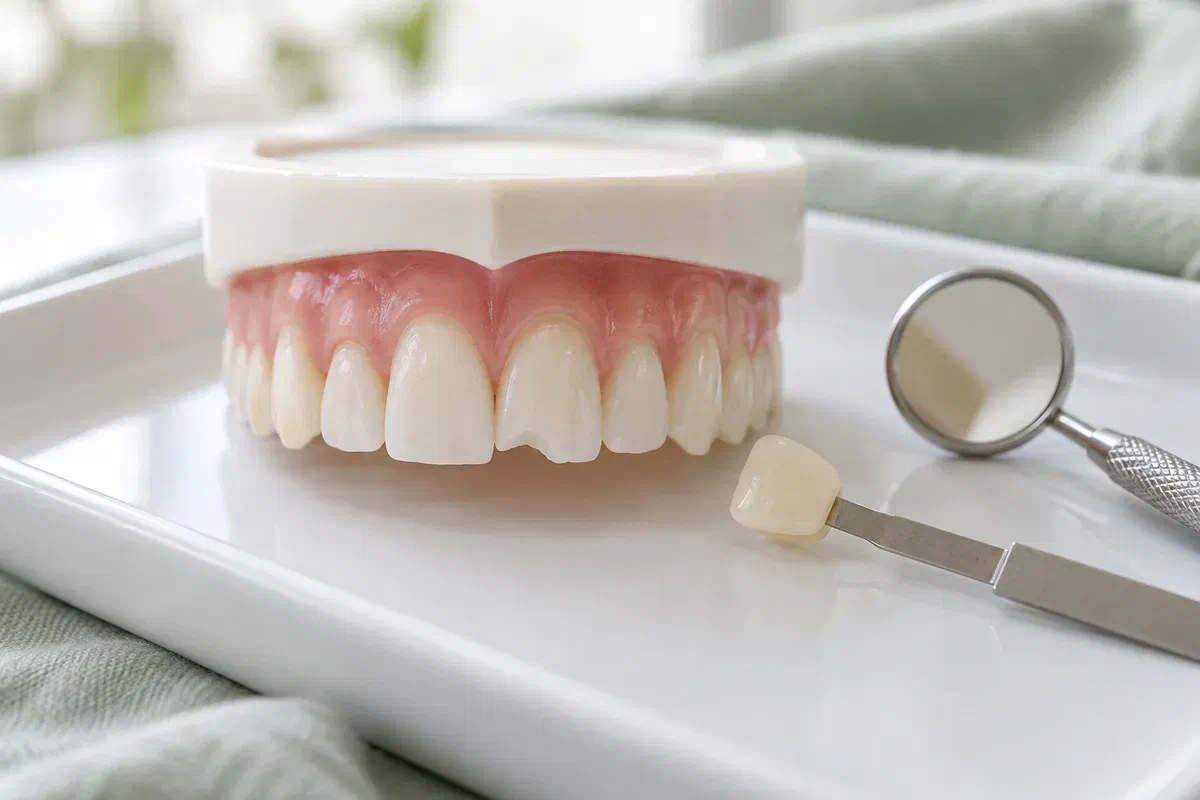
Illustrative front tooth model with a chipped corner beside a shade sample and dental mirror
Describing what you feel

Where does it catch, and when did it start?

The right repair depends on the condition of the tooth, not just the size of the chip. Even if nothing hurts, a few details help us plan.

It broke when something hit your mouth

Tell us whether the tooth loosened, bled, or has been tender since. The gum and nearby teeth may need checking as well. If there was a real impact, the chip should be looked at as an injury rather than a purely cosmetic flaw.

It scrapes your lip, cheek or tongue

Show us the exact spot and say whether eating or speaking feels different. Avoid filing it with a nail file or testing it on hard snacks. We can explain whether a tiny bit of smoothing or a resin build-up would be the better approach.

It chipped once, got fixed, and chipped again

Mention past repairs, any grinding or clenching, and habits like chewing pen caps or biting tape. Repairing the same spot without asking why it keeps breaking may not solve much. If you have a guard or retainer, bring it to the appointment.

Kept the piece that broke off? Put it in milk or saliva in a small closed container and bring it. Your dentist can tell you if reattaching it is an option. Please don't try household glue.

What you can expect from bonding

Less snagging, a more even outline.

On the right tooth, resin can be tinted and sculpted so the rebuilt corner blends with nearby enamel. The goals might include a smooth surface for your tongue, an outline that matches its neighbour, or a restored section of the biting edge.

It also helps to know the limits. Composite can stain, wear and occasionally chip, and how long it lasts depends on the tooth and how much force it handles. Ask what is reasonable to expect for your tooth rather than relying on a generic lifespan.

Patient information: Canadian Dental Association — bonding and veneers · Cleveland Clinic — dental bonding and maintenance

A repair sized to the problem

Ask how much of the tooth will be treated and why that is the right amount. Many small chips can be fixed locally rather than by covering the whole visible surface. The answer depends on the healthy enamel left, the pattern of the break and any older filling.

The details that bother you most

Explain whether the sharpness, the shorter length or the uneven look matters most to you. Ask how the planned shape will sit beside the adjacent tooth. You can share preferences freely without being steered into bigger cosmetic changes.

Straight answers about upkeep

Find out what would call for a polish, a repair or a replacement later, and how routine check-ups will monitor it. That helps you compare bonding with other choices fairly. Confirm the estimate and whether more assessment is needed first.

What the appointment involves

We look first and build second.

Every repair is planned around the specific tooth, so steps can vary. If you feel nervous, let us know and ask how comfort will be looked after.

  1. Finding the cause of the chip

    We talk about how and when it chipped, plus any soreness when chewing or sensitivity to temperature. The clinician examines the tooth and decides whether an X-ray would help. Ask if there is anything underneath that bonding would not fix.

  2. Choosing between smoothing and bonding

    For some edges, gentle reshaping is enough; others need material added. You will hear the reasoning and compare alternatives. Mention any whitening plans, because they can affect the order of treatment and the resin shade selected.

  3. Shaping the new edge

    If bonding goes ahead, the surface is prepared and resin is layered and sculpted. A curing light hardens each layer. Whether freezing is needed depends on the extent of the work, so ask what to expect for your tooth.

  4. Polishing and a final bite check

    The repair is polished until smooth, and your bite is checked as you close and move your jaw. Tell us if the tooth feels thick or hits first. We finish with aftercare advice and whether any follow-up is recommended.

Keeping the edge comfortable

Daily habits that help a repair last.

Follow the instructions for your specific repair. If you had freezing, avoid chewing until normal feeling returns so you don't nip your lip or cheek.

Clean around it like any other tooth

Brush with fluoride toothpaste and keep cleaning between your teeth as advised. Resin still gathers plaque along its edges. If the new shape makes you unsure about flossing there, ask us to show you how.

Spare the repaired edge from heavy loads

Don't use the tooth to bite fingernails, cut tape or crack nuts. If you grind or clench, ask whether an appliance should be considered. That recommendation depends on your habits and isn't automatically part of bonding.

Call instead of fixing it at home

Let us know about a new rough spot, a change in your bite or a piece breaking away. Please don't file or sand it yourself. If the chip came from an injury, keep any review appointment even when the tooth looks finished.

Patient information: NHS — assessment and treatment of chipped or broken teeth

Your repair options

Smooth it, build it, or look deeper.

Ask what each option would fix and what it might leave behind. A minor edge repair and treatment for a badly damaged tooth are very different.

For a minor, suitable chip

Reshaping or composite bonding

A very small rough area might only need polishing, while a missing corner can be rebuilt with resin. Ask how each choice affects the shape and enamel. The decision should come after an exam, not from a photo alone.

When the break is larger

Reattachment or a more extensive restoration

A saved fragment can occasionally be bonded back. Bigger breaks may need a restoration with more coverage or support. Ask why that option is recommended and whether enough healthy tooth remains to hold it securely.

When symptoms suggest deeper damage

Assessment of the pulp

Deep breaks, lingering sensitivity or pain can raise concerns about the tissue inside the tooth. Further treatment depends on the diagnosis. Resin over a chip doesn't replace a proper look at a tooth that may be more seriously affected.

Sharp edges, honest answers

What people ask about fixing a rough, chipped tooth.

Comfort, appearance and maintenance belong in one conversation. A good plan sees the repaired edge as part of a living tooth.

(905) 876-4488
Is it safe to leave a sharp chipped edge alone for a while?
A rough edge can irritate your tongue or cheek, and the reason it chipped may need attention. It is best to have it examined rather than waiting. Call sooner if there is pain, swelling or the tooth feels loose.
Can a sharp edge just be smoothed instead of bonded?
Sometimes. A very minor irregularity can be gently reshaped. If smoothing would make the tooth noticeably shorter or thinner, adding resin may be more appropriate. Your clinician will explain the trade-off after examining it.
Will a bonded edge feel different to my tongue?
It is shaped and polished to feel smooth and natural, though it may seem a little unfamiliar for a short time. If it still feels bulky or rough after a few days, call so the clinician can check it.
Can bonding fix a chip on a back tooth as well as a front one?
Composite is used on back teeth in some situations, but chewing forces there are higher. The dentist will consider the size of the break and your bite. A different restoration may be suggested if more strength is needed.
What should I do if the bonded edge chips off later?
Call to arrange a visit and bring any piece that came off. Avoid smoothing it at home. The dentist will look at why it broke and whether a repair, a change in habits or another option would work better.
Does clenching my jaw raise the chance of chipping a tooth?
It can add strain to edges and restorations. Tell your dentist if you notice clenching or wake with a sore jaw. They can look for signs of wear and talk about whether an appliance is worth considering.
From Burlington to Bronte Street

Let's smooth things over, properly.

Call our Bronte Street office from Burlington to describe the chip and book an assessment. Tell us when it happened and whether you have pain, sensitivity or a loose tooth so we can suggest the right next step.

Bonding is one possible way to repair a chip. For a recent injury or urgent symptoms, please call instead of waiting for an online reply.

Visit Milton Dental Clinic
Unit 1, 342 Bronte St. S, Milton, ON L9T 5B7
Get directions Clinic hours
Monday–Thursday
11am–7pm
Friday–Sunday
By appointment only

Areas we serve

  • Milton
  • Oakville
  • Mississauga
  • Georgetown
  • Halton Hills
  • Acton
  • Campbellville
  • Brampton
  • Burlington
  • Puslinch
  • Rockwood
  • Erin
  • Caledon
  • Etobicoke
  • Old Milton
  • Bronte Meadows
  • Timberlea
  • Dorset Park
  • Dempsey
  • Clarke
  • Beaty
  • Coates
  • Harrison
  • Scott
  • Willmott
  • Ford
  • Bowes
  • Cobden
  • Walker
  • Mountain View
  • Milton Heights
  • Hawthorne Village
  • Valley View
  • Fallingbrook
  • Nassagaweya
  • Trafalgar
  • Esquesing
  • Nelson
  • Brookville
  • Moffat
  • Glen Williams
  • Norval
  • Limehouse
  • Stewarttown
  • Ashgrove
  • Hornby
  • Silver Creek
  • Speyside
  • Scotch Block
  • North Oakville
  • River Oaks
  • Glen Abbey
  • West Oak Trails
  • Palermo
  • Bronte Creek
  • College Park
  • Joshua Creek
  • Uptown Core
  • Preserve
  • Iroquois Ridge
  • Lisgar
  • Meadowvale
  • Meadowvale Village
  • Churchill Meadows
  • Erin Mills
  • Central Erin Mills
  • Streetsville
  • East Credit
  • Creditview
  • Heartland
  • Sheridan
  • Mount Pleasant
  • Credit Valley
  • Huttonville
  • Churchville
  • Springbrook
  • Northwest Brampton
  • Bram West
  • Fletcher's Meadow
  • Fletcher's Creek South
  • Alton Village
  • Orchard
  • Millcroft
  • Headon Forest
  • Tansley
  • Brant Hills
  • Tyandaga
  • Kilbride
  • Lowville
  • Aberfoyle
  • Morriston
  • Arkell
  • Hillsburgh
  • Freelton
  • Carlisle
  • Waterdown
  • Flamborough
  • Mountsberg

How can we help?

Milton Dental Clinic

Have a question about your smile? Choose the option that works best for you.

For urgent dental concerns, please call.
Messages are reviewed during clinic hours.