

Illustrative patient and dental clinician discussing a chipped tooth using a model
Cosmetic Dentistry

Chipped Tooth Bonding in Erin

Repairing a chip is one appointment, but living with the repair takes years. For anyone coming from Erin or Hillsburgh, we explain how composite bonding tends to age, what upkeep it may need, and whether it suits your chipped tooth in the first place.

Thinking beyond the first visit

A repair you'll live with for years.

Most people judge a bonded chip on the day it's finished: does it match, does it feel smooth? The better question is how it will look and behave three or five years on. Composite bonding rebuilds a suitable chip with tooth-coloured resin that is sculpted on the tooth and polished, and like any restoration it needs some looking after.

How a repair ages starts with why the tooth chipped. A clean break from a single knock, an old filling that crumbled and a corner that wears away under heavy biting each put different demands on resin. Those factors also shape whether bonding is the right choice at all.

Start by describing how the tooth chipped, how it feels and what you expect from a repair. Our team examines it, explains the findings, and talks through bonding and other options with an honest view of maintenance. If you're coming from Erin, ask how that upkeep can fit into routine visits, and we'll plan it with you.

Ask how a bonded repair would age
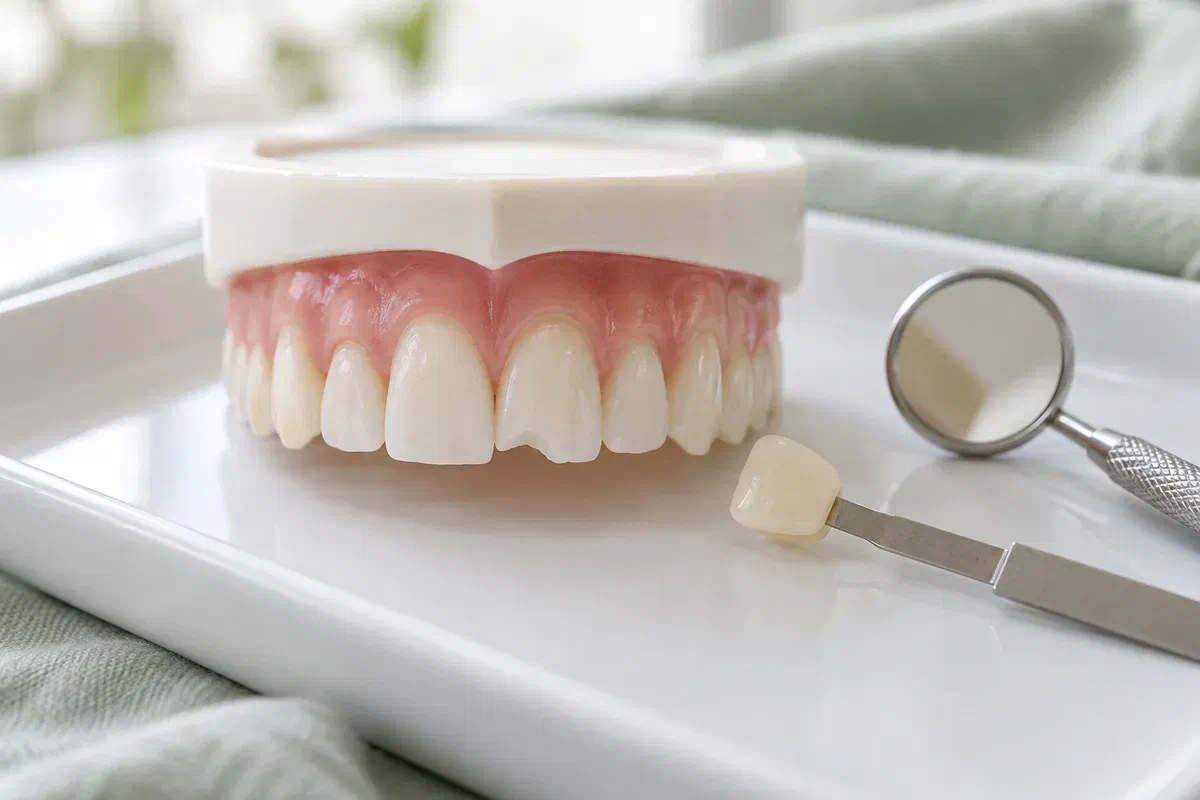
Illustrative front tooth model with a chipped corner beside a shade sample and dental mirror
What shapes how long it lasts

The cause of the chip predicts much of the future.

A durable repair depends on the condition of the tooth and the forces on it. Share these details even if the tooth is comfortable.

A single impact

Tell us how the injury happened and whether the tooth moved, bled or turned sensitive. Other teeth and the gum may also need checking. An injured tooth needs its health assessed first, and some injuries need monitoring long after the edge looks fine.

A rough or uneven corner

Show where it catches and describe how eating feels. Avoid testing it with hard foods. A very small flaw might be smoothed and need little upkeep, while a rebuilt corner will need occasional attention over the years.

Wear or repeated breaks

Mention grinding, clenching, chewing hard objects and previous repairs. Heavy forces shorten the life of any resin edge. Bring a night guard or retainer if you use one, because protection can make a real difference to how long a repair lasts.

If a fragment breaks off, keep it moist in milk or saliva inside a small closed container, and bring it to the appointment. The dentist can say whether reattaching it is possible. Please leave the glue in the drawer.

What bonding can offer over time

Good looks on day one, and a plan for the years after.

For a suitable chip, resin is shade-matched and contoured to restore the outline, smooth the edge and rebuild part of the biting surface. Because composite can be repaired or polished, small changes over time can often be managed without starting from scratch.

Resin is not enamel. It may gradually pick up stains, lose some shine, wear at the edge or chip, and how quickly depends on the tooth, your bite and your habits. Ask your clinician what to expect for your repair rather than relying on an average number of years.

Patient information: Canadian Dental Association — bonding and veneers · Cleveland Clinic — dental bonding and maintenance

A conservative starting point

Ask how much of the tooth would be treated and why. A small chip is often rebuilt locally, keeping more natural tooth for future options. The decision weighs the enamel left, the fracture pattern and any nearby filling.

A shape you'll be happy with long term

Tell the clinician whether length, symmetry or a rough spot is your main concern, and ask how the planned shape will relate to neighbouring teeth. You can share preferences without being pressed toward a larger smile makeover.

Knowing what upkeep looks like

Ask what usually prompts a polish, a touch-up or a full replacement, and how routine visits will check the repair. That helps you compare bonding with longer-lasting options. Confirm the estimate and whether more assessment is needed first.

Building a repair that lasts

Careful planning makes maintenance easier.

Steps depend on the tooth and the repair chosen. Dental nerves are common; mention them and we'll explain the ways we can make the visit easier.

  1. Checking the tooth and the forces on it

    We discuss how the chip happened, any pain or sensitivity, and your habits. The clinician examines the tooth, looks at wear on other teeth and may suggest an X-ray. Ask whether anything would make bonding less durable for you.

  2. Choosing the approach

    You compare bonding with other reasonable options, including their maintenance. If you plan to whiten, say so now; resin won't lighten later, so the order matters. Agree on the shape and look you want.

  3. Placing the resin

    With the plan agreed, the surface is prepared and composite is layered, shaped and hardened with a curing light. Preparation and the need for freezing depend on the repair, so ask what applies to your tooth.

  4. Polishing and checking the bite

    The edge is polished to a smooth finish that resists staining better, and your bite is checked. Tell us if anything feels high. We explain aftercare, upkeep and any review the tooth needs.

Year-round care

Habits that keep a bonded edge looking fresh.

Follow the instructions you're given. Freezing, if used, should wear off fully before your next meal to protect your lip and cheek from accidental bites.

Gentle cleaning, regular check-ups

Brush with a soft brush and fluoride toothpaste, and clean between your teeth as advised. Very abrasive toothpastes can dull resin over time, so ask what suits you. Routine cleanings give the clinic a chance to check and polish the repair.

Spare the edge from hard work

Avoid biting nails, cracking shells or opening packages with the tooth. If you clench or grind, ask whether an appliance should be considered. That advice is tailored to you rather than included with every bonding.

Get small changes seen early

Call about a rough spot, staining, a change in your bite or a small chip in the resin. Early touch-ups are often simpler. If the tooth was injured, keep any review visits, since a good-looking repair doesn't show how the inside is doing.

Patient information: NHS — assessment and treatment of chipped or broken teeth

Comparing repairs over the long run

Different repairs age in different ways.

Ask what each option would fix, what it would leave, and what upkeep it needs. A small edge repair and treatment for a weakened tooth have different futures.

For a small chip on a healthy tooth

Bonding or minor smoothing

Resin can rebuild a lost corner and can usually be polished or repaired later; a very small irregularity might only need smoothing. Ask how each affects the outline and enamel. Decide after an exam, not from a photo.

For bigger breaks

Reattachment or a larger restoration

A saved fragment can occasionally be reattached. More extensive damage may suit a restoration with more coverage, which has its own maintenance needs. Ask why it's suggested and whether enough healthy tooth remains.

For damage that may go deeper

Assessing the pulp

Deep breaks, lasting pain or darkening can point to changes inside the tooth. Treatment depends on the diagnosis. A cosmetic repair can't stand in for finding out whether the nerve has been affected.

Long-term bonding questions

What to expect from a bonded chip over time.

Ask about appearance, comfort and maintenance together. A repair is part of a living tooth that keeps needing care.

(905) 876-4488
How will I know when a bonded edge needs attention?
Signs include roughness, staining at the edges, a dull surface, a small chip, or a change in how your bite feels. Your dentist will also check it at routine visits and suggest polishing or repair when needed.
Can a stained bonded tooth be polished rather than replaced?
Surface staining can often be improved with professional polishing. Deeper discolouration may mean the resin needs to be refreshed or replaced. The clinician can explain which applies after a look.
Does toothpaste choice affect composite bonding?
Very abrasive products can wear down the polish on resin over time. Ask your dentist which toothpaste suits your teeth and repair. Fluoride toothpaste is still important for the natural tooth around it.
Can a small chip in my bonding be fixed without redoing it all?
Often, yes. Composite can usually be repaired by adding new resin to the existing material. Whether that’s appropriate depends on the size of the chip and the condition of the rest of the repair.
What is the most common reason bonded corners fail?
Heavy forces from grinding, clenching or biting hard objects are frequent contributors, along with how much natural tooth supports the resin. Telling your dentist about your habits helps them plan a more durable repair.
Can bonding checks be combined with my regular visits from Erin?
In most cases the repair can be reviewed during routine check-ups. Let us know when you book, and mention any changes you’ve noticed so time is set aside to look at them.
Chipped tooth repair for Erin

Plan a repair that keeps working for you.

Phone our Bronte Street team to talk about a chipped tooth and arrange an assessment. Let us know when it chipped and whether you have pain, sensitivity or a loose tooth, and we'll suggest the most suitable next step for you.

Bonding is one repair option. If the tooth was just injured or you have urgent symptoms, call us rather than waiting on a reply to an online enquiry.

Visit Milton Dental Clinic
Unit 1, 342 Bronte St. S, Milton, ON L9T 5B7
Get directions Clinic hours
Monday–Thursday
11am–7pm
Friday–Sunday
By appointment only

Areas we serve

  • Milton
  • Oakville
  • Mississauga
  • Georgetown
  • Halton Hills
  • Acton
  • Campbellville
  • Brampton
  • Burlington
  • Puslinch
  • Rockwood
  • Erin
  • Caledon
  • Etobicoke
  • Old Milton
  • Bronte Meadows
  • Timberlea
  • Dorset Park
  • Dempsey
  • Clarke
  • Beaty
  • Coates
  • Harrison
  • Scott
  • Willmott
  • Ford
  • Bowes
  • Cobden
  • Walker
  • Mountain View
  • Milton Heights
  • Hawthorne Village
  • Valley View
  • Fallingbrook
  • Nassagaweya
  • Trafalgar
  • Esquesing
  • Nelson
  • Brookville
  • Moffat
  • Glen Williams
  • Norval
  • Limehouse
  • Stewarttown
  • Ashgrove
  • Hornby
  • Silver Creek
  • Speyside
  • Scotch Block
  • North Oakville
  • River Oaks
  • Glen Abbey
  • West Oak Trails
  • Palermo
  • Bronte Creek
  • College Park
  • Joshua Creek
  • Uptown Core
  • Preserve
  • Iroquois Ridge
  • Lisgar
  • Meadowvale
  • Meadowvale Village
  • Churchill Meadows
  • Erin Mills
  • Central Erin Mills
  • Streetsville
  • East Credit
  • Creditview
  • Heartland
  • Sheridan
  • Mount Pleasant
  • Credit Valley
  • Huttonville
  • Churchville
  • Springbrook
  • Northwest Brampton
  • Bram West
  • Fletcher's Meadow
  • Fletcher's Creek South
  • Alton Village
  • Orchard
  • Millcroft
  • Headon Forest
  • Tansley
  • Brant Hills
  • Tyandaga
  • Kilbride
  • Lowville
  • Aberfoyle
  • Morriston
  • Arkell
  • Hillsburgh
  • Freelton
  • Carlisle
  • Waterdown
  • Flamborough
  • Mountsberg

How can we help?

Milton Dental Clinic

Have a question about your smile? Choose the option that works best for you.

For urgent dental concerns, please call.
Messages are reviewed during clinic hours.