

Illustrative patient and dental clinician discussing a chipped tooth using a model
Cosmetic Dentistry

Chipped Tooth Bonding in Etobicoke

Coming from Etobicoke for a chipped tooth is worth planning well. We help you sort out what needs attention now, what can be booked, and how to cover the assessment and any composite bonding repair in as few organised visits as the tooth allows.

Planning before you travel

Call first, so the trip counts.

A chipped tooth raises two questions at once: how urgent is this, and how do I get it fixed? A short phone call answers the first. For the second, bonding is often an option for a contained chip, using tooth-coloured resin that is sculpted directly onto the tooth and polished to match.

The plan depends on what broke and why. A clean chip with no pain is a different case from a tooth knocked hard enough to loosen it, an old filling that has fallen apart, or a corner that keeps cracking under a heavy bite. Some of those need prompt care closer to home before any cosmetic work.

When you phone from Etobicoke, describe the chip and any symptoms. We can suggest whether to come in, what to bring and how to organise visits. At the assessment, we examine the tooth, explain the findings and talk through bonding and other options with you.

Plan an assessment for your chipped tooth
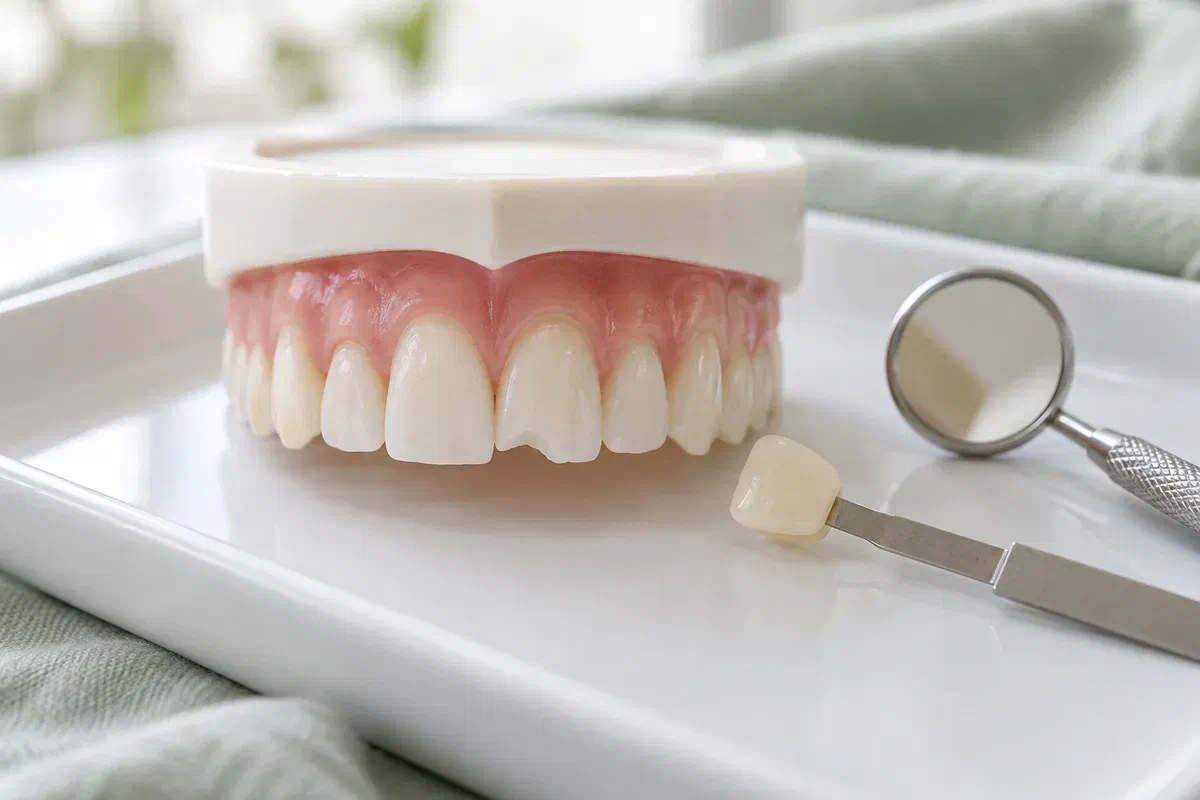
Illustrative front tooth model with a chipped corner beside a shade sample and dental mirror
Sorting out urgency

Three questions to answer on the phone.

Your answers help us decide what kind of visit makes sense, and whether urgent care nearer to Etobicoke should come first. Share them even if the tooth feels fine.

Was there an injury?

Tell us if the tooth was knocked, moved, bled or became painful. Surrounding teeth and gums may also be affected. For a significant injury, prompt assessment matters more than the trip, so a nearer emergency dental or medical service may be the better first stop.

Is the edge sharp or uncomfortable?

Describe where it catches your tongue or lip and whether you can eat comfortably. Try not to probe it with hard foods while you wait. Knowing this helps us decide whether smoothing, bonding or something else might be planned at your visit.

Has this tooth broken before?

Let us know about earlier repairs, grinding, clenching or habits like biting pens. If the same corner keeps failing, we'll want to look at why before rebuilding it again. Bring any guard or retainer so it can be checked in the same trip.

If you have the broken piece, keep it covered in milk or your own saliva inside a small sealed container, and bring it with you. Reattachment may be possible. Never glue a fragment back yourself.

What bonding may offer

A repair that can often be done directly on the tooth.

For a suitable chip, composite is matched to your enamel and shaped in the mouth, which often keeps the number of visits down. It can restore the tooth's outline, smooth a rough edge or rebuild part of the surface you bite with.

There are limits to keep in mind. Resin can stain, wear and chip, and how long it lasts depends on the tooth and the forces on it. Ask what's realistic for your repair rather than relying on a general estimate, especially if a return trip would be inconvenient.

Patient information: Canadian Dental Association — bonding and veneers · Cleveland Clinic — dental bonding and maintenance

A focused repair on the damaged area

Ask how much of the tooth would be treated and why. Small chips are often repaired locally rather than with full-surface coverage. That depends on the remaining enamel, how the break ran and any existing filling.

A shape that suits your concern

Tell the clinician whether length, symmetry or a rough corner matters most. Ask how the planned edge will look beside its neighbour. You can share your preference without being pushed toward a larger cosmetic plan.

Knowing what follow-up might mean

Ask what would call for polishing, repair or replacement later, and how check-ups can be timed to reduce extra trips. That helps you weigh bonding against other options. Confirm the estimate and any further assessment needed first.

Making each visit efficient

Organised appointments, careful work.

The steps depend on the tooth and the repair you choose. If you are nervous, mention it when you book and ask how comfort will be handled.

  1. Examining the tooth and symptoms

    We review the chip's history and any pain on biting or sensitivity. The clinician examines the tooth and decides whether imaging is needed. Ask whether there is an underlying problem that bonding alone wouldn't fix.

  2. Agreeing on the plan and timing

    You compare bonding with other reasonable options and decide on the outcome you want. Mention whitening or other treatment plans. Ask whether the assessment and repair could be combined, or whether the tooth needs monitoring before a final repair.

  3. Preparing and bonding the tooth

    For agreed bonding, the tooth surface is prepared and resin is applied and shaped in layers. A curing light hardens each layer. Preparation and freezing depend on the repair, so ask what your visit will involve.

  4. Polishing and checking your bite

    The edge is finished and polished, and your bite is checked. Tell us if anything feels high or unfamiliar before you leave, since that's easier to fix now than on a return trip. We explain aftercare and any review needed.

Once you're home

What to watch for after the repair.

Follow the instructions for your repair. If freezing was used, wait until the numbness wears off before eating to avoid biting your cheek or lip.

Keep the area clean

Carry on with your regular fluoride brushing and flossing routine. Resin still collects plaque and needs the same daily care as enamel. Ask for a quick cleaning demonstration during your visit if you're unsure.

Avoid putting heavy force on the edge

Don't use the repaired tooth to open packages, bite thread or crack hard foods. If you grind or clench, ask whether an appliance should be assessed. That decision depends on your habits and isn't automatic with bonding.

Know when to call and when to go nearer

Call us about a sharp edge, a changed bite or a piece breaking away. Don't try to adjust it yourself. If the tooth was injured, keep any review visit, and seek closer urgent care for severe symptoms rather than waiting for a trip.

Patient information: NHS — assessment and treatment of chipped or broken teeth

Possible approaches

What's missing helps decide what's next.

For each option, ask what it would fix and what it would leave unresolved. A simple edge repair and treatment for a deeper injury are different goals.

For a small, suitable chip

Bonding or minor reshaping

Resin can rebuild a lost corner, and a very slight irregularity may only need smoothing. Ask how each affects shape and enamel. A photo can help us plan your visit, but the final decision follows an exam.

When more structure is affected

Reattachment or a larger restoration

A saved fragment can sometimes be reattached. More extensive damage may need a restoration with more coverage, which can involve more visits. Ask why it's proposed and whether enough healthy tooth remains to support it.

When the injury goes deeper

Further assessment of the pulp

Deep damage or ongoing symptoms can raise concerns about the tissue inside the tooth. Treatment then depends on the diagnosis. Bonding over a chip isn't a substitute for assessing an injury that may go further.

Planning a chip repair

What to know before making the trip.

Ask about urgency, appearance and upkeep together. A good plan fits the tooth's needs and your schedule.

(905) 876-4488
How do I know if my chipped tooth needs urgent care rather than an appointment?
Severe pain, swelling, a loose or displaced tooth, or bleeding that won’t stop all need prompt attention. In those cases, seek the nearest appropriate care. A small chip without symptoms can usually wait for a planned assessment.
Can the exam and the bonding happen at the same appointment?
Sometimes, depending on the tooth and whether further tests or monitoring are needed. Ask when you book. If the repair can’t be done the same day, we can explain why and plan the next visit.
Should I send a photo of my chipped tooth before booking?
A photo can help us understand roughly what’s happened, but it can’t replace an examination. The dentist still needs to check the tooth, your bite and any signs of injury in person.
What happens if the bonding feels wrong after I get home?
Call us and describe what you’re noticing. Minor adjustments are sometimes needed once you’ve used the tooth for a few days. Avoid filing or sanding it yourself.
Do I need to keep a follow-up visit after a chip from an injury?
It may be recommended, because some injuries need monitoring over time. Ask when the review is due and which symptoms should prompt an earlier call. We can try to line it up with other appointments.
Can I bring the piece that broke off, and how should I store it?
Yes. Keep it moist in milk or saliva in a small sealed container. The dentist will decide whether reattachment is possible. Don’t scrub or glue it.
Etobicoke to Bronte Street

Make one call, then make the trip worthwhile.

Before setting out, phone our Bronte Street practice so we can plan the assessment around your trip. Tell us when it happened and whether there's pain, swelling or looseness, so we can help you decide whether to come in or seek closer care first.

Bonding is one possible way to repair a chip. For a fresh injury or worrying symptoms, phone us rather than sending an online request and waiting for a reply.

Visit Milton Dental Clinic
Unit 1, 342 Bronte St. S, Milton, ON L9T 5B7
Get directions Clinic hours
Monday–Thursday
11am–7pm
Friday–Sunday
By appointment only

Areas we serve

  • Milton
  • Oakville
  • Mississauga
  • Georgetown
  • Halton Hills
  • Acton
  • Campbellville
  • Brampton
  • Burlington
  • Puslinch
  • Rockwood
  • Erin
  • Caledon
  • Etobicoke
  • Old Milton
  • Bronte Meadows
  • Timberlea
  • Dorset Park
  • Dempsey
  • Clarke
  • Beaty
  • Coates
  • Harrison
  • Scott
  • Willmott
  • Ford
  • Bowes
  • Cobden
  • Walker
  • Mountain View
  • Milton Heights
  • Hawthorne Village
  • Valley View
  • Fallingbrook
  • Nassagaweya
  • Trafalgar
  • Esquesing
  • Nelson
  • Brookville
  • Moffat
  • Glen Williams
  • Norval
  • Limehouse
  • Stewarttown
  • Ashgrove
  • Hornby
  • Silver Creek
  • Speyside
  • Scotch Block
  • North Oakville
  • River Oaks
  • Glen Abbey
  • West Oak Trails
  • Palermo
  • Bronte Creek
  • College Park
  • Joshua Creek
  • Uptown Core
  • Preserve
  • Iroquois Ridge
  • Lisgar
  • Meadowvale
  • Meadowvale Village
  • Churchill Meadows
  • Erin Mills
  • Central Erin Mills
  • Streetsville
  • East Credit
  • Creditview
  • Heartland
  • Sheridan
  • Mount Pleasant
  • Credit Valley
  • Huttonville
  • Churchville
  • Springbrook
  • Northwest Brampton
  • Bram West
  • Fletcher's Meadow
  • Fletcher's Creek South
  • Alton Village
  • Orchard
  • Millcroft
  • Headon Forest
  • Tansley
  • Brant Hills
  • Tyandaga
  • Kilbride
  • Lowville
  • Aberfoyle
  • Morriston
  • Arkell
  • Hillsburgh
  • Freelton
  • Carlisle
  • Waterdown
  • Flamborough
  • Mountsberg

How can we help?

Milton Dental Clinic

Have a question about your smile? Choose the option that works best for you.

For urgent dental concerns, please call.
Messages are reviewed during clinic hours.