The chip came from an impact
Describe the injury and whether the tooth moved, bled or became sensitive afterward. Nearby teeth and gums may also need assessment. After a hard knock, the choice of repair may wait until the tooth's health is clearer.


Bonding, a veneer, a crown or simply smoothing the edge: a chipped tooth can open up several choices. For people coming from Mississauga, we examine the break and your bite first, so the comparison between composite bonding and other repairs rests on what the tooth actually needs.
Search for chipped tooth repair and you will find a long list of treatments. Composite bonding is often the most conservative of them for a contained chip: tooth-coloured resin is applied directly, sculpted into the missing shape and polished to match the surrounding enamel.
Choosing between options starts with understanding the break. A clean corner chip on healthy enamel is a different case from a cracked old filling, a tooth weakened by large restorations, or one that keeps breaking under strong biting forces. What looks like the same gap can need very different care.
When you book from Mississauga, tell us how the tooth chipped, how it feels and what you hope to change. We examine it, explain the findings and lay out the realistic choices side by side. You can arrive undecided; that is what the assessment is for. Bring questions about appearance, upkeep and cost, and we will answer them for each option rather than for bonding alone.
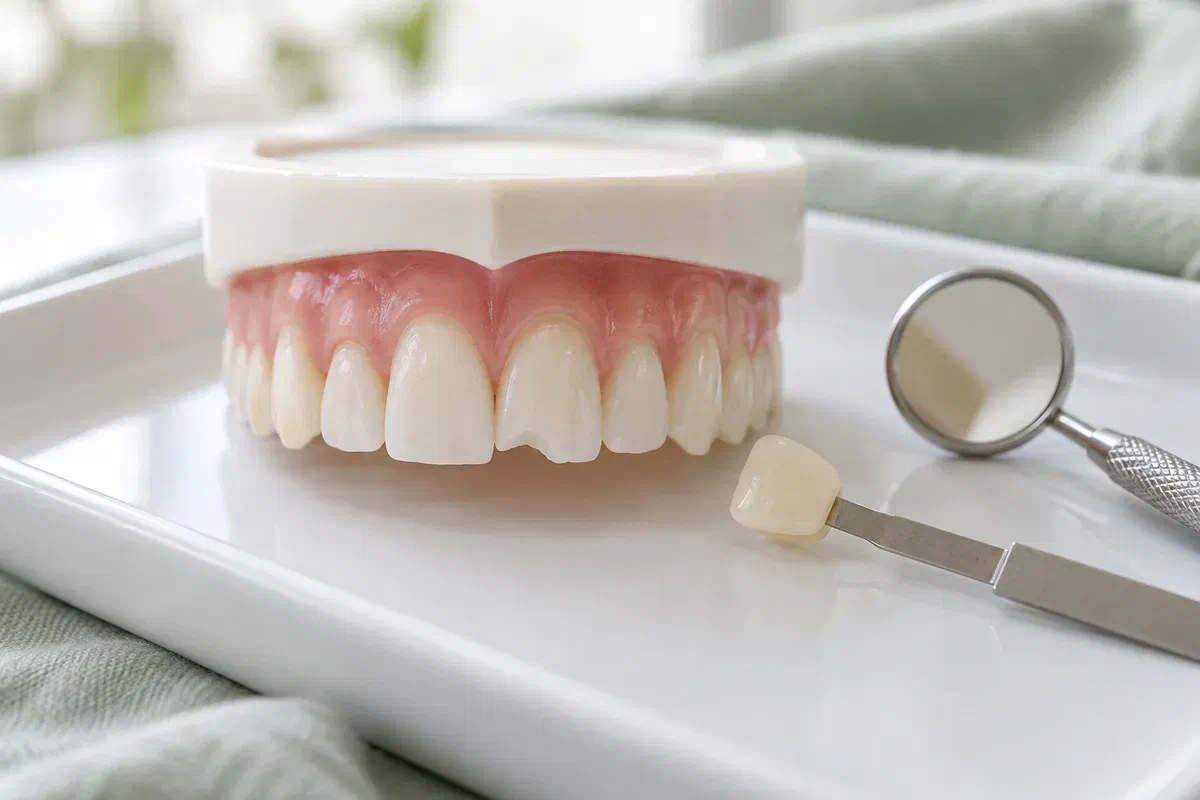
The right repair follows the condition of the whole tooth. Share what you know, even if the chip is not bothering you today.
Describe the injury and whether the tooth moved, bled or became sensitive afterward. Nearby teeth and gums may also need assessment. After a hard knock, the choice of repair may wait until the tooth's health is clearer.
Show where it catches and say whether chewing feels changed. Avoid testing it on hard foods. A very small flaw might be smoothed, while a larger one may suit bonding, so it helps to know exactly what is bothering you.
Let us know about previous repairs, grinding, clenching or using your teeth to open things. A tooth that breaks repeatedly may need a different restoration or protective plan rather than more resin. Bring any appliance you wear.
If you have the broken piece, keep it in milk or saliva in a small container and bring it in. The dentist can judge whether reattaching it is worth considering. Never glue it back yourself.
For a suitable chip, composite can usually be placed with limited preparation, colour-matched to your enamel and shaped to blend with neighbouring teeth. It can restore the outline, ease a rough edge or rebuild part of the biting surface.
Compared with porcelain or crown options, resin also has drawbacks. It may stain more readily, wear faster and chip if overloaded, and its lifespan depends on the tooth and your bite. Ask how these trade-offs apply to you before choosing, and which of them matter most for a front tooth that shows when you smile.
Patient information: Canadian Dental Association — bonding and veneers · Cleveland Clinic — dental bonding and maintenance
Ask how much enamel each option would require removing. Bonding often involves less preparation than coverage restorations, but that is not always the deciding factor. The fracture pattern, healthy structure remaining and existing fillings all matter.
Explain whether you care most about length, symmetry, colour or a sharp spot. Ask how each option would address that and how it would relate to the teeth beside it. You can focus on one tooth without being pushed toward wider work.
Ask what maintenance each choice usually needs, from polishing to repair or replacement. Seeing those differences makes the decision easier. Confirm estimates for the options you are weighing and whether further tests come first.
Steps depend on the tooth and the repair you choose. If you feel uneasy about dental work, mention it and ask how comfort will be managed.
We discuss how it chipped and any pain, sensitivity or tenderness. The clinician examines the tooth and may recommend imaging to check for cracks or decay. Ask whether anything found would rule out bonding.
You compare bonding with smoothing, veneers, crowns or other suitable approaches, along with what each would achieve. Mention whitening or orthodontic plans now. They can change which option makes sense and when it should be done.
For bonding, the surface is prepared, and resin is applied in layers, sculpted and hardened with a curing light. Preparation and the need for freezing vary with the repair, so ask what your appointment will involve.
The repair is shaped, polished and checked against your bite. Say so if the tooth feels high or unfamiliar. We explain aftercare and whether the tooth needs a review visit, particularly if it was injured.
Follow the instructions for the treatment you had. If you were numbed, wait until sensation returns before chewing so you do not bite your lip or cheek.
Use fluoride toothpaste morning and night, and floss or use interdental brushes as you were shown. A resin edge still needs daily cleaning like the rest of your mouth. Ask for a quick demonstration if cleaning near the repair feels awkward.
Do not bite through tape, thread, nutshells or packaging. If you grind or clench, ask whether a protective appliance is worth assessing. That advice depends on your situation rather than being included with every repair.
Call if you notice a sharp spot, a different bite or a piece breaking off. Leave adjustments to the clinic. If the tooth was injured, keep any recommended review, because the surface can look fine while the tooth is still recovering.
Patient information: NHS — assessment and treatment of chipped or broken teeth
Look at appearance, comfort and long-term care together. The best option is the one that suits the tooth, your bite and your goals.
Reach our Bronte Street practice by phone to talk through the chip and book a consultation. If you are travelling from Mississauga, ask whether the exam and comparison can be covered in one well-planned visit. Tell us about any pain, sensitivity or looseness so we can advise on the next step.
Composite is only one possible repair. For a recent injury or urgent symptoms, please phone rather than waiting for a reply to an online request.
