

Illustrative patient and dental clinician discussing a chipped tooth using a model
Cosmetic Dentistry

Chipped Tooth Bonding in Oakville

A stray elbow, a puck or a slip on the stairs can take a corner off a front tooth in a second. If you are coming from Oakville, we first check how the injury affected the tooth and its neighbours, then discuss whether a composite bonding repair is the right fit.

After the knock

First the injury, then the edge.

Game days, playgrounds and icy driveways account for a lot of chipped front teeth. Once the immediate shock passes, most people want to know if the tooth can look normal again. For a suitable chip, bonding uses tooth-coloured composite that is sculpted on the tooth and polished to sit flush with the enamel.

The cosmetic question comes second, though. A blow strong enough to break enamel can also bruise the tooth's inner tissue, loosen it slightly or affect the teeth on either side. Those things are not always visible, and some only show up later.

When you call from Oakville, describe what happened and how the tooth feels. We assess the injury, explain what we see, and then talk about whether bonding, another repair or a period of monitoring makes most sense. You are not expected to have chosen a treatment before the exam.

Arrange a check after a chipped tooth
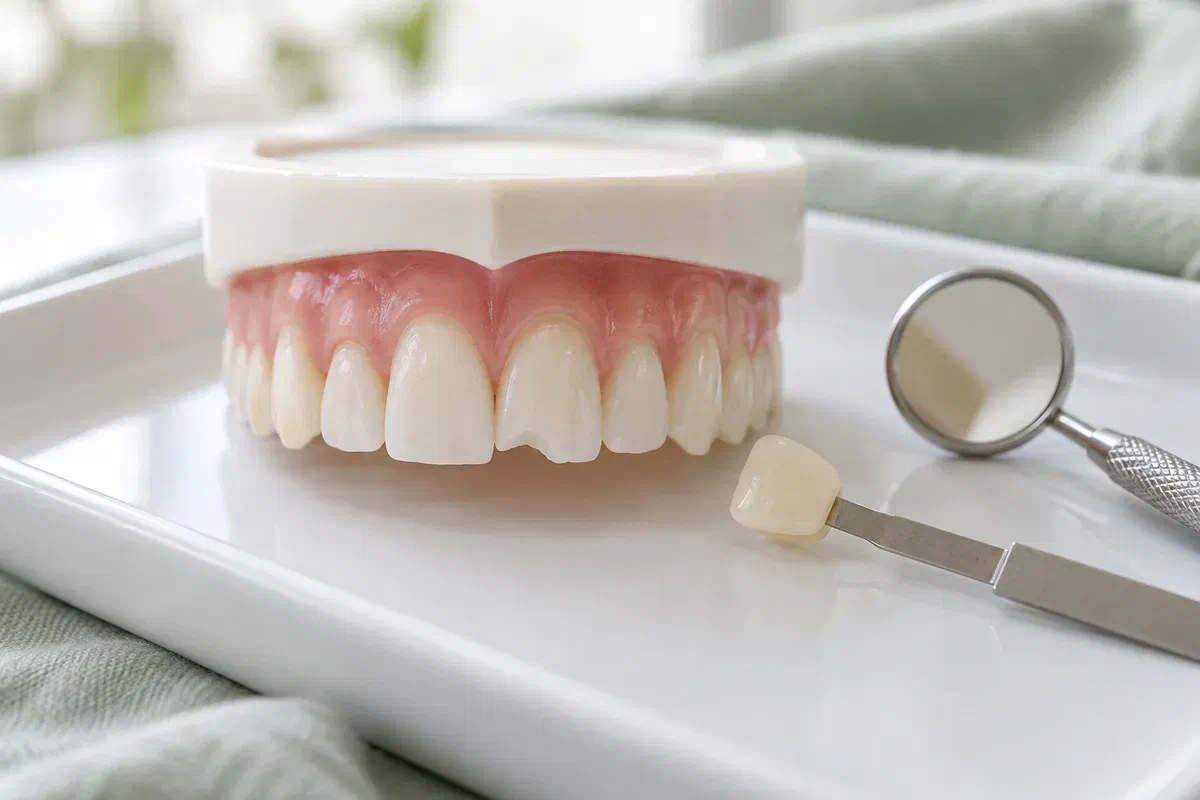
Illustrative front tooth model with a chipped corner beside a shade sample and dental mirror
What to tell us after an injury

How hard was the hit, and what has changed since?

The force behind a chip matters as much as the size of the gap. Please share these details even if the tooth feels fine right now.

A fresh chip from a fall or collision

Note whether the tooth moved, bled from the gum, or became sore to touch. Lips, gums and neighbouring teeth may need a look as well. Treat a chip from a real impact as an injury first, even if the missing piece is small.

An edge that now feels sharp

Tell us where it scratches your tongue or lip and whether biting into food feels odd. Try not to keep running your tongue or a fingernail over it. We can talk about whether smoothing or rebuilding the corner suits it best.

A tooth that has chipped in sport before

Let us know about earlier breaks, repairs and whether you wear a mouthguard for your activity. Repairing the same corner again without discussing protection may leave the door open to another injury. Bring your current guard so we can see how it fits.

If the broken piece was found on the field or floor, rinse off visible dirt gently, then keep it in milk or saliva in a sealed container and bring it in. Reattachment is sometimes possible. Do not glue it.

What a repair can achieve

Comfort and confidence, with realistic expectations.

Where the tooth is a good candidate, composite can be colour-matched and contoured so the restored corner blends with the teeth beside it. That can smooth a sharp edge, bring back the outline of the tooth, and rebuild part of the surface you use to bite.

Bonding has trade-offs worth hearing about up front. Resin can stain, wear, or break if the tooth takes another hit, and longevity varies with the tooth and the forces on it. Ask your clinician what is likely for your own repair instead of relying on a typical figure.

Patient information: Canadian Dental Association — bonding and veneers · Cleveland Clinic — dental bonding and maintenance

Treatment matched to the damage

Ask how much of the tooth the repair will involve and why. A contained chip can often be rebuilt locally without covering the whole front surface. That depends on how much healthy enamel remains, the shape of the fracture and any earlier restoration.

Restoring the look you noticed was lost

Say whether the missing length, the uneven corner or the rough feel bothers you most. Ask to see how the planned shape relates to the tooth next to it. It is fine to share your preference without being expected to rethink your whole smile.

A plan for protection and upkeep

Ask what would mean polishing, repair or replacement later, and whether a sports guard should be part of the plan. Knowing this makes comparing options easier. Confirm the estimate and any follow-up the injury needs before you commit.

The repair, step by step

Assess, plan, bond and check.

The order and detail depend on the injury and the repair chosen. If you feel uneasy about treatment, let us know and ask how we will manage your comfort.

  1. Checking the injured tooth

    We review how the injury happened, along with any pain, tenderness when biting or sensitivity to cold. The clinician examines the tooth and nearby teeth and may suggest imaging. Ask whether there are signs of a problem that resin alone would not address.

  2. Deciding on timing and shade

    Sometimes a repair can go ahead right away; other times it is better to wait and monitor first. You will compare bonding with other reasonable options. If whitening is planned, mention it, since it can change the order and the resin colour chosen.

  3. Placing the composite

    Once you agree to proceed, the tooth surface is prepared and resin is added and shaped in layers. A curing light sets the material. The need for freezing and the amount of preparation depend on the chip, so ask what your appointment will involve.

  4. Polishing and bite review

    The repaired edge is refined and polished, and the clinician checks how your teeth meet when you close and chew. Say so if the tooth feels high or strange. We will explain aftercare and when the injured tooth should be reviewed again.

Looking after it afterwards

Back to normal, with one eye on the injured tooth.

Follow the instructions provided for your repair. If local anaesthetic was used, wait until the numbness fades before eating so you don't accidentally bite your cheek or lip.

Keep up everyday cleaning

Stick with a soft toothbrush, fluoride toothpaste and whatever flossing method you were shown. Plaque builds up on resin just as it does on enamel. If the gum near the injury is tender, ask how to clean the area without irritating it.

Wear protection for contact activities

Use a properly fitting mouthguard for sports where a blow to the face is possible. Avoid opening packages or biting hard objects with the repaired tooth. If you clench or grind as well, ask whether a separate night appliance is worth assessing.

Watch for signs that need a review

Call if the tooth darkens, becomes painful, feels loose, or a piece of the repair comes off. Keep any follow-up booked after the injury even if things look good. The surface can look restored while the tooth underneath is still recovering.

Patient information: NHS — assessment and treatment of chipped or broken teeth

Matching the repair to the break

A surface chip and a deep fracture need different care.

For each option, ask what it would fix and what it might not. A neat corner repair is one job; treating a tooth injured below the surface is another.

For a small chip on a healthy tooth

Composite bonding or minor smoothing

Resin can rebuild a missing corner, and a very slight roughness may only need polishing. Ask how each option affects the outline and enamel. The decision should follow a proper examination rather than a phone photo sent from the sidelines.

For larger breaks

Reattaching the fragment or a bigger restoration

A saved piece of tooth can sometimes be bonded back into place. More extensive damage may need a restoration that offers more coverage or strength. Ask why a particular option is advised and whether there is enough healthy tooth for it.

For injuries that reach inside the tooth

Investigating the nerve and pulp

Deep fractures, lasting pain or later darkening can point to pulp involvement. Treatment then depends on what is found. Covering the chip with resin is never a substitute for assessing a tooth that may have been injured more seriously.

Chips, sports and repairs

Common questions after a tooth takes a hit.

It helps to ask about safety, appearance and upkeep together. A good plan treats the repair as part of a tooth that may still be healing.

(905) 876-4488
Can a chipped tooth be bonded on the same day as the injury?
Sometimes, but not always. The dentist may prefer to assess the injury, treat any urgent issues and wait before placing a final repair. Ask whether a temporary smoothing or protective step makes sense in the meantime.
My child chipped a front tooth at practice. Is bonding an option for kids?
Bonding is used for children and teens in suitable situations. Whether it fits depends on the tooth, the injury and the child’s age. Bring your child in promptly so the injury can be assessed, and share how it happened.
Will a mouthguard protect a bonded tooth during sports?
A properly fitting mouthguard helps reduce the risk of dental injury during contact activities. It cannot guarantee protection, but it is a sensible step for anyone who has already chipped a tooth. Ask whether a custom guard would suit you.
Why might the tooth turn darker weeks after it chipped?
Discolouration after an injury can be a sign that the inner tissue was affected. It is worth calling for a review if you notice it. The dentist can check whether further testing or treatment is needed.
Do I still need a dental visit if the chip is tiny and nothing hurts?
After an impact, yes. A small chip can be the only visible sign of an injury that deserves assessment. A quick exam can confirm whether the tooth and the teeth beside it are healthy.
How should I plan appointments from Oakville after a dental injury?
Call first so we can advise whether you should come in soon or whether a nearer emergency service is more appropriate. Follow-up visits can often be arranged around school or work. Keep any review appointments the dentist recommends.
Chipped tooth repair for Oakville

Had a knock? Let's check the tooth properly.

Phone our Bronte Street practice to describe the injury and arrange an assessment. Tell us when the chip happened and whether there is pain, swelling, sensitivity or looseness, so we can guide you to the appropriate next step.

Bonding is one of several possible repairs. For a recent injury or urgent symptoms, please call rather than waiting on an online request.

Visit Milton Dental Clinic
Unit 1, 342 Bronte St. S, Milton, ON L9T 5B7
Get directions Clinic hours
Monday–Thursday
11am–7pm
Friday–Sunday
By appointment only

Areas we serve

  • Milton
  • Oakville
  • Mississauga
  • Georgetown
  • Halton Hills
  • Acton
  • Campbellville
  • Brampton
  • Burlington
  • Puslinch
  • Rockwood
  • Erin
  • Caledon
  • Etobicoke
  • Old Milton
  • Bronte Meadows
  • Timberlea
  • Dorset Park
  • Dempsey
  • Clarke
  • Beaty
  • Coates
  • Harrison
  • Scott
  • Willmott
  • Ford
  • Bowes
  • Cobden
  • Walker
  • Mountain View
  • Milton Heights
  • Hawthorne Village
  • Valley View
  • Fallingbrook
  • Nassagaweya
  • Trafalgar
  • Esquesing
  • Nelson
  • Brookville
  • Moffat
  • Glen Williams
  • Norval
  • Limehouse
  • Stewarttown
  • Ashgrove
  • Hornby
  • Silver Creek
  • Speyside
  • Scotch Block
  • North Oakville
  • River Oaks
  • Glen Abbey
  • West Oak Trails
  • Palermo
  • Bronte Creek
  • College Park
  • Joshua Creek
  • Uptown Core
  • Preserve
  • Iroquois Ridge
  • Lisgar
  • Meadowvale
  • Meadowvale Village
  • Churchill Meadows
  • Erin Mills
  • Central Erin Mills
  • Streetsville
  • East Credit
  • Creditview
  • Heartland
  • Sheridan
  • Mount Pleasant
  • Credit Valley
  • Huttonville
  • Churchville
  • Springbrook
  • Northwest Brampton
  • Bram West
  • Fletcher's Meadow
  • Fletcher's Creek South
  • Alton Village
  • Orchard
  • Millcroft
  • Headon Forest
  • Tansley
  • Brant Hills
  • Tyandaga
  • Kilbride
  • Lowville
  • Aberfoyle
  • Morriston
  • Arkell
  • Hillsburgh
  • Freelton
  • Carlisle
  • Waterdown
  • Flamborough
  • Mountsberg

How can we help?

Milton Dental Clinic

Have a question about your smile? Choose the option that works best for you.

For urgent dental concerns, please call.
Messages are reviewed during clinic hours.