A chip caused by an injury
Tell us how it happened and whether the tooth moved, bled or became sore. Nearby teeth and gums may also need assessment. An injured tooth is checked for health first; shaping the edge comes after.


After a chip, one front tooth can look shorter or more angled than its partner, and that small mismatch is what people notice. From Rockwood, we assess the tooth and your bite, then talk through whether composite bonding can bring back an even, natural outline.
The eye is quick to spot imbalance. A chip that takes a millimetre off one central incisor can make your whole smile look tilted, even if no one else could say why. For a suitable tooth, bonding adds tooth-coloured resin to rebuild the lost length or corner, shaped by hand and polished to match its partner.
Getting the shape right means knowing why the tooth chipped and how your teeth meet. A fresh knock, a broken old repair and an edge worn down by clenching each call for different planning. If your lower teeth hit that edge firmly, adding length may need careful thought.
When you come in from Rockwood, bring a photo of your smile before the chip if you have one, and tell us what bothers you most. We examine the tooth, explain the findings and discuss bonding and other options. You don't need a plan in mind before you arrive.
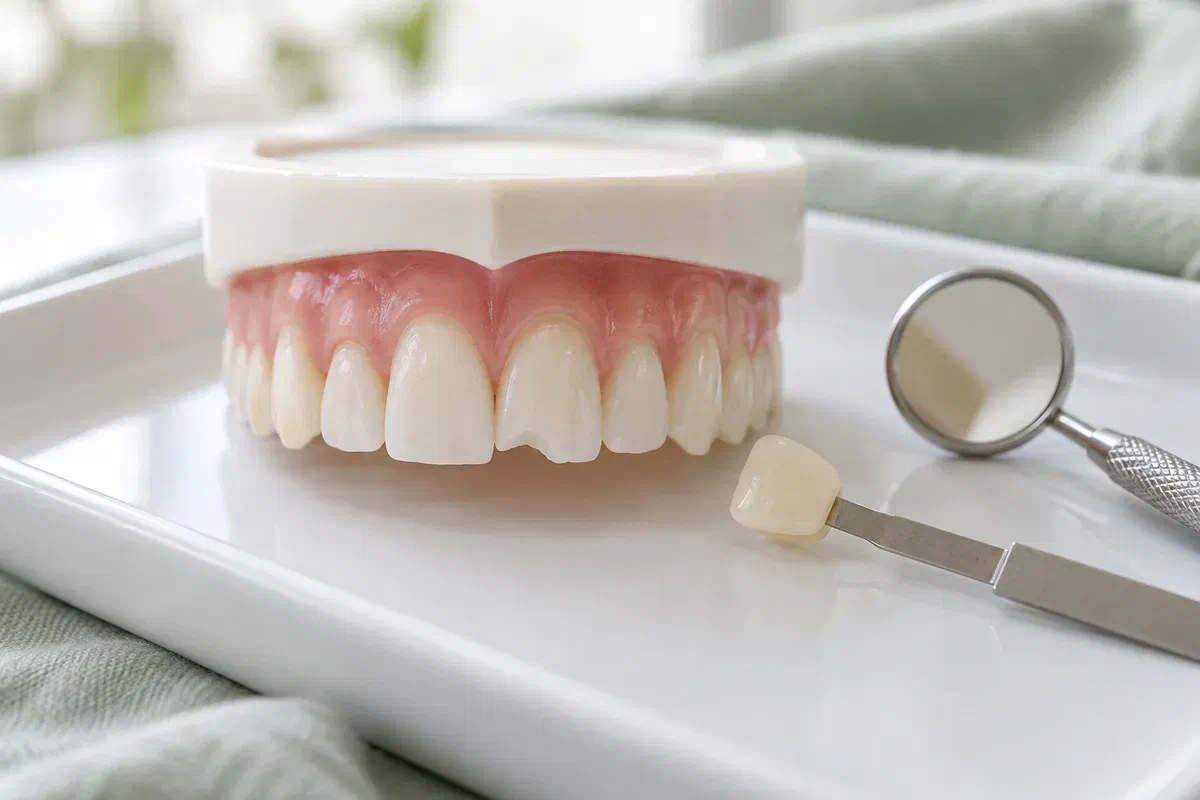
A balanced result depends on more than matching the neighbouring tooth. Share these details even if the chip doesn't hurt.
Tell us how it happened and whether the tooth moved, bled or became sore. Nearby teeth and gums may also need assessment. An injured tooth is checked for health first; shaping the edge comes after.
Point out whether the length, the angle of the edge or a rough spot bothers you most. Avoid testing the edge on hard foods. Knowing your priority helps the clinician plan whether to add resin, smooth the area, or both.
Mention clenching, grinding, nail biting and earlier repairs. If the lower teeth strike that edge heavily, rebuilding it to full length may need adjusting. Bring any guard or retainer so its fit can be checked against the planned shape.
If you find the broken fragment, keep it in a small lidded container covered with milk or saliva, and bring it in. The dentist will assess whether reattachment could work. Do not use glue.
For a suitable chip, resin can be matched to your shade and sculpted so the restored edge lines up with its neighbour. That may bring back length, correct an angled corner or smooth a surface that feels rough to your tongue.
There are practical limits. Composite can stain, wear and chip, and a long, thin edge may be more vulnerable than a shorter one. How it lasts depends on the tooth and your bite. Ask what's realistic for your particular repair instead of relying on a general lifespan.
Patient information: Canadian Dental Association — bonding and veneers · Cleveland Clinic — dental bonding and maintenance
Ask how much of the tooth will be treated. Many chips can be rebuilt locally without covering the whole front surface. The plan depends on the remaining enamel, how the break ran and any old restorations nearby.
Tell the clinician what you want to restore and ask how the planned length and angle will relate to the other front teeth. A photo can help. You can share your preference without being expected to redesign your entire smile.
Ask which changes would call for polishing, repair or replacement and how routine visits will monitor them. That helps you weigh bonding against other choices. Confirm the estimate and any further assessment before you decide.
The steps depend on the tooth and the repair agreed. If you feel anxious, mention it and ask how comfort will be managed during the visit.
We review how the tooth chipped and any pain or sensitivity. The clinician examines it, looks at how your teeth meet and may suggest an X-ray. Ask whether anything found would limit how much length can be restored.
You discuss the shape you want with the clinician, using photos or comparison with the neighbouring tooth. Bonding is weighed against other options. Mention whitening plans, since they affect the order of treatment and the resin shade.
For agreed bonding, the tooth is prepared, and resin is added and shaped in layers to create the planned length and angle. A curing light hardens it. Whether freezing is needed depends on the repair, so ask what applies.
The edge is polished and checked as you bite and slide your jaw forward and sideways. Tell us if the tooth feels long or catches. Small refinements are easier at this stage, and we explain aftercare before you leave.
Follow the instructions for your repair. If freezing was used, wait until it wears off before eating so you don't bite your cheek or lip.
Brushing with fluoride toothpaste and flossing once a day are still the basics. Resin attracts plaque along its margins like enamel. Ask for a demonstration if the new shape makes you unsure how to floss there.
Take care biting into hard items with the restored edge, and don't use it to tear packaging or bite thread. If you clench or grind, ask whether an appliance should be assessed. That depends on your habits, not every bonding case.
Call if the edge roughens, your bite feels different or part of the resin breaks off. Keep any review recommended after an injury. A well-shaped edge doesn't show whether an injured tooth is recovering inside.
Patient information: NHS — assessment and treatment of chipped or broken teeth
Ask about looks, comfort and care in the same conversation. A balanced repair still belongs to a living tooth that needs daily attention.
Our Bronte Street practice can book you in for a look at the chip and a conversation about shape. If you're travelling from Rockwood, mention whether you have pain, sensitivity or a loose tooth, and bring an older photo if you have one, so we can plan the right next step.
Bonding is one of several ways to restore a chipped tooth. For a recent injury or symptoms that worry you, phone us instead of using the online form.
