

Illustrative adult patient discussing a clear aligner with a dental clinician
Cosmetic Dentistry

Clear Aligners in Brampton

Finally putting your own smile on the family to-do list? Clear aligners can be discussed with a Brampton household’s schedule in mind, starting with an assessment of your bite and gums and an honest look at the wear, reviews and retainers involved.

Your turn

Somebody else’s appointment always seemed to come first.

Plenty of parents spend years arranging check-ups, school runs and activities before turning to the crooked tooth they have quietly disliked. Clear aligners appeal partly because they are removable: a set of thin trays, changed in sequence, each designed to move teeth a small, planned distance.

Removable does not mean casual. Trays need to be worn for long stretches every day, cleaned and stored carefully, and checked at reviews. Before any of that, your gum health, bone support, existing dental work and bite need to show that the intended movement is appropriate.

For households in Brampton, a first visit is a good moment to map treatment against the family calendar. Explain what you would like to change and how your days run. Ask who would design and supervise the plan, which records are needed and when a specialist should be consulted.

Plan an aligner visit around your week
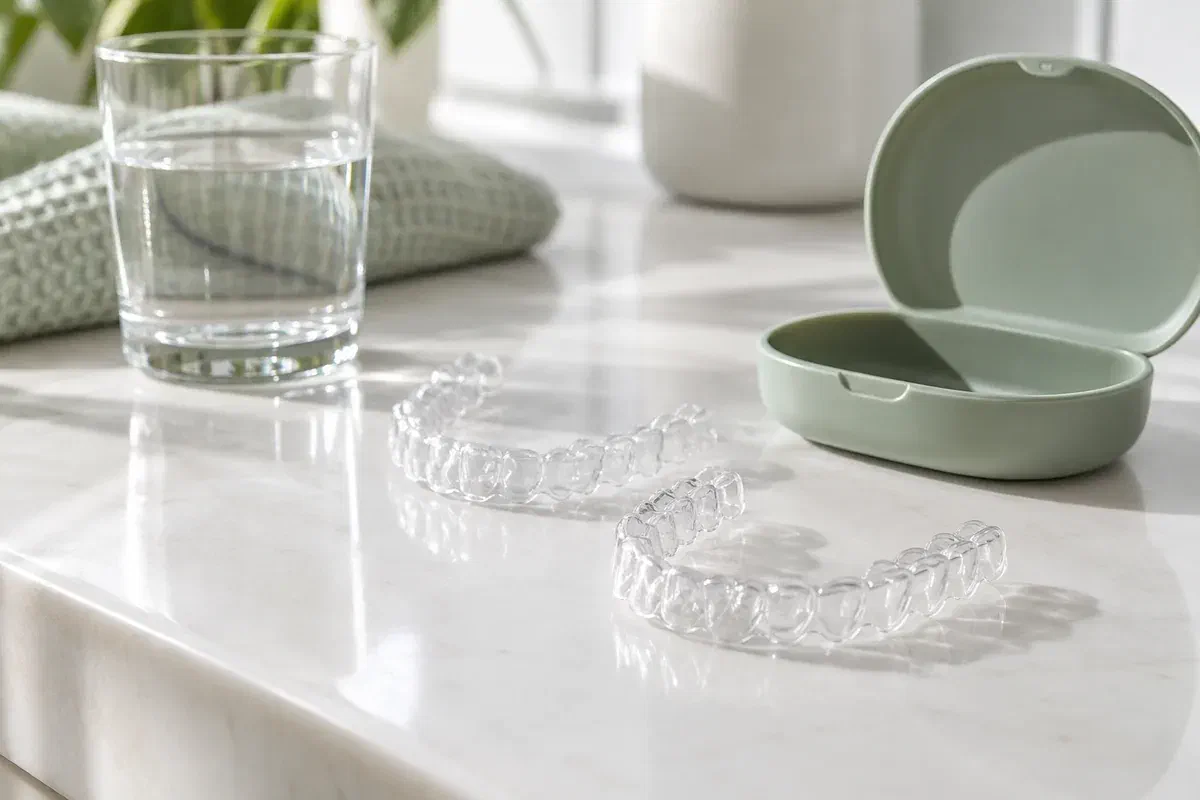
Illustrative transparent aligner trays beside a protective case and glass of water
Sort these out first

Is this the right time, and the right appliance?

A tray is one piece of orthodontic care. The assessment should clarify the movements needed and anything that could make them inadvisable or harder to achieve.

The tooth that bothers you, and the bite around it

Point out the crowding or gap you notice in the mirror. Then ask how your upper and lower teeth work together, since a front-tooth change can affect contacts elsewhere. A clear plan explains its targets and its limits.

Dental care you may have put off

It is common to postpone your own fillings or cleanings while managing everyone else’s. Mention any outstanding treatment, old injuries or gum issues. These generally need attention before orthodontics, and the team can explain how to sequence them.

Mealtimes that are rarely calm

Tasting while cooking, finishing a child’s snack or eating on the go all mean taking trays out and brushing afterwards. Think through a real day with your household. An honest picture now prevents frustration midway through treatment.

Not every orthodontic concern is suited to aligners. If they are suggested, ask why, and whether another appliance or a specialist opinion would serve your case better.

What trays can do for a busy adult

Treatment that comes out when life demands it

When the case fits, aligners provide a removable way to achieve planned tooth movement. They come out for eating, brushing and flossing according to your instructions. That same flexibility means the habit of putting them straight back in is central to success.

List the obligations next to the conveniences: cleaning trays, keeping stages in order, attending reviews and calling when something seems wrong. Ask what the estimate includes, how extra stages are handled and what retention will mean after active treatment is complete.

Patient information: American Association of Orthodontists — clear aligners · British Orthodontic Society — clear aligner treatment

A plan explained so you can share it

Ask the clinician to describe the goals clearly enough that you could explain them at home. If a digital simulation is used, discuss what it shows and what it can’t guarantee. Know how progress will be measured.

An open discussion about visibility

Mention the family gatherings, photographs or work events that matter to you. Ask whether attachments or other components would be needed. Trays are discreet, yet some elements can be noticed at close range.

Reviews that respond to your teeth

Follow-up appointments check the fit and the movement rather than relying only on the original timetable. Ask whom to call between visits and how to rebook a missed one. Changes to the plan should always be explained first.

The steps, laid out

Assessment first, retainers last

Details vary with the movements planned and your oral health. Ask for the stages and your responsibilities up front, including the plan once the last active tray is done.

  1. Assess and gather records

    Discuss your goals, health history, any past orthodontics and current dental work. The clinician examines your mouth and recommends records. Ask whether a cleaning, filling, gum care or a specialist visit should happen before an appliance plan is confirmed.

  2. Review the proposal and agree

    Cover goals, alternatives, risks, likely length and costs. Some plans include attachments or a controlled reduction of enamel between teeth. Ask what is suggested and why, and whether any step permanently changes enamel.

  3. Fit the trays and try it yourself

    At the fitting, the team checks the trays and demonstrates insertion, removal, cleaning and your wear schedule. Confirm which stages you are taking home and when to change. Practise until you can do it without help.

  4. Follow progress and plan for retainers

    Come to reviews so movement can be checked. Additional stages or adjustments may be recommended. Before active treatment ends, discuss retainers, how and when to wear them and future checks to help hold the result.

Keeping up at home

A routine the whole household can respect

Your written instructions are your guide. Keep the current stage and next appointment somewhere visible, such as the family calendar, so a hectic week doesn’t derail treatment.

Hours of wear, tracked honestly

Wear each stage for the prescribed time and don’t rush to the next tray after a patchy week. If a tray stops seating or an attachment falls off, phone the team. Ask what to wear while waiting for their advice.

Brush, then reinsert

Take trays out to eat and drink as instructed and clean your teeth before putting them back. Wash the trays in the way recommended for their material. Your usual check-ups and cleanings remain essential.

Out of reach of little hands and pets

Keep the case closed and stored where children and pets can’t get at it, away from heat. If a tray is lost or chewed, call with its stage number. Don’t switch stages without advice or attempt a fix at home.

Paths you might take

Let the findings guide the choice.

Being nearly invisible is not the same as being most suitable. Ask how each option handles the movement, your bite, the daily effort and long-term retention.

When the movements and your routine match

A supervised course of aligners

Aligners may suit selected alignment and bite concerns for someone who can keep up wear. Ask how supervision works and whether extra components are needed. The plan should explain the goal and the possibility of refinements or a change of approach.

When a different appliance gives more control

Fixed braces or specialist care

Some movements or more complicated bite issues may be better handled with braces or by an orthodontist. Ask what makes the case more involved and how a referral would proceed. Any alternative should come with a clear clinical reason.

When movement is optional or not the issue

Holding off, or a different cosmetic treatment

You might decide elective orthodontics can wait, or isn’t for you. If your concern is mostly a tooth’s shape or surface, ask about treatments aimed at that. A cosmetic restoration changes appearance without moving teeth or correcting the bite.

Brampton household questions

Fitting aligners into family life

Ask about your own plan instead of assuming every clear tray treatment is the same. Practical, everyday questions belong in the conversation.

(905) 876-4488
Can teenagers use clear aligners too?
Aligners are used for some teenagers, but suitability depends on their teeth, bite and ability to wear trays consistently. Ask whether an assessment for your child is appropriate and whether a specialist opinion would help.
What if I need to eat at irregular times because of shift work?
The trays come out whenever you eat, so irregular meals simply need planning. Tell the clinician about your schedule. They can discuss how to protect wear time and clean your teeth when you are away from home.
Is it okay to sleep in my aligners?
Many wear schedules include nighttime wear, but follow the instructions for your plan. Ask about cleaning your teeth before bed and what to do if a tray feels uncomfortable overnight.
Should I finish other dental treatment before starting trays?
Usually, active decay or gum problems need care first, and some restorations are better timed before or after orthodontics. Ask the team how to sequence your treatment so records and trays fit correctly.
Would extra parts on my teeth make my aligners more noticeable?
Some plans use tooth-coloured attachments to help certain movements, and they can be seen up close. Ask whether your plan includes them, where they would sit and when they would come off.
Can several family members’ appointments be booked together?
Ask the front desk when booking. Coordinating visits for different family members can save trips, though each person’s treatment will set its own timing. Knowing your review schedule early makes planning easier.
Clear aligners for Brampton adults

Make one appointment just for you.

Visit our Bronte Street practice to talk through crowding, gaps or a bite concern. We will explain how removable trays work day to day, how reviews are scheduled and what the assessment must show before you start.

The assessment decides suitability and whether a referral is advised. How long treatment takes, which appliance is used and the result differ by individual.

Visit Milton Dental Clinic
Unit 1, 342 Bronte St. S, Milton, ON L9T 5B7
Get directions Clinic hours
Monday–Thursday
11am–7pm
Friday–Sunday
By appointment only

Areas we serve

  • Milton
  • Oakville
  • Mississauga
  • Georgetown
  • Halton Hills
  • Acton
  • Campbellville
  • Brampton
  • Burlington
  • Puslinch
  • Rockwood
  • Erin
  • Caledon
  • Etobicoke
  • Old Milton
  • Bronte Meadows
  • Timberlea
  • Dorset Park
  • Dempsey
  • Clarke
  • Beaty
  • Coates
  • Harrison
  • Scott
  • Willmott
  • Ford
  • Bowes
  • Cobden
  • Walker
  • Mountain View
  • Milton Heights
  • Hawthorne Village
  • Valley View
  • Fallingbrook
  • Nassagaweya
  • Trafalgar
  • Esquesing
  • Nelson
  • Brookville
  • Moffat
  • Glen Williams
  • Norval
  • Limehouse
  • Stewarttown
  • Ashgrove
  • Hornby
  • Silver Creek
  • Speyside
  • Scotch Block
  • North Oakville
  • River Oaks
  • Glen Abbey
  • West Oak Trails
  • Palermo
  • Bronte Creek
  • College Park
  • Joshua Creek
  • Uptown Core
  • Preserve
  • Iroquois Ridge
  • Lisgar
  • Meadowvale
  • Meadowvale Village
  • Churchill Meadows
  • Erin Mills
  • Central Erin Mills
  • Streetsville
  • East Credit
  • Creditview
  • Heartland
  • Sheridan
  • Mount Pleasant
  • Credit Valley
  • Huttonville
  • Churchville
  • Springbrook
  • Northwest Brampton
  • Bram West
  • Fletcher's Meadow
  • Fletcher's Creek South
  • Alton Village
  • Orchard
  • Millcroft
  • Headon Forest
  • Tansley
  • Brant Hills
  • Tyandaga
  • Kilbride
  • Lowville
  • Aberfoyle
  • Morriston
  • Arkell
  • Hillsburgh
  • Freelton
  • Carlisle
  • Waterdown
  • Flamborough
  • Mountsberg

How can we help?

Milton Dental Clinic

Have a question about your smile? Choose the option that works best for you.

For urgent dental concerns, please call.
Messages are reviewed during clinic hours.