

Illustrative adult patient discussing a clear aligner with a dental clinician
Cosmetic Dentistry

Clear Aligners in Burlington

Wondering how removable trays would fit around your coffee, lunches and workday? From Burlington, begin with an assessment of your bite and gum health, then a frank look at the daily wear, cleaning and review visits clear aligners would ask of you.

A day in the life of an aligner

Out for breakfast, back in before the commute

Picture an ordinary morning. The trays come out for breakfast and coffee, you brush, they go back in, and the case goes into a bag or pocket. Clear aligners are a series of removable trays that shift teeth gradually, and they work only during the hours they are actually worn.

That rhythm is why the practical side deserves as much attention as the cosmetic side. Still, routine is not the first filter. Your gums, the bone around each tooth, any fillings or crowns and the way your teeth bite together decide whether the planned movements are reasonable at all.

Coming from Burlington, you can use a first visit at our Bronte Street practice to cover both. Describe the teeth that bother you and the kind of week you lead. Ask who would plan and oversee treatment, what records are needed and whether an orthodontist’s input would be wise.

Ask how aligners would fit your day
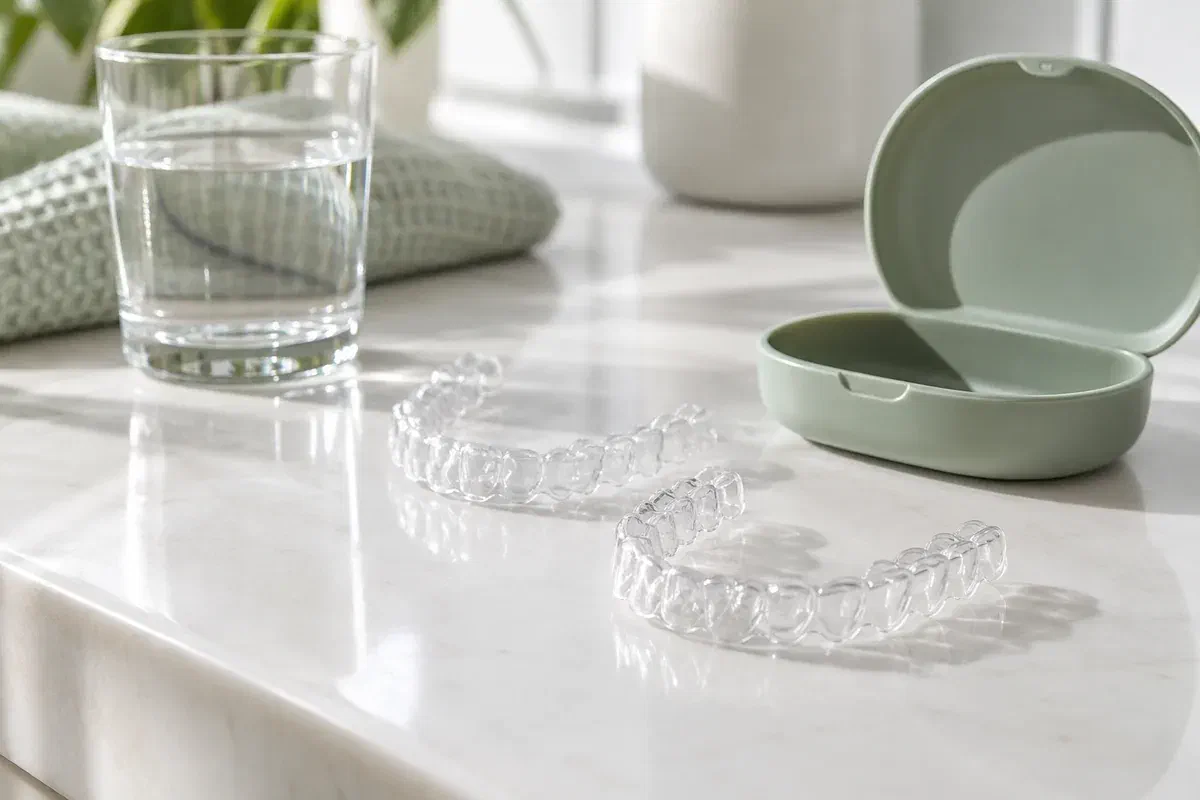
Illustrative transparent aligner trays beside a protective case and glass of water
Look at these before the trays

Your bite, your oral health, your calendar

An appliance is a means, not a diagnosis. The assessment should identify what needs to move and anything that could affect whether moving it is a good idea.

What you see, and what the bite is doing

Name the crowding or gap that bothers you, then ask how your teeth come together when you chew. A visible front-tooth issue may connect to the bite further back. The plan should list what it targets and what will stay the same.

Treatment that may need to come first

Tell the clinician about fillings, crowns, past injuries or gum care. Decay or gum disease that is active is usually managed before orthodontics. Ask how any upcoming work would be timed with scanning and fitting.

Meals, snacks and the hours in between

Every snack or sweetened drink means taking trays out and brushing before they go back. If you graze through the day or have long working lunches, say so. Knowing the commitment up front beats discovering it a month in.

Aligners don’t suit every orthodontic problem. If they are proposed, ask why, and whether a different appliance or a specialist’s assessment might do the job better.

Why some people prefer trays

Flexible, low-profile, and dependent on you

For a suitable case, aligners let you carry out planned movement with an appliance you remove for eating and cleaning. You can brush and floss as usual. The same flexibility makes it easy to leave trays out too long, which is why steady wear is part of the treatment itself.

Weigh the gains against the tasks: cleaning the trays, tracking stages, attending reviews and speaking up about problems. Ask what the estimate covers, how additional stages are handled and what retainers will involve after active movement ends.

Patient information: American Association of Orthodontists — clear aligners · British Orthodontic Society — clear aligner treatment

Aims you can follow

Ask the clinician to describe the goals without technical language. If a simulation is shown, talk about what it illustrates and what it cannot promise. You should understand how progress will be judged against the plan.

A conversation about visibility and speech

Mention calls, meetings, performances or events where you want to look and sound your best. Ask whether attachments or other parts would be added and how visible they are. Clear trays are subtle, though not every piece is invisible.

Reviews based on the fit you actually have

Follow-up visits let the clinician check how trays are seating and how teeth are responding, not just tick off dates. Ask who to call between appointments and what happens if you miss one. Any plan change should be explained first.

What happens, in order

Examine. Decide. Fit. Follow up.

Specifics depend on the planned movements and your oral health. Ask to see each stage and your responsibilities beforehand, including what follows the last active tray.

  1. An assessment that leads to a diagnosis

    Talk about your goals, health history, any previous orthodontics and existing dental work. The clinician examines your teeth and gums and recommends appropriate records. Ask whether gum treatment, a restoration or a specialist referral needs to come before an appliance plan.

  2. A proposal you understand before you agree

    Review goals, alternatives, risks, expected duration and costs. Some plans include attachments or a measured reduction of enamel between selected teeth. Ask what each step involves, why it is suggested and whether it permanently alters enamel.

  3. A fitting visit with hands-on practice

    When the trays are ready, the team checks the fit and teaches you to put them in, take them out and clean them, along with your wear schedule. Confirm which stages you have and when to change. Try the steps yourself before you leave.

  4. Reviews, then a plan for retainers

    Attend the reviews you are given so the clinician can see how teeth are responding. Adjustments or extra stages may follow. Before the last active tray, talk about retainers, how to wear them and the check-ups that help keep teeth where they finished.

Habits that keep things on track

Pack the case like you pack your keys.

Your own instructions take priority over what anyone else was told. Keep your tray number and review date handy, particularly in weeks when work, travel or family plans upset the usual pattern.

Wear time comes first

Keep to the hours prescribed for each tray, and don’t jump ahead after a few days of patchy wear. If a tray stops fitting or an attachment detaches, call. Ask which tray to wear in the meantime.

Brush before the trays go back in

Take the trays out for meals and for drinks as your instructions say, then clean your teeth before reinserting. Clean the trays as recommended for their material. Keep up your regular dental check-ups and cleanings as well.

Never wrap a tray in a napkin

Trays left on a tray or in a napkin at lunch are easily thrown out. Use the case, and keep it away from pets and heat. If a tray is lost or damaged, call with its stage number rather than guessing which to wear or repairing it.

Other ways forward

The right appliance follows the findings.

Discretion is appealing, but it is not the only measure. For each choice, ask how it handles the movement, your bite, the daily effort and retention afterward.

When movements and routine both suit trays

Clear aligners with supervision

Aligners may be appropriate for selected alignment and bite concerns when you can keep up the wear. Ask how supervision works and whether extra components are planned. The plan should state its aim and allow for refinements or a different approach.

When more control would help

Fixed braces or a specialist referral

Some movements and more involved bite problems may be better handled with another appliance or with an orthodontist. Ask what makes your case complex and how referral would work. A different recommendation should come with a clear explanation.

When moving teeth is optional or not the main issue

Keeping watch, or a different cosmetic fix

You may choose not to pursue elective orthodontics once you know the findings. If your concern is mostly the shape or surface of a tooth, ask whether another treatment addresses it. A cosmetic restoration changes appearance without moving teeth or fixing the bite.

Burlington questions about daily wear

Living with trays, answered

Ask about your own plan instead of assuming all clear tray systems are the same. Everyday practicalities are a real part of deciding.

(905) 876-4488
What happens if I snack throughout the day with aligners?
Each time you eat, the trays come out and your teeth should be cleaned before they go back in. Frequent snacking cuts into wear time and makes the routine harder. Ask how to plan meals around the hours your treatment requires.
Is chewing gum allowed while wearing trays?
Gum generally shouldn’t be chewed with trays in, since it can stick to the plastic. Follow the instructions you are given for your specific appliance and ask if anything is unclear.
Can I take my aligners to a restaurant meal?
Yes, bring the case and remove the trays when you eat. Put them straight into the case rather than a napkin, and brush or at least rinse before reinserting if you can’t brush. Ask what your team recommends when brushing isn’t possible.
How do I clean my aligner trays without damaging them?
Use the method recommended for your appliance’s material, since some products or hot water can harm trays. Ask the team to show you at the fitting visit, and check before trying any new cleaning product.
Will I need to change trays at a set time each day?
Your instructions will explain when to move to the next stage. If you miss wear time, contact the team before advancing. Note what you wore and for how long so they can advise you properly.
Can Burlington appointments be grouped to save trips?
Ask at your consultation whether some reviews or related visits could be combined. How often you need to be seen depends on your plan, but knowing the schedule early helps you arrange time around work and other commitments.
Aligners for Burlington adults

Tell us what a normal week looks like.

Arrange a visit to our Bronte Street practice to discuss crowding, spacing or a bite concern. Bring questions about wearing trays around meals, work and travel, and about the assessment that decides whether this approach suits you.

Whether aligners are suitable, and whether referral is advised, is decided at assessment. Duration, appliance and results vary between individuals.

Visit Milton Dental Clinic
Unit 1, 342 Bronte St. S, Milton, ON L9T 5B7
Get directions Clinic hours
Monday–Thursday
11am–7pm
Friday–Sunday
By appointment only

Areas we serve

  • Milton
  • Oakville
  • Mississauga
  • Georgetown
  • Halton Hills
  • Acton
  • Campbellville
  • Brampton
  • Burlington
  • Puslinch
  • Rockwood
  • Erin
  • Caledon
  • Etobicoke
  • Old Milton
  • Bronte Meadows
  • Timberlea
  • Dorset Park
  • Dempsey
  • Clarke
  • Beaty
  • Coates
  • Harrison
  • Scott
  • Willmott
  • Ford
  • Bowes
  • Cobden
  • Walker
  • Mountain View
  • Milton Heights
  • Hawthorne Village
  • Valley View
  • Fallingbrook
  • Nassagaweya
  • Trafalgar
  • Esquesing
  • Nelson
  • Brookville
  • Moffat
  • Glen Williams
  • Norval
  • Limehouse
  • Stewarttown
  • Ashgrove
  • Hornby
  • Silver Creek
  • Speyside
  • Scotch Block
  • North Oakville
  • River Oaks
  • Glen Abbey
  • West Oak Trails
  • Palermo
  • Bronte Creek
  • College Park
  • Joshua Creek
  • Uptown Core
  • Preserve
  • Iroquois Ridge
  • Lisgar
  • Meadowvale
  • Meadowvale Village
  • Churchill Meadows
  • Erin Mills
  • Central Erin Mills
  • Streetsville
  • East Credit
  • Creditview
  • Heartland
  • Sheridan
  • Mount Pleasant
  • Credit Valley
  • Huttonville
  • Churchville
  • Springbrook
  • Northwest Brampton
  • Bram West
  • Fletcher's Meadow
  • Fletcher's Creek South
  • Alton Village
  • Orchard
  • Millcroft
  • Headon Forest
  • Tansley
  • Brant Hills
  • Tyandaga
  • Kilbride
  • Lowville
  • Aberfoyle
  • Morriston
  • Arkell
  • Hillsburgh
  • Freelton
  • Carlisle
  • Waterdown
  • Flamborough
  • Mountsberg

How can we help?

Milton Dental Clinic

Have a question about your smile? Choose the option that works best for you.

For urgent dental concerns, please call.
Messages are reviewed during clinic hours.