

Illustrative adult patient discussing a clear aligner with a dental clinician
Cosmetic Dentistry

Clear Aligners in Caledon

Is it the position of your teeth that bothers you, or their shape, shade or edges? For adults in Bolton and across Caledon, an assessment can sort out whether clear aligners are the right answer, another treatment fits better, or no treatment is needed.

Start with the real concern

Is moving teeth what you actually want?

People often book to ask about aligners when the thing they dislike is harder to name. A tooth may sit slightly out of line, or it may simply be shorter, chipped or darker than its neighbours. Clear aligners only address position: they are removable trays, worn in order, that move teeth gradually along a plan.

Sorting position from shape is the first useful step. After that, the clinical checks follow. Healthy gums and bone, sound fillings and crowns, and a bite that works well all matter before any movement is planned. If the concern turns out to be cosmetic shape alone, a different approach may be simpler.

For households in Caledon, from Bolton to the smaller villages northeast of Milton, a visit to our Bronte Street practice can start with a mirror and an honest conversation. Ask who would plan and oversee treatment, which records are needed and whether an orthodontist should be involved.

Pin down what you’d like to change
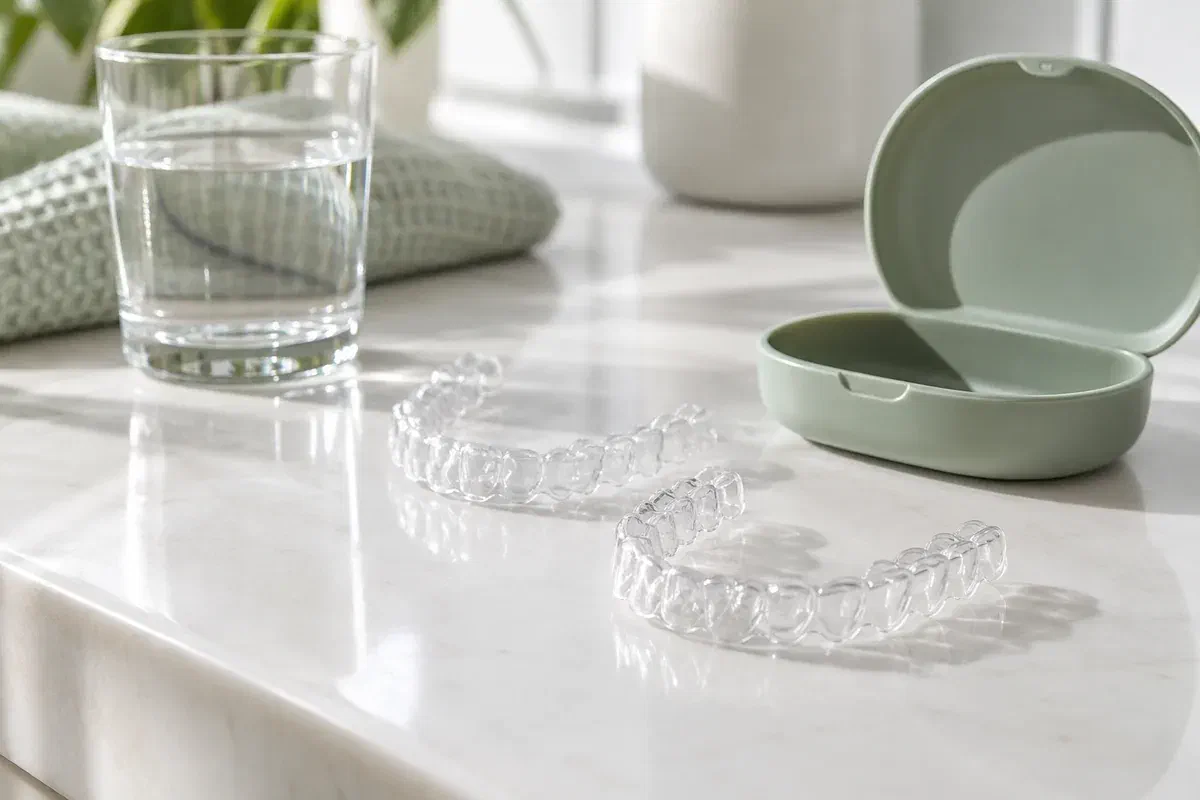
Illustrative transparent aligner trays beside a protective case and glass of water
Questions that narrow it down

Position, foundation, commitment

An appliance answers a diagnosis, not a wish. Your assessment should say which movements, if any, would help and what could make them unwise or difficult.

A position problem, or a different one?

Show the clinician exactly what catches your eye. Ask whether it comes from crowding, spacing or the way your teeth meet, or from shape and surface. Your plan should explain what moving teeth would and wouldn’t change.

Health that has to come first

Old fillings, crowns, past injuries and gum problems shape what is advisable. Active decay or gum disease typically needs care before teeth are moved. Ask how any treatment would be sequenced with records and the first fitting.

Months of daily wear

Trays are worn for most of the day, every day, for the length of treatment, then followed by retainers. Picture meals, work and time away. If that commitment feels out of proportion to the concern, say so.

Aligners are not suitable for every orthodontic problem, and not every cosmetic concern is an orthodontic one. Ask why trays are suggested and whether another appliance, a referral or a different cosmetic treatment would be better.

When position really is the issue

A removable, low-key way to realign

If the concern is how teeth are arranged and the case is suitable, aligners offer planned movement with trays you remove for meals and cleaning, as instructed. They are discreet in daily life. Because removal is easy, regular wear carries the treatment forward.

Put the benefits next to what you’d be taking on: tray cleaning, stage tracking, reviews and early reporting of problems. Ask for a breakdown of what the estimate covers, how any added stages are managed and what retention will require after active movement is complete.

Patient information: American Association of Orthodontists — clear aligners · British Orthodontic Society — clear aligner treatment

Goals in ordinary language

Ask the clinician to tell you, plainly, what the plan aims to achieve. If you’re shown a digital simulation, discuss what it portrays and what it can’t guarantee. Know how progress will be compared with those aims.

An honest word about what shows

Mention events, work or photographs that matter to you. Ask whether attachments or other parts would be bonded to teeth and how noticeable they’d be. Trays are subtle, but some components can be seen.

Reviews grounded in your progress

Follow-up appointments look at fit and movement rather than following a fixed timetable blindly. Ask whom to contact between visits and how a missed one is rescheduled. Changes to the plan should be explained first.

If you decide to proceed

Diagnosis to retention, in sequence

Each plan reflects the movements involved and the state of your teeth and gums. Before agreeing, ask what each phase involves, what you’re responsible for and what comes after the final active tray.

  1. Clarify the concern and gather records

    Share your goals, medical history, previous orthodontics and dental work. A thorough examination follows, with records recommended as needed. Ask whether gum care, restorations or a specialist opinion should come first, and whether a non-orthodontic option was considered.

  2. Weigh the proposal carefully

    Discuss aims, alternatives, risks, likely duration and fees. Some plans include attachments or a measured reduction of enamel between teeth. Ask why each step is proposed and whether it permanently changes your teeth.

  3. Receive the trays and learn their care

    The team checks the fit and demonstrates insertion, removal, cleaning and the wear schedule. Make a note of your stages and change dates. Practise any unfamiliar step before heading home.

  4. Follow progress, then hold the result

    Attend reviews so your response can be checked, with refinements if needed. As active treatment ends, agree on retainers, their wear and future checks, since holding teeth in place is an ongoing part of the plan.

Once trays are in

Steady habits do the quiet work.

Follow your own written instructions rather than anyone else’s schedule. Keep your current stage and next review easy to find, particularly when farm work, commuting or family plans change the week.

Wear as prescribed

Give each tray its full prescribed wear and don’t advance early after a gap. If a tray stops fitting or an attachment falls off, phone before driving in. Ask which tray to wear while you wait.

Clean before every return

Take trays out for meals and drinks as directed and brush before putting them back. Clean the trays using the recommended method. Continue regular check-ups and hygiene visits alongside orthodontic reviews.

Keep trays safe and report a loss

Use the case whenever trays are out, away from pets and heat. If one is lost or damaged, contact the team with its stage number. Avoid choosing another stage yourself or trying a home repair.

Three possible answers

Aligners, another appliance or a different treatment

The least visible choice isn’t automatically the right one. For each, ask how it would address your actual concern, your bite, the daily effort and what keeps the result stable.

When position is the concern and trays can move it

Clear trays, supervised

For various alignment and bite issues, trays can deliver the planned change if worn consistently. Ask how you’ll be supervised and whether extra parts are planned. Refinements, or a shift to a different method, remain possible.

When the bite needs more control

Braces or orthodontic specialist care

Some movements and more complex bites are better suited to fixed braces or an orthodontist. Ask what makes your case more involved and how a referral would be arranged. Expect a clear clinical explanation for any alternative.

When shape, not position, is the issue

A cosmetic restoration, or nothing at all

If what bothers you is a chipped edge, an uneven outline or a surface flaw, ask whether a restoration would address it more directly. That changes how a tooth looks without repositioning it or improving the bite. Choosing no treatment is also reasonable.

Caledon questions

Before deciding aligners are the answer

Each case is different, so ask about yours rather than assuming trays fit every smile concern. Questions that test the decision are useful ones.

(905) 876-4488
How can I tell if my concern is position or tooth shape?
It can be hard to judge in a mirror. An examination, sometimes with photographs or models, helps separate crowding or spacing from shape, size or surface concerns. Ask the clinician to show you what they see.
Could bonding or veneers be an alternative to aligners?
For some shape or surface concerns, a cosmetic restoration may be considered. These change appearance but don’t move teeth or correct the bite, and they involve their own trade-offs. Ask which applies to your situation.
Is it reasonable to decide not to straighten my teeth?
Yes. Orthodontics for cosmetic reasons is elective. Understanding your findings helps you decide whether treatment, monitoring or no change suits you best.
Can aligners be combined with other cosmetic treatment later?
Sometimes teeth are aligned first and cosmetic work is planned afterward. Ask whether that sequence makes sense in your case and how timing affects the result.
Do crooked teeth affect oral health, or only appearance?
In some cases crowding can make cleaning harder or bite contacts uneven, but this varies. Ask the clinician whether your alignment has any health implications or is a purely cosmetic concern.
How many visits would treatment involve from Caledon?
That depends on the plan and any dental work needed first. Ask about the likely review schedule at your consultation so you can plan travel and work time realistically.
Aligner consultations for Caledon

Name the concern first. The treatment can follow.

Visit our Bronte Street practice with whatever you’d like to change, whether it looks like crowding, spacing or something harder to describe. We’ll help identify the real concern, explain the assessment for aligners and outline other options.

Assessment determines whether aligners are suitable or a referral or alternative is advised. Duration, appliance choice and results vary individually.

Visit Milton Dental Clinic
Unit 1, 342 Bronte St. S, Milton, ON L9T 5B7
Get directions Clinic hours
Monday–Thursday
11am–7pm
Friday–Sunday
By appointment only

Areas we serve

  • Milton
  • Oakville
  • Mississauga
  • Georgetown
  • Halton Hills
  • Acton
  • Campbellville
  • Brampton
  • Burlington
  • Puslinch
  • Rockwood
  • Erin
  • Caledon
  • Etobicoke
  • Old Milton
  • Bronte Meadows
  • Timberlea
  • Dorset Park
  • Dempsey
  • Clarke
  • Beaty
  • Coates
  • Harrison
  • Scott
  • Willmott
  • Ford
  • Bowes
  • Cobden
  • Walker
  • Mountain View
  • Milton Heights
  • Hawthorne Village
  • Valley View
  • Fallingbrook
  • Nassagaweya
  • Trafalgar
  • Esquesing
  • Nelson
  • Brookville
  • Moffat
  • Glen Williams
  • Norval
  • Limehouse
  • Stewarttown
  • Ashgrove
  • Hornby
  • Silver Creek
  • Speyside
  • Scotch Block
  • North Oakville
  • River Oaks
  • Glen Abbey
  • West Oak Trails
  • Palermo
  • Bronte Creek
  • College Park
  • Joshua Creek
  • Uptown Core
  • Preserve
  • Iroquois Ridge
  • Lisgar
  • Meadowvale
  • Meadowvale Village
  • Churchill Meadows
  • Erin Mills
  • Central Erin Mills
  • Streetsville
  • East Credit
  • Creditview
  • Heartland
  • Sheridan
  • Mount Pleasant
  • Credit Valley
  • Huttonville
  • Churchville
  • Springbrook
  • Northwest Brampton
  • Bram West
  • Fletcher's Meadow
  • Fletcher's Creek South
  • Alton Village
  • Orchard
  • Millcroft
  • Headon Forest
  • Tansley
  • Brant Hills
  • Tyandaga
  • Kilbride
  • Lowville
  • Aberfoyle
  • Morriston
  • Arkell
  • Hillsburgh
  • Freelton
  • Carlisle
  • Waterdown
  • Flamborough
  • Mountsberg

How can we help?

Milton Dental Clinic

Have a question about your smile? Choose the option that works best for you.

For urgent dental concerns, please call.
Messages are reviewed during clinic hours.