Teeth that crowd, gap or bite awkwardly
Point to the teeth that bother you, then ask about the bite as a whole. A front-tooth correction can change how back teeth meet. Your plan should be precise about what it targets and what it leaves.


Most of clear aligner treatment happens at your own bathroom sink. From Erin or Hillsburgh, find out how trays are cleaned, stored and swapped at home, and why a careful assessment of your bite, gums and dental history has to come before any of it.
Here is what the routine usually looks like. Trays come out at mealtimes, teeth are brushed, trays are rinsed and cleaned, and they go back in. Every so often you switch to the next set. Clear aligners are simply a planned series of removable trays, and their effect depends on those small repetitions.
Because so much is in your hands, the clinical starting point has to be sound. The health of your gums and bone, any crowns or fillings and how your teeth meet when you bite decide whether the intended movements are appropriate in the first place. Good habits cannot make an unsuitable plan suitable.
If you’re coming from Erin, Hillsburgh or the surrounding countryside north of Milton, a first visit to our Bronte Street practice covers both sides. Explain what you want to change and how your household runs. Ask who would plan and oversee treatment, what records are needed and whether an orthodontist should weigh in.
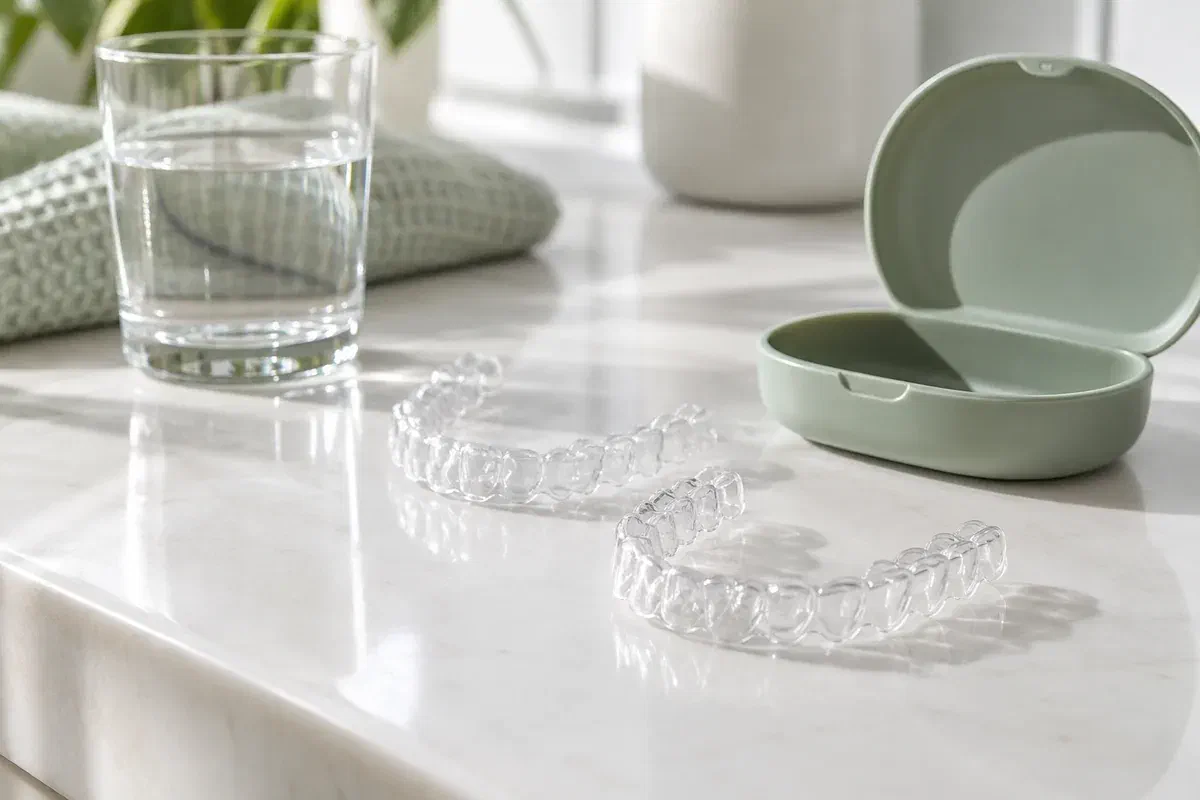
Orthodontic care is more than the appliance. The assessment should confirm which movements are needed and point out anything that would make them unwise or less predictable.
Point to the teeth that bother you, then ask about the bite as a whole. A front-tooth correction can change how back teeth meet. Your plan should be precise about what it targets and what it leaves.
Tell the clinician about fillings, crowns, injuries and past gum treatment. Active decay or gum disease usually comes first. Ask how any dental work would be timed with scans, since changing a tooth’s shape can affect how trays fit.
Think about who shares the bathroom, where trays will sit at mealtimes and how often you eat away from home. An honest look at daily life today is better than finding the routine unworkable a few months in.
Clear aligners don’t suit every orthodontic problem. Ask why they’re being recommended for you, and whether another appliance or an assessment by a specialist would be a better fit.
For a suitable case, trays allow planned movement while letting you clean your teeth without working around brackets. They’re removed for meals according to your instructions. That freedom is genuine, but it relies on the habit of returning them promptly.
Compare the convenience with the chores: cleaning trays, keeping to the sequence, attending reviews and calling about problems. Ask which visits and trays the quoted fee covers, what happens if refinement trays are needed and what retainers will mean once active movement finishes.
Patient information: American Association of Orthodontists — clear aligners · British Orthodontic Society — clear aligner treatment
Ask for the main aims in plain words. If a digital simulation is used, talk about what it represents and what it cannot promise. Understand how progress will be assessed at each review.
Mention events or work where appearance feels important. Ask whether attachments or other components would be added. Trays are subtle, but not every piece disappears entirely.
Follow-up visits check how trays seat and teeth respond, rather than relying only on dates. Ask whom to call between visits and how missed appointments are handled. Plan changes should be explained in advance.
Timing varies with the movements and the condition of your teeth and gums. Ask what each stage involves, what you’re responsible for and how things work after the final active tray.
Discuss your goals, health history, previous orthodontics and dental work. After a look at your teeth and gums, you’ll hear which scans or photographs are worthwhile. Ask whether gum care, restorations or a specialist consultation should come before an appliance plan.
Go over goals, alternatives, risks, duration and fees. Some plans include attachments or a measured reduction of enamel between certain teeth. Ask what is proposed, why, and whether any step can’t be undone.
At the fitting the team checks the trays, then shows you how to insert, remove, clean and store them and how long to wear each stage. Note your stage numbers and change dates. Practise until it feels natural.
Come to reviews so the response can be checked, with refinements added if needed. Before active treatment ends, discuss retainers, how to wear and clean them and the check-ups that help keep teeth in their new positions.
Your written instructions outrank anything a friend or website suggests. Keep the current stage and next review where everyone in the house can see them, so a busy week doesn’t blur the schedule.
Wear each tray as prescribed. If wear slips for a few days, don’t race ahead; ask first. A tray that won’t seat or a lost attachment is worth a call. Ask which tray to wear while you wait.
Take trays out for meals and drinks as instructed and brush before reinserting. Clean trays using the method suited to their material, avoiding hot water. Keep your routine check-ups and hygiene visits as usual.
Choose a spot for the case that pets and small children can’t reach, away from heat. If a tray is lost or damaged, call with its stage number. Don’t change stages without advice or attempt a home repair.
Each plan comes with its own instructions, so ask about yours instead of assuming all trays are cared for identically. Small practical questions are welcome.
Book an appointment at our Bronte Street practice to discuss crowding, gaps or how your teeth meet. We’ll show you what the daily routine of trays involves, how cleaning and storage work, and what the assessment has to confirm before you begin.
Suitability and any need for referral are confirmed at assessment. Treatment duration, appliance choice and results vary for each person.
