Which teeth, and how they bite
Identify the crowding or spacing you’d like to change, and ask how the upper and lower teeth meet. A change at the front can influence contacts further back. Your plan should say what it corrects and what remains.


Coming from Etobicoke for clear aligners means planning ahead. Learn how a suitable case is assessed, how review visits can be spaced and organised, and what to do if a tray problem or urgent symptom arises between appointments.
Orthodontic care unfolds over months, so the logistics matter from day one. Clear aligners are removable trays worn in a fixed order, each one moving the teeth a little further toward a planned position. Much of the work happens at home between visits, which suits people who prefer an organised schedule.
Distance never replaces diagnosis, though. Your gums, the supporting bone, existing fillings or crowns and the way your bite functions all decide whether the movements you want are appropriate, and whether trays are the right tool for them.
If you’re coming from Etobicoke, the west end of Toronto, it makes sense to cover a lot at the first appointment at our Bronte Street practice. Bring your goals, your dental history and your calendar. Ask who supervises the plan, what records are needed, whether specialist input is wise and how reviews would be spaced.
An appliance is only part of orthodontic care. Your assessment should set out which movements are needed and what could make them less suitable or less predictable.
Identify the crowding or spacing you’d like to change, and ask how the upper and lower teeth meet. A change at the front can influence contacts further back. Your plan should say what it corrects and what remains.
Mention past fillings, crowns, injuries or gum treatment. Decay and active gum problems usually need care before teeth are moved. Ask how any of that could be grouped into fewer visits alongside records and fitting.
With trays, the daily wear does the moving, not the appointments. Think about meals, commuting and time away from home. If you can keep the routine steady, longer gaps between visits are easier to manage safely.
Aligners don’t suit every orthodontic problem. Ask why they are proposed for you and whether another appliance or an orthodontist closer to home might be a better arrangement.
For a fitting case, aligners let planned movement continue between appointments, as long as you wear and change them as directed. You remove them for meals, brushing and flossing. That independence works well only when the habit of wearing them is solid.
Look at what you are taking on: cleaning, stage tracking, reviews and reporting problems promptly. Ask what the estimate includes, how extra stages are handled and what retainers will involve. Ask, too, whether some steps can be combined to cut down on travel.
Patient information: American Association of Orthodontists — clear aligners · British Orthodontic Society — clear aligner treatment
Ask for the main aims in plain terms, and take notes. If a digital simulation is shown, discuss what it represents and what it cannot promise. Know how progress will be checked against the agreed goals.
Raise the occasions when appearance matters to you. Ask whether attachments or other components would be bonded to teeth and how they look up close. Trays are discreet, but not every part is invisible.
Reviews confirm fit and response instead of assuming the timeline holds. Ask how often you need to be seen, whom to contact between visits and what happens if travel forces you to reschedule. Any plan change should be explained first.
Your plan depends on the movements and your oral health. Ask for the stages and responsibilities before you begin, and how retention will work after the final tray.
Explain your goals, health history, previous orthodontics and existing dental work. The clinician examines your mouth and recommends records, ideally gathered efficiently. Ask whether gum care, restorations or a specialist opinion is needed before an appliance plan can be finalised.
Go through aims, alternatives, risks, estimated duration and fees. Some plans involve attachments or a measured reduction of enamel between teeth. Ask what is proposed and why, and whether any preparation changes enamel permanently.
The team checks the trays, shows you how to insert, remove and clean them and explains your wear schedule. Since you may go longer between visits, confirm which stages you have, the change dates and how to reach the team. Practise before you go.
Keep the reviews you’re given so the response can be assessed. Refinements may follow. Before active treatment ends, settle on retainers, how to wear them and how future checks will be arranged, possibly with your regular dentist.
Follow your written instructions, not someone else’s plan. Keep your stage number, next review and the clinic’s phone number, (905) 876-4488, easy to find.
Wear each tray as prescribed and don’t advance early to make up for lost wear. If a tray doesn’t seat or an attachment comes off, call first rather than driving in. Ask which tray to keep wearing in the meantime.
Remove trays for meals and drinks as instructed and brush before they go back in. Clean the trays as recommended for the material. Keep seeing your regular dentist for check-ups and cleanings.
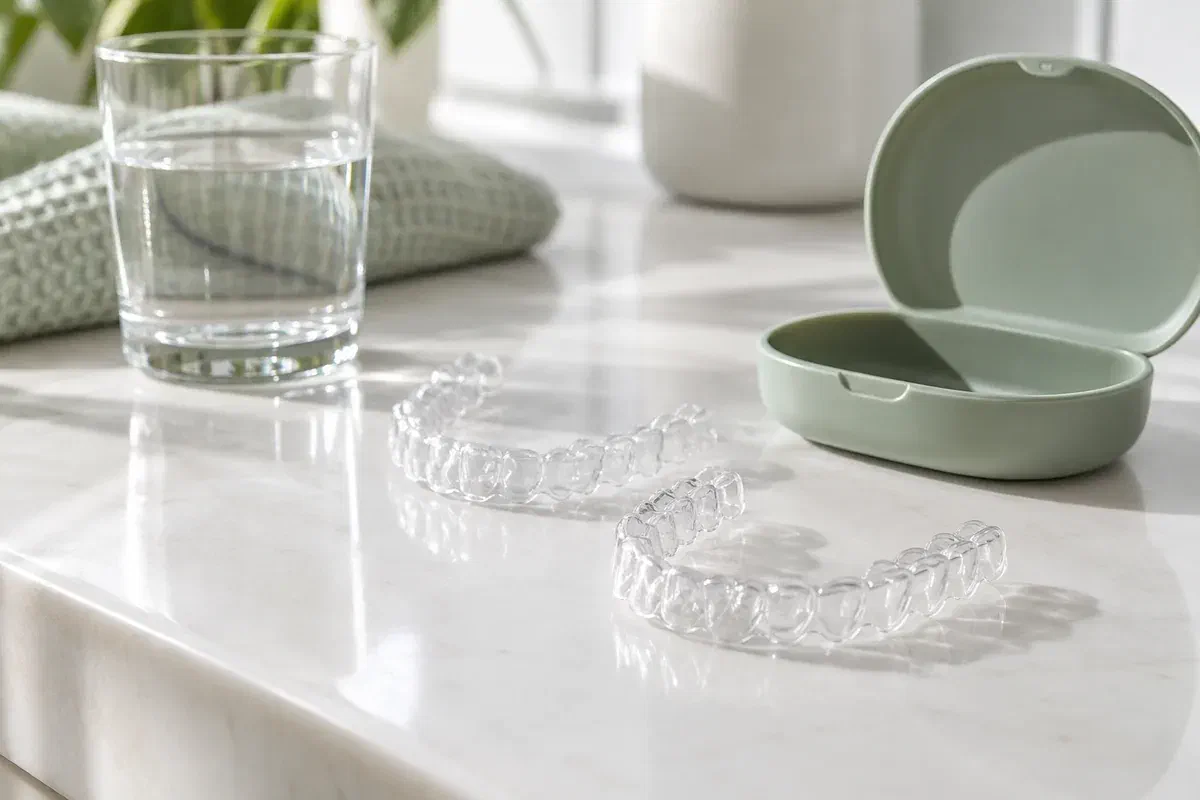
Store trays in their case, away from pets and heat. Ask whether to keep the previous stage as a backup. If a tray is lost or damaged, phone with the stage number before choosing another or trying a repair.
Ask about your own plan rather than assuming all tray treatments work alike. Logistics are a legitimate part of the decision.
Book a consultation at our Bronte Street practice and bring your history, goals and calendar. We will discuss crowding, spacing or bite concerns, the routine trays need and how reviews could be organised around a longer trip.
Suitability and the need for referral are confirmed at assessment. Duration, appliance and results vary for each person.
