

Illustrative adult patient discussing a clear aligner with a dental clinician
Cosmetic Dentistry

Clear Aligners in Milton

Noticed a crooked tooth in photos and wondered about removable trays? Talk through clear aligners close to home in Milton, starting with your bite and gum health, then the daily wear, review visits and retainers that a suitable plan would ask of you.

Aligners, explained close to home

The trays are the easy part to picture.

Many people first think about straightening when a group photo shows a tooth sitting forward or a gap that seems wider than it used to be. Clear aligners are one way to respond: a series of removable trays, each shaped to nudge teeth a small, planned amount toward a set position.

What decides whether that approach fits is less visible than the trays themselves. Your gums, the bone supporting each tooth, existing fillings or crowns and the way your upper and lower teeth meet all shape what movement is reasonable. A discreet appliance still has to answer to the biology underneath it.

Here in Milton, a first visit is a conversation and an examination rather than a sales pitch. Bring the feature that bothers you, and ask who would design and supervise the plan, what records would be taken and whether an orthodontist should weigh in. The appliance choice comes once the problem is clear.

Book a time to talk through your smile
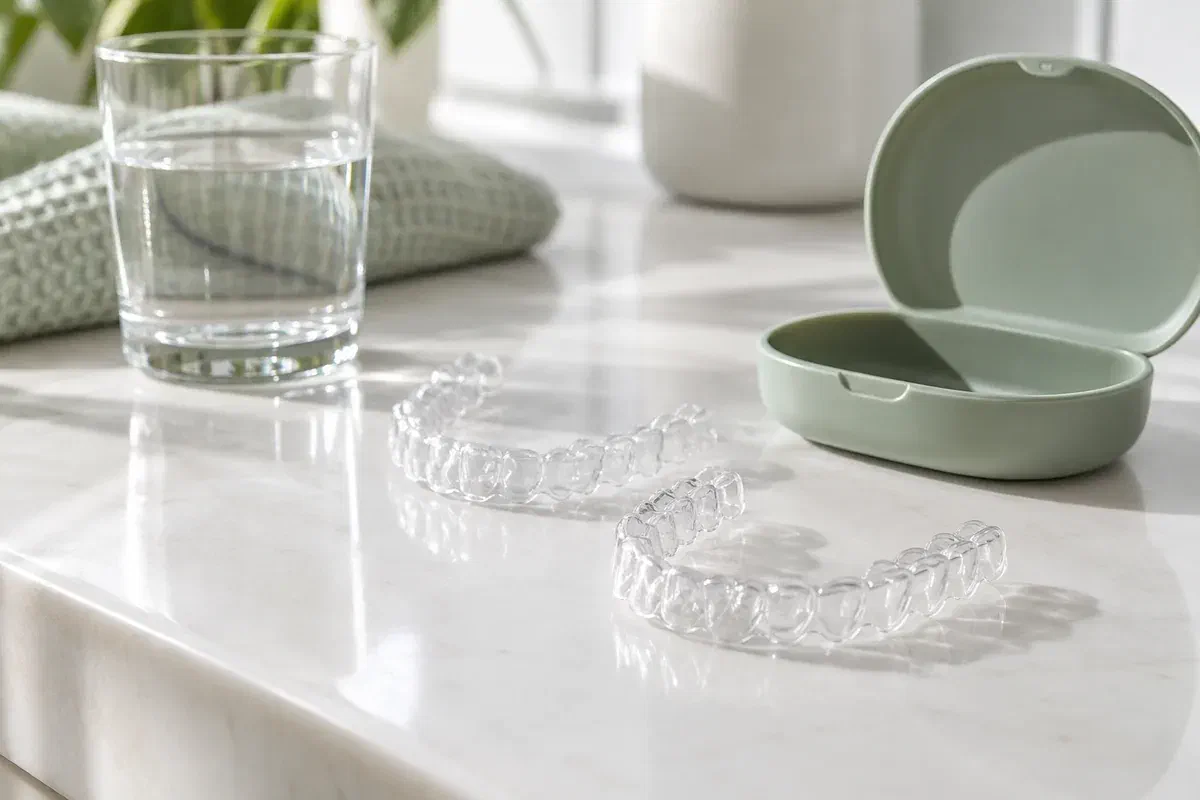
Illustrative transparent aligner trays beside a protective case and glass of water
Three things to weigh first

What sits behind a straighter-looking smile?

Removable trays are a tool, not a diagnosis. Before anything is ordered, your assessment should name the movements you would need and anything that might make them unwise or harder to achieve.

The way your teeth meet, not only how they look

Show the clinician the tooth or space that catches your eye, then ask how your bite works as a whole. Shifting one front tooth can affect how others contact when you chew. A good plan states what it will change and what it will leave as it is.

Fillings, old injuries and gum health

Mention past restorations, a knocked tooth, root canal treatment or any gum care you have had. Decay or active gum disease usually needs attention before teeth are moved. Ask how upcoming dental work would fit around scanning and the fitting of trays.

Your week, honestly described

Picture a normal weekday: commuting, lunches, snacking, coffee and evenings out. Then picture a busy one. Saying plainly what you could keep up is far more helpful than starting with optimism and finding the routine slipping a few months in.

Some orthodontic problems are better handled with a different appliance. If aligners are suggested for you, ask what makes them a good match and whether a referral or another approach was considered.

Where removable trays can help

Discreet treatment that relies on your daily habits.

When a case suits them, aligners let planned tooth movement happen with an appliance you can take out. You remove them to eat and to brush and floss, following your own instructions. That freedom is real, and it is also the reason steady wear matters so much.

Set the advantages beside the work involved. You would clean the trays, keep track of which stage you are on, come to reviews and speak up when something feels wrong. Ask what the estimate covers, how extra stages are handled if needed and what retainers will mean once the active phase ends.

Patient information: American Association of Orthodontists — clear aligners · British Orthodontic Society — clear aligner treatment

A plan you can follow in plain words

Ask for the main goals without jargon. If you are shown a digital preview of the movements, talk about what it represents and where real teeth may behave differently. You should understand how progress will be measured against those agreed aims.

Space to raise what matters socially

Mention the moments where appearance or speech feels important to you, such as presentations, a family celebration or a new job. Ask whether small tooth-coloured bumps or other parts would be added. Clear trays are subtle, though not every component disappears.

Reviews that look at your teeth, not the calendar

Check-ins let the clinician see how well the trays fit and how your teeth are responding, instead of assuming the schedule is on track. Ask who to call between visits and what to do if you miss one. Any change in plan should be explained first.

From first questions to retainers

Four stages, each with its own checkpoint

How the plan unfolds depends on the movements involved and on your oral health. Before agreeing to anything, ask for the stages, who does what, and what follows the last active tray.

  1. Examine, record and confirm a diagnosis

    You describe your goals, medical history, earlier orthodontics and existing dental work. The clinician examines your mouth and suggests the records that are relevant. Ask whether gum care, a filling or a specialist consultation must come before an appliance plan is settled.

  2. Talk through the plan and give informed consent

    Go over goals, alternatives, risks, likely duration and fees. Some plans add attachments or a small, measured reduction of enamel between teeth. Ask exactly what is proposed, the reason for it and whether any step changes your enamel permanently.

  3. Receive the trays and rehearse the routine

    At the fitting, the team checks how the first trays sit and shows you how to put them in, take them out, clean them and follow your wear schedule. Note which stages you are holding and when to switch. Try any unfamiliar step before leaving.

  4. Track the movement and prepare for retention

    Keep the reviews you are given so your progress can be checked. Refinements or adjustments may be added depending on what is found. Well before the final tray, talk about retainers, how often to wear them and how future check-ups will protect the result.

Living with aligners

Small daily habits carry most of the treatment.

Your written instructions are the ones that count, even if a friend’s schedule looked different. Keep your current tray number and next appointment somewhere easy to find, particularly during busy weeks.

Follow the wear schedule you were given

Wear each tray for the time prescribed and resist jumping ahead to catch up after a lapse. If a tray stops seating well or an attachment falls off, call the team. Ask which tray to keep wearing until you hear back.

Look after your teeth and the trays together

Take the trays out to eat and for drinks other than plain water, unless told otherwise, and brush before putting them back. Clean the appliance the way you were shown. Regular check-ups and hygiene visits still matter alongside orthodontic reviews.

Keep the case close and report a lost tray

Put trays in their case whenever they are out, away from pets, hot cars and dishwashers. If one goes missing or cracks, call with the stage number. Avoid switching to another stage on your own or trying to fix a tray at home.

More than one route

Match the method to what your teeth actually need.

The least noticeable appliance is not always the right one. For each option, ask how it would handle the movement, your bite, the daily effort involved and the retention that follows.

When the movements and the routine both fit

Clear aligners with regular supervision

Aligners may suit certain alignment and bite concerns for someone able to keep up the wear. Ask how supervision would work and whether extra components are planned. The plan should describe the aim and admit that refinements or a change of approach may be needed.

When more control would help

Braces or care from an orthodontist

Some movements and more complex bite problems respond better to fixed braces or a specialist’s involvement. Ask what makes your case more complicated and how a referral would be arranged. Any alternative recommendation should come with a clear clinical reason.

When moving teeth is optional or beside the point

Waiting, or addressing a different concern

After hearing the findings, you might choose not to have elective orthodontics at all. If what bothers you is mostly a tooth’s shape or surface, ask whether another treatment targets that. A cosmetic restoration can change how a tooth looks without moving it or correcting the bite.

Clear aligner questions from Milton

What people tend to ask before starting

Your plan is specific to you, so ask about it directly instead of assuming all clear tray systems behave alike. Everyday questions are part of making a sound decision.

(905) 876-4488
Will aligners change the way I talk at first?
Some people notice a slight change in speech while their tongue adjusts to the trays. It often settles as you get used to wearing them. If it persists or a tray edge irritates your tongue, mention it at your review so the fit can be checked.
Is it normal for new trays to feel tight or sore?
Pressure is common when you move to a new stage, because the tray is designed to guide movement. Ask what level of discomfort to expect and what you can safely do about it. Pain that is sharp, lasting or getting worse should be reported rather than tolerated.
Can I drink coffee or tea with my aligners in?
Follow the advice you are given for your appliance. Many instructions ask you to remove trays for drinks other than plain water, since warm or sugary drinks can affect the trays and sit against your teeth. Ask what applies to you.
Do I need an orthodontist, or can my dentist manage aligners?
That depends on the movements involved and the complexity of your bite. Ask who would plan and supervise your treatment and at what point a specialist referral would be recommended. You can also ask for a referral if you would like a second opinion.
Could my teeth drift back after aligner treatment ends?
Teeth can shift over time, which is why retention is planned from the start. Ask what type of retainer is proposed, how long and how often it should be worn, and how it will be checked. Replacement retainers may be needed over the years.
Is there any benefit to being local to the clinic during treatment?
Living nearby can make reviews, a quick fit check or a lost-tray visit easier to fit into the week. It does not change how the plan is designed. Ask how appointments would be spaced and how to reach the team between visits.
Starting in Milton

Bring the photo, or the question, that started this.

Book a consultation at our Bronte Street practice to discuss crowding, gaps or the way your teeth meet. We will talk about removable trays, the routine they ask of you and the assessment needed to choose a sensible approach.

Suitability and any need for referral are decided at assessment. Treatment length, appliance type and outcomes vary from person to person.

Visit Milton Dental Clinic
Unit 1, 342 Bronte St. S, Milton, ON L9T 5B7
Get directions Clinic hours
Monday–Thursday
11am–7pm
Friday–Sunday
By appointment only

Areas we serve

  • Milton
  • Oakville
  • Mississauga
  • Georgetown
  • Halton Hills
  • Acton
  • Campbellville
  • Brampton
  • Burlington
  • Puslinch
  • Rockwood
  • Erin
  • Caledon
  • Etobicoke
  • Old Milton
  • Bronte Meadows
  • Timberlea
  • Dorset Park
  • Dempsey
  • Clarke
  • Beaty
  • Coates
  • Harrison
  • Scott
  • Willmott
  • Ford
  • Bowes
  • Cobden
  • Walker
  • Mountain View
  • Milton Heights
  • Hawthorne Village
  • Valley View
  • Fallingbrook
  • Nassagaweya
  • Trafalgar
  • Esquesing
  • Nelson
  • Brookville
  • Moffat
  • Glen Williams
  • Norval
  • Limehouse
  • Stewarttown
  • Ashgrove
  • Hornby
  • Silver Creek
  • Speyside
  • Scotch Block
  • North Oakville
  • River Oaks
  • Glen Abbey
  • West Oak Trails
  • Palermo
  • Bronte Creek
  • College Park
  • Joshua Creek
  • Uptown Core
  • Preserve
  • Iroquois Ridge
  • Lisgar
  • Meadowvale
  • Meadowvale Village
  • Churchill Meadows
  • Erin Mills
  • Central Erin Mills
  • Streetsville
  • East Credit
  • Creditview
  • Heartland
  • Sheridan
  • Mount Pleasant
  • Credit Valley
  • Huttonville
  • Churchville
  • Springbrook
  • Northwest Brampton
  • Bram West
  • Fletcher's Meadow
  • Fletcher's Creek South
  • Alton Village
  • Orchard
  • Millcroft
  • Headon Forest
  • Tansley
  • Brant Hills
  • Tyandaga
  • Kilbride
  • Lowville
  • Aberfoyle
  • Morriston
  • Arkell
  • Hillsburgh
  • Freelton
  • Carlisle
  • Waterdown
  • Flamborough
  • Mountsberg

How can we help?

Milton Dental Clinic

Have a question about your smile? Choose the option that works best for you.

For urgent dental concerns, please call.
Messages are reviewed during clinic hours.