

Illustrative adult patient discussing a clear aligner with a dental clinician
Cosmetic Dentistry

Clear Aligners in Mississauga

Seen an animated preview of perfectly straight teeth and wondered how realistic it is? Our team talks Mississauga adults through what clear aligners can and can’t achieve, beginning with the bite, gums and daily commitment behind any honest plan.

Expectations before trays

What will my teeth really look like at the end?

It is a reasonable thing to want answered before committing months of daily wear. Clear aligners move teeth through a series of removable trays, each built from a digital plan of where the teeth should go next. The plan often comes with an on-screen animation of the finish.

That animation is useful for discussion, but living tissue does not always follow software. Bone remodels at its own pace, roots and restorations vary, and how well trays are worn changes the response. Your gums, bite and existing dental work set the boundaries for what is sensible.

For Mississauga adults, particularly in western areas like Meadowvale and Churchill Meadows, a consultation here is a place to ask the hard questions early. Who designs and supervises the plan? Which records are needed? Would an orthodontist’s opinion help? Expectations are easier to set once those are answered.

Ask what a realistic result looks like
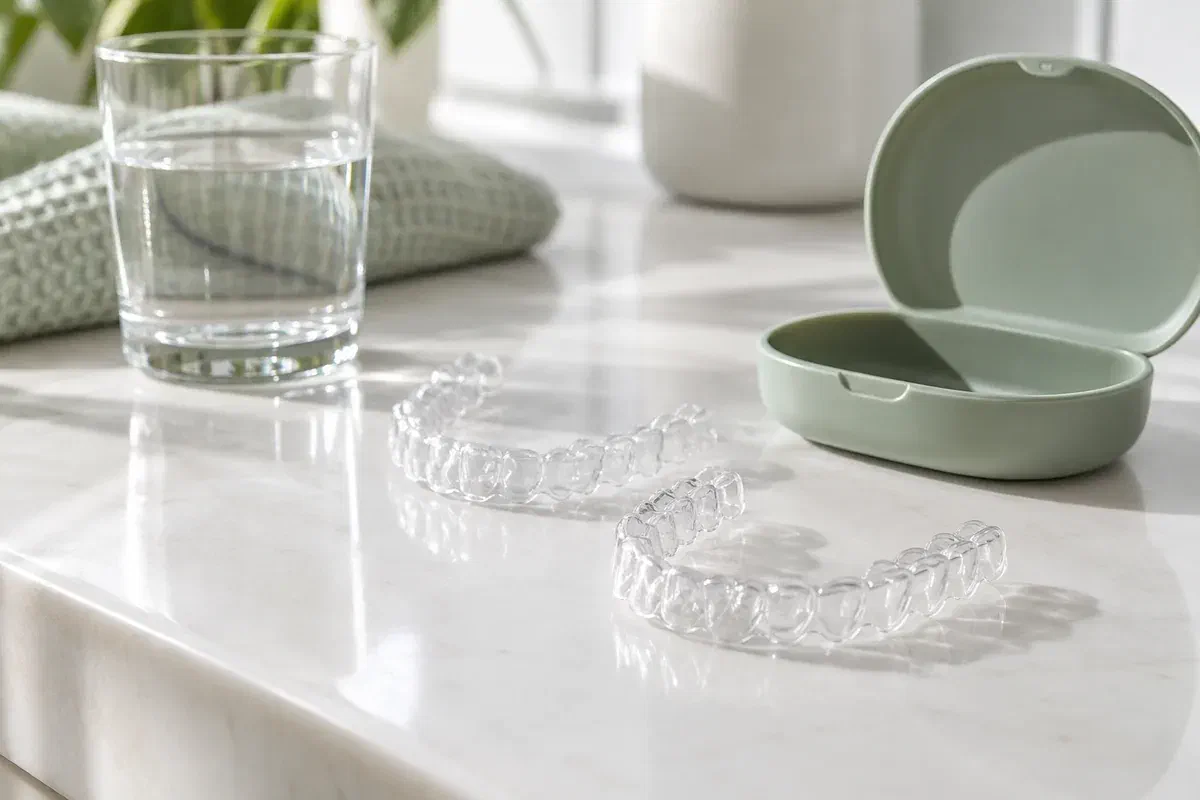
Illustrative transparent aligner trays beside a protective case and glass of water
Factors that shape the finish

Three reasons results differ from person to person

Before trays are ordered, the assessment should spell out which movements are planned and what might limit them. That is where realistic expectations begin.

How far, and in which direction, teeth must move

Gentle tipping of a front tooth is a different task from rotating a rounded tooth or changing how the arches meet. Ask which movements your plan relies on, and which concerns it may only partly improve.

The condition of the foundations

Gum health, bone support, fillings, crowns and past injuries all affect what is advisable. Problems such as decay or gum inflammation usually need treatment first. Ask how any dental work would be coordinated with scans and the first fitting.

Hours of wear, week after week

A tray left in its case does nothing. Think about meal times, a long workday and weekends away. Being realistic about the routine is as important as being realistic about the result.

Aligners are not appropriate for every orthodontic problem. If they are recommended, ask why they suit your case and whether another appliance or a specialist assessment could offer more predictability.

What a well-chosen case can gain

Subtle trays, a planned path and your steady effort

In an appropriate case, aligners offer a removable way to carry out a planned set of movements. You take them out to eat and to clean your teeth, following your own instructions. Because they come out so easily, consistent wear is not a detail; it is the treatment.

Consider the commitments alongside the appeal: cleaning trays, following stage order, coming to reviews and reporting problems. Ask what the estimate covers, how extra or refinement stages work and what retention will look like once the active phase is over.

Patient information: American Association of Orthodontists — clear aligners · British Orthodontic Society — clear aligner treatment

A simulation explained honestly

If you are shown a digital plan, ask what it illustrates and what it cannot guarantee. Request a plain-language summary of the main goals. You should know how actual progress will be compared with what was agreed.

A frank talk about what shows

Tell the clinician when appearance matters most to you, whether at work or at a family event. Ask whether attachments or other components would be used. Trays are hard to notice, but attachments can be seen up close.

Reviews that adjust to reality

Reviews show how trays fit and teeth respond rather than assuming the software timeline is being met. Ask who to contact between visits and what to do about a missed appointment. Any revision should be explained before you go on.

Turning a plan into movement

From scan to retainer, one checkpoint at a time

The details hinge on your movements and oral health. Ask for the stages and responsibilities before you commit, along with what happens after the final active tray.

  1. Collect what’s needed for a diagnosis

    Share your aims, medical history, earlier orthodontic treatment and current dental work. After examining your mouth, the clinician recommends records. Ask whether gum care, restorations or a specialist consultation should be completed first.

  2. Understand the plan, then consent

    Go over goals, alternatives, risks, likely duration and costs. Some plans include attachments or a small reduction of enamel between teeth. Ask what is proposed, why, and whether any preparation changes enamel permanently. Ask, too, how the preview relates to these steps.

  3. Fit the trays and learn the routine

    At delivery the team checks fit and explains insertion, removal, cleaning and your wear schedule. Note your stage numbers and change dates. Practise anything new while someone can help.

  4. Measure progress and plan to hold it

    Attend reviews so the response can be checked against the plan. Refinements may be added if teeth lag behind. Before active treatment ends, agree on retainers, how to wear them and future check-ups to help maintain the positions achieved.

Keeping the plan on course

The result depends on ordinary days.

Use your own written instructions as the guide, not someone else’s schedule. Keep your current stage and next review easy to look up, especially if your routine changes.

Wear as instructed, change as instructed

Follow the prescribed wear for every stage. Skipping ahead after missed hours can make the next tray fit poorly. If a tray won’t seat or an attachment breaks off, contact the team and ask what to wear until you hear back.

Two things to clean

Remove trays for meals and drinks as directed and brush before reinserting. Clean the trays using the method suited to their material. Keep your routine check-ups and hygiene visits, which orthodontic reviews do not replace.

A case for every removal

Store trays in their case, away from pets, heat and the edge of a plate. If one is lost or damaged, call with the stage number. Don’t choose another stage on your own or try to reshape a tray.

If trays aren’t the whole answer

Several routes, one diagnosis

The least visible appliance is not automatically the most suitable. Ask how each option addresses the movement, the bite, the daily commitment and retention.

When the plan and the routine fit

Clear aligners under supervision

Aligners can suit certain alignment and bite concerns for people able to follow the wear schedule. Ask about the supervision and any extra parts. The plan should describe the intended result and be open about possible refinements or a change of approach.

When predictability matters most

Braces or an orthodontist

Some movements, or a more complicated bite, may be better managed with fixed appliances or specialist input. Ask what makes your case more involved and how referral works. A different recommendation should come with clear clinical reasoning.

When movement is optional or not the concern

Choosing not to move teeth, or treating shape instead

Understanding the findings may lead you to skip elective orthodontics. If your concern is mainly a tooth’s shape or surface, ask whether another treatment targets that directly. A cosmetic restoration alters appearance without repositioning teeth or improving the bite.

Mississauga questions about results

Setting expectations together

Ask about your own plan rather than assuming all tray systems deliver the same thing. Questions about outcomes and limits are part of informed consent.

(905) 876-4488
What is a refinement in aligner treatment?
A refinement is an extra set of trays made when teeth haven’t moved exactly as planned. Not every case needs one. Ask whether refinements are likely in your case and whether they are covered by the original estimate.
Can aligners fix a gummy smile or uneven gum line?
Moving teeth may change how gums appear in some cases, but a gummy smile can have several causes that aligners do not address. Ask the clinician what is contributing in your case and which treatments, if any, would target it.
Why might the final position look slightly different from the preview?
Teeth respond individually, and factors like root shape, bone and wear consistency affect movement. The preview is a goal, not a guarantee. Ask how differences will be assessed and what options exist if they arise.
Can I whiten my teeth during aligner treatment?
Some people consider whitening during or after treatment. Ask the clinician whether it is appropriate for you, and when, since attachments and restorations can affect how shade changes appear.
Will my bite feel different once the teeth have moved?
Changes in tooth position can change how teeth meet, and some adjustment may be noticed. Report a bite that feels uncomfortable or suddenly different. Ask how the plan considers your bite and not only the visible teeth.
Who should I call if a tray cracks between appointments?
Contact the treating team with the tray’s stage number and describe what happened. Don’t move ahead or try to repair it. Ask at the start how to reach the team between visits and what to wear while waiting.
Mississauga aligner consultations

Bring your expectations, and leave with realistic ones.

Book time with Dr. Zoha Anjum at our Bronte Street practice to talk about crowding, spacing or a bite concern. We will explain what trays can reasonably achieve, the routine they need and the assessment that decides suitability.

Suitability and any referral are determined at assessment. Treatment length, appliance choice and outcomes vary with individual circumstances.

Visit Milton Dental Clinic
Unit 1, 342 Bronte St. S, Milton, ON L9T 5B7
Get directions Clinic hours
Monday–Thursday
11am–7pm
Friday–Sunday
By appointment only

Areas we serve

  • Milton
  • Oakville
  • Mississauga
  • Georgetown
  • Halton Hills
  • Acton
  • Campbellville
  • Brampton
  • Burlington
  • Puslinch
  • Rockwood
  • Erin
  • Caledon
  • Etobicoke
  • Old Milton
  • Bronte Meadows
  • Timberlea
  • Dorset Park
  • Dempsey
  • Clarke
  • Beaty
  • Coates
  • Harrison
  • Scott
  • Willmott
  • Ford
  • Bowes
  • Cobden
  • Walker
  • Mountain View
  • Milton Heights
  • Hawthorne Village
  • Valley View
  • Fallingbrook
  • Nassagaweya
  • Trafalgar
  • Esquesing
  • Nelson
  • Brookville
  • Moffat
  • Glen Williams
  • Norval
  • Limehouse
  • Stewarttown
  • Ashgrove
  • Hornby
  • Silver Creek
  • Speyside
  • Scotch Block
  • North Oakville
  • River Oaks
  • Glen Abbey
  • West Oak Trails
  • Palermo
  • Bronte Creek
  • College Park
  • Joshua Creek
  • Uptown Core
  • Preserve
  • Iroquois Ridge
  • Lisgar
  • Meadowvale
  • Meadowvale Village
  • Churchill Meadows
  • Erin Mills
  • Central Erin Mills
  • Streetsville
  • East Credit
  • Creditview
  • Heartland
  • Sheridan
  • Mount Pleasant
  • Credit Valley
  • Huttonville
  • Churchville
  • Springbrook
  • Northwest Brampton
  • Bram West
  • Fletcher's Meadow
  • Fletcher's Creek South
  • Alton Village
  • Orchard
  • Millcroft
  • Headon Forest
  • Tansley
  • Brant Hills
  • Tyandaga
  • Kilbride
  • Lowville
  • Aberfoyle
  • Morriston
  • Arkell
  • Hillsburgh
  • Freelton
  • Carlisle
  • Waterdown
  • Flamborough
  • Mountsberg

How can we help?

Milton Dental Clinic

Have a question about your smile? Choose the option that works best for you.

For urgent dental concerns, please call.
Messages are reviewed during clinic hours.