Broken, warped or misplaced
Contact the treating team promptly and mention when you last wore it. Ask how to manage until a replacement decision is made. Hold on to any pieces, and avoid glue or heat to repair or reshape the plastic yourself.


A new crown, a bonded edge or a filling can change how a retainer sits. From Brampton, talk with us about clear retainers alongside other dental work, including checking the fit, keeping your wear schedule on track, cleaning, and replacing a tray that no longer works.
A clear retainer is moulded to the exact outline of your teeth. That close fit is what lets it hold them in their orthodontic positions, and it is also why even a small change to one tooth, such as a new crown, a repaired chip or a larger filling, can make the tray sit differently. It resembles an aligner but is designed to retain, not to move.
Retention is long-term because teeth can shift gradually throughout life. The right appliance and wear hours depend on your treatment history, and they may need revisiting whenever your mouth changes.
If you are travelling from Brampton for a filling, crown or bonding, bring your retainer to that visit along with any orthodontic instructions. Seeing the tray and your teeth together lets us plan the dental work and protect your retention at the same time.
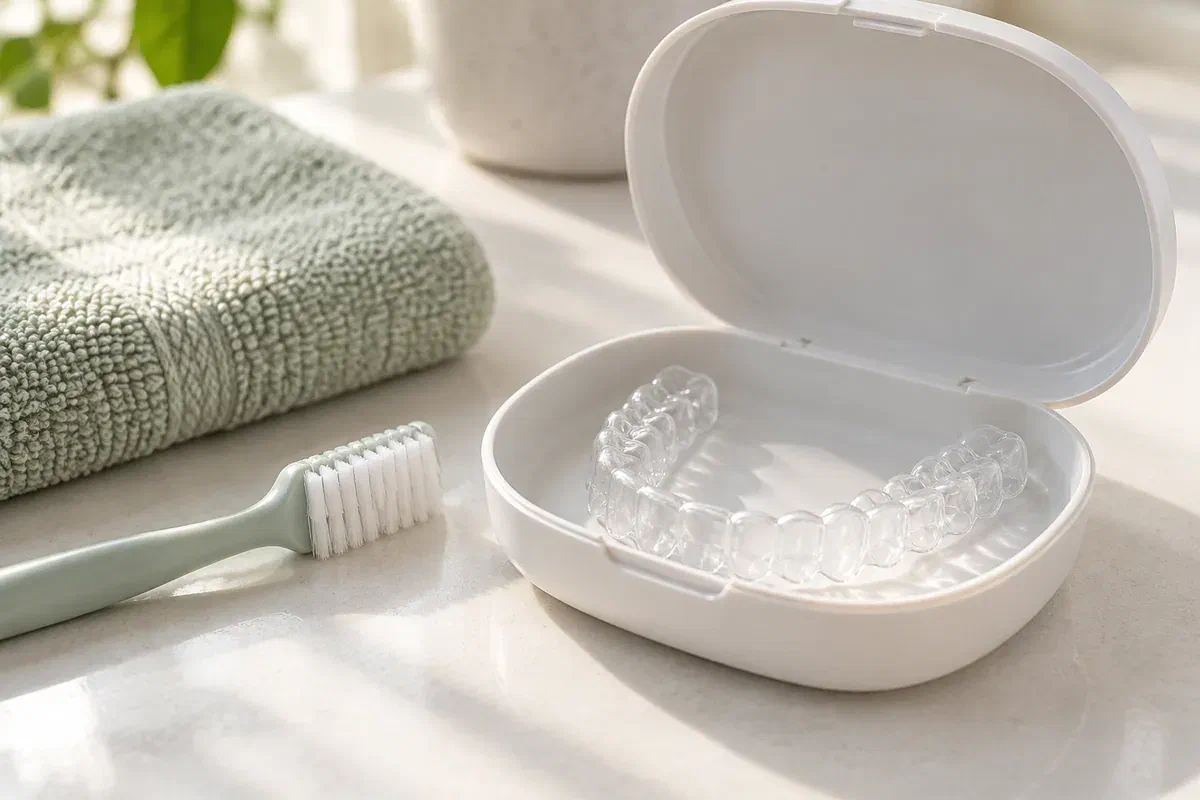
A changed fit can have several explanations, including recent dental treatment. Tell us what has happened lately instead of assuming a straight copy of the old tray will fit.
Contact the treating team promptly and mention when you last wore it. Ask how to manage until a replacement decision is made. Hold on to any pieces, and avoid glue or heat to repair or reshape the plastic yourself.
Say so if the tray stopped seating after a crown, bonding or filling. The new tooth contour, the appliance, or shifted teeth could each be the cause. Don’t force it on or bite down to make it click into place.
If you have lost the instructions or your life has changed, ask for an updated schedule rather than borrowing someone else’s. Confirm who is responsible for following your retention and when your teeth and tray should be checked.
Always tell the person planning your dental treatment that you wear a retainer. Bring it on the day so the fit can be considered before and after the new restoration.
A suitable retainer routine helps maintain the alignment you earned through orthodontic care. That means a tray that fits the teeth you have now, worn as directed. No appliance can promise teeth will never shift, so reviews and good communication between providers remain important.
Clear removable trays are discreet and easy to clean around, but they rely on you wearing and storing them carefully. A clinician who understands your treatment history can help you pick an approach that takes in your restorations, hygiene and daily routine.
Patient information: British Orthodontic Society — retainers and long-term retention · American Association of Orthodontists — retention after orthodontics
Find out the purpose behind your wear schedule and whether it may change after new dental work. Understanding the reason makes it easier to stick with. Keep the instructions where you can find them when your routine is interrupted.
When a tray is fitted or refitted, learn how it should seat and how to take it out safely. Ask which changes warrant a call. You should be able to tell normal snugness from a tray that no longer sits right around a new restoration.
Ask who to call if the appliance is lost or damaged and how replacement decisions are made. Check on fees and whether new records will be needed. Planning for this makes the next step easier if something goes wrong.
A first retainer, a straightforward replacement and a refit after dental work each follow a different path. We will explain which applies before assuming old records can be reused.
We ask when treatment ended, what your retention routine was and what dental work you have had or are planning. Bring your current tray and any records. After an examination, we decide together whether your orthodontic provider should be brought in.
Sometimes the restoration comes first and the retainer is remade afterwards; sometimes an adjustment is enough. If teeth have moved, you will also decide whether to retain the current position or seek advice on further correction.
Where a fresh retainer is needed, suitable records are taken after any restorations are complete, so the tray matches the final tooth shapes. Ask about timing and what to wear in between. A new tray won’t reverse earlier movement.
The clinician checks seating and comfort, including around new work, and shows you how to insert and remove the retainer. We review wear time, cleaning and follow-up. Practise before leaving and know who to contact about problems.
Follow the care advice for your appliance material. If you are unsure whether a product is safe around new crowns or bonding, ask before using it.
Rinse the tray when you take it out and clean it regularly as advised. Avoid hot water and abrasive toothpaste, which can damage clear plastic. Bleach and harsh chemicals should not replace a cleaner suitable for retainers.
Keep the retainer away from heat, pets and accidental knocks. A tray left wrapped in a napkin is easy to throw away. Carry the case when eating out or travelling, and clean the case as part of the routine.
Brush and floss around crowns, bonding and fillings before putting the retainer in. Keep up regular dental visits and bring the tray to reviews. Report persistent soreness, a changed fit or damage rather than continuing as normal.
Patient information: American Association of Orthodontists — cleaning a retainer · American Association of Orthodontists — a tight or poorly fitting retainer
Bring the retainer you currently use, so we can discuss its material, fit and purpose alongside your dental plans. Your own history matters most.
Reach out to our Bronte Street practice about a fit problem, a replacement or how upcoming dental work affects your retainer. Bring the tray and your wear instructions so we can build on the orthodontic care you completed.
Whether a new retainer is needed depends on assessing the tray, any restorations and your tooth positions. Call promptly if the appliance is lost, cracked, sore or not seating.
