

Illustrative adult patient learning about a clear retainer with a dental clinician
Cosmetic Dentistry

Clear Retainers in Burlington

It happens at lunch: the retainer goes into a napkin, the napkin goes in the bin. For anyone in Burlington, we offer help with clear retainers, from replacing a lost tray to checking fit, explaining your wear routine and making cleaning simple.

Clear retainers for Burlington

One napkin, one missing tray

Ask anyone who has worn a clear retainer and you will hear a version of the same story. They took it out to eat, set it on a tray or wrapped it up, and it was gone before dessert. Losing it is frustrating, but it is also a good moment to understand what the appliance does: it is a removable tray, shaped to your teeth, that helps hold them in the positions orthodontic treatment created.

Clear retainers resemble aligners, yet they are made for holding rather than moving. Teeth can slowly drift over the years, so the retainer’s role continues well beyond the end of treatment. How many hours you wear it depends on your history.

Coming from Burlington, bring a spare tray if you have one, along with any instructions from your orthodontic clinician. We look at where your teeth sit now before deciding whether a replacement is the right next step.

Get help with a lost retainer
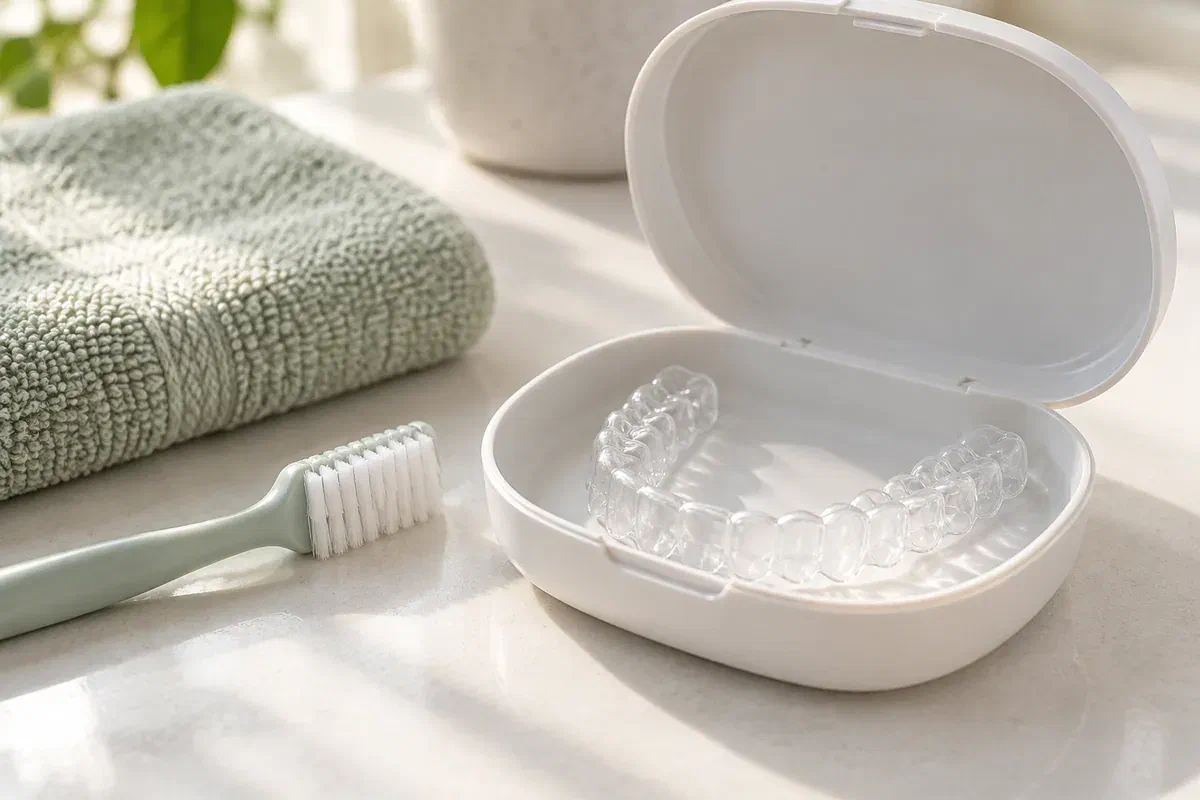
Illustrative clear dental retainer in an open protective case beside a soft cleaning brush
Moments that call for advice

Lost it, cracked it, or it just feels off

Each situation needs a slightly different response. Tell us exactly what happened instead of assuming that a copy of the old tray will cover it.

Thrown out, chewed or snapped

Phone without much delay and say when the tray was last in your mouth. Ask how to protect your teeth until a new one is decided on. Keep the pieces if there are any, and avoid gluing them or using heat to bend the plastic back.

Goes on, but not all the way

Explain whether you missed wear, dropped it or had dental work recently. A tray that sits proud of the teeth may be warped, the teeth may have moved, or both. Don’t clamp down or press with your thumbs to force it.

Lost track of how long to wear it

A new job, a baby or a move can scramble any routine. If you are no longer sure of your hours, ask for a fresh plan instead of borrowing a friend’s. Check who oversees your retention and when the next review falls.

Before bonding, a crown or a filling, remember to bring your retainer along. Changing the shape of a tooth can affect the fit, so the treatment may need to be timed with your retention in mind.

The case for a steady routine

A small habit that protects a big investment

You spent time and effort straightening your teeth. A retainer routine that suits you helps keep that result, provided the tray fits and is worn as prescribed. No appliance can guarantee teeth won’t change at all, so regular reviews still have value.

The clear design is popular because it barely shows. Its weakness, as the napkin story shows, is that it relies on you keeping track of it. Talk to someone who understands how your teeth were moved, so the retainer choice reflects your hygiene and lifestyle too.

Patient information: British Orthodontic Society — retainers and long-term retention · American Association of Orthodontists — retention after orthodontics

Hours with a purpose

Understand why your wear time was set where it is and whether it might reduce. A routine that comes with a reason is easier to follow. Keep the plan somewhere you will see it if a holiday or illness disrupts your week.

Knowing when the fit has changed

When the tray is fitted, notice how it should feel once seated and how to lift it out gently. Ask which signs mean you should get in touch. That way you can tell normal snugness apart from cracking, pain or a tray that no longer seats.

A plan B for the next loss

Find out who to call if it disappears and how replacement decisions are made. Ask about fees and whether new scans or impressions would be needed. Knowing this ahead of time turns a panicked search into a simple phone call.

Replacing or renewing a retainer

What a replacement visit involves

Getting a first retainer, swapping a lost one and fixing a poor fit each follow a different path. We will clarify yours before assuming older records can be used again.

  1. Explain what happened and when

    Tell us when treatment ended, how you were told to wear the tray and how long you have been without it. Bring any remaining appliance or records. We examine your teeth and consider whether your orthodontic provider should be part of the conversation.

  2. Agree how to retain from here

    We compare a clear removable tray with other designs, keeping your original plan in view. If teeth have drifted while the retainer was missing, you choose between holding the new position or asking about further treatment.

  3. Take records for the new tray

    If a replacement is the right call, suitable records are taken so it is made for the positions you want to keep. Ask how long it will take and what to do meanwhile. A new tray won’t reverse drift that has already occurred.

  4. Fit it and refresh the routine

    The clinician checks how the tray seats and whether it is comfortable, then shows you how to insert and remove it. Wear time, cleaning and follow-up are reviewed. Practise before leaving and note who to contact if it happens again.

Keeping the new one safe

Habits that keep a retainer out of the bin

Use the care guidance that matches your retainer material. If what you read online contradicts what you were told, ask us before you change your cleaning or wear routine.

Clean it the recommended way

Rinse the tray whenever you take it out and clean it regularly as advised. Hot water and abrasive toothpaste can scratch or warp clear plastic. Bleach and harsh household products are no replacement for a cleaner designed for retainers.

Case first, napkin never

A case protects the tray from heat, pets and getting swept off a table. Wrapping it in a napkin is the quickest way to lose it. Keep the case in a coat pocket or bag for meals out and travel, and wash it regularly.

Look after teeth and keep checkups

Brush before the retainer goes back in and continue regular dental visits. Bring it to the reviews your treating team asks for. A sore spot that lingers, a change in fit or visible damage should be reported rather than tolerated.

Patient information: American Association of Orthodontists — cleaning a retainer · American Association of Orthodontists — a tight or poorly fitting retainer

If clear isn’t the only answer

Retainer styles to consider

Your options depend on your treatment history and the teeth that need holding. Sometimes two retainer types are combined, each covering its own purpose.

When a removable fit matches your plan

Clear tray, removable

A clear tray covers the teeth and comes out as your instructions describe. Ask about wear hours, where to keep it and when it will be reviewed. It is easy to overlook in a smile, yet it asks for a daily rinse and clean and will one day need replacing.

When your retention needs something sturdier

Wire, or a different removable design

A clinician may suggest another removable style, a bonded wire behind the teeth, or both. A wire can’t be lost at lunch, but it needs careful cleaning and checks for loose bonds. Weigh the daily trade-offs rather than assuming fixed means no work.

When a replacement tray won’t answer everything

Assessment after teeth have shifted

If your teeth moved while the retainer was missing, decide whether you are happy to hold that position or want to explore correcting it. An ordinary replacement does not actively straighten teeth. An orthodontic assessment can explain the choices.

Patient information: American Association of Orthodontists — retainer types and care

Lost-retainer questions

Straight answers when the tray goes missing

Bring whatever appliance you still have so we can talk about its material, fit and purpose. Advice built on your history beats a general rule.

(905) 876-4488
How soon do teeth start to move after a retainer goes missing?
It varies from person to person and depends on how long ago treatment ended. Some people notice changes within days or weeks. Calling promptly gives you the best chance of being assessed before significant movement happens.
Should I keep a spare retainer at home?
Some people are given a backup, especially if they have lost trays before. Ask whether a spare suits your plan and how to store it. A backup should be checked periodically, because an old tray may not fit if teeth have moved.
What if my dog chewed my retainer but it still goes in?
Teeth marks can leave sharp edges or hidden cracks that irritate gums or weaken the tray. Even if it seems to fit, bring it in so it can be checked. Store it in a closed case out of a pet’s reach in future.
Can I wear my old aligner trays while I wait for a new retainer?
Only if your clinician tells you to. An old aligner may not match your finished positions and could apply unwanted pressure. Ask what to wear in the meantime rather than picking a tray from the drawer.
Is it normal for a new retainer to feel different from the one I lost?
A new tray can feel snugger or slightly different at first, especially if teeth moved while you were without one. Mild pressure that eases over a few days is common. Pain, sharp edges or a tray that won’t seat should be checked.
Is it worth booking before the drive from Burlington if I’ve found my retainer again?
If you found it but it no longer fits well, or it looks damaged, a quick call can help you decide. Describe how it seats and when you last wore it. If it fits normally and looks intact, ask whether you can simply resume your routine.
Retainer help for Burlington

Lost it? Let’s sort out the next step.

Contact our Bronte Street practice to discuss a replacement, a fit check or your wear routine. Bring any spare retainer and your previous instructions, so we can build on the orthodontic treatment you already finished.

A replacement depends on assessing your current tooth positions and any remaining appliance. Reach out promptly when a retainer is lost, broken, painful or no longer fitting.

Visit Milton Dental Clinic
Unit 1, 342 Bronte St. S, Milton, ON L9T 5B7
Get directions Clinic hours
Monday–Thursday
11am–7pm
Friday–Sunday
By appointment only

Areas we serve

  • Milton
  • Oakville
  • Mississauga
  • Georgetown
  • Halton Hills
  • Acton
  • Campbellville
  • Brampton
  • Burlington
  • Puslinch
  • Rockwood
  • Erin
  • Caledon
  • Etobicoke
  • Old Milton
  • Bronte Meadows
  • Timberlea
  • Dorset Park
  • Dempsey
  • Clarke
  • Beaty
  • Coates
  • Harrison
  • Scott
  • Willmott
  • Ford
  • Bowes
  • Cobden
  • Walker
  • Mountain View
  • Milton Heights
  • Hawthorne Village
  • Valley View
  • Fallingbrook
  • Nassagaweya
  • Trafalgar
  • Esquesing
  • Nelson
  • Brookville
  • Moffat
  • Glen Williams
  • Norval
  • Limehouse
  • Stewarttown
  • Ashgrove
  • Hornby
  • Silver Creek
  • Speyside
  • Scotch Block
  • North Oakville
  • River Oaks
  • Glen Abbey
  • West Oak Trails
  • Palermo
  • Bronte Creek
  • College Park
  • Joshua Creek
  • Uptown Core
  • Preserve
  • Iroquois Ridge
  • Lisgar
  • Meadowvale
  • Meadowvale Village
  • Churchill Meadows
  • Erin Mills
  • Central Erin Mills
  • Streetsville
  • East Credit
  • Creditview
  • Heartland
  • Sheridan
  • Mount Pleasant
  • Credit Valley
  • Huttonville
  • Churchville
  • Springbrook
  • Northwest Brampton
  • Bram West
  • Fletcher's Meadow
  • Fletcher's Creek South
  • Alton Village
  • Orchard
  • Millcroft
  • Headon Forest
  • Tansley
  • Brant Hills
  • Tyandaga
  • Kilbride
  • Lowville
  • Aberfoyle
  • Morriston
  • Arkell
  • Hillsburgh
  • Freelton
  • Carlisle
  • Waterdown
  • Flamborough
  • Mountsberg

How can we help?

Milton Dental Clinic

Have a question about your smile? Choose the option that works best for you.

For urgent dental concerns, please call.
Messages are reviewed during clinic hours.