Splits, thin spots or a lost tray
Contact the treating team soon and say when it was last worn. Ask what to wear while a new one is considered. Keep any broken parts, and don’t glue them or soften the plastic with heat.


Your retainer still goes in every night, but it is a few years old, a little yellow and thinner at the edges. From Bolton and the villages across Caledon, you can ask us whether an ageing clear retainer is still doing its job, how the fit and wear schedule are reviewed, how to care for it, and when replacing it makes sense.
Retainers rarely fail all at once. More often the plastic slowly clouds, edges thin, a small split appears near a back tooth, and the tray feels a touch looser than it used to. Because it still goes in, it is tempting to keep using it. Yet a clear retainer only works while its shape matches your teeth: it is a removable, moulded appliance made to keep them in their post-orthodontic positions, not to move them the way an aligner would.
Teeth can shift gradually throughout life, so retention usually stays part of your routine for the long term. The design and hours that suit you depend on your history.
Travelling from Caledon, bring the tray you wear now, any older ones, and instructions from your orthodontic clinician. Looking at all of them alongside your teeth helps show whether the appliance is still holding what it should.
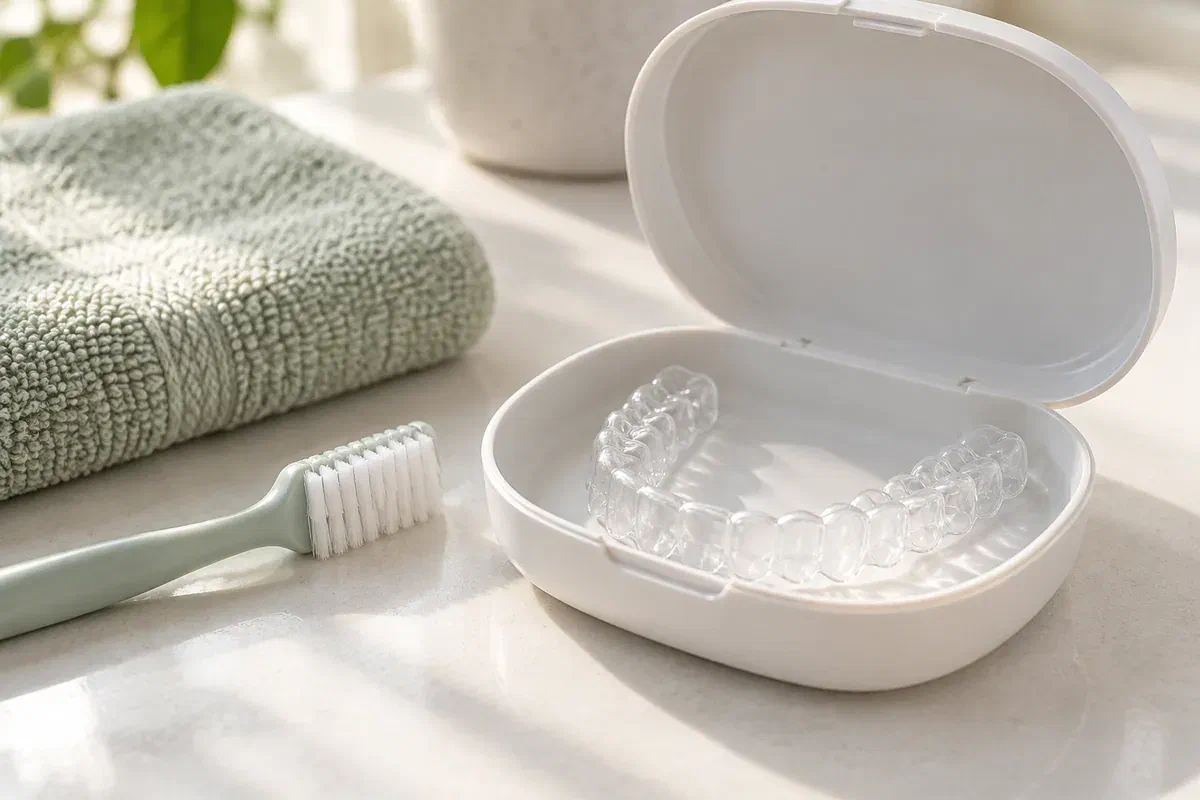
An ageing tray can change in ways that are hard to notice day to day. Tell us what you have seen, so we can judge whether a duplicate is the answer or something else has changed.
Contact the treating team soon and say when it was last worn. Ask what to wear while a new one is considered. Keep any broken parts, and don’t glue them or soften the plastic with heat.
Worn plastic can loosen, but so can teeth that have moved or a tooth that has been restored. Mention missed wear and recent dental work. Never bite down or press firmly to make the tray seat.
If your schedule was set years back, ask whether it still fits your teeth and life. Avoid adopting someone else’s routine. Confirm who is responsible for your retention now and when it should be reviewed.
Bring the retainer to visits where a crown, bonding or filling is planned. A changed tooth outline can affect fit and may be a good moment to consider whether a new tray is due.
A sound retainer worn as prescribed can help keep the positions orthodontic treatment achieved. A worn one may still feel familiar while flexing more than it should. No appliance guarantees teeth will never change, so periodic reviews of both the tray and your teeth stay useful.
Clear removable designs are discreet and easy to clean around, which suits many people for years. Their material does age. A clinician familiar with your treatment can help you decide when to replace a tray and whether another design would serve you better now.
Patient information: British Orthodontic Society — retainers and long-term retention · American Association of Orthodontists — retention after orthodontics
Ask why your hours were chosen and whether they still apply. A routine you understand is easier to maintain over the long term. Keep the written plan with your case and update it after each review.
Learn how a healthy tray seats and what normal snugness feels like. Check it in good light for cloudiness, thin edges or white stress lines. Ask which signs mean you should call before the next routine visit.
Find out how decisions about a new tray are made and who to call if the old one fails suddenly. Ask about fees and whether new records will be needed. Replacing on your schedule is easier than replacing in a hurry.
Renewing an old tray, fitting a first retainer and solving a sudden fit problem each follow their own path. Older records may be too out of date to reuse, and we will tell you which applies.
We ask when treatment ended, how long you have had this retainer and how it has been worn. Bring current and older trays plus any records. We examine your teeth and talk about whether the orthodontist who treated you ought to weigh in.
A new clear tray is compared with other designs in light of your plan and how the last one wore. If teeth have shifted, you can choose to hold today’s position or ask about further correction first.
When a replacement is agreed, current scans or impressions capture the positions you want to keep, and the new tray is made from those. Ask about timing and whether to keep wearing the old one until it is ready.
We make sure the new tray settles evenly and comfortably, and you try putting it in and lifting it out while we watch. Wear hours, cleaning and review dates are confirmed. Practise before leaving, and note when the next check is due.
Follow the guidance for your retainer material. If you have picked up cleaning habits over the years that differ from what you were told, ask whether they are still suitable.
Rinse the tray as it comes out and clean it regularly as recommended. Hot water and abrasive toothpaste can warp or scratch clear plastic, speeding wear. Bleach and harsh household cleaners are not a substitute for a retainer product.
Keep the retainer in its case, away from heat, pets and being dropped. A tray left in a napkin often gets thrown out. Take the case when you are away from home, and replace a case that no longer closes properly.
Brush before the tray goes in and keep up regular dental visits. Bring it to reviews so its condition can be checked. If soreness persists, the fit changes or damage appears, call rather than waiting for the next appointment.
Patient information: American Association of Orthodontists — cleaning a retainer · American Association of Orthodontists — a tight or poorly fitting retainer
Bring your current tray, and older ones if you have them. The condition and fit of your own appliance matter more than a general timeline.
Call our Bronte Street practice about an ageing retainer, a replacement or a change in fit. Bring your current and older trays, along with any written guidance, and we will carry on from the orthodontic treatment you completed.
A replacement depends on assessing your tray and how your teeth sit now. Contact us promptly if a retainer is lost, cracked, painful or no longer fits as it did.
