

Illustrative adult patient learning about a clear retainer with a dental clinician
Cosmetic Dentistry

Clear Retainers in Georgetown

A hairline crack across the front of a retainer is easy to ignore until it splits. From Georgetown, you can have a damaged clear retainer looked at, learn why glue and heat are poor repairs, and talk through fit, wear time, cleaning and whether a new tray is the right move.

Damaged retainers, Georgetown

Can a cracked retainer be saved?

Usually the honest answer is no, at least not at home. Thin clear plastic cracks along stress lines, and once it has split, glue and heat tend to change the shape the tray depends on. That shape is the whole point: a clear retainer is a removable appliance made to match your teeth so it can hold them in their post-treatment positions. It looks like an aligner without doing an aligner’s job of moving teeth.

Retention continues for the long term, since teeth can gradually shift whether or not you notice it. That is why a cracked tray deserves attention even when it still seems to go on. Which appliance suits you, and how often you wear it, are set by your own history rather than a general rule.

Bring the damaged tray from Georgetown, pieces and all, along with your orthodontic instructions. We check the plastic, how your teeth sit now and what your plan was designed to hold.

Have a damaged retainer checked
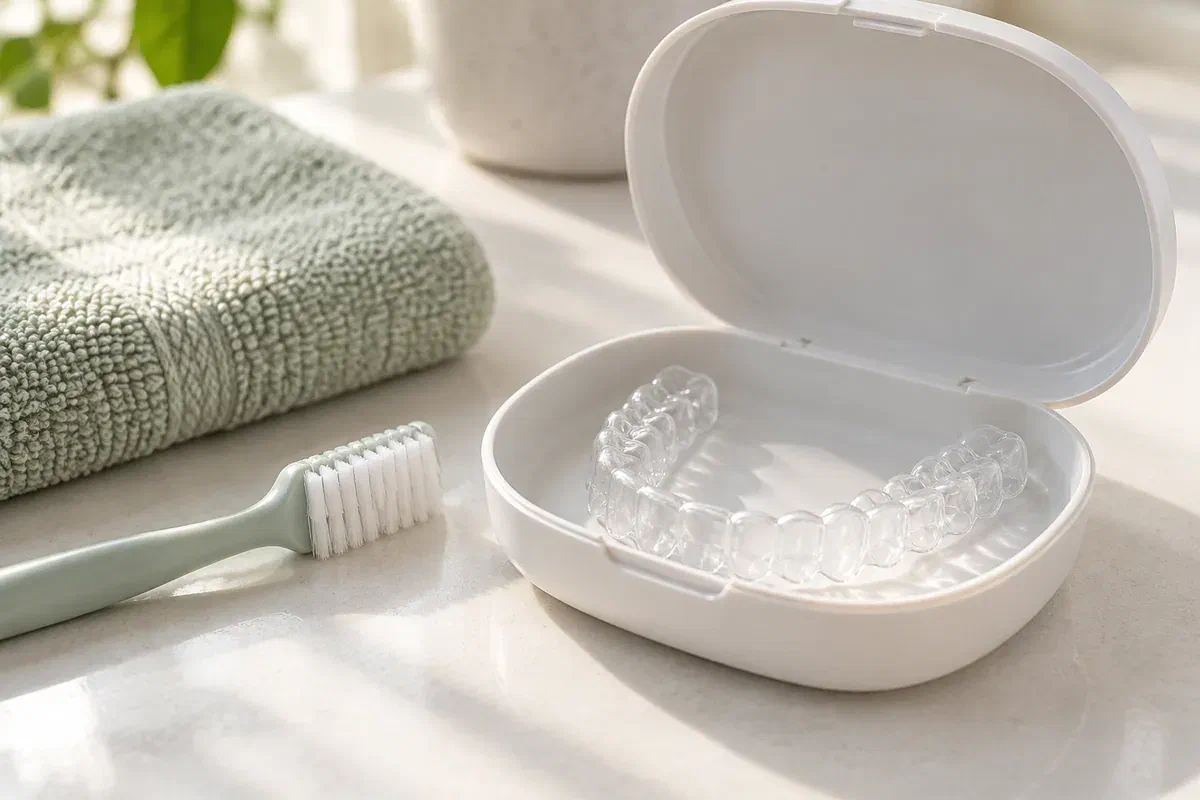
Illustrative clear dental retainer in an open protective case beside a soft cleaning brush
Signs a tray is failing

Little cracks, bigger questions

Damage and fit problems overlap, and the cause is not always obvious. Describe what you see rather than assuming another copy of the same tray will settle it.

A split, chip or missing piece

Call soon and mention roughly when it was last in. Ask what to wear while a replacement is being considered. Keep the parts in the case, and leave them as they are: superglue, nail glue or warm water can make the problem worse.

Edges that lift or a tray that rocks

A crack can loosen one side, but so can skipped nights, a drop or a new filling. Shifted teeth, damage or both may be at work. Never bite down on the tray or press it hard to make it sit.

Not sure whether to keep wearing it

A slightly damaged tray raises the question of whether to carry on. Ask rather than guess, and don’t switch to a friend’s routine. Confirm who monitors your retention and when the next check should happen.

If bonding, a crown or a new filling is planned, bring the retainer, even a damaged one. A change in tooth shape can alter the fit that any replacement needs to match.

Why replacing it properly helps

A sound tray does its job.

An intact, well-fitting retainer worn as prescribed can help keep the positions you achieved. A cracked one may still feel snug yet flex in ways that no longer hold teeth as intended. No appliance promises permanent stability, so even a sound tray benefits from routine reviews.

Clear trays are discreet and come out for brushing, which many people like. They also wear out, crack and warp with time and handling. A clinician who knows your treatment can help you decide whether a new clear tray, a sturdier style or another approach suits you best.

Patient information: British Orthodontic Society — retainers and long-term retention · American Association of Orthodontists — retention after orthodontics

Knowing what your wear hours are for

Understand why your schedule was chosen and whether it might shorten. A purpose is easier to follow than a bare number. Keep the plan handy for the days a damaged tray throws your routine off.

Noticing damage before it spreads

Hold the tray up to the light now and then and run a finger along the edges. At the fitting, learn how it should seat. White stress lines, rough spots or a new rocking feeling are signs to call rather than wait.

Knowing what happens after a break

Find out who to contact about damage and how the decision to remake a tray is made. Ask about cost and whether new scans would be needed. Settling this ahead of time makes a cracked tray a small hassle rather than a crisis.

From cracked to replaced

You bring the pieces. Here is what follows.

Replacing a broken tray, fitting a first retainer and solving a poor fit are handled differently. We will tell you which one you are dealing with before relying on any older records.

  1. We inspect the damage and your teeth

    Tell us when treatment finished, how you were wearing the tray and when the crack appeared. We look at the broken appliance, examine your teeth and consider whether your orthodontic provider should weigh in.

  2. Together we choose the approach

    A clear tray may be remade, or a different design may suit better, given your history. If teeth have shifted since the damage, you decide whether to hold the current position or ask about further correction.

  3. New records, then a new tray

    When a remake is appropriate, current records are taken so the appliance matches the positions you are keeping. Check how long it will be and whether to keep wearing the cracked one meanwhile. A new tray holds; it won’t reverse drift.

  4. Fitting day

    The clinician checks the seating and comfort and walks you through putting the tray in and taking it out. Wear time, cleaning and the next review are covered. Practise a few times, and keep the number handy in case the tray cracks again.

Making the next tray last

Handle it gently.

Your retainer material has its own care advice. When you hear conflicting tips about soaking, boiling or brushing, ask your clinician before trying them.

Cleaning that won’t stress the plastic

Rinse the tray after use and clean it regularly in the way you were shown. Hot water and gritty toothpaste can warp or scratch clear plastic, and scratches can become crack lines. Bleach and harsh household products should not replace a retainer cleaner.

Remove and store it with care

Take the tray out evenly from both sides rather than flicking one corner, which strains the plastic. Keep it in its case, away from heat and pets. A napkin-wrapped retainer often gets thrown out or crushed. Clean the case often too.

Healthy teeth under the tray

Brush before you put the retainer in and keep up regular dental care. Bring it to reviews. Report a sore spot, a fit change or new damage promptly instead of wearing a tray that may be failing.

Patient information: American Association of Orthodontists — cleaning a retainer · American Association of Orthodontists — a tight or poorly fitting retainer

After a breakage

Same again, or something sturdier?

Your treatment history and the teeth needing support shape the choice. Some people end up using two retainers with different roles.

If a removable tray still suits you

A remade clear tray

A new transparent tray fits over the teeth and is removed as instructed. Ask how long to wear it, how to store it and when it will be checked. It looks discreet, though any clear tray eventually needs replacing.

If trays keep breaking

A thicker removable style or bonded wire

Your clinician may suggest a different removable design, a wire bonded behind the teeth, or both. A wire won’t crack in a pocket but needs careful flossing and checks for loose bonds. Each option carries its own upkeep.

If teeth shifted while the tray was broken

Assessing movement since the damage

Decide whether you are content to hold the new position or want to explore correcting it. A replacement retainer is not a straightening tool. An orthodontic assessment can explain the realistic options.

Patient information: American Association of Orthodontists — retainer types and care

Breakage questions

When the plastic gives way

Have the damaged appliance with you at the visit. Its condition, material and role in your plan tell us more than any general guidance can.

(905) 876-4488
Why did my retainer crack when I wasn’t doing anything unusual?
Clear plastic weakens with repeated flexing, cleaning and age. Removing it from one corner, clenching or grinding at night can add stress. Mention any clenching or grinding so the right design can be discussed for your next tray.
Is it dangerous to wear a retainer with a small crack?
A minor crack may not cause immediate harm, but sharp edges can cut the gums and the tray may not hold teeth as intended. Call to describe it and ask whether to keep wearing it until you are seen.
Can you repair my clear retainer instead of replacing it?
Clear trays generally cannot be repaired reliably once split, because any patch changes the thickness and shape that the fit relies on. Some other retainer types can be adjusted or mended. Bring the appliance so we can tell you what is realistic for yours.
Does clenching at night shorten a retainer’s life?
It can. Grinding and clenching put repeated force on the plastic. Tell your clinician, as it may affect the type of appliance recommended, and ask whether a separate guard is needed rather than relying on the retainer.
Should I keep my old cracked retainer once I have a new one?
Ask your clinician. A damaged tray is not usually suitable as a backup, but there may be reasons to keep it for reference, for example to compare against the new fit. Never switch back to a cracked tray without advice, even if the new one feels tighter at first.
If my retainer breaks on a Sunday, can I be seen from Georgetown?
Friday to Sunday appointments are available by arrangement, and Monday to Thursday hours run until 7 pm. Call to describe the damage and when you last wore the tray. If there is no pain or injury, a planned visit is usually appropriate. Severe pain, swelling or a mouth injury should be treated as urgent.
Retainer repairs and remakes, Georgetown

Bring the pieces in the case.

Phone our Bronte Street practice about a cracked, warped or worn retainer, or a fit problem. Pack the broken tray and any written instructions, and the visit can start from the orthodontic care you already completed.

A replacement is decided only after looking at the tray and your current tooth positions. Get in touch promptly if a retainer is broken, missing, painful or not seating.

Visit Milton Dental Clinic
Unit 1, 342 Bronte St. S, Milton, ON L9T 5B7
Get directions Clinic hours
Monday–Thursday
11am–7pm
Friday–Sunday
By appointment only

Areas we serve

  • Milton
  • Oakville
  • Mississauga
  • Georgetown
  • Halton Hills
  • Acton
  • Campbellville
  • Brampton
  • Burlington
  • Puslinch
  • Rockwood
  • Erin
  • Caledon
  • Etobicoke
  • Old Milton
  • Bronte Meadows
  • Timberlea
  • Dorset Park
  • Dempsey
  • Clarke
  • Beaty
  • Coates
  • Harrison
  • Scott
  • Willmott
  • Ford
  • Bowes
  • Cobden
  • Walker
  • Mountain View
  • Milton Heights
  • Hawthorne Village
  • Valley View
  • Fallingbrook
  • Nassagaweya
  • Trafalgar
  • Esquesing
  • Nelson
  • Brookville
  • Moffat
  • Glen Williams
  • Norval
  • Limehouse
  • Stewarttown
  • Ashgrove
  • Hornby
  • Silver Creek
  • Speyside
  • Scotch Block
  • North Oakville
  • River Oaks
  • Glen Abbey
  • West Oak Trails
  • Palermo
  • Bronte Creek
  • College Park
  • Joshua Creek
  • Uptown Core
  • Preserve
  • Iroquois Ridge
  • Lisgar
  • Meadowvale
  • Meadowvale Village
  • Churchill Meadows
  • Erin Mills
  • Central Erin Mills
  • Streetsville
  • East Credit
  • Creditview
  • Heartland
  • Sheridan
  • Mount Pleasant
  • Credit Valley
  • Huttonville
  • Churchville
  • Springbrook
  • Northwest Brampton
  • Bram West
  • Fletcher's Meadow
  • Fletcher's Creek South
  • Alton Village
  • Orchard
  • Millcroft
  • Headon Forest
  • Tansley
  • Brant Hills
  • Tyandaga
  • Kilbride
  • Lowville
  • Aberfoyle
  • Morriston
  • Arkell
  • Hillsburgh
  • Freelton
  • Carlisle
  • Waterdown
  • Flamborough
  • Mountsberg

How can we help?

Milton Dental Clinic

Have a question about your smile? Choose the option that works best for you.

For urgent dental concerns, please call.
Messages are reviewed during clinic hours.