

Illustrative adult patient learning about a clear retainer with a dental clinician
Cosmetic Dentistry

Clear Retainers in Old Milton

Found an old retainer in a drawer and wondered whether it still fits? From Old Milton, you can talk with us about clear retainers years after treatment, including wear routines, cleaning, the right fit, and what to do once a tray is lost, worn out or uncomfortable.

Retention, long after the braces

The tray in the bathroom drawer

Plenty of adults finished orthodontic care as teenagers, wore a retainer faithfully for a while, and then slowly stopped. Years later the tray turns up during a move or a spring clean, and the obvious question follows: should I still be wearing this? A clear retainer is a removable appliance moulded to hold teeth in their finished positions. It looks like an aligner but is not built to move teeth.

Teeth tend to shift over a lifetime, with or without past treatment. That is why retention is usually seen as long-term rather than something that ends a year after the braces came off. Your own appliance type and hours depend on your history.

Living in Old Milton, you are close to our Bronte Street practice. Bring the old tray, even if you doubt it still fits, along with anything you kept from your orthodontist. We start by comparing your current tooth positions with what the retainer was made to hold.

Ask about an older retainer
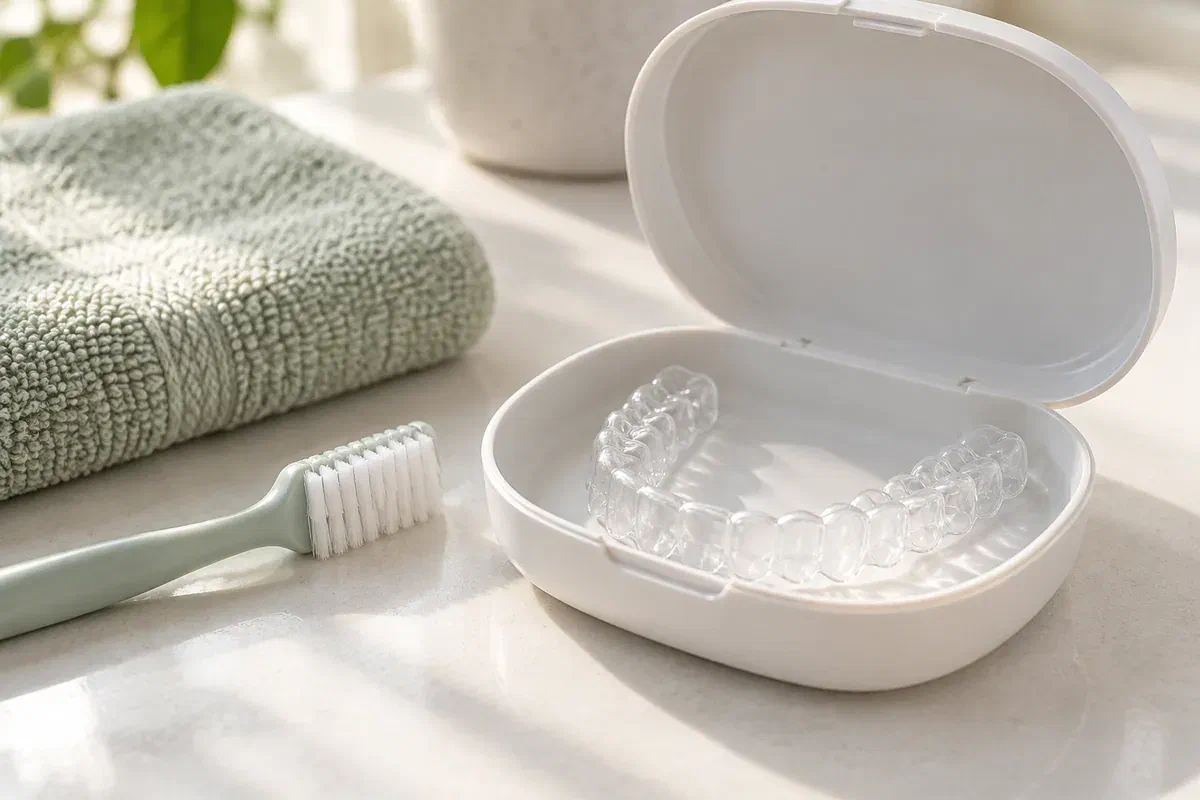
Illustrative clear dental retainer in an open protective case beside a soft cleaning brush
Old Milton retainer questions

What years away from a retainer can look like

A long gap in wear can show up in several ways. Tell us how long it has been and what you notice, instead of assuming a fresh copy of the old tray is the answer.

A tray that has gone missing or brittle

Older plastic can yellow, crack or lose its shape. If the retainer is lost or damaged, let us know when you last wore it. Keep any fragments for us to look at. Gluing a split or warming the plastic to reshape it can cause more harm.

Teeth that won’t accept the old fit

If the tray stops partway or pinches, mention how long it sat unused and any dental work done since. The cause may be the appliance, shifted teeth, or both. Do not squeeze it into place or bite down to make it seat.

No idea what the schedule should be

Many people never had their instructions written down, or lost them long ago. Ask for a plan that fits you now rather than guessing from a family member’s routine. Settle who is keeping an eye on your retention and when the next check should be.

If you are planning a crown, bonding or a new filling, bring your retainer to that appointment. Changing a tooth’s outline can alter how the tray sits, so the work and your retention may need to be planned together.

Why it is worth revisiting

An old result can still be looked after.

Even decades later, a retainer routine that suits your mouth may help maintain the positions you have now. It needs a tray that fits and wear that matches the plan. No retainer guarantees teeth will stay put indefinitely, so occasional reviews remain worthwhile.

Many adults appreciate how discreet a clear removable design is. It also asks you to remember to wear it and to store it properly. Talk the options over with a clinician who can see your teeth and hear your history, including what your hygiene and daily habits allow.

Patient information: British Orthodontic Society — retainers and long-term retention · American Association of Orthodontists — retention after orthodontics

Instructions that make sense to you

Learn why a certain schedule is suggested and whether it may change. A routine with a clear purpose is easier to stick to than a number with no explanation. Store the instructions where you will find them when routines slip.

Spotting a fit problem early

At the fitting of a new tray, pay attention to how it should feel when properly seated and how to take it out safely. Find out which changes warrant a call, so you can tell a familiar snugness from a tray that is damaged or painful.

Knowing the path if it breaks again

Ask who to contact if the appliance is lost and how decisions about a replacement are made. Check on possible fees and whether new records would be needed. Planning ahead for ordinary wear and accidents keeps the next step simple.

Getting back on track

How a long-gap review usually unfolds

Restarting after years away is not the same as replacing a tray you wore last week. We will tell you which situation applies before relying on any old impressions or files.

  1. Hear the story and see the teeth

    We ask when your orthodontic treatment finished, what you were told about wear, and roughly when you stopped. Bring the old appliance and any records. Your teeth are examined, and we consider whether to involve an orthodontic provider.

  2. Choose between holding and correcting

    If the teeth have moved, decide whether you want to keep them as they are now or ask about further treatment. A retainer can hold; it is not the same as straightening. Once that is clear, the retention approach can be agreed.

  3. Take new records and order the tray

    When a new retainer is the right step, fresh records are taken so it fits the positions you have agreed to keep. Ask about timing and whether to wear anything in the meantime. A new tray will not undo earlier movement.

  4. Fit, practise and set the routine

    The clinician checks how the tray seats and feels, then shows you how to put it in and remove it. Wear hours, cleaning and follow-up visits are explained. Practise before you go, and note who to call about a fit problem or loss.

Making it a habit again

Small routines that keep a retainer working

Your appliance material has its own care instructions. If you have read conflicting advice online about cleaners or wear time, ask us before changing what you do.

Clean it gently, the way you were shown

Rinse the retainer after use and clean it regularly with the method recommended for your appliance. Very hot water and abrasive toothpaste can harm clear plastic. Household bleach and harsh cleaners should not take the place of a suitable retainer product.

Give it a permanent home

When it is not in your mouth, it belongs in its case, away from heat, pets and knocks. A retainer wrapped in a tissue is easily thrown away. Keep the case with you when eating out or away overnight, and wash the case regularly too.

Pair it with steady dental care

Brush your teeth before the tray goes in and keep your regular checkups. Bring the retainer to reviews your treating team asks for. A lingering sore spot, a change in fit or visible damage is a reason to call, not to keep wearing it as is.

Patient information: American Association of Orthodontists — cleaning a retainer · American Association of Orthodontists — a tight or poorly fitting retainer

Retainer choices for adults

More than one way to keep teeth steady

The right fit for you depends on how your teeth were treated and which ones need support. Some people end up with two retainers that do different jobs.

When a removable tray suits your plan

A transparent, removable tray

This transparent tray sits over the teeth and comes out as your instructions allow. Ask about wear hours, storage and when it should be checked. It is discreet, but it still needs regular care and will need replacing at some stage.

When a different design fits better

A bonded wire or another removable style

Some people are better served by another kind of removable retainer, a fixed wire behind the teeth, or both. A fixed wire needs careful cleaning and checks for loose bonds. Compare the trade-offs instead of assuming a fixed retainer looks after itself.

If replacing the tray won’t settle the matter

Reviewing movement that already happened

If your teeth have shifted since treatment, think about whether holding them where they are is enough or whether you want to explore correction. A routine replacement retainer is not active treatment. An orthodontic assessment can clarify the options.

Patient information: American Association of Orthodontists — retainer types and care

Questions from returning wearers

Starting again after a long break

Bring the actual retainer you have, however old, so we can talk about its material, fit and purpose. Advice for your mouth matters more than a general rule.

(905) 876-4488
I stopped wearing my retainer ten years ago. Is it too late to start again?
It is rarely too late to begin retention, but the goal may be holding today’s positions rather than returning to the original result. Do not force an old tray on. An assessment shows whether a new retainer or other advice makes sense.
Can old plastic retainers become unsafe to wear?
Clear plastic can become brittle, discoloured or warped with age and storage. A tray with cracks or sharp edges can irritate the gums or break further. Bring it in so its condition and fit can be judged before you rely on it again.
Does gum recession or bone loss change what kind of retainer I should have?
Gum and bone health can affect how teeth are supported and which retention approach suits you. Mention any history of gum treatment. The clinician may consider your periodontal health when recommending a design and review schedule.
Should I tell you about dental work done since my braces came off?
Yes. Crowns, bonding, fillings or extractions since treatment can change how a retainer fits. A list of past work, even an approximate one, helps us understand why an old tray may no longer seat and what a new one needs to account for.
How do I know if my teeth have actually moved or I’m just noticing them more?
Small changes can be hard to judge in a mirror. Old photos, your previous retainer and an examination together give a clearer picture. If the tray no longer fits as it once did, that is often a useful clue worth checking.
Is it easy to fit a retainer review around errands in Old Milton?
Many people book a review on a day they are already nearby. Our Bronte Street practice is open Monday to Thursday until 7 pm, with Friday to Sunday by appointment. Bring the retainer and any records so the first visit covers as much as possible.
Clear retainers for Old Milton

Bring the drawer find. We’ll take a look.

Contact our Bronte Street practice to discuss restarting retention, a replacement or a fit concern. Bring whatever retainer you still have and any old instructions, so we can work from the treatment you completed.

Whether a replacement is appropriate depends on checking the appliance and your current tooth positions. Please contact us promptly if a retainer is lost, damaged, painful or no longer fits.

Visit Milton Dental Clinic
Unit 1, 342 Bronte St. S, Milton, ON L9T 5B7
Get directions Clinic hours
Monday–Thursday
11am–7pm
Friday–Sunday
By appointment only

Areas we serve

  • Milton
  • Oakville
  • Mississauga
  • Georgetown
  • Halton Hills
  • Acton
  • Campbellville
  • Brampton
  • Burlington
  • Puslinch
  • Rockwood
  • Erin
  • Caledon
  • Etobicoke
  • Old Milton
  • Bronte Meadows
  • Timberlea
  • Dorset Park
  • Dempsey
  • Clarke
  • Beaty
  • Coates
  • Harrison
  • Scott
  • Willmott
  • Ford
  • Bowes
  • Cobden
  • Walker
  • Mountain View
  • Milton Heights
  • Hawthorne Village
  • Valley View
  • Fallingbrook
  • Nassagaweya
  • Trafalgar
  • Esquesing
  • Nelson
  • Brookville
  • Moffat
  • Glen Williams
  • Norval
  • Limehouse
  • Stewarttown
  • Ashgrove
  • Hornby
  • Silver Creek
  • Speyside
  • Scotch Block
  • North Oakville
  • River Oaks
  • Glen Abbey
  • West Oak Trails
  • Palermo
  • Bronte Creek
  • College Park
  • Joshua Creek
  • Uptown Core
  • Preserve
  • Iroquois Ridge
  • Lisgar
  • Meadowvale
  • Meadowvale Village
  • Churchill Meadows
  • Erin Mills
  • Central Erin Mills
  • Streetsville
  • East Credit
  • Creditview
  • Heartland
  • Sheridan
  • Mount Pleasant
  • Credit Valley
  • Huttonville
  • Churchville
  • Springbrook
  • Northwest Brampton
  • Bram West
  • Fletcher's Meadow
  • Fletcher's Creek South
  • Alton Village
  • Orchard
  • Millcroft
  • Headon Forest
  • Tansley
  • Brant Hills
  • Tyandaga
  • Kilbride
  • Lowville
  • Aberfoyle
  • Morriston
  • Arkell
  • Hillsburgh
  • Freelton
  • Carlisle
  • Waterdown
  • Flamborough
  • Mountsberg

How can we help?

Milton Dental Clinic

Have a question about your smile? Choose the option that works best for you.

For urgent dental concerns, please call.
Messages are reviewed during clinic hours.