Misplaced or damaged retainer
Get in touch soon and say when it was last in. Ask what to wear meanwhile, and don’t reach for an old aligner without advice. Save any pieces, and skip the glue or hot water.


You have just snapped in your last aligner, and the box is empty. What now? From Rockwood, you can talk with us about the move from aligners to a clear retainer: how the two differ, how the retainer should fit, how long to wear it, cleaning it properly, and what to do if it is lost or damaged.
After months of swapping aligners on schedule, a clear retainer can look like just one more tray in the series. It isn’t. Each aligner was shaped slightly ahead of your teeth to coax them forward. The retainer is shaped to where they finished, so its job is to hold that result in place while the surrounding bone and gums settle and long after.
Teeth can keep drifting for years, which makes retention a long-term habit rather than a short epilogue to aligner treatment. The exact design and wear schedule depend on the movements you had and on your circumstances.
Travelling from Rockwood, bring your current tray, the final aligner if you still have it, and any instructions from the clinician who supervised your aligner treatment. That gives us a clear picture of where your teeth are meant to be.
Problems in the early retention phase can look alike but come from different causes. Explain what is going on instead of assuming another tray from the same files will sort it out.
Get in touch soon and say when it was last in. Ask what to wear meanwhile, and don’t reach for an old aligner without advice. Save any pieces, and skip the glue or hot water.
Mention any missed nights, a fall or new dental work. A retainer that sits proud may be distorted, teeth may have moved, or both. Avoid forcing it down with your fingers or by biting.
Many people carry their aligner hours over to the retainer without checking. If you are unsure what applies, ask for the plan to be confirmed. Find out who oversees your retention and when your teeth should next be checked.
If you have aligner attachments still bonded or plan to have bonding, a crown or a filling, bring the retainer. Changes to tooth surfaces can affect how it fits.
Aligner treatment asked for a lot of discipline. A retention routine that suits you helps protect the outcome, as long as the tray fits well and you wear it as prescribed. No appliance can ensure teeth stay perfectly still, so reviews remain part of good care.
Moving from aligners to a clear retainer feels familiar, which helps many people adapt. That familiarity can also lead to shortcuts, such as using an old aligner instead. A clinician who knows your treatment can explain the right design and the habits that make it work.
Patient information: British Orthodontic Society — retainers and long-term retention · American Association of Orthodontists — retention after orthodontics
Retainer hours often differ from aligner hours. Ask why your schedule is set as it is and whether it is expected to change. Keep the instructions with your case so there is no confusion with old aligner guidance.
A retainer may feel snug in a steady way, without the pressure of a fresh aligner. At the fitting, get to know what a fully seated retainer feels like and practise lifting it out evenly from both sides. Ask which sensations should prompt a call, so you are not left guessing in the first few weeks.
Find out who to contact if the retainer is lost, whether your aligner records can be used and how decisions are made. Ask about fees. Clarity now makes it easier to act quickly if a problem arises.
A first retainer after aligners, a replacement and a tray that has stopped fitting each need different steps. Digital files from aligner treatment are helpful, but they don’t always reflect where teeth sit now.
We look at your last aligner stage, your teeth and any attachments. Tell us how the final trays were worn and whether any gaps occurred. If another provider supervised your aligners, we may coordinate with them.
A clear removable retainer is discussed alongside other approaches. If teeth have moved since the last aligner, decide whether to hold the current position or ask about refinement first. These lead to different plans.
When a retainer is to be made, current records are taken so it matches the positions you want held. Ask how long fabrication takes and what to wear while you wait. An old aligner is not an automatic stand-in.
Seating and comfort are checked first, then you are guided through taking the retainer in and out, including anything that differs from how you handled aligners. Wear hours, cleaning and review dates are explained, including how they differ from aligners. Practise before leaving.
Many aligner habits carry over, but materials and instructions can differ. Before reusing an aligner cleaning product on your retainer, check with your clinician.
Rinse the retainer each time it comes out and clean it as recommended. Very hot water and abrasive toothpaste can damage clear plastic. Bleach and harsh household cleaners aren’t a substitute for a suitable retainer product.
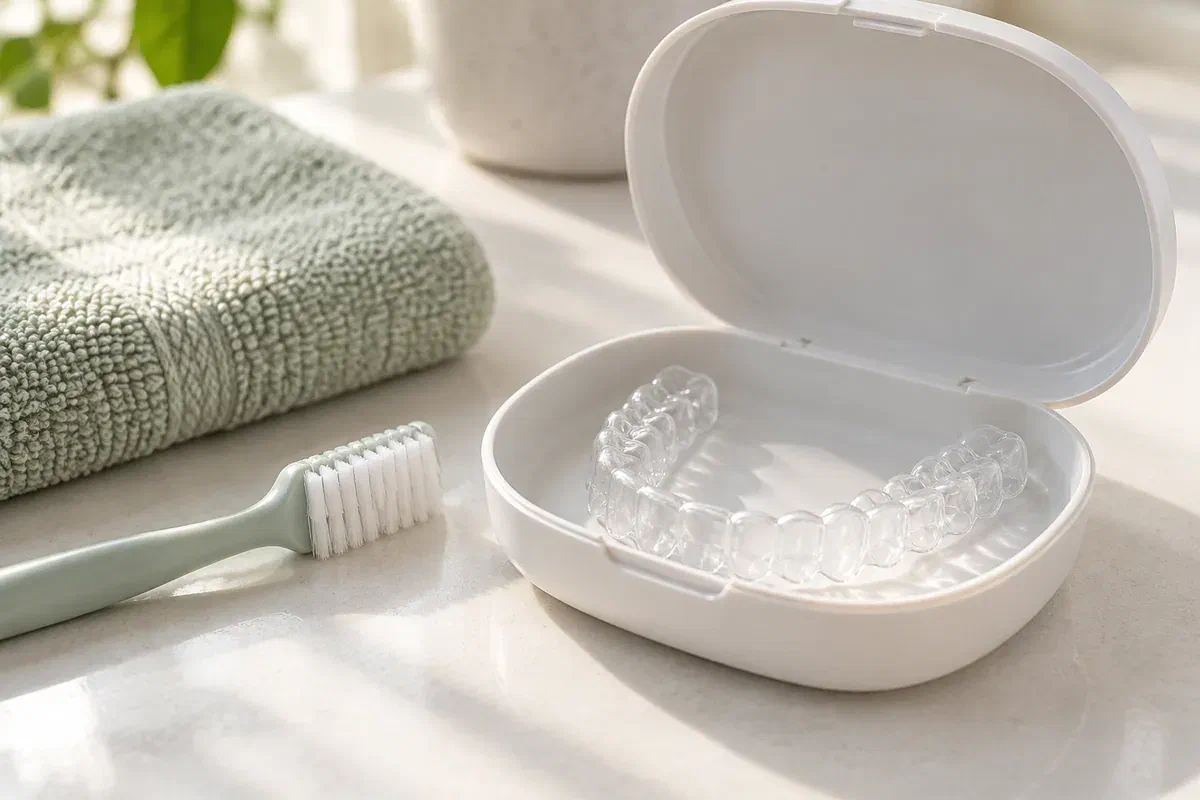
Store the tray away from heat, pets and knocks. A retainer wrapped in a napkin is easily lost, just as aligners were. Bring the case when eating out or travelling, and clean it regularly.
Clean your teeth before putting the retainer in, and continue routine dental care. Bring it to scheduled reviews. If soreness persists, the fit changes or you see damage, call instead of carrying on.
Patient information: American Association of Orthodontists — cleaning a retainer · American Association of Orthodontists — a tight or poorly fitting retainer
Have your retainer and any aligner records on hand. The material, fit and purpose of your own tray matter more than general rules, and what a friend was told after their aligners may not apply to you.
Contact our Bronte Street practice about your first retainer after aligners, a replacement or a fit concern. Bring your trays and any aligner paperwork, and we will start from where your treatment finished.
Any recommendation follows a look at your tray and where your teeth have settled. If yours goes missing, breaks, hurts or stops seating, contact us promptly.
