

Illustrative patient discussing tooth shade and shape with a dental clinician
Cosmetic Dentistry

Composite Veneers in Erin

Most people who ask about veneers do not want a new smile. They want their own smile, minus one distracting detail. From Erin or Hillsburgh, we can plan a composite veneer around a subtle change, with careful attention to shade, texture, preparation and the upkeep resin needs.

Subtle on purpose

Still you, only less distracted

“I don’t want anyone to know” is one of the most common requests we hear. Done with care, a composite veneer can be quiet. Resin in a tooth shade is bonded over the front of a suitable tooth and sculpted, so that colour, outline or texture shift just enough to stop drawing your eye.

Subtlety has its own planning. Natural teeth have small ridges, slight translucency at the edges and gentle differences in shade, and a veneer that is too smooth or too white can look out of place. It is also worth asking whether any veneer is needed, how much enamel it would alter, and how your gums and bite affect the plan.

For visitors from Erin, we like to begin by looking at what makes your smile yours. Then you can point to the one feature you would soften. We will explain what resin might do, where a smaller step or no treatment could be wiser, and what maintaining it would ask of you.

Ask about a subtle veneer
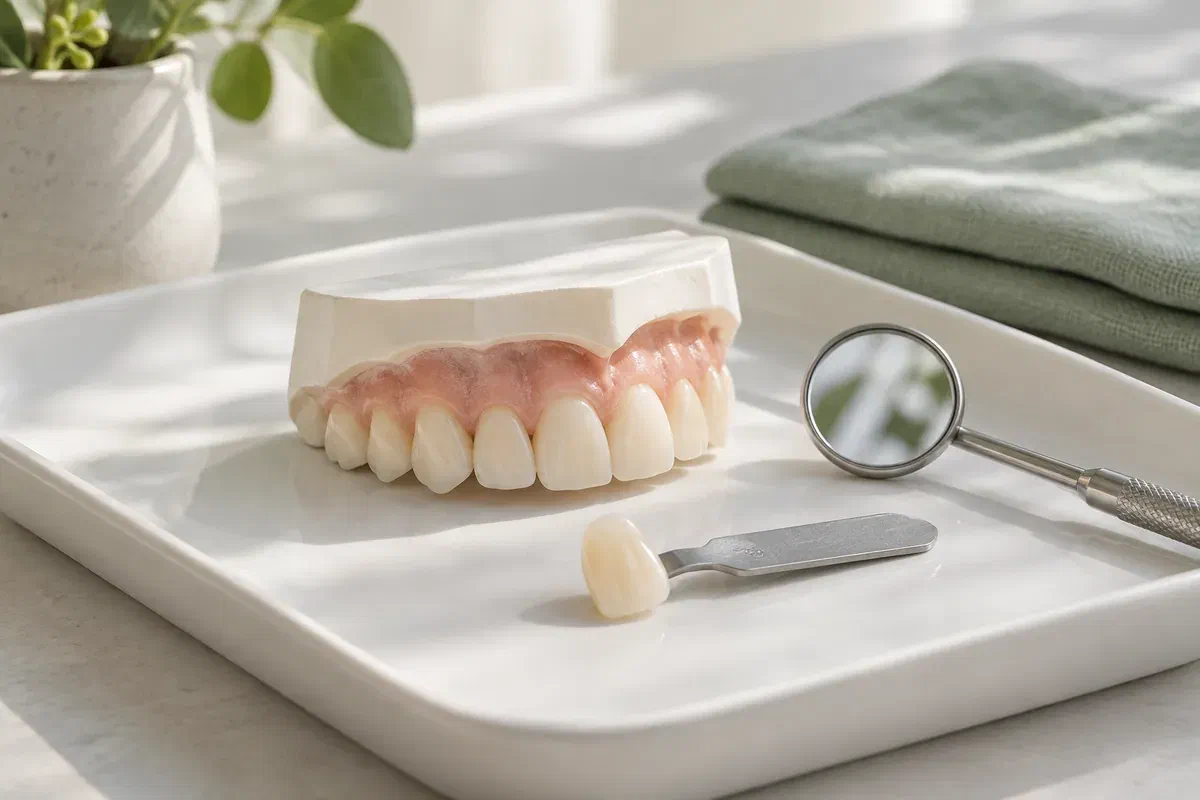
Illustrative front-teeth teaching model beside a shade sample and dental mirror
The detail that distracts

One feature, described in your own words

Tell us the specific thing you notice, and how much it bothers you day to day. An exam can then separate a small appearance preference from a dental or gum condition that would need different care.

A slightly different shade

Sometimes the difference is small but persistent. Say whether it has always been there or appeared more recently. Any tooth that has darkened should be assessed before resin hides it; whitening, cleaning or a restoration may be more fitting.

An edge or contour that catches the light

A notch, a flat spot or a slightly short edge can be easy to see in photographs. Show us where it is. Neighbouring teeth may need nothing, and while reference images help, the exam decides what is appropriate.

Wear, clenching or a visible older repair

An old filling line or worn edge can be the very thing you notice. Mention grinding, chipping and existing work, since these affect how a veneer is planned and how long a subtle finish lasts.

Gum health, decay and any symptoms are checked before cosmetic work. A veneer alters the outside of a tooth and will not correct a hidden issue.

What a quiet veneer can do

Blend, rather than stand out

With a suitable tooth, resin can be layered in more than one shade and given a surface texture that mimics enamel. Colour, shape and finish are discussed together. The goal is a tooth that sits comfortably among its neighbours, keeping the small variations that make teeth look real.

Subtle results still need upkeep. Resin can lose gloss, pick up stain, wear or chip, and these changes can make a veneer more noticeable over time. Polishing, repair or replacement may follow, so think about that commitment before you begin.

Patient information: American Dental Association — composite and porcelain veneers

A plan that protects your character

Explain the features you like about your smile. Most people want to keep them. Ask how the planned surface will match nearby teeth in shade, texture and translucency, not only in colour.

A clear account of preparation

Ask what would be altered on the tooth for each reasonable option. Even a small resin change may not be fully undone later. Understanding the procedure and the care gives you a better basis for comparison.

The fewest teeth that achieve the goal

A subtle change often means one or two teeth. Ask how many are being proposed and why. If matching a single veneer to untreated teeth is tricky, that should be explained.

Getting the details right

Small changes, careful steps

The number of visits depends on your teeth and the work. Ask what each step covers, how your comfort will be looked after, and whether you can preview the planned change before it is final.

  1. Study your smile as it is

    We talk about your concern, dental history and any symptoms. The clinician examines the teeth, gums and bite and notes the natural features worth keeping. You will hear whether elective work makes sense now or something else comes first.

  2. Agree on a restrained design

    Weigh a veneer against smaller or non-cosmetic options, and settle which teeth are included. Discuss shade, translucency and how future whitening could affect the match. Confirm preparation, fees, upkeep and limits.

  3. Build in layers of colour

    When direct composite is chosen, the enamel is readied and resin shades are applied in thin, sculpted layers, each set by a curing light. Texture and outline are developed to echo the surrounding teeth.

  4. Finish with natural texture

    Rather than a glassy surface, the finish may include subtle texture to match neighbouring enamel. The bite and contacts are checked. Mention anything rough or high, and review cleaning, follow-up and changes worth a call.

Keeping it understated

Gentle care keeps a subtle result subtle.

Both the composite and the natural tooth need attention. Follow your own advice from the clinician, and ask before trying abrasive products, whitening kits or any home touch-ups.

A soft brush and steady habits

Use a fluoride toothpaste, a soft brush and your usual between-tooth cleaner. Ask for a demonstration at the veneer edge. If the gum bleeds repeatedly, food lodges or floss tears, come in for a look.

Avoid knocks and hard bites

Chipped edges are what make a subtle veneer noticeable. Avoid biting hard objects and keep your teeth off tool duty. Raise grinding or sport so protection can be discussed.

Catch changes while they are small

Dullness, a faint stain line, roughness or a different bite are worth mentioning early, when polishing or a small repair may be enough. Do not file, glue or scrub the resin.

Patient information: Cleveland Clinic — dental veneers and their care

Quieter alternatives

Could something smaller do it?

With each option, find out what changes, what preparation is needed and what remains as it is. The decision should depend on your teeth and on the one feature you want softened.

When composite can make the change

A veneer or a minor resin touch-up

A veneer changes the whole front surface; a minor touch-up smooths one notch or edge. Ask which scope suits a subtle goal. Both will need review and some upkeep in time.

When another material or broader coverage comes up

Porcelain or another restoration

Compare preparation, appearance, repair and replacement. More coverage should have a clear reason based on the tooth, particularly when the aim is understated. Ask what that reason is.

When colour, position or preference points another way

Whitening, orthodontics or leaving it

Gentle whitening, orthodontic advice or simply leaving a healthy tooth alone may suit you better. Many people decide their small quirk is worth keeping.

Erin veneer questions

Will anyone notice?

Choosing a veneer involves more than colour. Talk about preparation, how many teeth are involved, care over time, and what you would do if your taste changed later.

(905) 876-4488
Can a composite veneer look like natural enamel up close?
With careful layering of shades and surface texture, resin can blend well with neighbouring teeth. Results depend on the tooth and the match required. Ask to look at the shade in natural light before you leave.
Is a single veneer more noticeable than a set?
It can be harder to match one tooth to untreated neighbours, but a single well-matched veneer is often the most understated option. Ask how the clinician would approach matching for your teeth.
Can the surface texture of a veneer be matched to my other teeth?
Natural teeth often have fine ridges, faint vertical lines and a little translucency near the biting edge. The clinician can shape and polish resin to reflect some of that character. Mention if you prefer a less glossy finish, and bring up anything that looks too uniform once you see it.
Will people see a line where the veneer meets my tooth?
The clinician aims to blend the margin so it is hard to see, though staining or wear can make it more visible over time. Regular cleaning visits and early reviews help, and a faint line can sometimes be polished before it becomes obvious.
Can I change my mind about the brightness after it is placed?
Adjustments may be possible, but changing shade usually means reworking or replacing resin. That is why choosing a shade carefully, and taking your time over it, matters. Look at the proposed colour in daylight and say so if it feels even slightly too bright.
Is it worth having a consultation if I am only mildly bothered?
Yes. Understanding your options, including leaving the tooth alone, can be reassuring in itself. There is no pressure to proceed with elective treatment, and a visit can simply give you the information to decide later.
Coming in from Erin

Keep what you love about your smile.

Arrange a consultation at our Bronte Street practice to talk about subtle composite veneers and the alternatives. We will look at the tooth, the small change you have in mind, and the preparation and upkeep each choice would involve.

Whether a quiet veneer will work comes down to the tooth itself, your gums and the way you bite. Agree the planned appearance and its long-term care before any treatment begins.

Visit Milton Dental Clinic
Unit 1, 342 Bronte St. S, Milton, ON L9T 5B7
Get directions Clinic hours
Monday–Thursday
11am–7pm
Friday–Sunday
By appointment only

Areas we serve

  • Milton
  • Oakville
  • Mississauga
  • Georgetown
  • Halton Hills
  • Acton
  • Campbellville
  • Brampton
  • Burlington
  • Puslinch
  • Rockwood
  • Erin
  • Caledon
  • Etobicoke
  • Old Milton
  • Bronte Meadows
  • Timberlea
  • Dorset Park
  • Dempsey
  • Clarke
  • Beaty
  • Coates
  • Harrison
  • Scott
  • Willmott
  • Ford
  • Bowes
  • Cobden
  • Walker
  • Mountain View
  • Milton Heights
  • Hawthorne Village
  • Valley View
  • Fallingbrook
  • Nassagaweya
  • Trafalgar
  • Esquesing
  • Nelson
  • Brookville
  • Moffat
  • Glen Williams
  • Norval
  • Limehouse
  • Stewarttown
  • Ashgrove
  • Hornby
  • Silver Creek
  • Speyside
  • Scotch Block
  • North Oakville
  • River Oaks
  • Glen Abbey
  • West Oak Trails
  • Palermo
  • Bronte Creek
  • College Park
  • Joshua Creek
  • Uptown Core
  • Preserve
  • Iroquois Ridge
  • Lisgar
  • Meadowvale
  • Meadowvale Village
  • Churchill Meadows
  • Erin Mills
  • Central Erin Mills
  • Streetsville
  • East Credit
  • Creditview
  • Heartland
  • Sheridan
  • Mount Pleasant
  • Credit Valley
  • Huttonville
  • Churchville
  • Springbrook
  • Northwest Brampton
  • Bram West
  • Fletcher's Meadow
  • Fletcher's Creek South
  • Alton Village
  • Orchard
  • Millcroft
  • Headon Forest
  • Tansley
  • Brant Hills
  • Tyandaga
  • Kilbride
  • Lowville
  • Aberfoyle
  • Morriston
  • Arkell
  • Hillsburgh
  • Freelton
  • Carlisle
  • Waterdown
  • Flamborough
  • Mountsberg

How can we help?

Milton Dental Clinic

Have a question about your smile? Choose the option that works best for you.

For urgent dental concerns, please call.
Messages are reviewed during clinic hours.