

Illustrative patient discussing tooth shade and shape with a dental clinician
Cosmetic Dentistry

Composite Veneers in Georgetown

A small space between front teeth, one tooth that looks narrower, edges that do not line up: proportion is often what people want changed. From Georgetown, we can talk about whether composite resin could reshape those teeth, how orthodontics compares, and the upkeep resin needs.

Shape and spacing

When proportion, not colour, is the issue

Plenty of people are content with the shade of their teeth and still feel something is off. Perhaps a lateral tooth is slim, a gap has always been there, or one edge sits higher than the rest. With a composite veneer, resin in a matching colour is bonded over the front of a suitable tooth and sculpted to adjust width, length or outline.

Reshaping is a design question as much as a dental one. Adding width to close a space changes how neighbouring teeth look, and some spacing or alignment concerns are better solved by moving teeth rather than building on them. The plan must also account for enamel, gum contours and your bite.

When you come in from Georgetown, point to the proportion that bothers you. We can explain how resin might change it, where orthodontic advice or a smaller repair could be the better step, and how much ongoing care each choice tends to require.

Talk about reshaping with resin
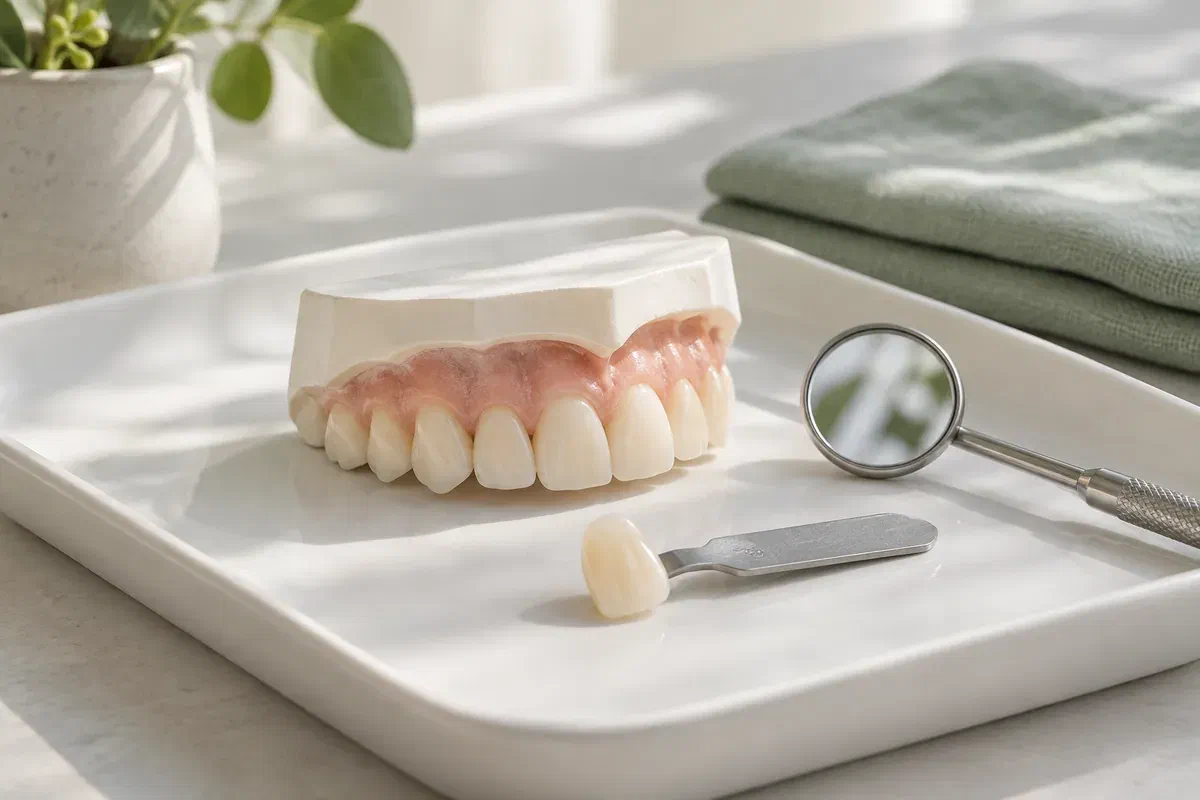
Illustrative front-teeth teaching model beside a shade sample and dental mirror
Pinpointing the proportion

Width, length or line?

Try to put the concern into one sentence, then tell us how much it matters. The exam helps sort a cosmetic preference from gum, bite or tooth issues that might need different care first.

One tooth reads differently in colour

Even when shape is the main concern, mention any tooth that looks darker. Colour change should be understood before resin covers it. The cause might suggest cleaning, whitening, a new filling or further investigation instead.

A gap, a slim tooth or an uneven edge

Show us exactly where the space or mismatch is. Closing a gap may involve adding resin to more than one tooth, while a single short edge may need very little. Reference images can explain your taste, but the exam decides what is realistic.

Wear, clenching or past repairs nearby

Grinding and chips can alter tooth proportions over time, and older bonding can change how teeth line up. Raise these early. Bite forces or an ageing repair may need attention before reshaping is planned.

Gum health, decay and any symptoms are assessed before reshaping. Adding resin to a tooth’s front changes its outline but not a problem underneath.

What reshaping can achieve

Better balance, built on suitable teeth

On an appropriate tooth, composite can add width, length or curvature in a shade that blends with the enamel around it. You and the clinician will discuss proportion, texture and colour as a set. Balanced teeth do not need to be identical; slight variation usually looks more natural.

Resin that has been used to reshape teeth needs the same upkeep as any composite surface. It may lose its gloss, stain, wear or chip, and edges that were built out can be more exposed. Talk through polishing, repair and eventual replacement before you decide.

Patient information: American Dental Association — composite and porcelain veneers

Your sense of balance

Tell us which features you like about your smile as well as the proportion you want adjusted. Sometimes softening one edge is enough. Ask how the new shape will look beside teeth that are not being treated.

Preparation and maintenance, side by side

Ask how much enamel would be altered for each reasonable option, including reshaping with resin versus moving teeth. A resin veneer is not automatically reversible. A clear view of both the first step and the long-term care makes the comparison fairer.

Only as many teeth as needed

Closing a space might involve two teeth or several; a short edge might involve one. Ask what the proposal includes and why. The number should follow your goals and the examination rather than a standard package.

How reshaping is planned

Mapped out, then sculpted

The visit plan depends on your teeth and how much reshaping is involved. Ask what each step covers, how comfort is managed and when you can look at the proposed proportions before they are final.

  1. Measure, examine and listen

    The clinician reviews your concern, dental history and any symptoms, then looks at tooth sizes, spacing, gums and bite. Additional records may help. You will discuss whether cosmetic reshaping suits you now or whether something else should be handled first.

  2. Weigh the options and agree the design

    Compare veneers with orthodontic advice, smaller repairs and other options, and agree which teeth will change. Ask how the shade will match and how whitening plans could affect it. Confirm preparation, fees, maintenance and what reshaping cannot do.

  3. Sculpt the new outline

    When direct composite has been chosen, the enamel is conditioned and resin is added in shaped increments, each set with a curing light. The clinician builds width or length gradually, checking proportion against the neighbouring teeth and the space available.

  4. Refine, polish and review

    Edges and contacts are refined, the surface is polished and your bite is tested. Tell us if anything catches, feels high or traps floss. Go over cleaning around new contacts, any follow-up and which changes warrant a call.

After reshaping

New contacts need a slightly new routine.

Look after both the resin and the tooth underneath. Follow your own instructions, and check with us before using abrasive products or trying to smooth an edge yourself.

Learn to clean the new contacts

If a gap has been closed, floss or a small brush may feel different between those teeth. Ask for a demonstration. Use fluoride toothpaste daily, and book a check if food keeps catching, floss shreds or the gum bleeds repeatedly.

Keep hard objects away from new edges

Built-out edges can chip under sudden force. Avoid biting fingernails, pens or ice and do not use the treated teeth as tools. Mention sport or grinding so protection can be discussed, and expect an old guard to need checking.

Ask for a look when something changes

Report roughness, a chip, stain or a new feeling when you bite. Polishing or a small repair may be enough, though the clinician will decide. Avoid files, glue or harsh home polishing on the resin.

Patient information: Cleveland Clinic — dental veneers and their care

Other ways to adjust proportion

Move the teeth, or build on them?

For each option, ask what it would change, how much preparation is involved and what it would leave untouched. The answer should reflect your teeth and the proportion that bothers you.

When resin can carry the change

A veneer or edge-only bonding

A full veneer reshapes the whole visible face, while bonding just the edge or side may close a small gap or even a corner. Ask which is warranted. Both will need checking and some upkeep over time.

When another material or fuller coverage is mentioned

Porcelain or another restoration

Compare how much tooth each would require, how it looks, whether it can be repaired and when it may need replacing. More coverage should be justified by the tooth itself. Ask what that justification is.

When position, colour or preference suggests another route

Orthodontics, whitening or leaving it

Orthodontic treatment can close spaces or straighten edges by moving teeth, and whitening handles natural colour. Many people also decide that a small gap is part of their smile. That is a perfectly sound choice.

Georgetown reshaping questions

Gaps, widths and edges

Shape decisions involve more than looks. Raise preparation, the number of teeth involved, ongoing care, and what would happen if your bite, health or taste changes later.

(905) 876-4488
Can composite resin close a gap between my front teeth?
In suitable cases, adding resin to the sides of one or more teeth can narrow or close a small space. Whether it looks natural depends on tooth size and gum shape. Ask whether orthodontics would suit the gap better.
Will closing a gap with resin make my teeth look too wide?
It can if the space is large relative to the teeth. The clinician considers proportions before suggesting how much to add. Sometimes spreading the change across several teeth looks more balanced.
Can one narrow tooth be widened to match its neighbour?
Often resin can add width to a slim tooth, depending on the space and the bite. Ask how the shade and surface will be matched so the treated tooth blends rather than stands out.
Is orthodontic treatment a better choice than veneers for spacing?
Sometimes, especially when spacing or alignment involves several teeth or the bite. Moving teeth keeps natural enamel, while resin adds material. Ask for both options to be explained for your mouth.
Does flossing feel different after a gap is closed with resin?
It may, because there is now a contact where there was none. Ask for a demonstration and tell us if floss catches or tears, as the contact can sometimes be smoothed.
Could I reshape just one edge now and think about more later?
Yes. Treatment can start with the single feature that bothers you. Ask how a later change might affect matching, and decide in stages if that suits you.
From Georgetown to Bronte Street

Talk proportion with a clinician.

Book a consultation at our Bronte Street practice and we can look at spacing, tooth widths and edges together. You will hear how composite veneers compare with orthodontics and smaller repairs, and what preparation and upkeep each involves.

Reshaping with resin depends on tooth structure, gum contours and the bite. Agree the proportions, shade and future care before any work starts.

Visit Milton Dental Clinic
Unit 1, 342 Bronte St. S, Milton, ON L9T 5B7
Get directions Clinic hours
Monday–Thursday
11am–7pm
Friday–Sunday
By appointment only

Areas we serve

  • Milton
  • Oakville
  • Mississauga
  • Georgetown
  • Halton Hills
  • Acton
  • Campbellville
  • Brampton
  • Burlington
  • Puslinch
  • Rockwood
  • Erin
  • Caledon
  • Etobicoke
  • Old Milton
  • Bronte Meadows
  • Timberlea
  • Dorset Park
  • Dempsey
  • Clarke
  • Beaty
  • Coates
  • Harrison
  • Scott
  • Willmott
  • Ford
  • Bowes
  • Cobden
  • Walker
  • Mountain View
  • Milton Heights
  • Hawthorne Village
  • Valley View
  • Fallingbrook
  • Nassagaweya
  • Trafalgar
  • Esquesing
  • Nelson
  • Brookville
  • Moffat
  • Glen Williams
  • Norval
  • Limehouse
  • Stewarttown
  • Ashgrove
  • Hornby
  • Silver Creek
  • Speyside
  • Scotch Block
  • North Oakville
  • River Oaks
  • Glen Abbey
  • West Oak Trails
  • Palermo
  • Bronte Creek
  • College Park
  • Joshua Creek
  • Uptown Core
  • Preserve
  • Iroquois Ridge
  • Lisgar
  • Meadowvale
  • Meadowvale Village
  • Churchill Meadows
  • Erin Mills
  • Central Erin Mills
  • Streetsville
  • East Credit
  • Creditview
  • Heartland
  • Sheridan
  • Mount Pleasant
  • Credit Valley
  • Huttonville
  • Churchville
  • Springbrook
  • Northwest Brampton
  • Bram West
  • Fletcher's Meadow
  • Fletcher's Creek South
  • Alton Village
  • Orchard
  • Millcroft
  • Headon Forest
  • Tansley
  • Brant Hills
  • Tyandaga
  • Kilbride
  • Lowville
  • Aberfoyle
  • Morriston
  • Arkell
  • Hillsburgh
  • Freelton
  • Carlisle
  • Waterdown
  • Flamborough
  • Mountsberg

How can we help?

Milton Dental Clinic

Have a question about your smile? Choose the option that works best for you.

For urgent dental concerns, please call.
Messages are reviewed during clinic hours.