

Illustrative patient discussing tooth shade and shape with a dental clinician
Cosmetic Dentistry

Composite Veneers in Halton Hills

Worn edges, a sore jaw in the morning, a corner that keeps breaking: clenching and grinding often sit behind the wish for a new tooth surface. For households in Halton Hills, we look at those forces first, then talk about whether a composite veneer, and what kind of care, would make sense.

When your bite is part of the story

Pressure first, polish later

Front teeth that look flat, short or chipped have often been under pressure for years, sometimes at night when you do not notice. A composite veneer bonds a layer of tooth-coloured resin onto the front of a suitable tooth and shapes it, so colour, outline and texture can change. But resin feels those same forces.

That makes the bite an early topic, not an afterthought. Before planning a veneer, the clinician will want to know how your teeth meet, whether wear is still happening, and whether something simpler, such as a guard or a smaller repair, would protect the tooth better. Enamel and gum health matter too.

From Georgetown, Acton, Glen Williams or a hamlet elsewhere in Halton Hills, you can bring both concerns together: the look you would like and the clenching you suspect. We can then explain what resin might achieve on your teeth, how protection fits in, and what upkeep to expect.

Discuss wear and veneer options
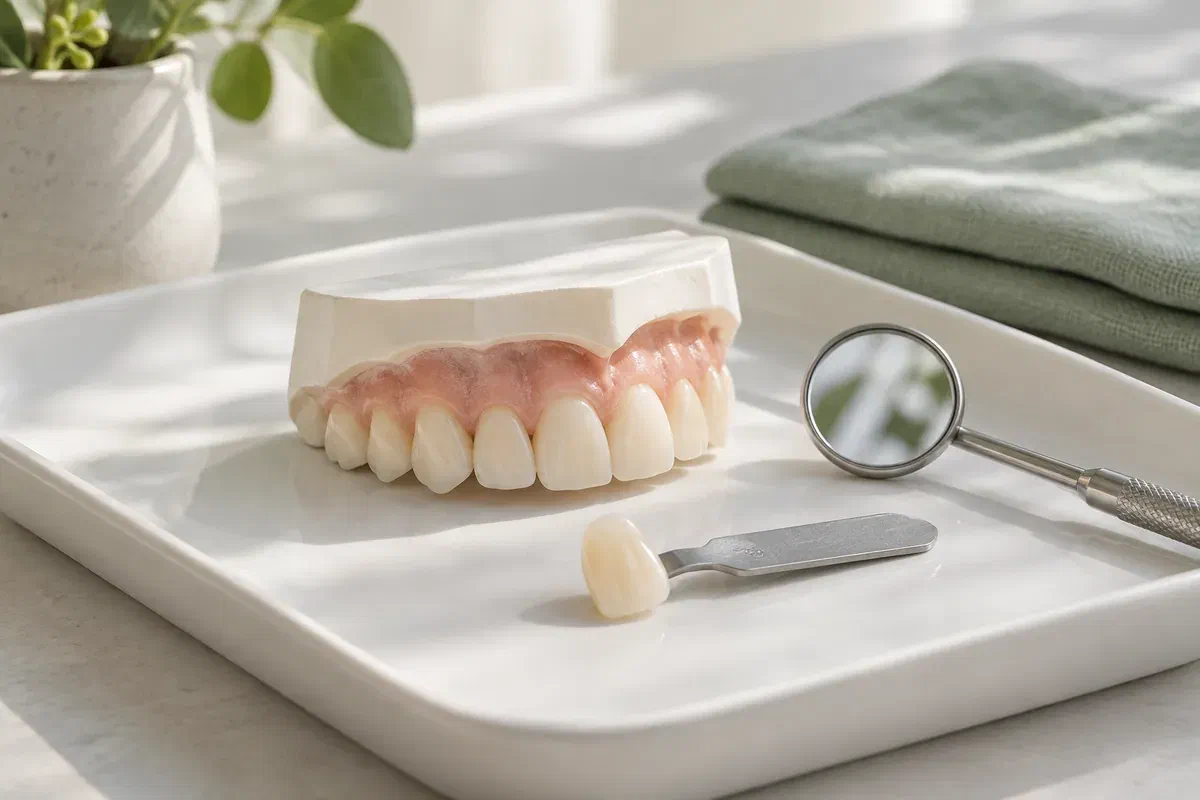
Illustrative front-teeth teaching model beside a shade sample and dental mirror
Reading the signs

Is the problem cosmetic, mechanical, or both?

Describe the change you notice and anything that hints at grinding, such as jaw tiredness or a partner hearing it. An examination can separate a preference about looks from wear or a dental condition that should be handled first.

Edges that look darker or see-through

Thinning edges can change how a tooth’s colour appears, and a tooth that has darkened overall needs checking before it is covered. Mention when you first noticed the change. Cleaning, whitening, a restoration or further tests may be more relevant than resin.

Teeth worn short or uneven

Show us where the edges have flattened or where one tooth now looks shorter than its neighbour. Rebuilding length is not always wise until the cause is understood. Old photos can show what has changed, but the exam decides what is appropriate now.

Grinding, clenching and repeat fixes

Let us know about morning jaw ache, worn guards, chips that return or fillings replaced more than once. These details shape planning and longevity. The bite may need attention before a veneer can be expected to hold up well.

Decay, gum disease and symptoms such as pain are assessed before cosmetic planning. Resin across the front of a tooth does not settle a problem beneath or around it.

What resin can contribute

Restore the look, with protection in the plan

On a suitable tooth, composite can be sculpted to rebuild a worn outline or even out a surface, with the shade chosen to blend. You will discuss colour, texture and proportion together. A natural appearance tends to keep some character between teeth instead of making every edge identical.

Where grinding is involved, upkeep matters even more. Resin can chip, wear, dull or stain, and the response might be polishing, a repair or replacement. Ask how a protective guard or other bite management would fit around the veneer, so you know the full commitment.

Patient information: American Dental Association — composite and porcelain veneers

A design shaped by your preferences

Say what you want kept as well as changed. Some people simply want worn edges to look less obvious. Ask how the planned surface relates to your other teeth and to the way they come together when you bite.

Clear answers on preparation and care

Ask how much of the tooth would be altered for each reasonable option. Resin is not automatically reversible or prep-free. Understanding the procedure, the protection needed and the maintenance makes for a fairer comparison.

Treatment where it is justified

Find out how many teeth the proposal includes and why. Your aims and the findings should drive the number. If wear affects many teeth, ask how priorities would be set rather than assuming everything is treated at once.

From bite check to bonded surface

Every stage considers the forces on your teeth.

How many visits you need depends on your teeth, the wear and what else may be planned. Ask what each step involves, how comfort is handled, and when you can review the proposed shape.

  1. Bite and wear assessment

    Your concern, dental history and any symptoms are discussed. The clinician examines teeth, gums, bite and wear patterns and may suggest records to track changes. Together you decide whether cosmetic work suits you now or whether the bite needs attention first.

  2. Choosing scope, shade and protection

    Weigh a veneer against sensible alternatives, agree which teeth are included, and plan how shade will relate to neighbours and any whitening. Talk through a guard if grinding is likely. Confirm preparation, fees, upkeep and limits.

  3. Building the resin layer by layer

    Once direct composite has been agreed, the tooth surface is readied and resin is placed in sculpted increments, each hardened with a curing light. The clinician develops length and contour with your bite and the available space in mind.

  4. Testing the bite and finishing

    After polishing, the clinician checks how your teeth meet in different movements, not only when you close. Tell us about anything that feels high or rough. Review cleaning, guard use, follow-up and the changes that should prompt a call.

Protecting the new edges

Guard the resin, especially at night.

Both the composite and the natural tooth under it need care. Follow the advice given to you, and ask before using any abrasive product or adjusting a guard or the veneer yourself.

Keep the gumline and edges clean

A fluoride toothpaste twice a day and your usual between-tooth cleaner are the basics, with extra attention at the veneer margin. A demonstration can help with a new contour. Persistent bleeding, trapped food or floss that frays deserves a check.

Wear protection if it is advised

If a night guard is recommended, use it as directed and bring it to visits. An old guard may not fit once tooth shapes change. Avoid chewing ice or hard objects, and do not use the treated teeth to grip or open things.

Notice early signs of wear

Mention a chipped edge, roughness, staining or any change in how your teeth meet. Small problems can sometimes be smoothed or repaired before they grow. Do not file, glue or grind the veneer at home.

Patient information: Cleveland Clinic — dental veneers and their care

Alternatives when wear is involved

Protect first, then choose a surface.

With each option, ask what it would change, how much preparation is needed and what it would leave as is. The right fit depends on your teeth, your bite and the feature you care about.

When composite fits the planned change

A veneer or targeted edge bonding

Bonding just the worn edge may be enough where the rest of the front surface looks fine; a veneer reshapes more. Ask which is justified. Either will need review, and grinding can shorten how long resin looks its best.

When a different material or fuller coverage is raised

Porcelain, a crown or another restoration

Heavily worn teeth sometimes lead to this conversation. Compare how much tooth each approach removes, how it looks, how it is repaired and when it may need replacing. Ask for the specific reason a larger restoration is suggested.

When colour, position or preference leads elsewhere

Whitening, orthodontics or a guard alone

Whitening addresses natural colour, orthodontics addresses position, and a guard alone may slow further wear. Leaving a healthy tooth as it is, once you know the choices, is a reasonable decision.

Halton Hills questions on wear

Grinding, guards and resin

There is more to the decision than shade. Cover preparation, the number of teeth in the plan, protection and upkeep, and what changes if your bite, health or preferences shift.

(905) 876-4488
Will grinding at night damage a composite veneer?
Grinding puts heavy force on teeth and restorations, and resin can chip or wear under it. The clinician may suggest a night guard or other bite management. Tell us if you suspect grinding so the plan reflects it.
Do I need a new night guard after getting a composite veneer?
Possibly. Changing the shape of a tooth can affect how an existing guard fits. Bring your guard to the finishing appointment so it can be checked, and ask whether an adjustment or a new one is needed.
Can resin rebuild front teeth that have worn down?
In suitable cases composite can restore some length and shape. The cause of the wear should be understood first, otherwise new material may face the same stress. Ask what the exam suggests for your teeth.
Why does my veneer feel different when I slide my teeth side to side?
Teeth meet in many positions, not only when you close straight down. If a veneer catches during sideways movement, mention it. A small adjustment may reduce stress on the resin and the tooth.
Are my worn teeth too damaged for a veneer?
That depends on how much tooth remains, the bite and gum health. Sometimes a veneer is suitable; sometimes another restoration or approach is better. An assessment gives a clearer answer for your situation.
How can a household in Halton Hills fit veneer visits around family schedules?
Ask for the likely number of appointments at the first visit so you can plan ahead. Our hours are Monday to Thursday from 11am to 7pm, with Friday to Sunday by appointment only, which may help with coordinating family calendars.
Halton Hills consultations

Show us the wear. We will talk through the choices.

Book a consultation at our Bronte Street practice to discuss grinding, worn edges and whether composite veneers suit you. We can examine your bite, the appearance you want, and the protection, preparation and upkeep each option would involve.

A veneer’s suitability depends on how much tooth remains, your gum health and the forces in your bite. Agree the planned look, protection and future care first.

Visit Milton Dental Clinic
Unit 1, 342 Bronte St. S, Milton, ON L9T 5B7
Get directions Clinic hours
Monday–Thursday
11am–7pm
Friday–Sunday
By appointment only

Areas we serve

  • Milton
  • Oakville
  • Mississauga
  • Georgetown
  • Halton Hills
  • Acton
  • Campbellville
  • Brampton
  • Burlington
  • Puslinch
  • Rockwood
  • Erin
  • Caledon
  • Etobicoke
  • Old Milton
  • Bronte Meadows
  • Timberlea
  • Dorset Park
  • Dempsey
  • Clarke
  • Beaty
  • Coates
  • Harrison
  • Scott
  • Willmott
  • Ford
  • Bowes
  • Cobden
  • Walker
  • Mountain View
  • Milton Heights
  • Hawthorne Village
  • Valley View
  • Fallingbrook
  • Nassagaweya
  • Trafalgar
  • Esquesing
  • Nelson
  • Brookville
  • Moffat
  • Glen Williams
  • Norval
  • Limehouse
  • Stewarttown
  • Ashgrove
  • Hornby
  • Silver Creek
  • Speyside
  • Scotch Block
  • North Oakville
  • River Oaks
  • Glen Abbey
  • West Oak Trails
  • Palermo
  • Bronte Creek
  • College Park
  • Joshua Creek
  • Uptown Core
  • Preserve
  • Iroquois Ridge
  • Lisgar
  • Meadowvale
  • Meadowvale Village
  • Churchill Meadows
  • Erin Mills
  • Central Erin Mills
  • Streetsville
  • East Credit
  • Creditview
  • Heartland
  • Sheridan
  • Mount Pleasant
  • Credit Valley
  • Huttonville
  • Churchville
  • Springbrook
  • Northwest Brampton
  • Bram West
  • Fletcher's Meadow
  • Fletcher's Creek South
  • Alton Village
  • Orchard
  • Millcroft
  • Headon Forest
  • Tansley
  • Brant Hills
  • Tyandaga
  • Kilbride
  • Lowville
  • Aberfoyle
  • Morriston
  • Arkell
  • Hillsburgh
  • Freelton
  • Carlisle
  • Waterdown
  • Flamborough
  • Mountsberg

How can we help?

Milton Dental Clinic

Have a question about your smile? Choose the option that works best for you.

For urgent dental concerns, please call.
Messages are reviewed during clinic hours.