

Illustrative patient discussing tooth shade and shape with a dental clinician
Cosmetic Dentistry

Composite Veneers in Milton

Maybe it is one front tooth you keep spotting in family photos, or a surface that never quite matches the rest. In Milton, we start with what bothers you and what your teeth can support, then talk through shade, shape, preparation and upkeep for a resin veneer.

The tooth you keep noticing

It often begins with a single photo.

A school concert picture, a video call, a glance in the rear-view mirror. Many people first think about a veneer when one tooth looks darker, shorter or flatter than they expected. A composite veneer is a layer of tooth-coloured resin bonded and shaped over the visible front of a tooth to change how it looks.

That covers more of the tooth than patching a chipped corner does. So the first job is working out whether the feature you notice actually calls for a veneer, and how much of the existing surface would be altered. Healthy enamel, the gums around the tooth and your bite all shape what is sensible.

Here in Milton, you can simply describe the change you have in mind, in your own words. A softer colour, a straighter edge, a surface that sits more evenly beside its neighbours. We can then explain what resin can realistically do, what another approach might offer, and the care it would ask of you afterward.

Ask about a veneer for that tooth
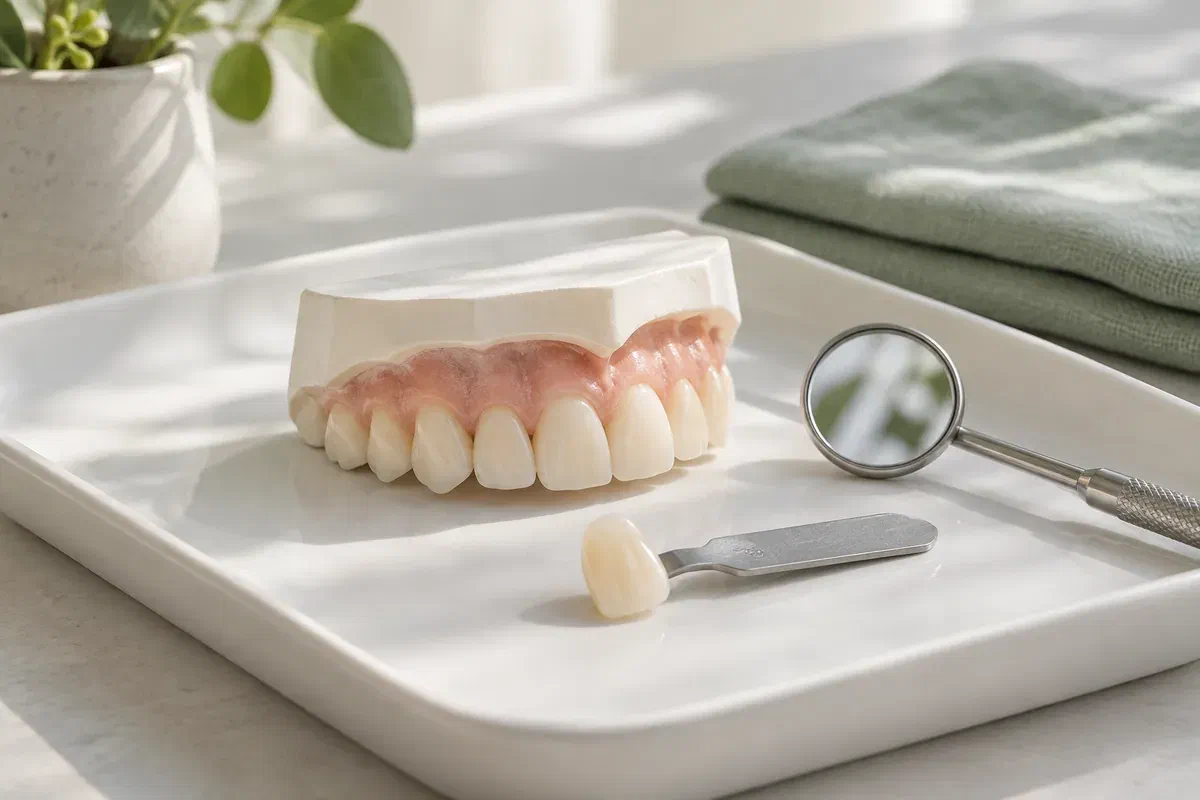
Illustrative front-teeth teaching model beside a shade sample and dental mirror
Naming the feature

What exactly would you change?

Be as specific as you can about the detail that catches your eye and how much it bothers you. An examination helps sort a matter of taste from a dental or gum issue that needs its own treatment first.

A shade that stands apart

Say whether the tooth has always looked this way or darkened over time. A tooth that has changed colour should be checked before anything covers it. Cleaning, whitening, a new restoration or further tests may be more relevant than resin, depending on the cause.

An edge or outline that looks off

Show us the part of the shape that bothers you, whether it is length, width or the way one tooth lines up beside the next. Not every tooth near it will need work. Reference photos are welcome as a way to explain taste, though they cannot decide what suits your mouth.

Signs of grinding or older repairs

Mention clenching, chips that keep coming back and any fillings or bonding already in place. These change how a veneer would be planned and looked after. Heavy forces or a failing older repair may need attention before a cosmetic surface is added.

Decay, gum problems and any symptoms come first. A veneer sits on the surface of a tooth and will not fix a problem hidden beneath it.

What resin can and cannot do

A realistic goal, agreed before anything is placed

Composite can be colour-matched and sculpted to change the look of a suitable tooth. Together we would talk about shade, surface texture and proportion. A natural result rarely means identical teeth or the whitest possible colour; small differences between teeth are part of what makes a smile look like your own.

Resin also needs looking after. Over the years it may dull, pick up stain, wear down or chip, and the answer could be a polish, a repair or eventually a replacement. Knowing that before treatment lets you decide whether this kind of maintenance fits the way you live.

Patient information: American Dental Association — composite and porcelain veneers

Your preferences shape the design

Tell us what you would keep as well as what you would change. Plenty of people like their smile overall and want one detail softened. Ask how the planned surface relates to the teeth beside it rather than accepting a one-size design.

Preparation and upkeep, compared honestly

Ask how much natural tooth would be changed for each reasonable option. Resin veneers are not automatically reversible or preparation-free. A clear picture of the first appointment and the likely upkeep makes the comparison fairer.

Treatment limited to the teeth involved

Find out whether one tooth, a few or a wider plan is being suggested, and the reason. The count should follow your goals and what the exam shows. A concern about a single tooth does not have to become a plan for the whole smile, though matching limits should be explained.

How the appointments unfold

Planning comes before any resin goes on.

How many visits you need depends on the teeth and the work involved. Ask what happens at each step, how your comfort will be looked after, and when you will see the planned appearance.

  1. Exam and expectations

    We go over your concern, dental history, earlier restorations and any symptoms. The clinician checks the teeth, gums and bite and notes whether more information is needed. Together you decide whether cosmetic work suits you now or whether something else should be treated first.

  2. Settle on scope and shade

    Weigh a veneer against sensible alternatives and agree which teeth are included. Ask how the shade will sit beside the neighbouring teeth and how future whitening would affect it. Confirm the preparation, fees, upkeep and the limits of what can change.

  3. Bond and sculpt the composite

    When a direct composite veneer is agreed, the tooth surface is prepared and resin is bonded in one or more shaped layers. A curing light sets each layer. The clinician builds the outline and surface with the tooth and the available space in mind.

  4. Polish, check the bite, plan follow-up

    The resin is smoothed and polished, then the bite and contacts with nearby teeth are checked. Speak up about anything that feels high or rough. Before you leave, go over cleaning, any follow-up visit and the changes that are worth a call.

Living with a resin surface

Care for the veneer and the tooth underneath.

Both the composite and the natural tooth beneath it need ongoing attention. Follow the instructions you are given, and check with us before trying an abrasive product or reshaping anything yourself.

Keep up careful daily cleaning

Use a fluoride toothpaste and clean between your teeth in the way you have been shown. If a new contour feels unfamiliar, ask for a quick demonstration. Bleeding that persists, food that keeps getting stuck or floss that snags is a reason to come in, not to skip that spot.

Avoid putting the resin under strain

Skip biting pens, ice or packaging, and do not use the treated teeth as tools. Let us know about sports or grinding so protection can be discussed. An existing guard or retainer may no longer fit once the tooth surface has changed.

Book a check when the surface changes

Tell us about roughness, a chip, staining that bothers you or a change in the way your teeth come together. The clinician can decide whether polishing, a repair or something else is needed. Never file, glue or scrub the veneer at home.

Patient information: Cleveland Clinic — dental veneers and their care

Other ways to reach the same goal

Sometimes a veneer is not the right fit.

For each option, ask what it would change, how much preparation is involved and what it would leave untouched. The right answer depends on the state of your teeth and the detail you care about.

When resin suits the change you want

Composite veneer or a smaller bonded repair

A veneer reshapes a wider front surface, while a small repair targets one spot. Talk through which is justified for your tooth. Resin can work well, but its look and condition will need checking and occasional maintenance.

When a different material or more coverage is on the table

Porcelain or a fuller restoration

Compare how much preparation each needs, how it looks, whether it can be repaired and when it may need replacing. More coverage should have a clear reason tied to the tooth itself, so ask why it is being suggested rather than assuming bigger is better.

When colour, position or your own preference points elsewhere

Whitening, orthodontics or leaving it alone

Another approach may solve the concern without any veneer. Whitening lightens suitable natural enamel, and orthodontic care moves teeth into a new position. Keeping a healthy tooth as it is remains a perfectly reasonable choice once you know the options.

Common questions in Milton

Before you commit to a new surface

Colour is only one part of the decision. Ask about preparation, how many teeth are involved, the upkeep, and what happens if your taste or your oral health changes later.

(905) 876-4488
Is one darker front tooth a good reason to consider a composite veneer?
It can be, but the reason for the darkening should be found first. A tooth that has changed colour may need an examination or X-ray before anything covers it. Once the cause is understood, a veneer can be compared with whitening or other choices.
How much natural tooth is usually removed for a resin veneer?
It varies with the tooth and the change planned. Sometimes very little is altered, and sometimes more shaping is needed. Ask for a clear explanation of what would be removed, if anything, so you are not assuming the procedure is fully reversible.
Will coffee and tea stain a composite veneer over time?
Resin can pick up surface stain, especially from strongly coloured drinks. Rinsing with water, regular cleaning and hygiene visits can help. If staining starts to bother you, the clinician can check whether polishing the surface is enough.
Can I see roughly how the veneer will look before it is placed?
Ask how the proposed shape and shade can be previewed or explained at your visit. Seeing the plan in some form can help you say whether the change feels too subtle or too noticeable before the material is bonded.
What should I do if my veneer feels high when I bite down?
Let us know soon rather than waiting for it to settle. A small adjustment to the surface may be needed. A bite that feels uneven can put extra stress on the veneer and the tooth, so it is worth checking.
Can a chipped composite veneer be fixed without starting over?
Often a small chip can be repaired by adding and polishing resin, but it depends on the size of the damage and the condition of the tooth beneath. The clinician will check the edges and the bond before suggesting a repair or a replacement.
Your Milton consultation

Point to the detail. We will explain what is possible.

Book a visit at our Bronte Street practice to talk about composite veneers and the alternatives worth weighing. We will look at the teeth involved, the look you are hoping for, and the preparation and upkeep each choice would bring.

Whether a veneer suits you depends on the tooth structure, gum health and bite. The planned look and its future upkeep should be agreed before treatment begins.

Visit Milton Dental Clinic
Unit 1, 342 Bronte St. S, Milton, ON L9T 5B7
Get directions Clinic hours
Monday–Thursday
11am–7pm
Friday–Sunday
By appointment only

Areas we serve

  • Milton
  • Oakville
  • Mississauga
  • Georgetown
  • Halton Hills
  • Acton
  • Campbellville
  • Brampton
  • Burlington
  • Puslinch
  • Rockwood
  • Erin
  • Caledon
  • Etobicoke
  • Old Milton
  • Bronte Meadows
  • Timberlea
  • Dorset Park
  • Dempsey
  • Clarke
  • Beaty
  • Coates
  • Harrison
  • Scott
  • Willmott
  • Ford
  • Bowes
  • Cobden
  • Walker
  • Mountain View
  • Milton Heights
  • Hawthorne Village
  • Valley View
  • Fallingbrook
  • Nassagaweya
  • Trafalgar
  • Esquesing
  • Nelson
  • Brookville
  • Moffat
  • Glen Williams
  • Norval
  • Limehouse
  • Stewarttown
  • Ashgrove
  • Hornby
  • Silver Creek
  • Speyside
  • Scotch Block
  • North Oakville
  • River Oaks
  • Glen Abbey
  • West Oak Trails
  • Palermo
  • Bronte Creek
  • College Park
  • Joshua Creek
  • Uptown Core
  • Preserve
  • Iroquois Ridge
  • Lisgar
  • Meadowvale
  • Meadowvale Village
  • Churchill Meadows
  • Erin Mills
  • Central Erin Mills
  • Streetsville
  • East Credit
  • Creditview
  • Heartland
  • Sheridan
  • Mount Pleasant
  • Credit Valley
  • Huttonville
  • Churchville
  • Springbrook
  • Northwest Brampton
  • Bram West
  • Fletcher's Meadow
  • Fletcher's Creek South
  • Alton Village
  • Orchard
  • Millcroft
  • Headon Forest
  • Tansley
  • Brant Hills
  • Tyandaga
  • Kilbride
  • Lowville
  • Aberfoyle
  • Morriston
  • Arkell
  • Hillsburgh
  • Freelton
  • Carlisle
  • Waterdown
  • Flamborough
  • Mountsberg

How can we help?

Milton Dental Clinic

Have a question about your smile? Choose the option that works best for you.

For urgent dental concerns, please call.
Messages are reviewed during clinic hours.