

Illustrative patient discussing tooth shade and shape with a dental clinician
Cosmetic Dentistry

Composite Veneers in Puslinch

Morning coffee, an afternoon tea, a habit of chewing on a pen: daily routines decide how a resin veneer ages. For households in Puslinch, we look honestly at those habits alongside the tooth itself, then discuss shade, shape, preparation and the care composite needs.

Your routine, your resin

Everyday habits matter more than you might think.

Two people can receive very similar veneers and see them age quite differently. Much of that comes down to daily life. A composite veneer is a tooth-coloured resin layer, bonded over the front of a suitable tooth and sculpted to change its colour, outline or texture, and that resin responds to what it meets each day.

Strongly coloured drinks, tobacco, nail-biting and using teeth as tools can all affect a composite surface. That does not rule a veneer out, but it does belong in the decision, along with whether your concern needs full coverage and how much enamel would be altered. Gums and bite matter as well.

From Puslinch, you can talk openly with us about how you live, without judgment. Describe the change you would like, and we will explain what resin might achieve, which habits are worth adjusting, how a different option compares, and what keeping it looking good would take.

Talk through habits and veneers
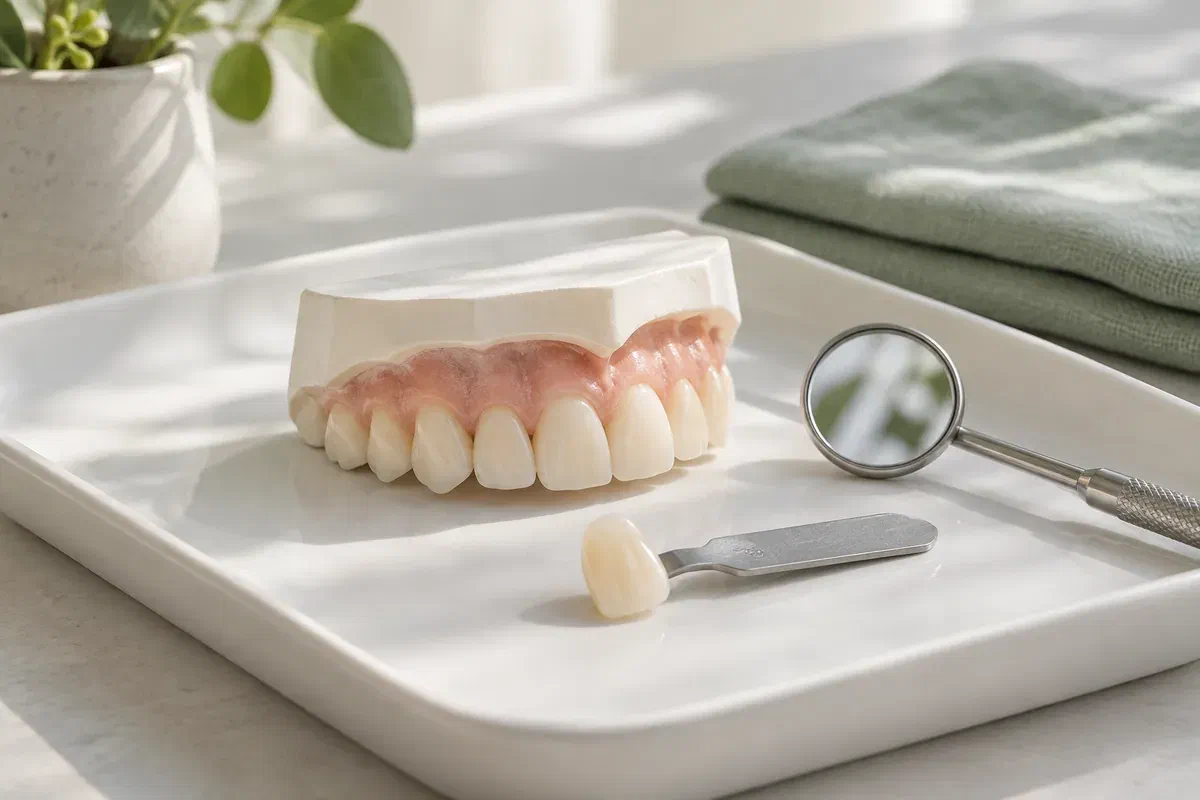
Illustrative front-teeth teaching model beside a shade sample and dental mirror
What you want to change

Begin with the feature, then the habits around it.

Explain the detail that bothers you and what might have caused it. An assessment helps separate a preference about looks from staining habits, wear or a dental issue that needs different care.

Colour that has drifted over the years

Note whether the shade change is gradual, as with surface staining, or affects a single tooth more than the rest. A tooth that has darkened from the inside should be checked before resin covers it. Professional cleaning or whitening may also help.

A shape you would like refined

Be specific about length, width or a rough edge. Habits such as biting thread or fingernails can wear particular spots. Pictures can explain the look you prefer, though the examination decides what suits your teeth.

Grinding, chewing habits or past repairs

Mention clenching, pen chewing, ice crunching and any existing fillings or bonding. These influence both planning and how long resin may look its best. Some habits or an older repair may need attention first.

Decay, gum health and symptoms come first in any plan. A resin surface on a tooth will not address a problem underneath it.

What resin can do

A fresh surface, with realistic expectations

Where the tooth is a good candidate, resin can be colour-matched and shaped to change its appearance. Colour, surface texture and proportion are discussed together. A natural look tends to include slight variation, so the aim is a tooth that suits your smile rather than one that stands out as brighter or more uniform.

Resin is more prone than enamel to picking up surface stain and losing its gloss, and it can also wear or chip. Polishing, repair or eventual replacement might follow. Thinking about your routine now helps you judge how much upkeep you are realistically comfortable with.

Patient information: American Dental Association — composite and porcelain veneers

A plan built on what you value

Explain what you like about your teeth as well as what you would change. Often only one feature is the issue. Ask how the planned surface will relate to its neighbours over time, not just on the first day.

Straight answers on preparation and care

Ask how much of the tooth each reasonable option would change. Resin is not automatically reversible or free of preparation. Knowing the procedure and the maintenance helps you compare fairly.

Treatment kept to what is needed

Ask how many teeth are being suggested and the reason for each. Each extra veneer is another surface that can stain. The plan should follow your aims and the exam, with matching limits explained.

How it is done

Talk, decide, place, review

The appointment plan depends on your teeth and the work involved. Ask what each stage covers, how comfort is managed, and when you can review the proposed look before it is finished.

  1. An honest first conversation

    We cover your concern, dental history, daily habits and any symptoms. The clinician examines teeth, gums and bite, and may suggest records. By the end, you should know if this is a good time for elective work or if gum care, a filling or another step needs to happen first.

  2. Agree the plan and the shade

    Compare a veneer with sensible alternatives and confirm which teeth are included. Ask how the shade will relate to untreated teeth that may stain or be whitened differently. Confirm preparation, fees, upkeep and limits.

  3. Shape the composite in place

    With direct composite agreed, the tooth surface is readied and resin is added in sculpted layers, each set by a curing light. Outline and texture are developed to suit the tooth and the space.

  4. Polish to a smooth finish

    A smooth, well-polished surface tends to resist staining better, so finishing matters. The bite and contacts are checked afterward. Mention anything rough or high, and review cleaning, follow-up and changes worth a call.

Small adjustments, real difference

Habits that help resin last

Your veneer and the tooth under it both need attention. Follow the advice you are given, and check before using whitening toothpaste, abrasive powders or anything meant to alter the surface.

Rinse, brush and clean between teeth

A quick rinse with water after coffee, tea or red wine can reduce staining. Brush twice daily with fluoride toothpaste and clean between teeth as shown. Persistent bleeding or floss that snags is a reason to come in.

Retire teeth from tool duty

Avoid biting nails, pens, thread or packaging, and skip crunching ice. Mention grinding or sport so protection can be discussed. An old guard may not fit after the veneer is placed.

Bring changes to our attention

Dullness, stain, a chip or a change in your bite can often be assessed quickly. Professional polishing may help; abrasive home remedies can scratch resin. Never file, glue or scrub the veneer.

Patient information: Cleveland Clinic — dental veneers and their care

Alternatives to consider

Sometimes the simplest fix is cleaning.

For each option, find out what it changes, how much preparation it takes and what it will not fix. Your teeth and the feature you care about should guide the decision.

When composite suits the planned change

A veneer or a small resin repair

A veneer covers the whole front surface, while a small repair touches one area and leaves less resin to stain. Ask which is warranted. Both need periodic checking and some upkeep.

When a different material or more coverage is raised

Porcelain or another restoration

Different materials respond to staining and wear in their own ways. Compare preparation, appearance, repair and replacement, and ask why more coverage is suggested before assuming it is better.

When colour, position or preference points elsewhere

Cleaning, whitening, orthodontics or no change

Surface stain may lift with a professional cleaning, whitening can lighten suitable enamel and orthodontics changes position. Leaving a healthy tooth as it is remains a fine decision.

Puslinch habit questions

How daily life affects a resin veneer

There is more to decide than colour. Raise preparation, the number of teeth, everyday habits and upkeep, and what might change if your health or preferences shift.

(905) 876-4488
Does drinking through a straw help protect a resin veneer from stain?
It may reduce contact between dark drinks and front teeth, though it will not stop staining entirely. Rinsing with water and regular cleaning visits also help. Ask what fits your routine, since small, repeatable changes tend to work better than strict rules you will not keep.
Does smoking affect composite veneers?
Tobacco can stain resin and also affects gum health, which matters for any restoration. If you smoke, mention it so the clinician can explain how it may influence your plan and upkeep.
Could nail-biting chip my veneer?
Yes, biting hard objects like nails can stress resin edges and lead to chips. If it is a long-standing habit, ask whether a smaller change or a different approach might suit you better.
Is a professional cleaning worth trying before a veneer?
Often. Some surface staining lifts with a professional clean, which may change how you feel about the tooth. The clinician can tell you whether the colour sits on the surface or comes from deeper in the tooth, which points to quite different next steps.
Can I use charcoal or whitening powders on a composite veneer?
It is best to avoid abrasive powders, which can scratch resin and dull its finish, making it more likely to pick up stain afterward. Ask which toothpaste suits your veneer instead, and leave polishing to your hygiene visits.
How can a Puslinch household combine veneer visits with regular check-ups?
Ask at the first visit whether veneer reviews can be scheduled with routine hygiene appointments, and how many visits the plan is likely to need. That can help cut down on separate trips.
Visiting from Puslinch

Tell us how you live. We will plan around it.

Arrange a visit at our Bronte Street practice to discuss composite veneers and the alternatives. We can examine the tooth, hear about the change you want and your daily routine, and explain the preparation and upkeep involved.

Suitability depends on the tooth’s structure, gum health and bite, and your habits influence upkeep. Agree on the planned look and its care before treatment.

Visit Milton Dental Clinic
Unit 1, 342 Bronte St. S, Milton, ON L9T 5B7
Get directions Clinic hours
Monday–Thursday
11am–7pm
Friday–Sunday
By appointment only

Areas we serve

  • Milton
  • Oakville
  • Mississauga
  • Georgetown
  • Halton Hills
  • Acton
  • Campbellville
  • Brampton
  • Burlington
  • Puslinch
  • Rockwood
  • Erin
  • Caledon
  • Etobicoke
  • Old Milton
  • Bronte Meadows
  • Timberlea
  • Dorset Park
  • Dempsey
  • Clarke
  • Beaty
  • Coates
  • Harrison
  • Scott
  • Willmott
  • Ford
  • Bowes
  • Cobden
  • Walker
  • Mountain View
  • Milton Heights
  • Hawthorne Village
  • Valley View
  • Fallingbrook
  • Nassagaweya
  • Trafalgar
  • Esquesing
  • Nelson
  • Brookville
  • Moffat
  • Glen Williams
  • Norval
  • Limehouse
  • Stewarttown
  • Ashgrove
  • Hornby
  • Silver Creek
  • Speyside
  • Scotch Block
  • North Oakville
  • River Oaks
  • Glen Abbey
  • West Oak Trails
  • Palermo
  • Bronte Creek
  • College Park
  • Joshua Creek
  • Uptown Core
  • Preserve
  • Iroquois Ridge
  • Lisgar
  • Meadowvale
  • Meadowvale Village
  • Churchill Meadows
  • Erin Mills
  • Central Erin Mills
  • Streetsville
  • East Credit
  • Creditview
  • Heartland
  • Sheridan
  • Mount Pleasant
  • Credit Valley
  • Huttonville
  • Churchville
  • Springbrook
  • Northwest Brampton
  • Bram West
  • Fletcher's Meadow
  • Fletcher's Creek South
  • Alton Village
  • Orchard
  • Millcroft
  • Headon Forest
  • Tansley
  • Brant Hills
  • Tyandaga
  • Kilbride
  • Lowville
  • Aberfoyle
  • Morriston
  • Arkell
  • Hillsburgh
  • Freelton
  • Carlisle
  • Waterdown
  • Flamborough
  • Mountsberg

How can we help?

Milton Dental Clinic

Have a question about your smile? Choose the option that works best for you.

For urgent dental concerns, please call.
Messages are reviewed during clinic hours.