

Illustrative patient discussing tooth shade and shape with a dental clinician
Cosmetic Dentistry

Composite Veneers in Rockwood

When a single front tooth turns grey or yellow while the rest stay the same, the first step is finding out why. For people in Rockwood, we examine that tooth before discussing a composite veneer, then talk through masking the colour, preparation and long-term resin care.

The odd one out

Why is just one tooth darker?

It is easy to notice and hard to ignore: one tooth that looks greyer, more yellow or duller than its neighbours. A composite veneer can cover the visible front of a suitable tooth with shaded resin, sculpted to change its colour and surface. Yet covering a colour is different from understanding it.

That kind of change can follow an old knock, a past root canal, a large filling or changes inside the tooth. Some of those need treatment or monitoring in their own right, and some respond to approaches other than a veneer. The clinician will also look at your enamel, gum line and bite before planning anything.

If you are coming from Rockwood, tell us what you remember about that tooth: any injury, treatment or gradual change. With the cause clearer, we can explain whether resin could mask the shade convincingly, what alternatives exist, and what looking after a veneer would involve over the years.

Get a dark tooth assessed
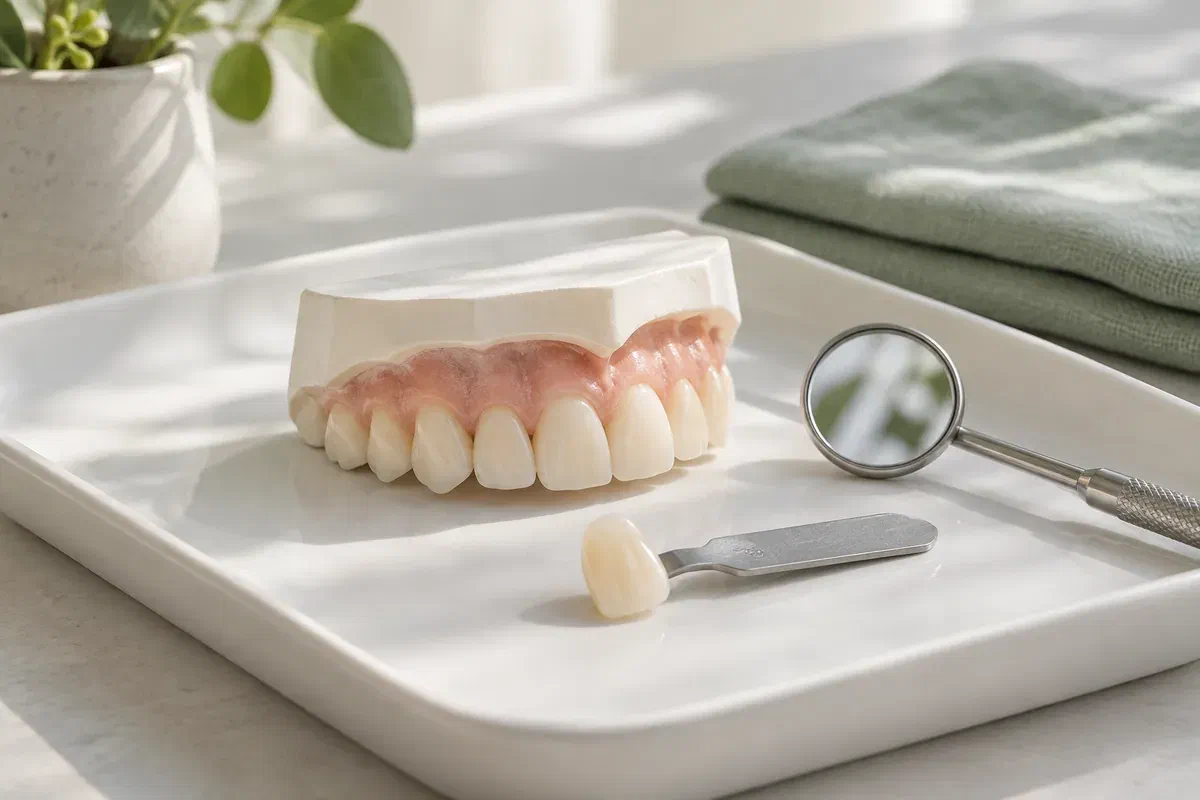
Illustrative front-teeth teaching model beside a shade sample and dental mirror
Clues worth sharing

The history of the tooth guides the plan.

Tell us when the colour changed and whether anything happened around that time. An examination, and sometimes an X-ray, separates a cosmetic issue from a tooth that needs other care.

A tooth that turned grey or brown

Darkening that develops over months or years, especially after an injury, deserves investigation. Mention any tenderness or swelling. Depending on the cause, testing, root canal care, whitening options or a new restoration might come before a veneer.

A surface that looks flat or uneven

Sometimes the shape bothers you as much as the colour. Show us where. A darker tooth can look smaller or flatter beside bright neighbours, and the exam helps decide what is realistic to change.

Old fillings, past trauma or grinding

Large restorations, earlier accidents and clenching all affect how a tooth should be treated. Let the clinician know. A weakened or heavily filled tooth may suit a different approach than a veneer.

Colour change calls for a health check first. Resin over the front can hide the shade, but it cannot treat a problem inside the tooth or at its root.

When resin can help

Masking colour so the tooth blends in

Once the tooth has been assessed and is suitable, composite can be layered to reduce the appearance of a darker shade and match it to surrounding teeth. Opaque and translucent resins may be combined. The aim is a tooth that no longer draws the eye, not one brighter than all the others.

Masking a dark tooth can be more demanding than changing a light one, and resin will still need upkeep. It can stain, dull, wear or chip, and polishing, repair or replacement may follow. Discuss how the result might change over time before you decide.

Patient information: American Dental Association — composite and porcelain veneers

A design that respects the whole smile

Tell us what you would like to keep about your other teeth. Often the goal is simply for the darker tooth to blend. Ask how the planned shade will compare with neighbours in different lighting.

Clarity about preparation and longevity

Ask how much of the tooth would be altered and whether more resin thickness is needed to mask the colour. Composite is not automatically reversible. Knowing what is involved helps you compare with other options.

Treating one tooth when one is the issue

A single dark tooth usually means a single-tooth plan. Ask why any wider treatment would be suggested, and how shade matching for just one tooth will be handled.

Investigate, then treat

Health checks come before shade guides.

The number of visits depends on what the exam finds and on any treatment needed first. Ask what each stage involves, how you will be kept comfortable, and at what point you will see the proposed shade.

  1. Find the cause of the colour

    The clinician asks about the tooth’s history and any symptoms, examines it alongside your gums and bite, and may take an X-ray or perform tests. You will learn whether the tooth needs care before cosmetic treatment is considered.

  2. Choose a path for the shade

    Compare a veneer with alternatives such as whitening options suited to that tooth, a crown or no change. Agree on the approach, shade and how it will sit beside untreated teeth. Confirm preparation, fees, upkeep and limits.

  3. Layer resin to mask and shape

    When a direct composite veneer is the plan, the surface is readied and resins of different opacity may be built up in layers, each set with a curing light. The outline is refined to suit the tooth and space.

  4. Polish and compare in natural light

    After polishing, check the shade with a hand mirror in daylight if possible. The bite and contacts are tested. Mention anything rough or high, and review cleaning, follow-up and signs that should prompt a call.

Keeping an eye on it

Care for the veneer, and watch the tooth beneath.

Even with its new surface, a once-dark tooth still needs monitoring under its new surface. Follow your instructions, and ask before using abrasive products or trying to change the resin yourself.

Daily cleaning, especially at the margin

Twice-daily brushing with a fluoride paste and your usual floss or interdental brush keep the area healthy. The edge where resin meets tooth is worth extra care. Bleeding, trapped food or catching floss should be checked.

Spare the tooth from heavy force

A tooth with a history may be more vulnerable. Avoid biting hard objects, and never use your front teeth as tools. Mention grinding or sport so protection can be discussed.

Keep regular reviews

Report any return of darker colour at the edges, tenderness, a chip or a change in your bite. Routine visits let the clinician monitor the tooth as well as the veneer. Do not file, glue or scrub the resin.

Patient information: Cleveland Clinic — dental veneers and their care

Ways to deal with a dark tooth

Covering is only one approach.

For each option, find out what it alters, what preparation it involves and what it would not resolve. The choice should depend on the cause of the colour and on what matters to you.

If composite can deal with the colour or shape

A composite veneer or a smaller resin change

A veneer covers the whole front surface, which is usually needed to mask a darker tooth. A smaller repair may help if only part of the tooth is affected. Both need monitoring and some upkeep.

When more coverage or another material is suggested

A crown, porcelain or other restoration

A heavily filled or weakened dark tooth sometimes leads to this option. Compare preparation, appearance, repair and replacement, and ask for the reason a larger restoration is recommended.

When the cause, position or preference points elsewhere

Whitening, monitoring or leaving it

Some darker teeth may suit a whitening approach chosen for that tooth, and some simply need monitoring. You may also decide to leave a healthy tooth as it is once you understand the options.

Rockwood dark-tooth questions

Colour, cause and choices

Shade is only part of the decision. Raise the cause, preparation and upkeep, and ask how the plan would adapt if the tooth itself changed again later.

(905) 876-4488
Why did my front tooth go grey years after I hit it?
An injury can affect the inside of a tooth, and colour changes may appear long afterward. The tooth should be examined, often with an X-ray, before any cosmetic treatment. Tell us about the injury if you remember it.
Can a composite veneer fully hide a very dark tooth?
Resin can often reduce the appearance of darker colour, but very dark teeth can be harder to mask. The clinician will explain what is realistic and whether another option might give a better result.
Should a root canal-treated tooth be checked before a veneer?
Yes. A tooth that has had root canal treatment should be assessed for its health and strength. That helps decide whether a veneer, a crown or another approach suits it.
Is there a whitening option for one dark tooth?
Some single dark teeth may suit a whitening approach chosen for that tooth, depending on the cause. Ask whether it is relevant before deciding on a veneer.
Will the dark colour show through at the edges later?
It may, especially if the gum line changes or resin wears. Regular reviews help spot this. Mention any change you notice so the clinician can assess it.
Can I just have the cause checked without discussing veneers yet?
Yes. An assessment of the tooth itself is a good first step on its own. You can explore cosmetic options later, once you know what is going on.
From Rockwood

Start with the cause.

Arrange a visit at our Bronte Street practice to have the darker tooth assessed and to discuss whether a composite veneer or another option suits it. We will explain the findings, the appearance you could expect, and the preparation and upkeep involved.

Suitability depends on the tooth’s health and structure, gum condition and bite. Agree the planned shade and its long-term care before treatment begins.

Visit Milton Dental Clinic
Unit 1, 342 Bronte St. S, Milton, ON L9T 5B7
Get directions Clinic hours
Monday–Thursday
11am–7pm
Friday–Sunday
By appointment only

Areas we serve

  • Milton
  • Oakville
  • Mississauga
  • Georgetown
  • Halton Hills
  • Acton
  • Campbellville
  • Brampton
  • Burlington
  • Puslinch
  • Rockwood
  • Erin
  • Caledon
  • Etobicoke
  • Old Milton
  • Bronte Meadows
  • Timberlea
  • Dorset Park
  • Dempsey
  • Clarke
  • Beaty
  • Coates
  • Harrison
  • Scott
  • Willmott
  • Ford
  • Bowes
  • Cobden
  • Walker
  • Mountain View
  • Milton Heights
  • Hawthorne Village
  • Valley View
  • Fallingbrook
  • Nassagaweya
  • Trafalgar
  • Esquesing
  • Nelson
  • Brookville
  • Moffat
  • Glen Williams
  • Norval
  • Limehouse
  • Stewarttown
  • Ashgrove
  • Hornby
  • Silver Creek
  • Speyside
  • Scotch Block
  • North Oakville
  • River Oaks
  • Glen Abbey
  • West Oak Trails
  • Palermo
  • Bronte Creek
  • College Park
  • Joshua Creek
  • Uptown Core
  • Preserve
  • Iroquois Ridge
  • Lisgar
  • Meadowvale
  • Meadowvale Village
  • Churchill Meadows
  • Erin Mills
  • Central Erin Mills
  • Streetsville
  • East Credit
  • Creditview
  • Heartland
  • Sheridan
  • Mount Pleasant
  • Credit Valley
  • Huttonville
  • Churchville
  • Springbrook
  • Northwest Brampton
  • Bram West
  • Fletcher's Meadow
  • Fletcher's Creek South
  • Alton Village
  • Orchard
  • Millcroft
  • Headon Forest
  • Tansley
  • Brant Hills
  • Tyandaga
  • Kilbride
  • Lowville
  • Aberfoyle
  • Morriston
  • Arkell
  • Hillsburgh
  • Freelton
  • Carlisle
  • Waterdown
  • Flamborough
  • Mountsberg

How can we help?

Milton Dental Clinic

Have a question about your smile? Choose the option that works best for you.

For urgent dental concerns, please call.
Messages are reviewed during clinic hours.