

Illustrative patient discussing the appearance of uneven teeth during a dental consultation
Cosmetic Dentistry

Cosmetic Correction of Uneven Teeth in Burlington

One bite into something hard, or a knock to the mouth, can leave a front tooth shorter than its partner. Visiting from Burlington, you can have the tooth checked for health first, then talk through cosmetic ways to even out the edge without giving up more enamel than necessary.

After a chip or a knock

A corner missing, a smile off balance

An olive pit, a fork, a fall, or an elbow during a pickup game: small accidents are a common reason one front tooth ends up looking shorter or jagged next to the other. The visible change is cosmetic, yet the first priority is making sure the tooth itself is healthy.

Once that is confirmed, the question becomes how to restore balance. A chipped edge is often rebuilt with tooth-coloured bonding. A tiny rough corner might be smoothed with careful contouring. If the impact moved the tooth, or the chip revealed that teeth meet unevenly, a different plan may make more sense.

Coming from Burlington, it helps to bring any piece of tooth you saved and to note exactly when the injury happened. Tell us whether the tooth feels sensitive or looks darker. If you have pain or swelling, call before travelling so we can advise whether you should be seen urgently somewhere closer.

Ask about evening out a chipped tooth
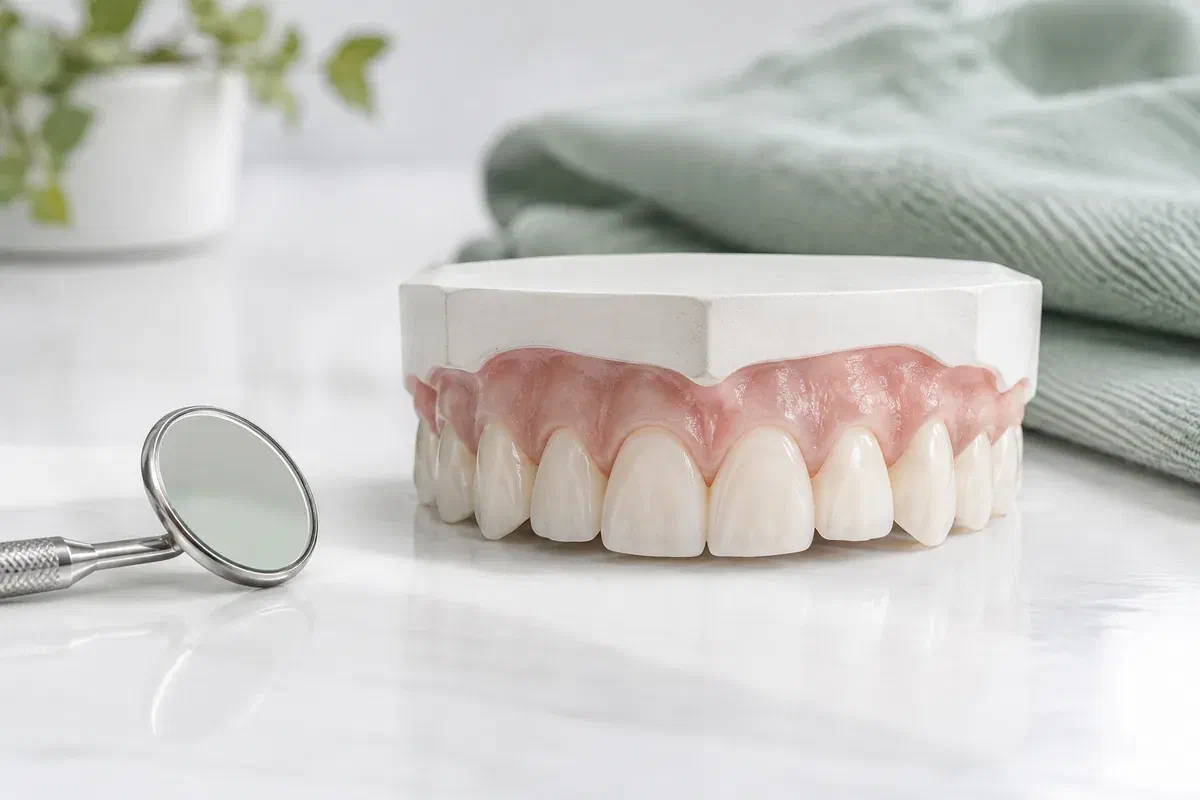
Illustrative teaching model showing modest differences in front-tooth edge lengths
What a chip can reveal

Is it just the edge, or something more?

Describe how the damage happened and what you have noticed since. Mention appearance, sensitivity, changes in how your teeth meet, or anything that seems different when you bite into food.

A broken or uneven biting edge

A clean chip in enamel is a different situation from a crack reaching deeper. Report sensitivity to cold, sharpness against your tongue, and whether the break is growing. Ask how a rebuilt edge would stand up to your bite.

A tooth that shifted with the impact

A blow can push a tooth slightly forward, back, or sideways, making it look uneven even without a chip. Bonding over a displaced tooth does not reposition it. Ask whether its position or the bite needs assessment first.

Gums or old repairs around the injured tooth

Gum tissue can change after trauma, and an earlier repair may have loosened or discoloured. The examination should consider these areas. Ask whether the cosmetic concern lies in the tooth, the gum, or previous dental work.

Pain, a darkening tooth, swelling, or a tooth that feels loose needs prompt attention. Never file a broken edge yourself, since enamel does not regrow and the tooth may be weakened further.

Repairing with the full picture

Why health comes before the cosmetic step

An injury can hide more than you see in the mirror. Checking the tooth and the bite first means the repair is chosen for its fit with your situation, not just because it can be done quickly in one appointment.

It also lets you decide how close a match you want. Your two front teeth may never have been identical. Explain whether restoring the old shape is your goal, and ask whether a larger repair would take away more natural structure than the result is worth.

Patient information: Cleveland Clinic — tooth contouring and enamel preservation · American Association of Orthodontists — tooth alignment and bite

Knowing what the repair actually does

Ask whether the plan adds bonding, removes a little enamel, or involves moving or protecting the tooth. Each choice carries a different commitment, so it is worth having them described separately and plainly.

Keeping your natural look

Perhaps you only want the broken corner replaced so the tooth looks like it did. Say so. Planning can focus on restoring that corner rather than altering teeth that were not injured.

Thinking ahead to future repairs

Bonding on a biting edge may chip or wear over time and need attention again. Ask how long the repair is expected to serve, what can protect it, and when the tooth should be reviewed after the injury.

Step by step

Check, explain, compare, follow up

Evening out a chipped or uneven tooth is not a single procedure. The steps depend on what the assessment finds and on the repair you prefer.

  1. Assess the injury and the tooth

    We ask how and when the damage occurred and what you have felt since. The clinician examines the tooth, gums, nearby restorations, and your bite. Photographs or other records may be used to document the injury and track it.

  2. Explain why the edge looks uneven

    You learn whether the unevenness comes from the chip, movement of the tooth, wear, gum change, or a mix. If further testing is needed to judge the tooth’s health, the clinician will explain it before cosmetic decisions are made.

  3. Choose between repair options or waiting

    Discuss bonding, small contouring, orthodontic or other advice, or observing the tooth for a period. Ask how much of the tooth would be prepared and how the edge would look. If staging is recommended, ask why.

  4. Confirm the bite and plan the review

    After treatment, contacts and the bite are checked to make sure the new edge meets correctly. Report anything that feels high or rough. Confirm when the injured tooth should be reviewed again.

Protecting the repaired edge

Look after the tooth that was injured.

Aftercare depends on the treatment you received. Ask for instructions that apply to your repair rather than general advice for other procedures.

Clean carefully around the new edge

Brush and clean between teeth as you were shown. Tell us if floss catches on the repair or the edge feels rough. The restored tooth should be just as easy to keep clean as the others.

Avoid repeating the same accident

If sport or a habit caused the chip, ask about a mouthguard or a change in routine. Breaks that keep happening should be examined rather than patched again, because a cosmetic repair cannot control every cause of damage.

Wear appliances and keep follow-ups

If you have a retainer or guard, confirm the correct routine and bring it to visits involving more dental work. Follow-ups after an injury help us check both the look of the tooth and its health.

Patient information: Cleveland Clinic — tooth erosion and changes in tooth surfaces

Repair options

Rebuild, refine, realign, or wait

Choose the approach that matches the cause of the uneven look. Compare how much healthy tooth each option keeps, and remember that a small, stable difference may not need treatment.

For a chipped or rough edge

Tooth-coloured bonding or a slight contour

Bonding can replace a missing corner, while limited contouring can smooth a very small irregularity if enough healthy enamel remains. Ask which suits the break. Even minor enamel removal cannot be undone.

If the tooth moved or the bite is involved

Orthodontic advice

When an injury or the bite has changed a tooth’s position, moving it may be more appropriate than reshaping it. Ask about appliance choices, commitment, and retention, and consider the bite along with appearance.

If the concern lies elsewhere

Other dental care, or monitoring

An injured tooth, older restoration, or gum change may need its own care first. A stable, healthy difference can also be watched. Ask what signs would mean the tooth should be seen sooner.

Patient information: American Association of Orthodontists — adult orthodontic options

Burlington questions about chipped edges

Questions after a broken tooth edge

Tell us what happened and bring any fragment you kept. Your account of the injury guides the discussion, and the exam determines what is safe and suitable.

(905) 876-4488
Should I keep the piece of tooth that broke off?
Yes, keep it clean and moist and bring it along. In some cases a fragment can be considered for reattachment, though often a new bonded edge is used instead. The clinician can explain which is suitable.
Can a chipped front tooth be matched to the one beside it?
Bonding material is chosen and shaped to blend with the neighbouring tooth, though natural teeth have subtle variation. Ask how the shade and outline will be matched and whether whitening should happen beforehand.
My chipped tooth has started to look grey. What does that mean?
Darkening after an injury can be a sign that the tooth’s inner tissue is affected and should be assessed promptly. Cosmetic repair of the edge would usually wait until the tooth’s health is understood.
Do I need a mouthguard after my tooth is repaired?
If the chip happened during sport, a mouthguard can help protect the repair and the other teeth. If grinding contributed, a different appliance may be suggested. Ask which type suits your activity or habit.
Is the chip small enough to leave alone?
Some small chips are stable and do not need repair, while others are sharp or sensitive. The assessment can show whether the edge is sound, what to watch for, and whether a minor smoothing or nothing at all is sensible.
Who should I call first if the tooth breaks again on the way to Milton?
If there is pain, bleeding, or a loose tooth, call us first for advice. When an urgent visit is needed and the trip from Burlington would delay care, being seen sooner somewhere nearer may be the safer choice.
Chipped or uneven teeth, from Burlington

Let’s make sure the tooth is sound, then talk shape.

Our Bronte Street practice can see you about a chipped edge or uneven tooth. We will check the tooth’s health, explain why it looks uneven, and compare suitable repairs with your goals and oral health.

The repair depends on the injury and the cause. A small, stable difference may be left alone, and enamel that is removed does not return.

Visit Milton Dental Clinic
Unit 1, 342 Bronte St. S, Milton, ON L9T 5B7
Get directions Clinic hours
Monday–Thursday
11am–7pm
Friday–Sunday
By appointment only

Areas we serve

  • Milton
  • Oakville
  • Mississauga
  • Georgetown
  • Halton Hills
  • Acton
  • Campbellville
  • Brampton
  • Burlington
  • Puslinch
  • Rockwood
  • Erin
  • Caledon
  • Etobicoke
  • Old Milton
  • Bronte Meadows
  • Timberlea
  • Dorset Park
  • Dempsey
  • Clarke
  • Beaty
  • Coates
  • Harrison
  • Scott
  • Willmott
  • Ford
  • Bowes
  • Cobden
  • Walker
  • Mountain View
  • Milton Heights
  • Hawthorne Village
  • Valley View
  • Fallingbrook
  • Nassagaweya
  • Trafalgar
  • Esquesing
  • Nelson
  • Brookville
  • Moffat
  • Glen Williams
  • Norval
  • Limehouse
  • Stewarttown
  • Ashgrove
  • Hornby
  • Silver Creek
  • Speyside
  • Scotch Block
  • North Oakville
  • River Oaks
  • Glen Abbey
  • West Oak Trails
  • Palermo
  • Bronte Creek
  • College Park
  • Joshua Creek
  • Uptown Core
  • Preserve
  • Iroquois Ridge
  • Lisgar
  • Meadowvale
  • Meadowvale Village
  • Churchill Meadows
  • Erin Mills
  • Central Erin Mills
  • Streetsville
  • East Credit
  • Creditview
  • Heartland
  • Sheridan
  • Mount Pleasant
  • Credit Valley
  • Huttonville
  • Churchville
  • Springbrook
  • Northwest Brampton
  • Bram West
  • Fletcher's Meadow
  • Fletcher's Creek South
  • Alton Village
  • Orchard
  • Millcroft
  • Headon Forest
  • Tansley
  • Brant Hills
  • Tyandaga
  • Kilbride
  • Lowville
  • Aberfoyle
  • Morriston
  • Arkell
  • Hillsburgh
  • Freelton
  • Carlisle
  • Waterdown
  • Flamborough
  • Mountsberg

How can we help?

Milton Dental Clinic

Have a question about your smile? Choose the option that works best for you.

For urgent dental concerns, please call.
Messages are reviewed during clinic hours.