

Illustrative patient discussing the appearance of uneven teeth during a dental consultation
Cosmetic Dentistry

Cosmetic Correction of Uneven Teeth in Caledon

The option that looks best next week may not be the one that serves you best in ten years. From Caledon, including Bolton and the surrounding villages, book an assessment that explains why a tooth looks uneven and compares each choice by how it is likely to age.

The ten-year view

Think about the tooth you’ll have in a decade.

Cosmetic decisions are often made quickly and lived with for a long time. A bonded edge, a small contour, or a course of orthodontic treatment can each make an uneven tooth look better, but they age differently. Some need repairs, some need retainers, and one of them cannot be reversed.

So the comparison starts with why the tooth looks uneven. A short or chipped edge, a turned or tilted tooth, gradual wear, or the gum and older dental work around it each lead to a different set of sensible options. Once the cause is clear, you can ask the more useful question: what will this look and feel like years from now?

Coming from Caledon, you may prefer fewer, well-planned visits, so bring your questions about longevity to the first appointment. Mention past dental work and anything you know about grinding or chipping. Those details help predict how each option is likely to hold up for you.

Ask how uneven-teeth options age
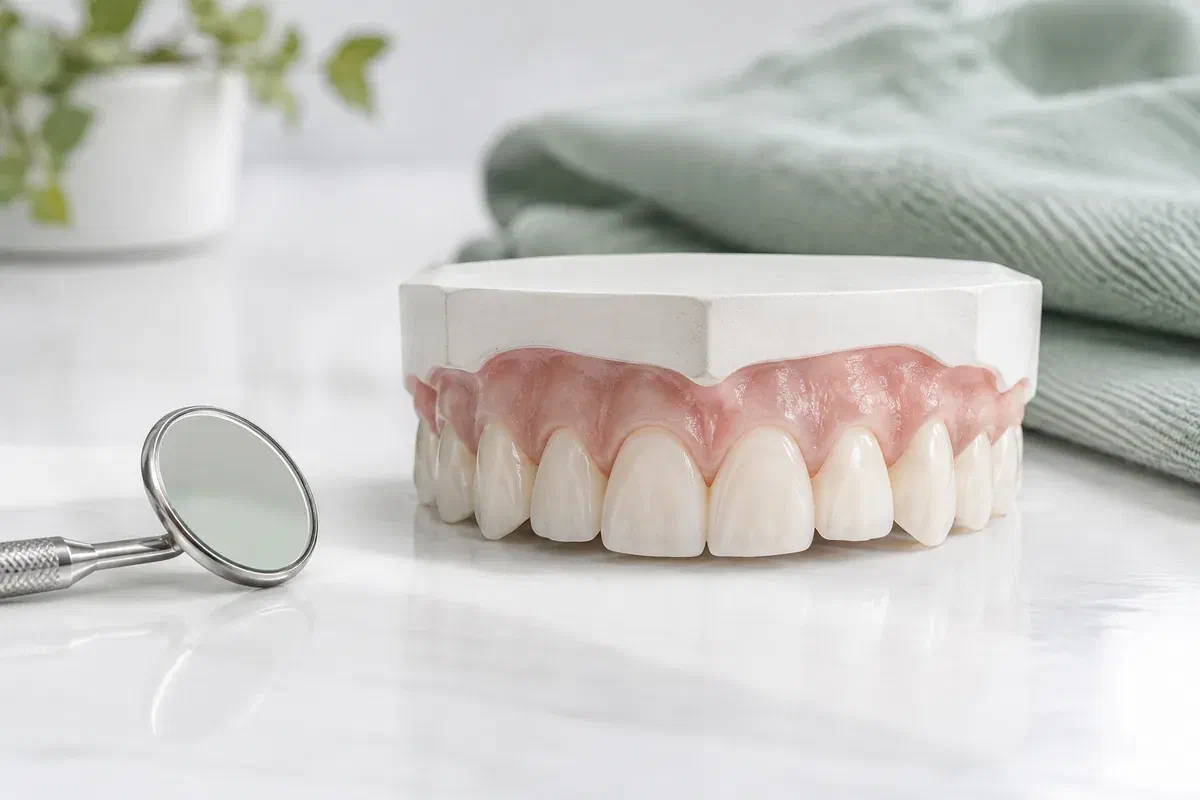
Illustrative teaching model showing modest differences in front-tooth edge lengths
The starting point shapes the outlook

Edge, angle, or the tissue around the tooth

Point to the uneven area and explain what bothers you. Also tell us about chipping, sensitivity, or a different feel when your teeth meet, since those can affect how long a change lasts.

An edge that is short, chipped, or worn

A naturally shaped edge and one lost to wear have different outlooks. Repairing a worn edge without addressing the cause may not last. Mention recent chips and sensitivity, and ask how a new edge would cope with your bite over time.

A tooth that sits turned or forward

Position can make a tooth look larger or uneven. Bonding can disguise the look, but the tooth stays put and the bonding may need upkeep. Ask how a surface change compares with orthodontic movement over the longer term.

Gums or past dental work contributing

Gum changes or an older crown or filling can create an uneven look. The examination should identify these early. Ask whether the tooth needs changing at all, or whether another area will matter more in the years ahead.

Unevenness that is new, chips that keep recurring, or pain need assessment. Please never file an edge at home to even it out; enamel loss is permanent and the tooth may be weakened.

Deciding for the long run

A clear look at durability and trade-offs

Understanding the cause means you can compare options on more than speed. A quick change may be right for a stable edge, while a tooth affected by wear or position may be better served by addressing that first, so a cosmetic result is not undone.

It also means you can accept some natural variation. Teeth do not need to match exactly to be healthy or attractive. Describe what level of improvement would satisfy you, and ask whether achieving more would cost healthy structure or add maintenance over time.

Patient information: Cleveland Clinic — tooth contouring and enamel preservation · American Association of Orthodontists — tooth alignment and bite

A plain account of what changes, and for how long

Ask whether each option adds material, removes enamel, or moves teeth, and how long each typically lasts before attention is needed. Those differences matter as much as the immediate look.

Room to preserve what you like

If you like most of your smile, say so. A focused plan that changes only the distracting edge often leaves you with fewer restorations to maintain in the future.

A realistic maintenance picture

Discuss repairs, replacements, retention, and protective guards. Ask how each option is likely to need attention over the years, and what would happen if you later chose a different approach.

A plan built to last

Assessment first, longevity always in view

There is no single correction for uneven teeth. The steps after the first visit depend on the cause and on how you weigh appearance, effort, and durability.

  1. Gather history and examine closely

    Talk about when you noticed the difference, any dental work, and habits like grinding. Your enamel, gum tissue, any existing fillings or crowns, and the way your teeth close are all checked. Photos can provide a baseline for future comparison.

  2. Explain the cause and its stability

    You learn whether shape, position, wear, gum level, or a combination is behind the uneven look. If anything is unclear, ask what would clarify it. A difference that is still changing affects which option will last.

  3. Compare options by durability, too

    Consider bonding, a careful contour, orthodontic care, gum or restorative treatment, or observation. Ask how much each changes the tooth, what result to expect, and how it is likely to age. If staged, ask why.

  4. Review the result and set the upkeep

    After treatment, the clinician checks fit, contacts, or bite as needed. Report anything unusual. Agree on maintenance, retention or protection, and a schedule of reviews that suits you.

Care that protects the investment of time

Make the result last with the right habits.

Long-term care depends on whether you had bonding, contouring, or orthodontic treatment. Ask for a routine written for your plan.

Thorough daily cleaning

Brush and clean between teeth using the methods recommended. If floss catches or an edge roughens, mention it. Good daily care helps both natural teeth and restorations last longer.

Managing the causes of wear

If grinding, acid exposure, or chipping played a part, follow the prevention plan. Report new chips so the cause can be assessed, since an appearance repair alone does not halt every source of wear.

Retention, guards, and regular reviews

Wear any retainer or guard as directed, and bring it when more dental work is planned. Regular reviews let the clinician check how the change is holding up, in both appearance and function.

Patient information: Cleveland Clinic — tooth erosion and changes in tooth surfaces

Long-term comparison

How each approach tends to age

Choose the option that addresses the real cause, then compare its durability. Ask how much natural tooth each preserves, and whether leaving a stable, healthy difference alone is reasonable.

Edge-level change with different outlooks

Bonding or minimal contouring

Bonding can add to a short or chipped edge and can be repaired or replaced later, but may stain or chip. Limited contouring can smooth a minor irregularity where the enamel allows, and is permanent. Ask which suits you and why.

Position-level change with ongoing retention

Orthodontic assessment

Moving teeth can address a position concern at its source. Results depend on long-term retention. Ask about appliance options, the commitment, and retention, considering the bite and appearance together.

For dental work, gums, or a difference worth keeping

Restorative or gum care, or monitoring

Older restorations or gum changes may need their own care. A stable, healthy difference may be monitored without treatment. Ask what would be watched and which changes should bring you in sooner.

Patient information: American Association of Orthodontists — adult orthodontic options

Caledon questions about lasting results

Long-term questions worth asking

Bring your questions about durability and upkeep. Your priorities shape the discussion, and the examination shows which options are suitable.

(905) 876-4488
How long does bonding on a front tooth edge usually last?
It varies with the size of the repair, your bite, and habits such as grinding. Bonding may need repair or replacement at some point. Ask what affects longevity in your situation and how to protect it.
Is contouring a permanent solution?
The enamel removed is permanently gone, so the change itself is permanent. Whether the result stays satisfying depends on wear and movement over time. Ask whether a limited contour is suitable before committing.
Do orthodontic results stay put without a retainer?
Teeth tend to shift over time, so retention is often recommended for the long term. Ask what retention would involve and how reviews would be scheduled to protect the result.
If I choose bonding now, can I choose orthodontics later?
Often, yes. Bonding can usually be adjusted or removed if you later decide to move teeth. Ask how the two might be sequenced and whether starting with one affects the other.
Will my teeth keep changing as I get older?
Teeth and gums can change gradually through wear, movement, and gum changes. That is one reason to plan conservatively. The assessment can explain what changes are likely to matter for your smile.
How can I keep review visits manageable from Caledon?
Ask which reviews are essential for your option and whether they can be timed with routine checkups. Knowing the schedule in advance helps you compare options fairly.
Uneven teeth care for Caledon

Plan for the smile you’ll still want later.

Arrange a consultation at our Bronte Street practice to discuss uneven edges, tooth length, or alignment. We will explain the cause and compare options by both appearance and durability, with your preferences and long-term oral health guiding the choice.

Recommendations follow the cause. A healthy natural difference may need no treatment, and enamel removed by contouring cannot be regained.

Visit Milton Dental Clinic
Unit 1, 342 Bronte St. S, Milton, ON L9T 5B7
Get directions Clinic hours
Monday–Thursday
11am–7pm
Friday–Sunday
By appointment only

Areas we serve

  • Milton
  • Oakville
  • Mississauga
  • Georgetown
  • Halton Hills
  • Acton
  • Campbellville
  • Brampton
  • Burlington
  • Puslinch
  • Rockwood
  • Erin
  • Caledon
  • Etobicoke
  • Old Milton
  • Bronte Meadows
  • Timberlea
  • Dorset Park
  • Dempsey
  • Clarke
  • Beaty
  • Coates
  • Harrison
  • Scott
  • Willmott
  • Ford
  • Bowes
  • Cobden
  • Walker
  • Mountain View
  • Milton Heights
  • Hawthorne Village
  • Valley View
  • Fallingbrook
  • Nassagaweya
  • Trafalgar
  • Esquesing
  • Nelson
  • Brookville
  • Moffat
  • Glen Williams
  • Norval
  • Limehouse
  • Stewarttown
  • Ashgrove
  • Hornby
  • Silver Creek
  • Speyside
  • Scotch Block
  • North Oakville
  • River Oaks
  • Glen Abbey
  • West Oak Trails
  • Palermo
  • Bronte Creek
  • College Park
  • Joshua Creek
  • Uptown Core
  • Preserve
  • Iroquois Ridge
  • Lisgar
  • Meadowvale
  • Meadowvale Village
  • Churchill Meadows
  • Erin Mills
  • Central Erin Mills
  • Streetsville
  • East Credit
  • Creditview
  • Heartland
  • Sheridan
  • Mount Pleasant
  • Credit Valley
  • Huttonville
  • Churchville
  • Springbrook
  • Northwest Brampton
  • Bram West
  • Fletcher's Meadow
  • Fletcher's Creek South
  • Alton Village
  • Orchard
  • Millcroft
  • Headon Forest
  • Tansley
  • Brant Hills
  • Tyandaga
  • Kilbride
  • Lowville
  • Aberfoyle
  • Morriston
  • Arkell
  • Hillsburgh
  • Freelton
  • Carlisle
  • Waterdown
  • Flamborough
  • Mountsberg

How can we help?

Milton Dental Clinic

Have a question about your smile? Choose the option that works best for you.

For urgent dental concerns, please call.
Messages are reviewed during clinic hours.