

Illustrative patient discussing the appearance of uneven teeth during a dental consultation
Cosmetic Dentistry

Cosmetic Correction of Uneven Teeth in Halton Hills

Flattened corners and edges of different lengths are often signs of grinding or clenching rather than the way teeth grew. For Halton Hills households, we look at the wear pattern first, then compare cosmetic repairs with the protection needed so a new edge can last.

Wear that changes the outline

Clenched jaw, uneven edges

Many people grind at night or clench during stressful stretches without knowing it. Over time the front teeth can lose length unevenly, so one corner looks chipped, a central tooth looks shorter, or the whole edge line tilts. A partner may hear the grinding before you notice the wear.

Repairing that look is possible, but a cosmetic edge placed on a tooth that is still being ground can break quickly. That is why the plan usually pairs appearance with protection. Bonding can rebuild lost length. Limited contouring can blend a rough spot, though it removes enamel permanently. A guard or bite review may protect the result, and position sometimes matters too.

Coming from Georgetown, Acton, Glen Williams, or elsewhere in Halton Hills, mention jaw soreness, morning headaches, or any guard you already own. Tell us which edge bothers you most. The conversation can then balance a better appearance with keeping your remaining enamel safe.

Talk about worn, uneven front teeth
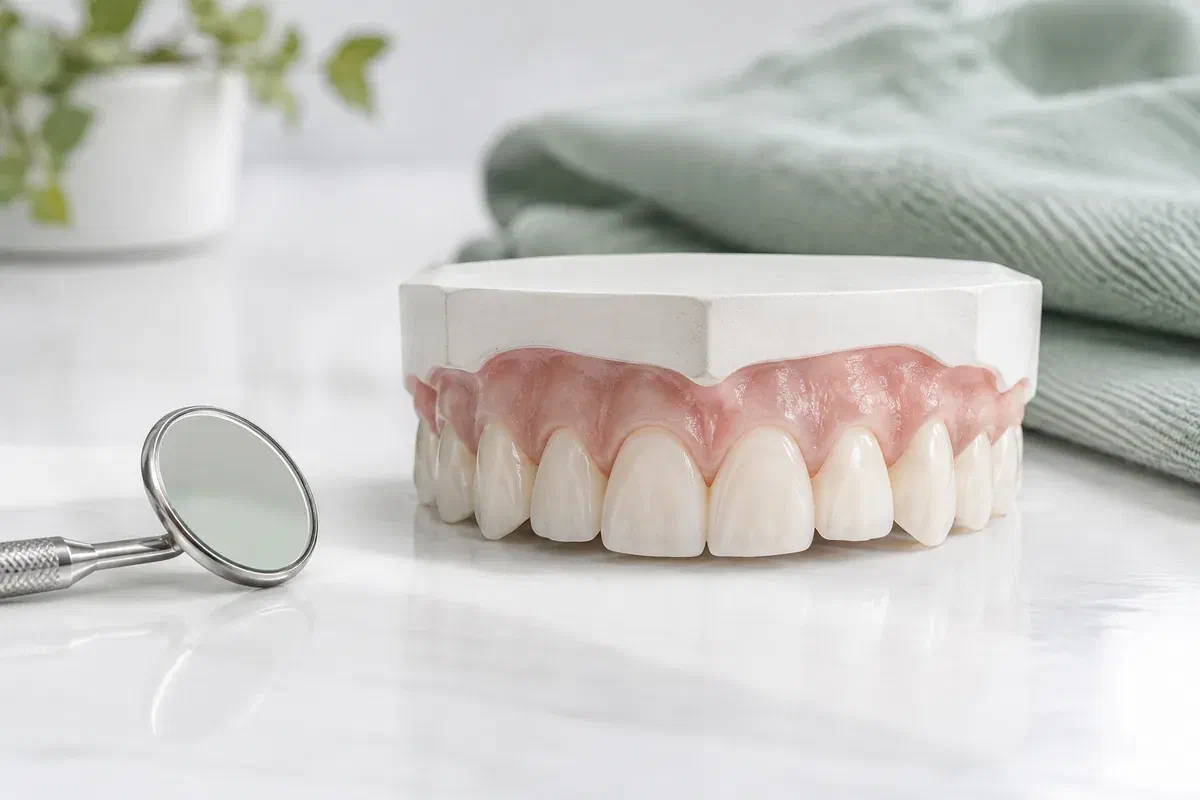
Illustrative teaching model showing modest differences in front-tooth edge lengths
Reading the wear pattern

Signs that wear is shaping your smile

Show us the edges that look uneven, and describe any clenching, grinding, or jaw tension you notice. Also mention sensitivity or changes when you bite.

Short, flat, or chipped edges

Worn edges often look flatter and shorter than unworn ones. A chip may also appear where enamel has thinned. Mention sensitivity and how long you have noticed the change. Ask how a rebuilt edge would cope with your bite and habits.

Teeth pushed slightly out of line

Strong forces and a crowded bite can tip or rotate a tooth, creating extra wear on its edge. Surface repair will not change position. Ask whether alignment contributes and whether orthodontic advice is worth considering.

Gums, restorations, and worn surfaces together

Wear can expose differences in gum height or make older fillings stand out. The examination should look at all of these. Ask whether the tooth itself, a restoration, or the gum is the main contributor to the uneven look.

Rapid wear, repeated chipping, jaw pain, or tooth sensitivity should be assessed. Do not try to level worn edges with a file; enamel loss is permanent and can make sensitivity or damage worse.

Repairs that can hold up

Appearance and protection, planned together

When wear is the cause, the cosmetic step is only half the plan. Identifying grinding or clenching helps avoid a cycle of repairs, and lets you choose an approach that suits the forces your teeth face every day and night.

It also helps set realistic goals. Restoring every millimetre of lost edge is not always wise or necessary. Describe what would look balanced to you, and ask whether rebuilding more would place repairs under stress or require more change than you want.

Patient information: Cleveland Clinic — tooth contouring and enamel preservation · American Association of Orthodontists — tooth alignment and bite

An explanation of what is wearing and why

Ask the clinician to show where wear is occurring and what would be changed. Knowing whether bonding is added, enamel smoothed, or the bite adjusted helps you understand the commitment.

Keeping the natural character you like

You may want only the most noticeable edge restored. Say so. A focused plan can address that tooth without reshaping teeth that still look right to you.

Protection built into the plan

Ask about a night guard, how often repairs might need attention, and how wear will be monitored. A longer-lasting result depends on managing the cause as well as fixing the look.

How we approach worn edges

Understand the wear, then repair and protect

No single procedure covers uneven worn teeth. The steps depend on how much wear there is, whether it is active, and what you want to achieve.

  1. Describe your habits and examine the wear

    Share any grinding, clenching, jaw tension, or previous guards. The clinician checks edges, enamel, gums, restorations, and how your teeth meet. Photos can record the current wear for comparison.

  2. Identify the main cause

    You learn whether wear, position, edge shape, gum level, or a mix is responsible. If anything is uncertain, the next step is explained. Active wear is managed differently from wear that has stopped.

  3. Compare repair and protection options

    Discuss bonding, limited contouring, a guard, orthodontic advice, or monitoring. Confirm how much tooth would be prepared and what the result should look like. Ask whether protection should start before repairs, and how the team will judge whether wear has slowed.

  4. Check the bite and plan monitoring

    After treatment, the clinician checks the bite and how the new edges meet. Report anything that feels high or sharp. Confirm guard wear and when wear should be reviewed.

Living with repaired edges

Protect the new edges from old habits.

Aftercare depends on whether you had bonding, contouring, orthodontics, or a guard. Ask for instructions specific to your treatment.

Keep repaired edges clean and smooth

Brush and clean between teeth as recommended, paying attention to the edges that were rebuilt. If floss catches or an edge starts to feel rough, mention it at your next visit or sooner. Daily cleaning should stay easy and comfortable after any cosmetic change.

Wear the guard and watch for clenching

If a guard was recommended, use it as directed. Notice daytime clenching and relax your jaw. A repaired edge that chips again should be assessed rather than simply smoothed, since repair alone does not stop wear.

Bring appliances and keep reviews

Bring your guard or retainer to appointments when more dental work is planned, since changes to edges can affect fit. Reviews let us monitor wear, appearance, and function.

Patient information: Cleveland Clinic — tooth erosion and changes in tooth surfaces

Repair and protection choices

Three paths for uneven, worn teeth

The best approach depends on the source of the wear and unevenness. Compare how much healthy tooth each option keeps, and consider whether a stable difference can be left untreated.

For worn or chipped edges

Bonding or minimal contouring

Bonding can rebuild lost edge length, and limited contouring can smooth minor roughness where enough healthy enamel allows. Ask which suits your wear pattern. Enamel removal is permanent.

When crowding or the bite drives wear

Orthodontic opinion

If tooth position concentrates force on certain edges, moving teeth may help more than reshaping them. Ask about appliances, commitment, and retention, with appearance and the bite considered together.

When protection or monitoring is the priority

Guard, other care, or observation

A guard, restorative review, or gum care may come first. Stable wear that does not bother you may simply be watched. Ask what would be monitored and when to call.

Patient information: American Association of Orthodontists — adult orthodontic options

Grinding and wear questions in Halton Hills

Is grinding behind my uneven teeth?

Mention any signs of grinding you or others have noticed. Your account helps the discussion, and the exam shows the wear pattern.

(905) 876-4488
How can I tell if I grind my teeth at night?
Common clues include morning jaw soreness, headaches, a partner hearing grinding, and edges that look flatter than they used to. Many people have no idea until someone points it out. The examination can look for wear patterns that suggest grinding and discuss what may help protect the teeth.
Will bonding hold up if I keep grinding?
Bonding on a heavily loaded edge can chip or wear. Managing grinding, often with a guard, helps repairs last. Ask how likely the repair is to need attention and what protection is advised.
Does a night guard fix uneven edges?
A guard does not restore lost length, but it can help protect natural teeth and any repairs from further wear. It is often one part of a plan alongside a cosmetic change, rather than a replacement for one. Ask which type of guard would suit your bite and habits.
Can stress cause my front teeth to wear unevenly?
Stress can be linked to clenching and grinding, which may contribute to wear. If you notice clenching during the day, mention it. The clinician can discuss protection and whether other factors are involved.
Is it better to repair worn teeth now or wait?
That depends on whether wear is active, whether there is sensitivity, and your goals. Sometimes protection comes first and repairs follow. Ask what waiting would mean for the teeth and what would be monitored.
Will my current night guard still fit after edges are rebuilt?
Changing edges may affect the fit, because a guard is shaped around the teeth as they were. Bring it to the consultation so the clinician can check it and arrange any adjustment or replacement as part of the plan, rather than discovering a poor fit afterwards.
Uneven teeth care for Halton Hills

Let’s look at the wear together.

Visit our Bronte Street practice to discuss worn or uneven edges and any grinding you suspect. We will explain what is causing the uneven look and compare repair and protection options with your goals and oral health in mind.

Treatment depends on the cause of wear. Healthy variation may not need treatment, and any enamel taken off during contouring is gone for good.

Visit Milton Dental Clinic
Unit 1, 342 Bronte St. S, Milton, ON L9T 5B7
Get directions Clinic hours
Monday–Thursday
11am–7pm
Friday–Sunday
By appointment only

Areas we serve

  • Milton
  • Oakville
  • Mississauga
  • Georgetown
  • Halton Hills
  • Acton
  • Campbellville
  • Brampton
  • Burlington
  • Puslinch
  • Rockwood
  • Erin
  • Caledon
  • Etobicoke
  • Old Milton
  • Bronte Meadows
  • Timberlea
  • Dorset Park
  • Dempsey
  • Clarke
  • Beaty
  • Coates
  • Harrison
  • Scott
  • Willmott
  • Ford
  • Bowes
  • Cobden
  • Walker
  • Mountain View
  • Milton Heights
  • Hawthorne Village
  • Valley View
  • Fallingbrook
  • Nassagaweya
  • Trafalgar
  • Esquesing
  • Nelson
  • Brookville
  • Moffat
  • Glen Williams
  • Norval
  • Limehouse
  • Stewarttown
  • Ashgrove
  • Hornby
  • Silver Creek
  • Speyside
  • Scotch Block
  • North Oakville
  • River Oaks
  • Glen Abbey
  • West Oak Trails
  • Palermo
  • Bronte Creek
  • College Park
  • Joshua Creek
  • Uptown Core
  • Preserve
  • Iroquois Ridge
  • Lisgar
  • Meadowvale
  • Meadowvale Village
  • Churchill Meadows
  • Erin Mills
  • Central Erin Mills
  • Streetsville
  • East Credit
  • Creditview
  • Heartland
  • Sheridan
  • Mount Pleasant
  • Credit Valley
  • Huttonville
  • Churchville
  • Springbrook
  • Northwest Brampton
  • Bram West
  • Fletcher's Meadow
  • Fletcher's Creek South
  • Alton Village
  • Orchard
  • Millcroft
  • Headon Forest
  • Tansley
  • Brant Hills
  • Tyandaga
  • Kilbride
  • Lowville
  • Aberfoyle
  • Morriston
  • Arkell
  • Hillsburgh
  • Freelton
  • Carlisle
  • Waterdown
  • Flamborough
  • Mountsberg

How can we help?

Milton Dental Clinic

Have a question about your smile? Choose the option that works best for you.

For urgent dental concerns, please call.
Messages are reviewed during clinic hours.