

Illustrative patient discussing the appearance of uneven teeth during a dental consultation
Cosmetic Dentistry

Cosmetic Correction of Uneven Teeth in Oakville

Should an uneven tooth be covered, reshaped, or moved? From Oakville, you can book an assessment that answers that question by finding the real source of the difference first, then setting quick surface changes beside orthodontic options so you can choose with confidence.

Surface change or real movement?

A quick fix isn’t always the right fix.

It is tempting to ask for the fastest way to make two front teeth line up. Sometimes a little bonding really is the sensible answer. Other times the tooth is rotated or tipped, and covering its surface only hides a position problem that may affect your bite later.

That is why the decision starts with diagnosis rather than a menu. Bonding builds onto an edge. Contouring takes away a small amount of enamel, which is permanent. Aligners or braces move the tooth. Gum or restorative care deals with what surrounds it. Each answers a different question.

If you are coming from Oakville, especially the northern part of town, you can plan one consultation to cover all of this. Say which tooth bothers you, whether you have had orthodontics before, and how much time you are willing to invest. Then we can talk honestly about what each route involves.

Compare options for an uneven tooth
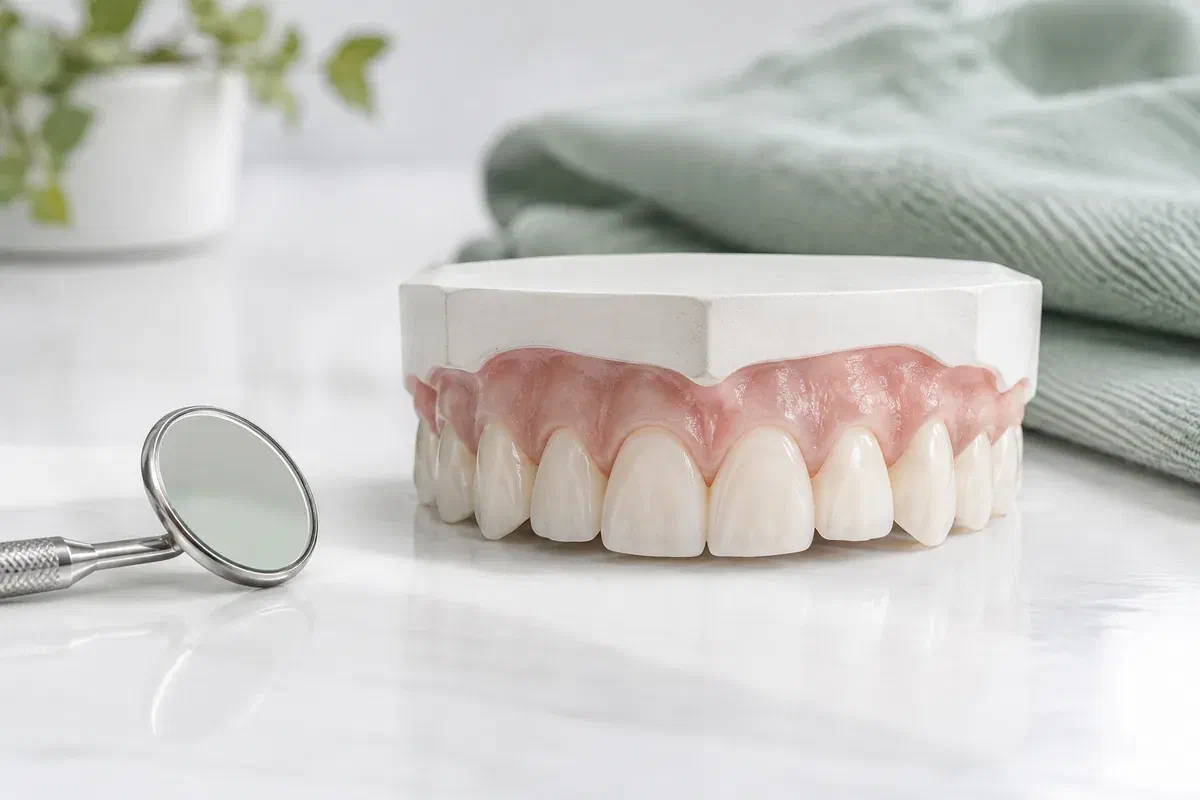
Illustrative teaching model showing modest differences in front-tooth edge lengths
Sorting out the cause

Outline, alignment, or surroundings

Tell the clinician what you would like changed and why. Is it purely the look, or do you also notice food trapping, chipping, or teeth that meet awkwardly?

An outline that is short, chipped, or squared off

When the tooth sits in a good position but its edge is uneven, a local change may be reasonable. Mention whether a chip is new and whether anything feels sensitive. Ask how the proposed edge would work with the teeth that close against it.

Alignment that makes a tooth stand out

A tooth turned on its axis or sitting slightly forward can look larger than the rest. Bonding over it may create the impression of straightness while adding bulk. Ask whether an orthodontic view would give a cleaner, more conservative outcome.

Gums or existing work changing the picture

Uneven gum height or an older restoration can create the impression of uneven teeth. The assessment should identify that early. Ask whether the solution lies with the tooth, the gum, or the existing dental work.

Seek an assessment for any new unevenness, repeated chipping, or pain. Please do not try to file an edge at home; enamel cannot regrow, and the tooth or bite can be damaged.

What you gain from a clear diagnosis

Choosing with the trade-offs in view

Once the cause is known, the comparison becomes far easier. You can see whether a single visit for bonding is enough, or whether a longer orthodontic route would avoid adding material or removing enamel you would rather keep.

A good plan also respects that teeth vary. A perfectly uniform row is not required for health or for an attractive smile. Explain your idea of a good outcome, and ask whether chasing more symmetry would demand more tooth change than you are comfortable with.

Patient information: Cleveland Clinic — tooth contouring and enamel preservation · American Association of Orthodontists — tooth alignment and bite

Each option described in plain language

Ask what would physically happen to the tooth in each approach. Adding, removing, and moving are not interchangeable, and knowing the difference helps you weigh speed against preservation.

Space to say what should stay the same

If you like the shape of most of your teeth, say so. Planning can then target the one feature that bothers you rather than redesigning the whole smile.

A realistic look at maintenance

Bonding may need repair or replacement over time, and orthodontic results depend on retention. Ask about the visits, the upkeep, and any protective appliance each option requires, so you can compare them over years rather than weeks.

The path to a decision

How do we get from concern to plan?

There is no one-size procedure for uneven teeth. The next steps depend on what the examination shows and on how you balance speed, time commitment, and preservation.

  1. Listen first, then examine

    You describe the tooth that bothers you and any history of braces, chips, or grinding. The clinician checks enamel, gums, restorations, and your bite. Photos or records may help you both see the concern more clearly.

  2. Pinpoint what makes it look uneven

    The clinician explains whether shape, position, wear, gum level, or several factors combine. If more information is needed, you will hear what that involves. It is important to know whether the difference is settled or still developing.

  3. Set surface work beside orthodontics

    Compare bonding, limited contouring, aligner or brace treatment, other care, or simple observation. Ask how much tooth each one changes and what result to expect. If a staged plan is suggested, ask why one step should come before another.

  4. Check the outcome and plan upkeep

    After treatment, the fit, contacts, or bite are checked as appropriate. Report anything unusual. Confirm the retention or maintenance routine and the timing of your next review.

After treatment

Different treatments, different aftercare

Caring for bonding is not the same as caring for teeth that were moved. Ask for instructions written for your treatment, and keep them handy.

Cleaning that keeps up with the new shape

Use the brushing and between-teeth tools you were shown. If floss snags or an edge feels sharp, tell us. Good daily cleaning should still be easy after a cosmetic change.

Managing grinding or other causes

If wear or chipping contributed, keep following the protection plan, whether that is a guard or a change in habits. A new break should be examined, not simply smoothed again, since an appearance repair cannot control every cause of damage.

Wearing retainers and keeping reviews

Orthodontic results need retention. Wear any retainer exactly as advised, and bring appliances along when more dental work is planned. Reviews let us check appearance and function together.

Patient information: Cleveland Clinic — tooth erosion and changes in tooth surfaces

Side by side

Covering, contouring, or correcting position

Ask which route deals with the true source of the unevenness. Compare how much natural tooth each one keeps, and remember that a healthy variation can be left untreated.

Edge-focused change

Bonding or a conservative contour

Bonding can build out a short or chipped edge, and minor contouring can refine a small irregularity when there is enough healthy enamel. Ask which one fits and why. Enamel reduction is permanent even in small amounts.

Position-focused change

Orthodontic assessment

When alignment or the bite drives the unevenness, moving teeth may be the more direct route. An orthodontic opinion can explain appliance types, treatment length, and retention, with appearance and bite considered together.

When the source is elsewhere, or no change is wanted

Restorative or gum care, or no treatment

Older restorations or gum changes may need their own plan. A healthy, stable difference may also be left alone. Ask what would be monitored and which changes should bring you back early.

Patient information: American Association of Orthodontists — adult orthodontic options

Oakville questions, answered

Bonding or braces? Common questions

Come with the question you are weighing, whether it is speed, appearance, or how long a result lasts. Your priorities shape the conversation, and the exam confirms what is suitable.

(905) 876-4488
Is bonding a substitute for straightening a crooked tooth?
Bonding can change how a slightly turned tooth looks, but it does not move the tooth or change your bite. For more noticeable misalignment it may add bulk. Ask what it would hide, what it would leave unchanged, and whether orthodontic advice would help.
Are clear aligners an option for one uneven front tooth?
Aligners can be suitable for some adult alignment concerns, but not every case. An assessment can explain whether they fit your situation, what commitment is involved, and how the result would be retained afterwards.
Can I combine orthodontics with bonding afterwards?
Sometimes. Moving a tooth first and then refining its edge with bonding can be a reasonable sequence. Ask why the order matters and whether the edge would still need changing once the tooth is in a better position.
How do I know if contouring would take too much enamel?
Ask the clinician to explain how much enamel is available and how much would be removed. Contouring is only suitable for limited changes, and enamel does not grow back. If more change is needed, another option may be safer.
Does my previous orthodontic treatment change the options?
It can. Teeth that have shifted after earlier treatment may respond to renewed orthodontics, and an existing retainer may be affected by edge changes. Bring your retainer and any records you have.
How should I plan appointments if I’m coming from Oakville?
Ask at the consultation how many visits each option needs and whether any can be combined. Surface changes may take fewer appointments, while orthodontic care involves regular reviews, so knowing that early helps you choose.
Uneven teeth assessment for Oakville

Find out which route suits your tooth.

Book a consultation at our Bronte Street practice to compare bonding, contouring, and orthodontic options for uneven teeth. We will explain where the difference comes from and how each choice fits your goals and oral health.

Every plan follows the cause. Healthy variation can stay as it is, and enamel that is removed cannot be restored.

Visit Milton Dental Clinic
Unit 1, 342 Bronte St. S, Milton, ON L9T 5B7
Get directions Clinic hours
Monday–Thursday
11am–7pm
Friday–Sunday
By appointment only

Areas we serve

  • Milton
  • Oakville
  • Mississauga
  • Georgetown
  • Halton Hills
  • Acton
  • Campbellville
  • Brampton
  • Burlington
  • Puslinch
  • Rockwood
  • Erin
  • Caledon
  • Etobicoke
  • Old Milton
  • Bronte Meadows
  • Timberlea
  • Dorset Park
  • Dempsey
  • Clarke
  • Beaty
  • Coates
  • Harrison
  • Scott
  • Willmott
  • Ford
  • Bowes
  • Cobden
  • Walker
  • Mountain View
  • Milton Heights
  • Hawthorne Village
  • Valley View
  • Fallingbrook
  • Nassagaweya
  • Trafalgar
  • Esquesing
  • Nelson
  • Brookville
  • Moffat
  • Glen Williams
  • Norval
  • Limehouse
  • Stewarttown
  • Ashgrove
  • Hornby
  • Silver Creek
  • Speyside
  • Scotch Block
  • North Oakville
  • River Oaks
  • Glen Abbey
  • West Oak Trails
  • Palermo
  • Bronte Creek
  • College Park
  • Joshua Creek
  • Uptown Core
  • Preserve
  • Iroquois Ridge
  • Lisgar
  • Meadowvale
  • Meadowvale Village
  • Churchill Meadows
  • Erin Mills
  • Central Erin Mills
  • Streetsville
  • East Credit
  • Creditview
  • Heartland
  • Sheridan
  • Mount Pleasant
  • Credit Valley
  • Huttonville
  • Churchville
  • Springbrook
  • Northwest Brampton
  • Bram West
  • Fletcher's Meadow
  • Fletcher's Creek South
  • Alton Village
  • Orchard
  • Millcroft
  • Headon Forest
  • Tansley
  • Brant Hills
  • Tyandaga
  • Kilbride
  • Lowville
  • Aberfoyle
  • Morriston
  • Arkell
  • Hillsburgh
  • Freelton
  • Carlisle
  • Waterdown
  • Flamborough
  • Mountsberg

How can we help?

Milton Dental Clinic

Have a question about your smile? Choose the option that works best for you.

For urgent dental concerns, please call.
Messages are reviewed during clinic hours.